
For China's Gen Z, "hanfu" is no longer a museum category or a costume — it is everyday wear, social practice, and increasingly a profession. A growing cohort of young Chinese in their late teens and twenties have built a lifestyle around hanfu, zanhua (floral hair ornaments), and traditional Chinese brocade crafts, and the cultural mainstream has begun to follow. The shift, documented across social media and major state media in 2026, marks the moment when the Chinese intangible heritage revival crossed from subculture into broad cultural vocabulary.
The clearest expression of the shift is the move of hanfu from special-occasion wear to daily wardrobe component. Where 2018-era hanfu wearers typically reserved their outfits for festivals, photoshoots, and museum visits, 2026 hanfu wearers pair a Tang Dynasty-inspired ruqun with a casual T-shirt, wear a Song Dynasty beizi over jeans, or substitute a mamianqun for a regular skirt. The aesthetic logic has shifted from "wear heritage for special days" to "integrate heritage into ordinary life."

Several factors have made this possible. Hanfu rental and purchase prices have fallen significantly. The variety of styles available has expanded to include more casual, everyday-friendly options. And social media platforms have made it socially acceptable — even fashionable — to be seen in hanfu at cafes, on public transport, and in workplace settings that don't require strict business dress codes.
Zanhua: The Floral Hair Ornament Revival
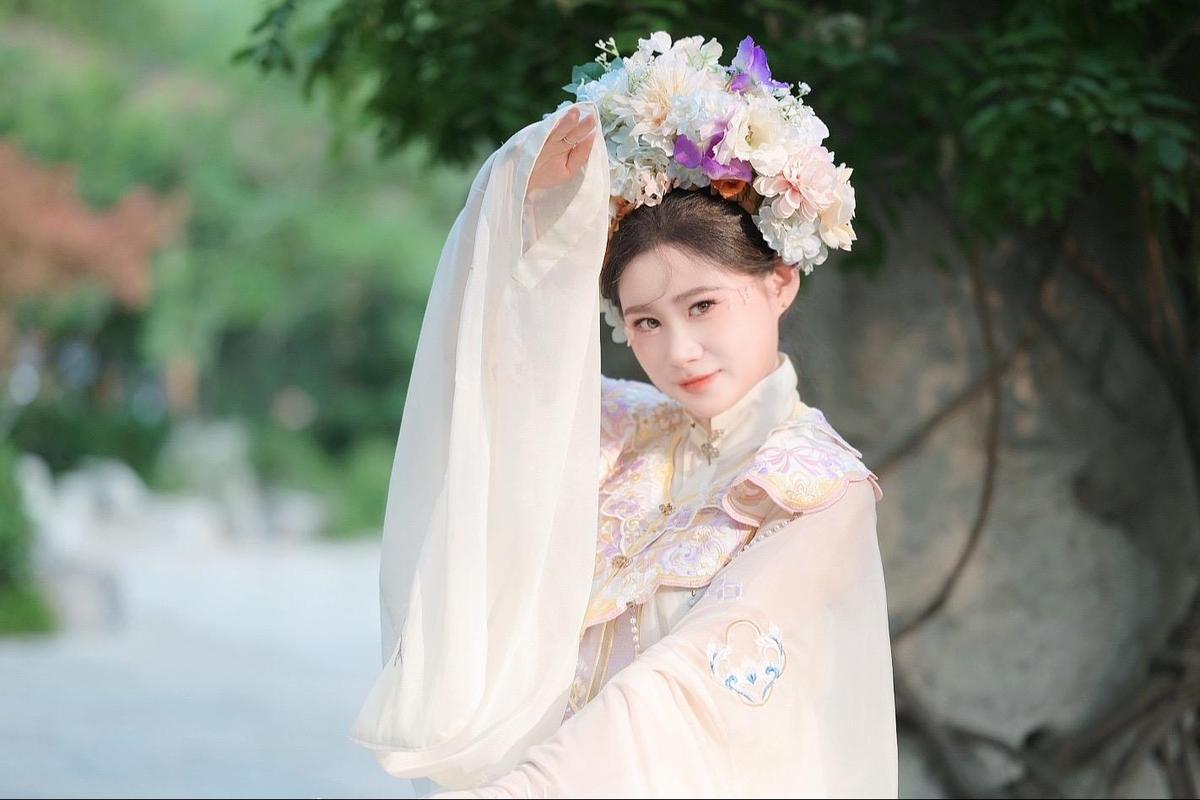
Zanhua (簪花, literally "hairpin flower") has become one of the most visible markers of the heritage-as-lifestyle movement. The tradition of wearing fresh or silk flowers in the hair, which has roots in Tang Dynasty court practice and Minnan folk culture, has exploded on Chinese social media over the past two years, with hashtags related to zanhua accumulating billions of views.
Wearing zanhua has become a default for hanfu events, graduations, tourism photography, and increasingly for everyday occasions. The supply side has responded with a proliferation of both fresh-flower zanhua studios (which now operate in most major Chinese cities) and silk-flower zanhua artisans (a traditional craft that has gained a new generation of practitioners). For many young Chinese women, zanhua has become a kind of personal signature — a small, expressive touch that signals their engagement with traditional culture without requiring a full hanfu outfit.
Brocade Crafts as Living Skills
Alongside the wearable heritage pieces, traditional brocade and weaving crafts have become popular hobby and micro-business activities. Yunjin (cloud brocade, Nanjing), Song brocade (Suzhou), and Zhuang brocade (Guangxi) workshops have seen a surge in young trainees, both as hobbyists and as aspiring small-business owners. Several social-media-famous brocade artisans have built followings in the millions by documenting the slow, technical process of traditional weaving and explaining the cultural significance of the patterns they produce.
The economic structure is unusual: many of these brocade practitioners are not full-time craftspeople, but rather office workers or students who have built second careers in craft. The "side hustle brocade weaver" has become a recognizable social category, and the brocade items they produce — small pouches, headbands, scarves — are widely sold through short-video commerce platforms.
2026's heritage calendar reflects the demand. The annual Cultural and Natural Heritage Day on June 13 saw 280 events in Shandong alone, with similar density in Henan, Guangdong, and Zhejiang. The events are not just museum exhibitions — they include heritage markets, craft workshops, food demonstrations, and hanfu-friendly public programming. Major commercial brands have begun to sponsor heritage-day events, and the events are marketed to a broad consumer audience rather than a narrow heritage-interested one.
Local governments, recognizing the economic value of the heritage economy, have begun to invest in dedicated infrastructure: heritage creative parks, traditional craft incubators, hanfu-friendly historic districts, and zanhua-friendly tourism routes. The model treats heritage as a living industry, not just a preservation project.
What Comes Next
For observers, the most interesting question is whether the 2026 wave represents a stable cultural shift or a temporary peak. The argument for stability: the economic infrastructure (workshops, rental studios, online retail, tourism integrations) is now well-developed, and the social acceptability of heritage wear has reached a tipping point. The argument for caution: most of the activity is concentrated in tier-1 and strong tier-2 cities, and the demographic of the most active participants skews female and under-30, raising questions about long-term sustainability.
For the heritage economy itself, the answer probably lies in the middle. The hanfu-zanhua-brocade ecosystem is likely to remain a significant cultural and economic force through the late 2020s, but its center of gravity may shift from "fashion statement" to "craft and tourism" as the initial Gen Z cohort ages into their thirties. The brands and studios that plan for this shift are likely to be the ones that thrive.
