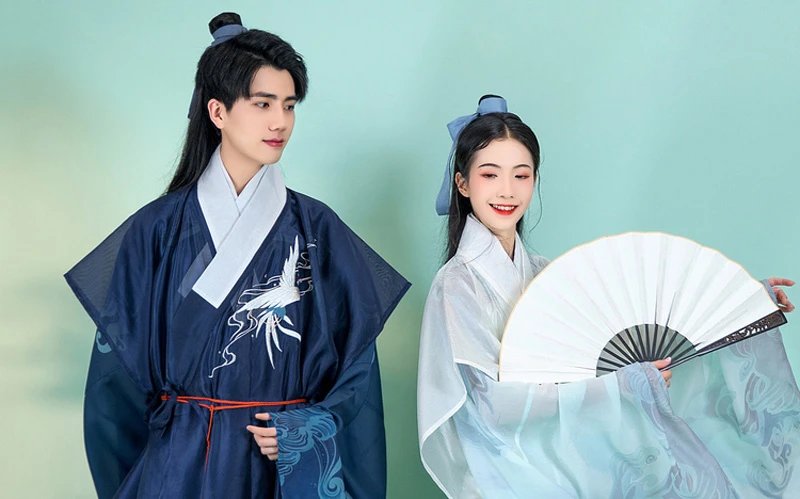
Ruqun (襦裙) is the most recognizable style of Hanfu, the traditional clothing of the Han Chinese people. Whether you are captivated by the dramatic empire-waist silhouette of chest-high qixiong ruqun, drawn to the practical elegance of waist-high qiyao ruqun, or simply exploring ancient Chinese fashion for the first time, this graceful two-piece hanfu dress is almost always the garment that leaves the strongest impression. This comprehensive guide covers everything you need to know about ruqun hanfu — from its profound history and the defining differences between qixiong and qiyao styles, to step-by-step wearing instructions, trusted places to buy authentic pieces, and the reasons this millennia-old traditional dress continues to soar in global popularity.

What Is Ruqun?
Ruqun (襦裙) literally translates to “shirt and skirt.” Ru (襦) refers to a short upper garment — typically a blouse or top with a crossed or straight collar — and qun (裙) refers to a wrapped skirt. Together they form a two-piece outfit secured by fabric sashes or ribbons rather than buttons or zippers.
This elegant simplicity is exactly why ruqun is widely recommended as the best hanfu for beginners. Unlike more complex hanfu styles that require multiple layers and separate pieces, a basic ruqun set consists of just three elements: one top, one skirt, and one sash. This makes ruqun the most approachable entry point into the world of traditional Chinese dress, perfect for anyone new to hanfu fashion.
Ruqun is considered the oldest and most fundamental type of hanfu. According to historical records, its origins can be traced back over 3,000 years — it is said to have been the basic clothing worn as early as the age of the Three Sovereigns and Five Emperors in Chinese mythology. In ancient times, ruqun was worn by both men and women, though over the centuries it gradually became primarily associated with women’s attire.
Many first-time learners often ask: what does ruqun mean? Beyond the literal “jacket and skirt” translation, the term represents the core of the traditional shangyi xiachang (上衣下裳, “upper garment and lower skirt”) clothing system that has defined Han Chinese fashion for millennia, embodying the cultural philosophy of harmony between heaven and earth.
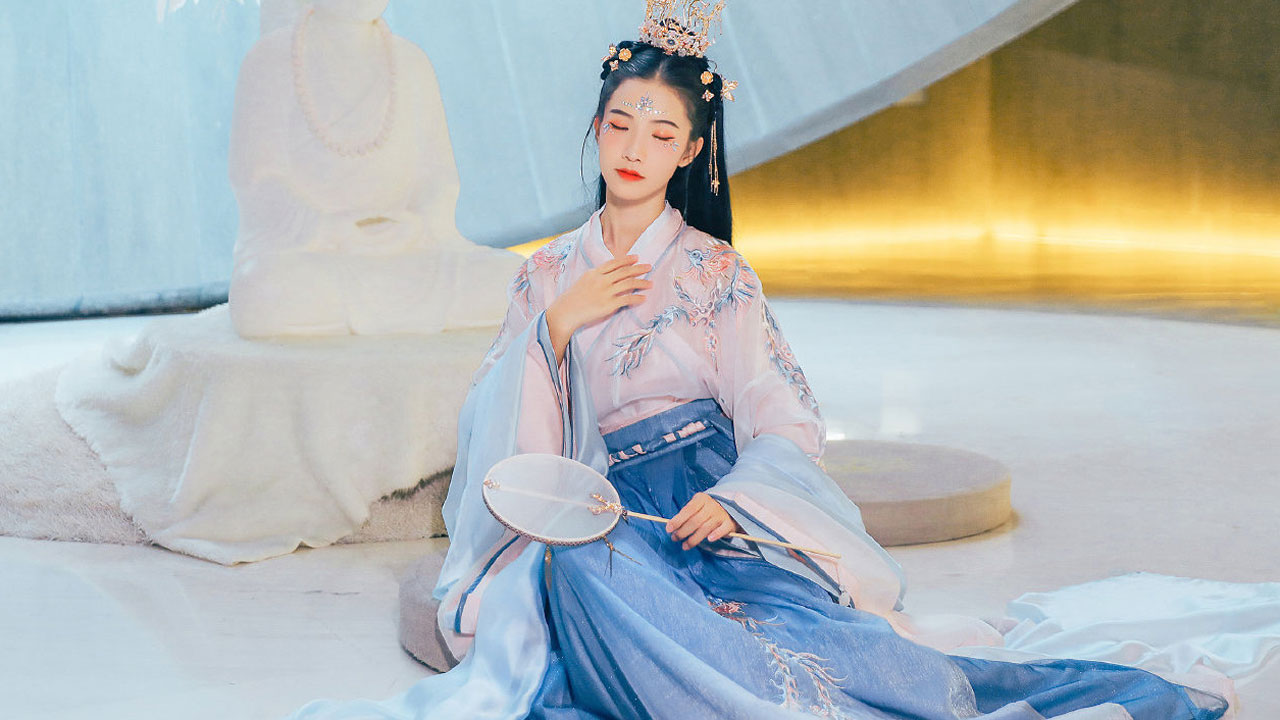
The Evolution of Ruqun Across Dynasties
Pre-Qin Period to Han Dynasty
During the pre-Qin period, ruqun was relatively simple in design. The upper garment was short, and the lower skirt was long and loose, made primarily from natural fibers such as hemp and kudzu in predominantly plain colors.
In the Qin and Han dynasties, ruqun evolved further: the upper garment grew longer, the skirt became wider, and silk began to be widely used, lending the garment a more dignified and luxurious appearance. Embroidery and painting techniques were frequently employed to add artistic value to the clothing.
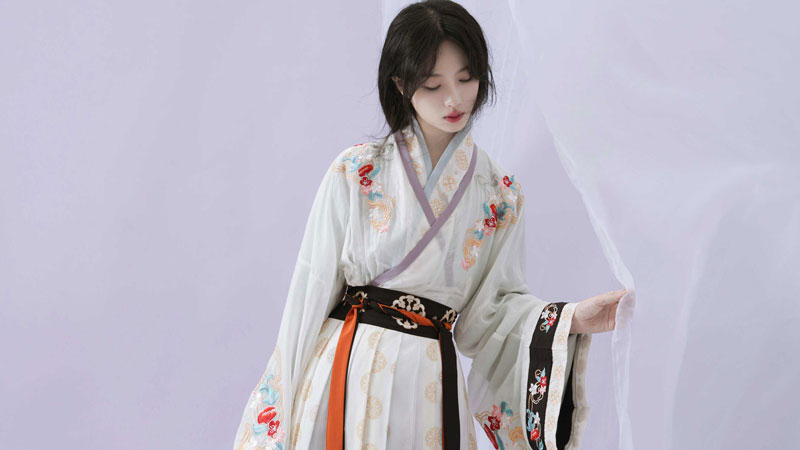
Wei, Jin, and Southern and Northern Dynasties
The Wei and Jin dynasties marked a transformative period for ruqun fashion. Women began wearing longer upper garments that were worn outside the skirt rather than tucked in — a new variant known as shanqun (衫裙). This era also introduced a distinctive aesthetic trend known as the “Immortal Style,” characterized by layered tops and flowing silhouettes that gave the wearer an ethereal, goddess-like appearance.
This period also gave birth to tanling ruqun (坦领襦裙), a unique variation featuring a U-shaped collar that exposed the shoulders slightly, paired with half-sleeved outer jackets. Skirts from this period, such as the poqun (破裙, “paneled skirt”), consisted of multiple strips of fabric sewn together to create striking vertical stripes. Social turmoil and ethnic integration during this time also brought bolder colors and new decorative influences into ruqun design.

Sui and Tang Dynasties: The Golden Age of Ruqun
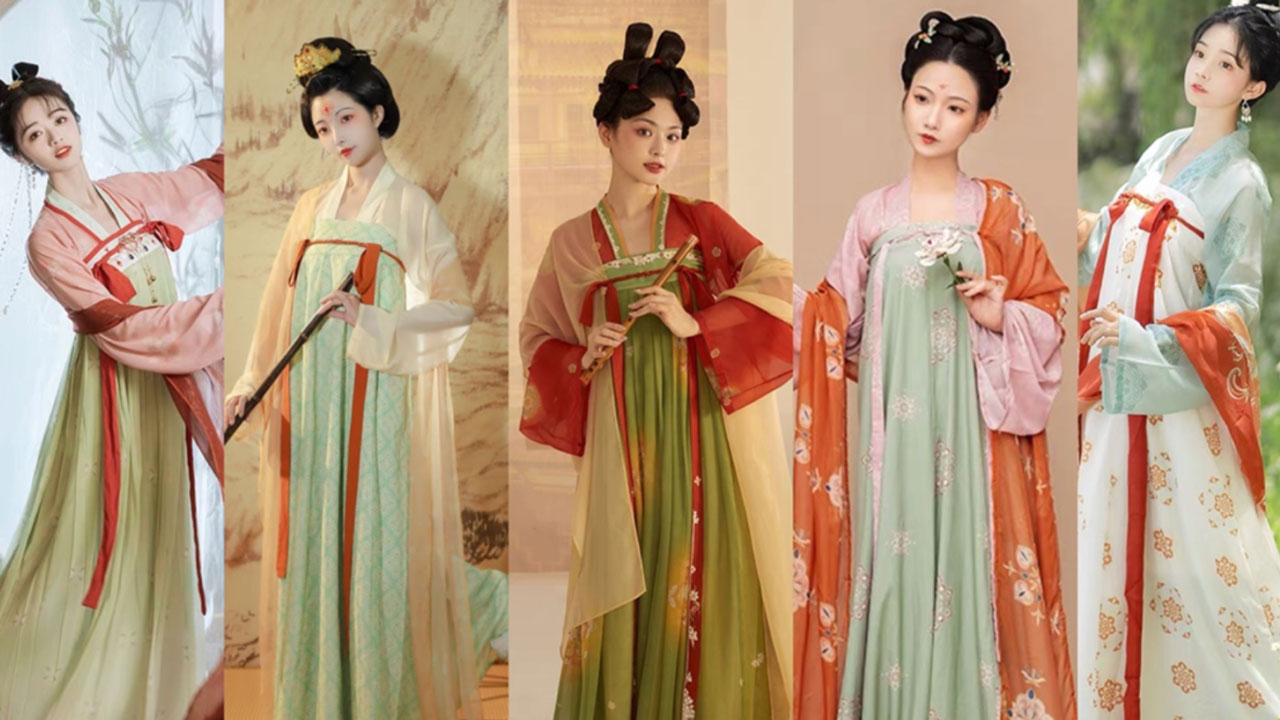
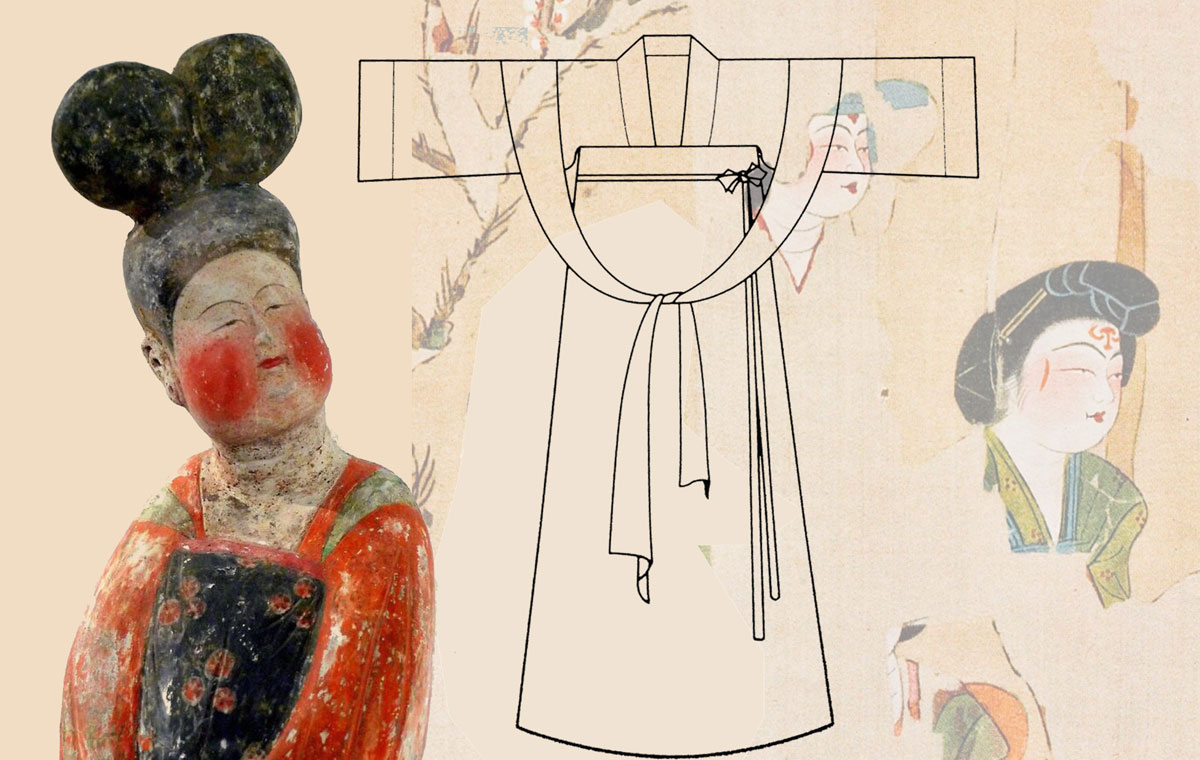
The Sui and Tang dynasties represent the peak of ruqun’s development. During this era of prosperity and cultural openness, ruqun styles became extraordinarily diverse and luxurious. The most significant innovation was the gradual raising of the skirt waistline — what began as a waist-level tie eventually climbed all the way above the chest, giving birth to the iconic qixiong ruqun (齐胸襦裙), or chest-high ruqun.
Tang dynasty women often paired their ruqun with a half-sleeve jacket called banbi (半臂) and draped a delicate silk shawl known as pibo (披帛) over their shoulders for an added touch of elegance. This combination remains one of the most popular ruqun hanfu styles for photoshoots and cultural events today.
Tang-era ruqun was renowned for its opulent decoration. Gold and silver thread embroidery, pearl and jade inlays, and vibrant colors — particularly the brilliant pomegranate-red skirts that became synonymous with Tang fashion — reflected the dynasty’s prosperous and confident spirit. The idiom “to bow before the pomegranate skirt,” meaning to be captivated by a woman’s beauty, originated from the irresistible charm of the Tang qixiong ruqun.
Song, Ming, and Later Dynasties
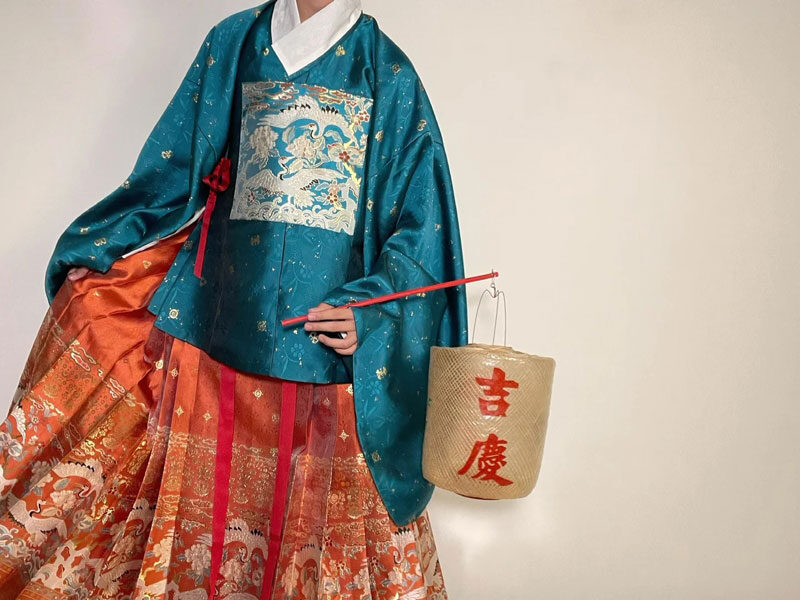
During the Song dynasty, the skirt waistline was gradually lowered back to the natural waist, reflecting the era’s more conservative aesthetic. By the Ming dynasty, ruqun had become the most common form of everyday attire for women. A notable Ming variation was the aoqun (袄裙), in which the top was a double-layered jacket worn untucked over the waist-high skirt.
Many Ming aoqun sets were paired with mamian qun (马面裙), or horse-face skirt, a structured skirt design with overlapping front panels that allowed for easier movement while maintaining an elegant silhouette. This combination remains one of the most popular ruqun hanfu wedding options today, as it carries deep traditional cultural meaning.
Ming-era ruqun sleeves were often of the distinctive pipa (琵琶袖, “lute sleeve”) style — curved with a narrow cuff — and an optional detachable huling (护领) collar protector was sometimes added to extend the garment’s lifespan.
The Main Types of Ruqun: Qixiong, Qiyao, and More
When people say “ruqun,” they are typically referring to one of several distinct styles, each with its own historical origin, silhouette, and wearing experience. Understanding these differences is essential before making a purchase, especially if you are looking for the best ruqun hanfu for beginners.
Qixiong Ruqun (齐胸襦裙) — Chest-High Ruqun
Qixiong ruqun, literally “chest-high ruqun,” is perhaps the most visually striking and photographically popular hanfu style. The skirt is tied just below the bust rather than at the natural waist, creating an empire-waist silhouette that visually elongates the legs.
This style flourished during the Tang dynasty and is strongly associated with Tang-era femininity: opulent, graceful, and confident. A typical qixiong ruqun set consists of a short upper blouse and a long pleated skirt with ribbons that wrap and tie above the chest. The upper garment can feature either a straight center-opening collar (duijin) or a cross-over collar (jiaoling). The skirt itself typically comes in two formats: a one-piece wrap style or a two-piece style consisting of front and back panels tied separately.
Qixiong ruqun is best suited for taller individuals or those seeking to create the illusion of height. It is generally considered a women’s-only style — the high waist placement relies on the bust for support, which makes it impractical for most men to wear securely.
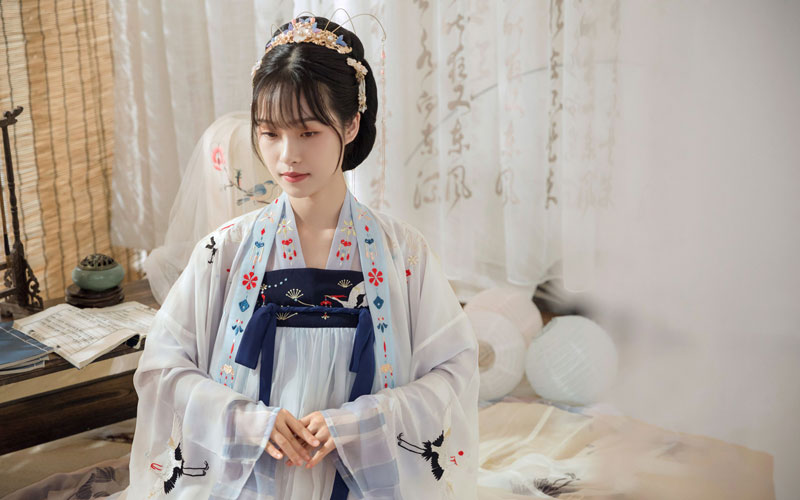
Common concern: “Does the chest-high skirt really fall down?” This is one of the most frequently asked questions in hanfu communities. The answer is that it can — especially when walking or moving actively — but many modern hanfu brands have addressed this by incorporating anti-slip features such as small ties between the upper garment and skirt panels. Proper tying technique is also crucial for a stable, comfortable fit.
Qiyao Ruqun (齐腰襦裙) — Waist-High Ruqun
Qiyao ruqun is the waist-high version, where the skirt wraps and ties at the natural waistline. This is the most historically versatile style and the one most hanfu communities recommend for first-time buyers — it is easier to walk in, simpler to secure, and less prone to wardrobe malfunctions.
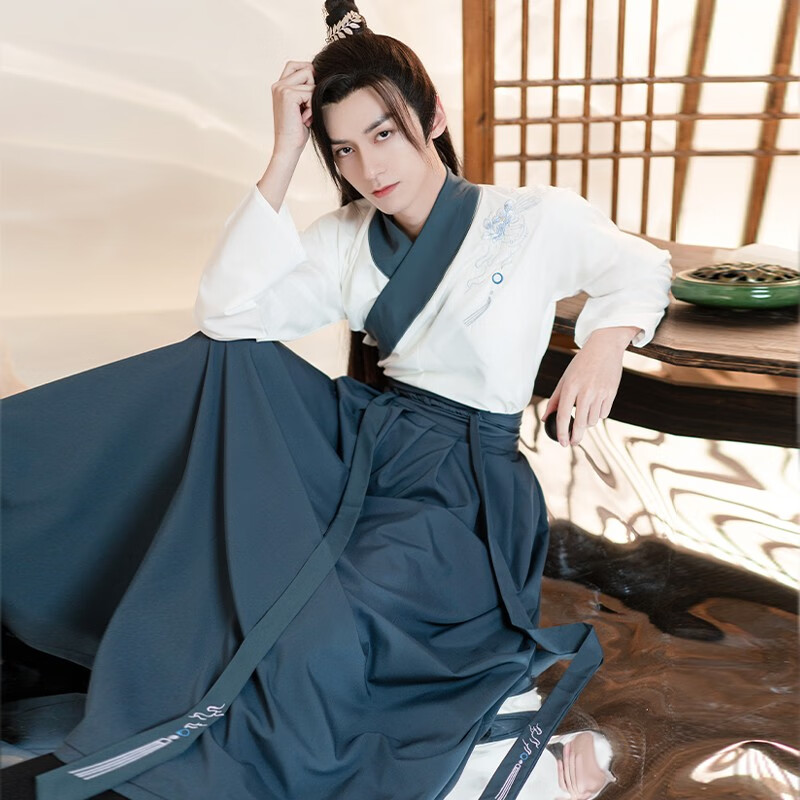
The waist-high ruqun is also the most gender-inclusive style. Both men and women have worn it throughout history, and it remains the most popular form of unisex hanfu today.
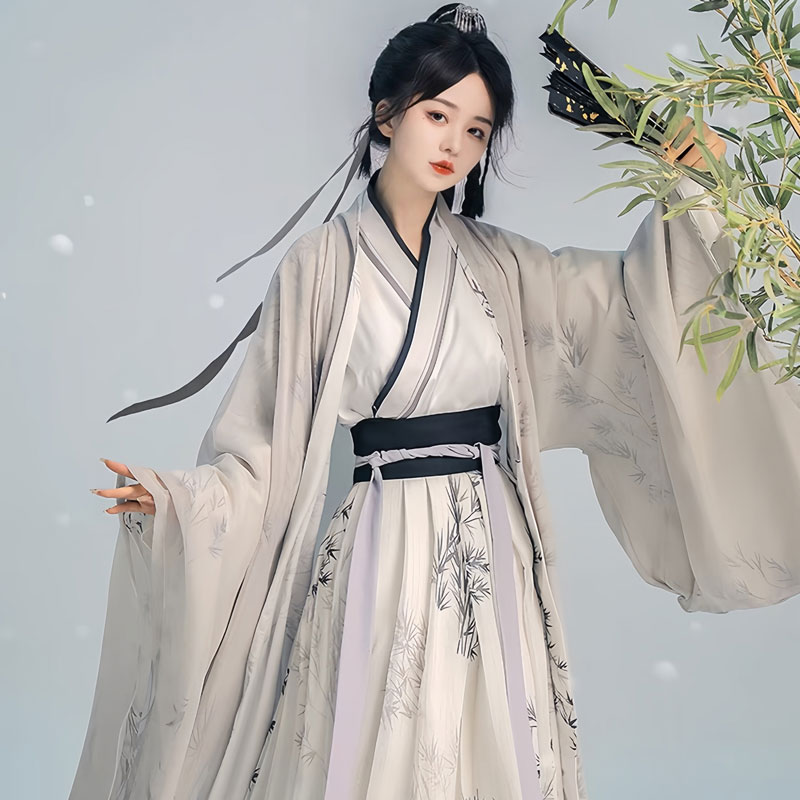
On a feminine silhouette, the waist-high tie cinches the waist elegantly; on a masculine silhouette, the same design accentuates the shoulders and creates a strong, elongated bodyline. For men, this style is sometimes referred to as yichang (衣裳).
Qiyao ruqun is particularly flattering for those with a defined waistline. If you have broader shoulders, the duijin (parallel collar) variation can help draw attention downward toward the chest area rather than the shoulders. This duijin ruqun style is also one of the most popular modern ruqun hanfu options for casual daily wear.
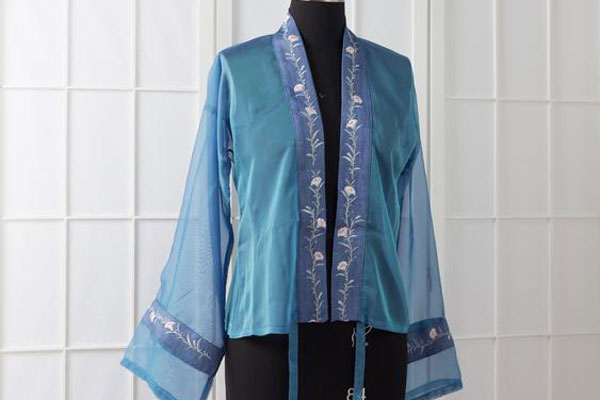
Jiaoling Ruqun (交领襦裙)
The jiaoling, or cross-collar design, is one of the most classic and recognizable features of traditional hanfu. In this variation, the top wraps across the chest with the left side crossing over the right (zuoren), secured with inner ties. The jiaoling ruqun can be either waist-high or chest-high, though it is most commonly seen in qiyao styles.
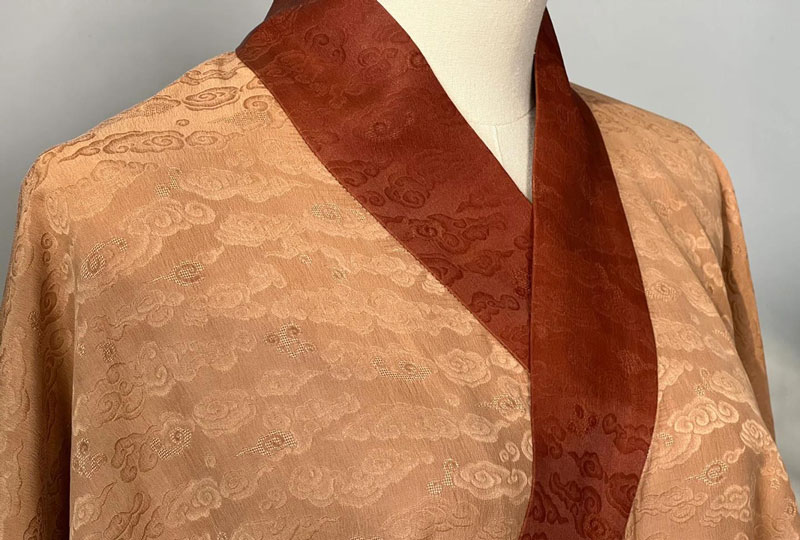
Aoqun (袄裙) — Ming Dynasty Jacket and Skirt
Aoqun is a Ming dynasty variation of ruqun in which the top is a double-layered jacket (ao, 袄) worn outside the skirt rather than tucked in. This differs from the standard ruqun where the top is typically tucked inside the skirt. Aoqun is considered formal attire and is especially popular for weddings, coming-of-age ceremonies, and other significant cultural celebrations.
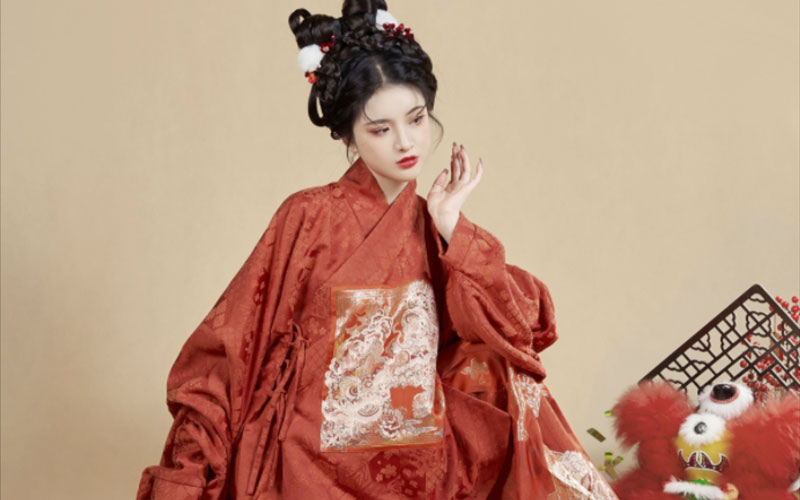
Tanling Ruqun (坦领襦裙) — U-Collar Ruqun
Tanling ruqun, or U-collar ruqun, is a Wei-Jin and Tang dynasty variation that features a wide, shallow U-shaped neckline.
This style is often paired with half-sleeved outer jackets, creating a light, airy silhouette perfect for summer wear. It has gained popularity in recent years for its unique, fresh look that stands out from more traditional collar styles.
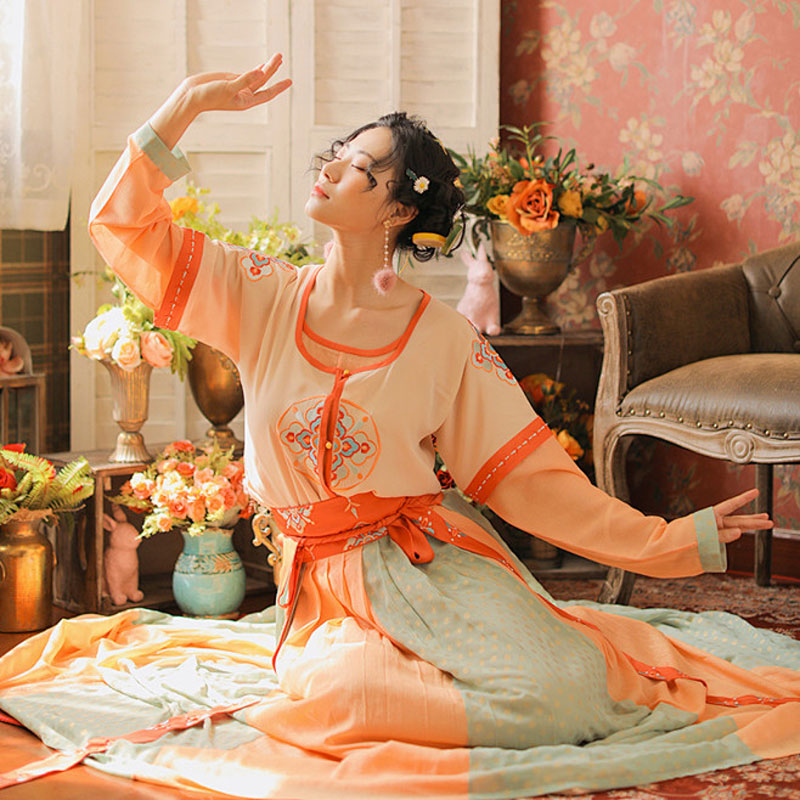
Other Variations
Beyond the waist-height and collar-style classifications, ruqun can also be categorized by sleeve type — narrow sleeves for everyday practicality and wide sleeves for formal occasions — and by season, with lighter fabrics for summer and heavier layered versions for winter. Many modern ruqun hanfu cosplay options also draw inspiration from these historical variations, adapting them for pop culture events and conventions.
Key Differences Between Men’s and Women’s Ruqun
Although qiyao ruqun is a unisex hanfu style, ancient and modern designs feature distinct tailoring differences for male and female body shapes, delivering completely different silhouettes and wearing effects.
- Silhouette & Cutting: Women’s ruqun adopts a fitted waist design with natural draping, highlighting body curves and presenting a soft, graceful, and elegant temperament. Men’s ruqun features a straight, loose, and wide-cut silhouette with a higher shoulder line and relaxed waist layout, focusing on a neat, unrestrained, and dignified look that showcases masculinity.
- Skirt Design: Female ruqun skirts are mostly multi-pleated, layered, and flowing, with rich draping layers to enhance a gentle and ethereal aesthetic. Male ruqun usually uses fewer pleats or straight-panel designs with simpler lines, reducing exaggerated draping and prioritizing neatness and practicality for daily movement.
- Collar & Details: Women’s ruqun commonly uses delicate jiaoling cross-collars, U-shaped tanling collars, and exquisite small sash bows paired with pibo shawls and fine embroidery. Men’s ruqun mostly adopts standard wide cross-collars or minimalist straight collars, with fewer decorative accessories and low-key, solemn embroidery patterns.
- Applicable Styles: Chest-high qixiong ruqun is exclusively designed for women and cannot be worn stably by men due to its structural support requirements. Waist-high qiyao ruqun is the dominant unisex style and the only traditional ruqun variant suitable for male wear in both ancient and modern contexts.
Ruqun Hanfu vs. Qipao vs. Kimono
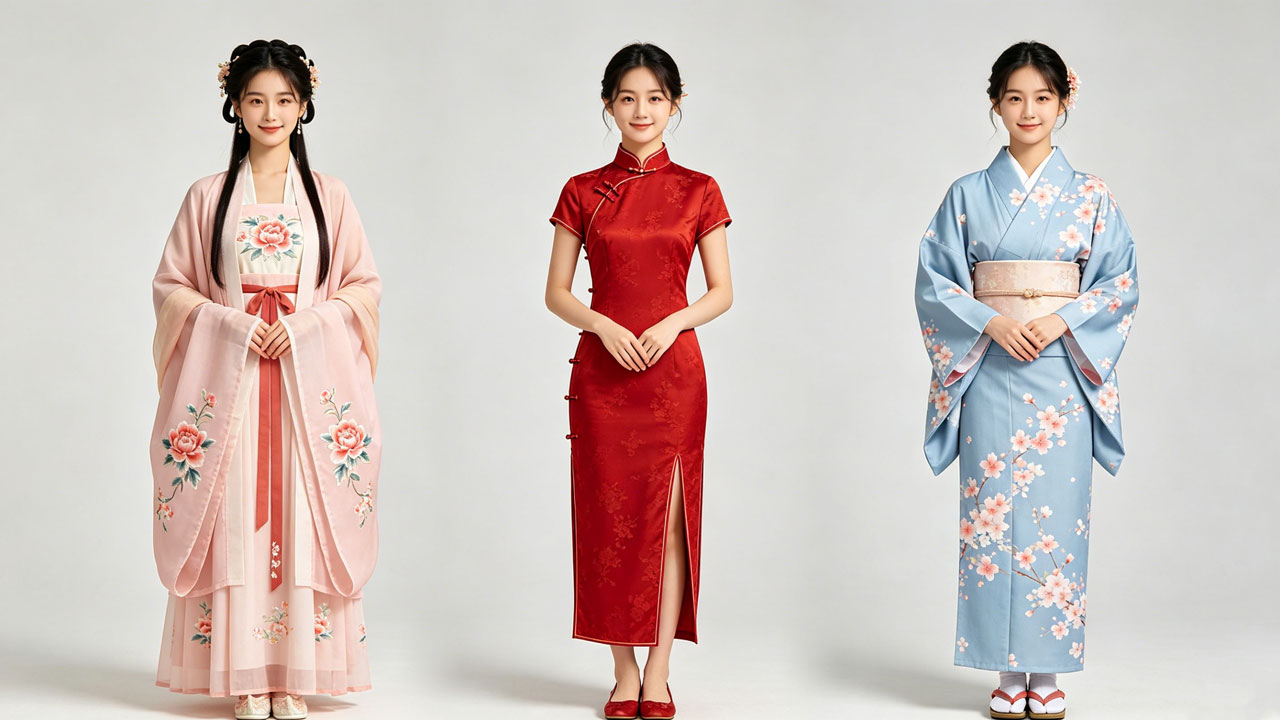
One of the most common questions we receive is how ruqun differs from other popular East Asian traditional garments, especially qipao and kimono. Many people new to traditional fashion often confuse these three styles, so we’ve broken down the key differences to help you quickly tell them apart.
What is Qipao (Cheongsam)?
Qipao, also known as cheongsam, is a form-fitting one-piece dress that originated in 1920s Shanghai, evolving from Manchu traditional clothing. Unlike the loose, flowing two-piece ruqun, qipao is designed to hug the body’s curves, featuring a high mandarin collar and side slits. While qipao is a beloved symbol of modern Chinese fashion, it is a relatively recent invention compared to the 3,000-year history of ruqun.
What is Kimono?
Kimono is the traditional clothing of Japan, a T-shaped, full-length robe with wide sleeves, wrapped around the body and secured with a wide, stiff belt called an obi. Kimono typically features more symmetrical, repeating patterns, and its structure is quite different from the separate top and skirt design of ruqun. While both garments are traditional, they originate from entirely different cultures with distinct historical backgrounds.
Key Differences at a Glance
| Ruqun Hanfu | Qipao (Cheongsam) | Kimono |
|---|---|---|
| Han Chinese, 3,000+ years ago | Chinese, 1920s Shanghai | Japanese, centuries of evolution |
| Two-piece: separate top and skirt | One-piece form-fitting dress | One-piece T-shaped robe |
| Fabric sashes/ribbons | Buttons or zippers | Wide obi belt |
| Loose, flowing, layered | Fitted, body-hugging | Straight, loose with structured obi |
| Traditional Han Chinese ethnic clothing | Modern Chinese urban fashion | Traditional Japanese ethnic clothing |
How to Wear Ruqun: A Step-by-Step Guide
How to Wear Qixiong Ruqun (Chest-High Ruqun)
The qixiong ruqun is made up of front and back panels. Follow these simple steps for a secure, slip-free fit:
- Put on the upper blouse first and tie its sash securely to lay a stable foundation.
- Separate the front and back skirt panels. Wear the back piece first: step into the skirt, wrap the back panel around your back to the front, and position it firmly under the chest.
- Tie the first knot tightly, wrap the sash around to the back and then forward again, and fasten a second tight knot for extra stability.
- Take the front panel, wrap its upper edge around to the back to cover the hidden knots of the back panel, and tie the sash using the same method.
- Finish by tying the remaining sash into a neat bow on the side or front of the chest. With proper tying, the skirt will stay securely in place even during walking, dancing, or long-hour wear.
Here is a complete guide for how to wear qixiong ruqun and other hanfu styles:
How to Wear Hanfu (2) – Tang Dynasty Qixiong Ruqun
How to Wear Qiyao Ruqun (Waist-High Ruqun)
The waist-high ruqun features a simple wrapping design, making it the most beginner-friendly ruqun style for daily wear and events:
- Place the skirt over your natural waist, aligning the skirt’s center seam with the middle of your body for a symmetrical look.
- Wrap the skirt tightly around your waist and lower body, similar to wrapping a bathrobe, to eliminate loose fabric.
- Smooth out all wrinkles and adjust the fabric evenly, keeping the side tying area fully accessible.
- Cross the ribbon or sash tightly behind your back twice to lock the position, then bring both ends around to the front.
- Thread the ribbon through the fixed waist loop, pull tight, and secure firmly to prevent slipping.
- Put on the upper garment, then tuck it inside the skirt or wear it over the skirt based on your preferred ruqun style.
Tips for a Secure and Comfortable Fit
- Practice makes perfect. Wearing hanfu is not difficult, but a few practice attempts will help you master the tying skills for a flawless look and maximum stability.
- For qixiong ruqun, prioritize modern upgraded designs with built-in anti-slip ties that connect the top and skirt panels, effectively solving the slipping problem.
- When choosing your first ruqun, opt for a qiyao ruqun. It is more forgiving for all body types, easy to move in, and far less prone to wardrobe issues.
Ruqun in the Hanfu Movement
The ruqun is not merely a historical relic — it is at the very center of a vibrant global cultural revival. The modern hanfu revival movement is generally traced back to 2003, when a hanfu enthusiast walked the streets of Zhengzhou in traditional hanfu, drawing widespread media attention and igniting a nationwide cultural revival trend.
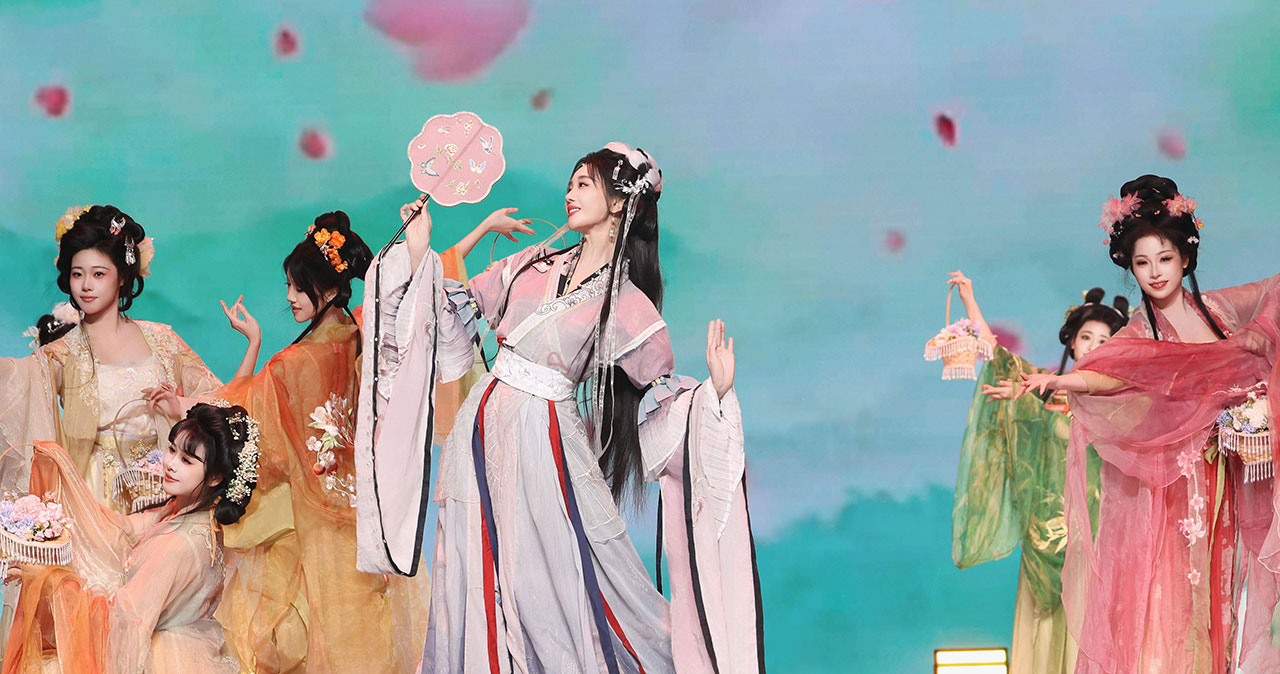
Social media has been the core catalyst for ruqun’s global popularity. On Douyin (China’s TikTok), videos tagged #Hanfu had amassed over 140 billion views as of late 2025. Hanfu communities on Xiaohongshu (Little Red Book) and Weibo regularly host offline gatherings featuring poetry recitals, traditional tea ceremonies, and classical music performances. This cultural trend has spread worldwide, with ruqun hanfu communities emerging across Europe, North America, and Southeast Asia, uniting global lovers of traditional Chinese fashion.
Young generations are increasingly drawn to ruqun hanfu for dual reasons: it offers a unique, elegant aesthetic that stands out from modern fast fashion, and it serves as a tangible way to inherit and showcase traditional Chinese culture and cultural confidence. For most enthusiasts, wearing ruqun is never just wearing a costume — it is a way to connect with thousands of years of Chinese heritage.
Thanks to its elegant, photogenic silhouette and diverse dynastic styles, ruqun has always ranked among the most popular hanfu styles in the revival movement. In particular, the luxurious and ethereal Tang-style qixiong ruqun is a top choice for travel photoshoots, cultural events, and social media content creation worldwide.
How to Buy Ruqun Hanfu: A Practical Buyer’s Guide
The booming global demand for traditional Chinese hanfu has made authentic ruqun easily accessible to international buyers. Whether you need ruqun for daily casual wear, cultural ceremonies, weddings, or photoshoots, this buying guide will help you select high-quality, authentic pieces.
What to Look For When Buying Ruqun
- Fabric: Traditional ancient ruqun adopted pure silk and brocade fabrics. Modern ruqun features diverse material options, including 100% pure silk, cotton, linen, and high-quality polyester blends. Silk and brocade deliver the most authentic, luxurious texture and drape, while cotton and blended fabrics are more durable and suitable for daily wear. Premium fabrics require gentle maintenance to preserve embroidery and fabric texture.
- Embroidery and craftsmanship: High-end authentic ruqun is defined by intricate, handcrafted embroidery featuring traditional auspicious motifs, including dragons, phoenixes, lotus flowers, and peonies. Exquisite stitching, neat threadwork, and vivid pattern coloring mark superior craftsmanship, distinguishing authentic hanfu from low-quality cosplay replicas.
- Sizing: Chinese hanfu sizes run significantly smaller than standard US and European clothing sizes. Always refer to the brand’s centimeter-based size chart and measure your bust, waist, and height accurately before purchasing, avoiding size mismatch issues for international orders.
- Care instructions: Different fabric types require targeted maintenance. Always check the official care guide for your ruqun set to avoid fabric damage, embroidery fading, or shape deformation.
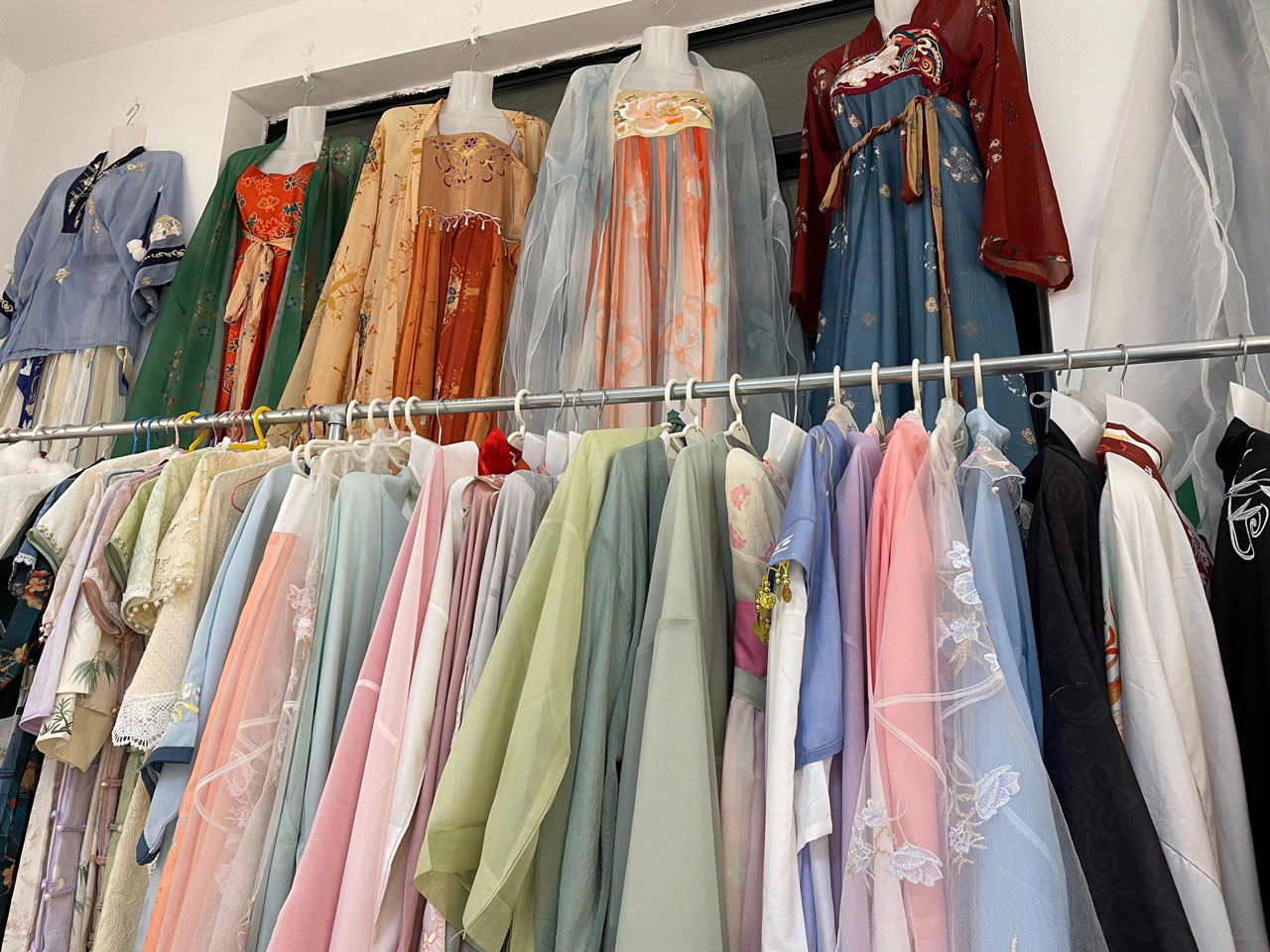
Where to Buy Ruqun Hanfu
A growing number of professional hanfu retailers support global shipping, making it convenient for international customers to purchase authentic ruqun hanfu:
- Hanfu Store: Newhanfu provide curated authentic ruqun sets covering Pre-Qin, Tang, Wei-Jin, and Ming dynasty styles. Most of these brands offer door-to-door international shipping and duty-inclusive services, helping global buyers avoid unexpected customs fees and delivery troubles.
- Original hanfu brands on Taobao: For buyers familiar with Chinese e-commerce platforms, reputable Taobao hanfu brands such as Shang Yun Le (specializing in elegant Wei-Jin immortal-style ruqun) and Tayunguan (focusing on classic Tang qixiong ruqun) offer outstanding cost performance and historically restored designs.
- International marketplaces: Platforms like AliExpress provide budget-friendly ruqun options starting at $22, ideal for beginners, casual cosplay, and temporary event wear.
How Much Does Ruqun Cost?
Ruqun hanfu prices vary greatly based on fabric quality, embroidery craftsmanship, historical restoration accuracy, and brand grade. Entry-level polyester ruqun sets for casual wear and basic cosplay cost $20–$50. Mid-range blended silk and cotton ruqun with standard exquisite embroidery, the most popular choice for beginners, are priced at $60–$150. Premium museum-level restored ruqun made of 100% pure silk with hand-embroidered details costs $200 and above, perfect for cultural collectors, formal ceremonies, and professional photoshoots.
Why Ruqun Matters
Ruqun is far more than a beautiful traditional garment — it is a carrier of thousands of years of Chinese cultural aesthetics and philosophical thoughts. The classic right-crossed collar represents the unique cultural identity of Han Chinese civilization. The sash-and-ribbon fastening design interprets the traditional Chinese aesthetic philosophy of softness, harmony, and unity between humanity and nature, standing in stark contrast to the rigid button and zipper structures of Western clothing.
Every embroidery pattern on ruqun carries profound cultural symbolism: dragons symbolize power and auspiciousness, phoenixes represent grace and nobility, and lotus flowers stand for purity and elegance. In the modern hanfu revival movement, wearing ruqun has become a meaningful act of cultural inheritance and self-expression. It allows modern people to break the boundaries of time, inherit ancient Chinese aesthetics, and showcase unique traditional cultural confidence on modern occasions.
FAQ: Common Questions About Ruqun Hanfu
What is the difference between ruqun and qixiong ruqun?
Ruqun is the general term for all traditional two-piece top-and-skirt hanfu styles. Qixiong ruqun is a popular sub-category of ruqun, defined by its chest-high waistline. The two core mainstream ruqun styles are chest-high qixiong ruqun and waist-high qiyao ruqun.
Can men wear ruqun?
Yes. Historically, qiyao ruqun (waist-high ruqun) was a unisex garment worn by both ancient Chinese men and women, and it remains a popular unisex hanfu style today. In contrast, qixiong ruqun is exclusively women’s wear, as its chest-high design relies on bust support for stable wearing.
Is ruqun appropriate for everyday wear?
Absolutely. Modern hanfu brands have launched simplified, lightweight, and casual ruqun designs suitable for daily commuting, shopping, and leisure activities. The popular “han element” fashion trend also integrates ruqun-style collars and silhouettes with modern pants and skirts, making traditional ruqun aesthetics more adaptable to modern daily life.
What is the best ruqun for a beginner?
Most global hanfu enthusiasts and communities recommend qiyao ruqun (waist-high ruqun) for beginners. It is easy to wear and adjust, stable during movement, not prone to slipping, and flattering for most body types, making it the most beginner-friendly ruqun style.
What is the difference between ruqun and aoqun?
The core difference lies in the top wearing method. Traditional standard ruqun requires the upper top to be tucked into the skirt. Aoqun is a unique Ming-dynasty ruqun variant featuring a double-layered jacket top that is worn untucked over the skirt, belonging to formal hanfu attire.
Is ruqun the same as hanfu?
No. Hanfu is the general term for all traditional clothing of the Han Chinese ethnicity, covering dozens of styles such as shenyi, quju, and zhiduo. Ruqun is the oldest, most fundamental, and most iconic sub-style of hanfu, not an equivalent term.
Is ruqun real hanfu or just a costume?
Ruqun is authentic, historically verified traditional Han Chinese clothing with over 3,000 years of inheritance, not a simple cosplay costume. While simplified ruqun may be used for cosplay performances, standard ruqun is a genuine cultural heritage garment widely used in modern cultural inheritance activities.
Do I have to pay customs duty when buying ruqun internationally?
It depends on the retailer’s shipping policy. Many professional international hanfu brands offer duty-free shipping services for global customers, with all customs fees included in the order price. Always confirm the shipping and duty policy before placing an order to avoid extra hidden costs.
How do I wash and care for ruqun?
Ruqun care varies by fabric material to protect embroidery and fabric texture:
- Cotton, linen, and polyester blend ruqun: Hand wash gently with mild cold water detergent. Do not machine wash, tumble dry, bleach, or dry clean. Air-dry in a cool, shaded place away from direct sunlight.
- 100% silk and brocade ruqun: Use special silk detergent for gentle hand washing or opt for professional dry cleaning. Use low-temperature steam ironing only, and avoid ironing directly on embroidered areas to prevent damage.
Conclusion
Ruqun has been worn for over 3,000 years, shifting shape and style through almost every major dynasty. In the Tang, chest-high qixiong ruqun matched the empire’s outward confidence and taste for color. The Song era brought the waistline back down and turned toward softer, leaner lines. By the Ming, formal aoqun sets paired layered jackets with horse-face skirts in patterns that signaled status, occasion, and even the season. Each change wasn’t random — it tracked shifting ideals of beauty, comfort, and identity.
Today, that same garment is being worn again by students, office workers, and photographers who mix vintage silhouettes with modern fabrics and daily routines. You don’t need to know every dynasty to start. A simple waist-high qiyao ruqun, a sash tied comfortably, and you’ll already feel the difference a structured drape makes compared to modern cuts.
Pick a style that matches your frame and the look you want. Most people start with a qiyao ruqun for everyday wear, then branch out once they get the fit right. Find a reputable seller, check the size chart against your own measurements, and give yourself an afternoon to practice tying the panels. The first time you walk with the skirt moving cleanly around your legs, you’ll understand why this design never really disappeared.