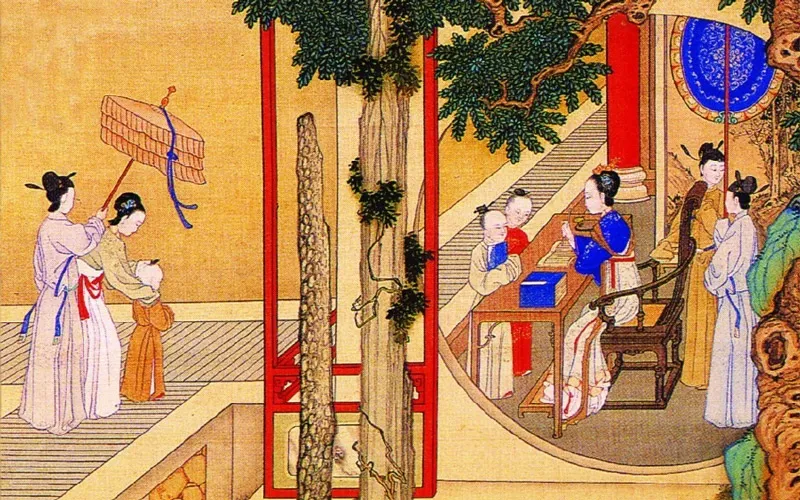
Imagine a quiet courtyard. A phone would be useless there—no signal, no charger, no group chat. Yet the day did not stop. Women in old China, especially those kept in inner rooms, filled hours with games that needed wit, nerve, and a little mischief. Their fun was not a sad pause between chores. It was social life, competition, and small private theatre. Their tools? Cards, seeds, grass, arrows, a tiny hook, and a sheet of paper waiting for spring.
1. Card Games
Cards were not a modern invention. Empress Wei (韦), wife of Tang Zhongzong (唐中宗), reportedly enjoyed paper games. By later dynasties, card tables and tile tables had their own fans in courtyards. The click of counters could turn a polite afternoon into a fierce match.
Li Qingzhao (李清照) is usually remembered for delicate lyrics. She also loved gambling. She admitted she could play all day and forget meals. Her favorite was a board game called dama (打马), and she wrote Manual of Dama (打马经图), calling it a refined indoor contest.
Picture her with friends, sleeves pushed up, dice rattling, chips counted twice. A loss demanded a rematch. This was not fragile poetry. It was noisy, focused fun—proof that a writing brush and a competitive streak can share one desk.
The stakes were often tiny: a sweet, a coin, a promise to fetch tea. The real prize was the thrill of a close finish. A quiet room could suddenly feel like a tournament, and no one had to leave the gate.
2. Melon Seeds
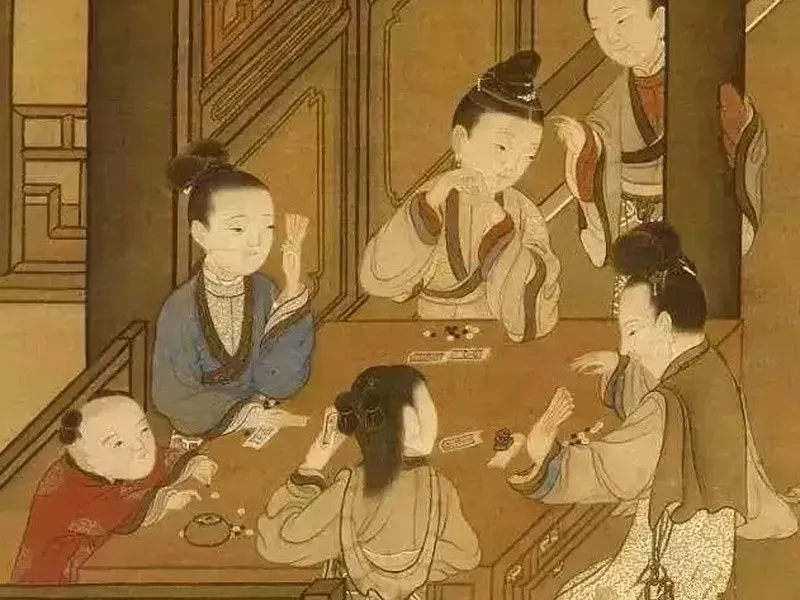
Between card rounds, hands still needed work. Melon seeds were perfect. They kept fingers busy and mouths free for gossip. In old poems and household customs, seeds appear at New Year; in novels, they mark ordinary leisure. The sound is tiny, but the habit is deeply social.
In Dream of the Red Chamber (红楼梦), Daiyu (黛玉) visits Baoyu (宝玉) and cracks seeds while smiling behind pressed lips. That small gesture says plenty: she is relaxed, slightly amused, and completely at home. No grand scene is needed.
For girls with few reasons to leave the house, seeds offered a gentle clock. Crack, chat, crack, laugh. The pile of shells grew, and an afternoon disappeared. Simple? Yes. Empty? Never.
3. Grass Duels
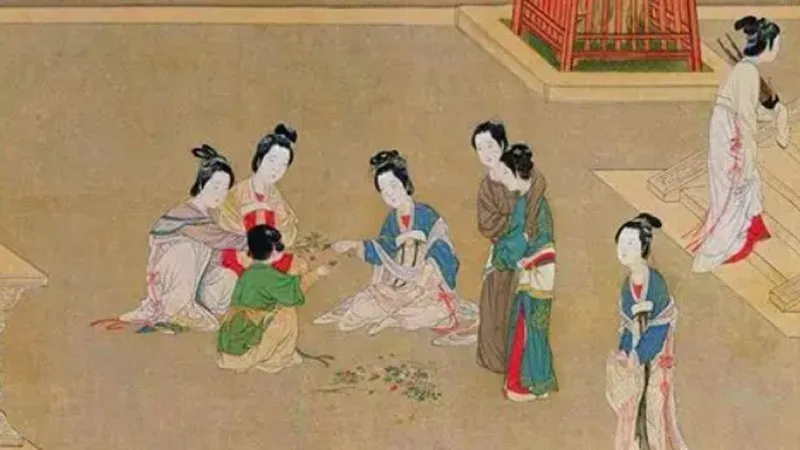
For a quieter mood, there was grass dueling. Two players could pull stems until one snapped—rough, quick, and loud. The refined version was a verbal contest. Players gathered plants, named them, and matched names in neat pairs. Lose the pair, lose the round.
In the Grand View Garden, Xiangling (香菱), Fangguan (芳官), and Ruiguan (蕊官) played this game. One offered Guanyin willow (观音柳); another answered arhat pine (罗汉松). Then came “gentleman bamboo” against “beauty plantain.” Botany became a quiz, and poetry became a playground.
This was leisure with a hidden test. You needed memory, vocabulary, and quick judgment. A girl without books could still learn plant names; a girl with books could show off. The garden supplied the pieces, but the mind won the game.
4. Arrow Tossing
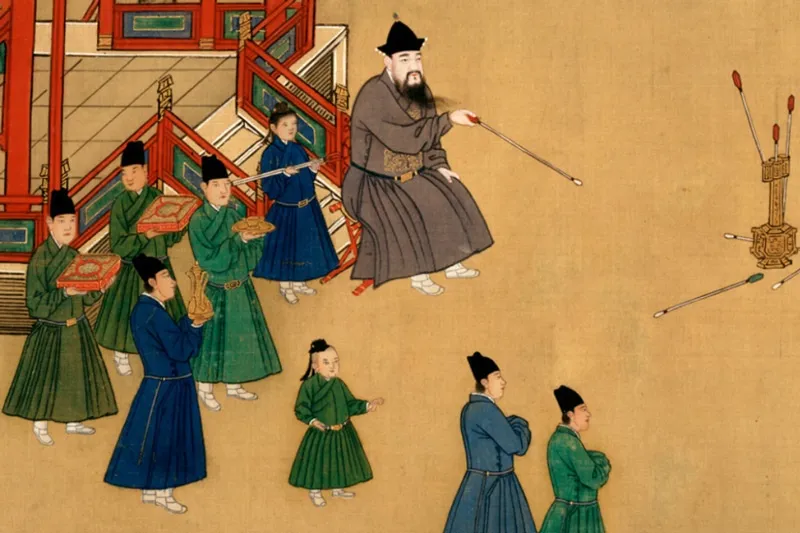
Pitch-pot came from old archery rituals. Players threw arrows into a wine vessel; the best score won, and the loser drank. It looked calm. It was not easy. Angle, force, breath, and pride all had to line up.
Wang Jian (王建) described palace women dividing into teams and betting cherries. They played until their wrists ached. The game suited indoor life: no running, no shouting, no muddy hem. Yet a single good throw could bring a burst of applause.
That balance made pitch-pot popular. It offered competition without chaos and elegance without boredom. A courtyard, a pot, a few arrows—enough for an afternoon of suspense.
5. Hidden Hook
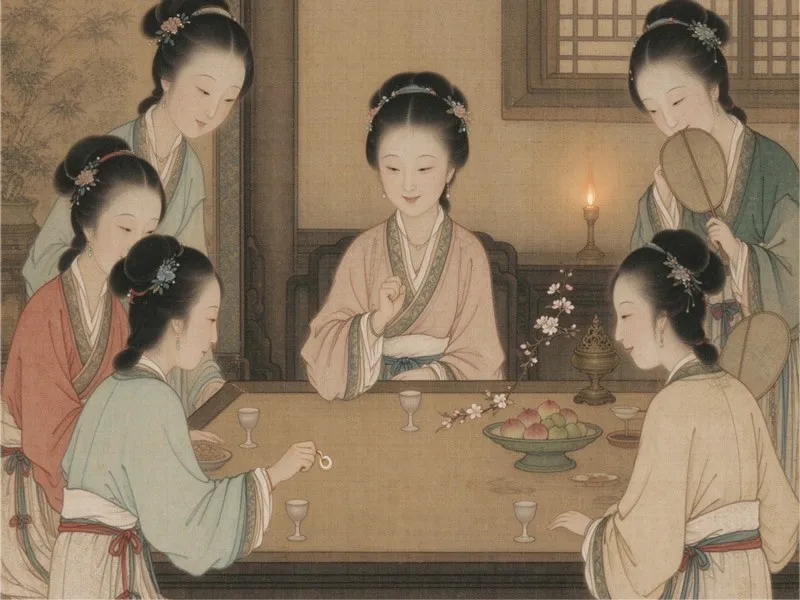
The hidden-hook game had a legendary origin. Lady Gouyi (钩弋), it was said, kept her fists closed until Emperor Wu of Han gently opened them. A small hook lay inside. Palace women copied the trick and turned it into a guessing game.
One team hid a tiny object in someone’s hand; the other team studied faces and chose. Li Shangyin (李商隐) caught the mood in a line about passing a hook across seats during a warm spring banquet. No equipment, no court, no special room—just tension.
Players tightened fingers, faked calm, and watched for a tell. The guesser hunted for a flicker of guilt. It was an ancient version of a social deduction game, played in silence and sudden laughter.
6. Winter Countdown
Winter made the courtyard smaller. Cold air locked doors, and daylight left early. A clever remedy began at the winter solstice: the Nine-Nine Cold-Dispelling Map (九九消寒图). One popular design showed a bare plum branch with nine flowers, each holding nine petals—eighty-one in all.
Each day, a woman colored one petal. Weather decided where the color went: top for cloud, bottom for sun, left for wind, right for rain, middle for snow. The paper became a diary without words. It also became a promise that the season would end.
Petal by petal, the red spread. The ritual did not stop the cold, but it gave the cold a shape. When the last petal was filled, the door could open. Spring was not just hoped for; it had been counted into being.
Some maps used circles instead of plum petals, but the idea stayed. Mark one spot, note the weather, keep going. The count gave structure to gray days. It turned patience into a visible object on the table.