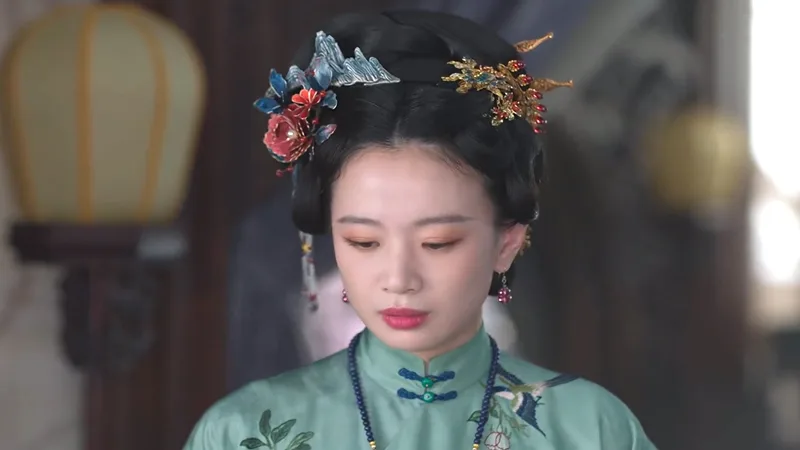
In Against the Current (兰香如故), Li Meng (李梦) plays Zhao Xingtang (赵星棠), a woman whose entrance announces authority. Two long pins sit slantwise beside her bun. Each tip is a tiny spoon. At first glance, the pins look like mini earpicks stuck in her hair. The choice seems odd, almost comical. It is not a costume mistake. The object is an earpick hairpin, a real accessory with a long, practical past. Its shape invites a second look, and that is exactly why it works on screen. It also quietly tells viewers that this is a woman prepared for small, everyday tasks, even while dressed for power.
Practical Glamour
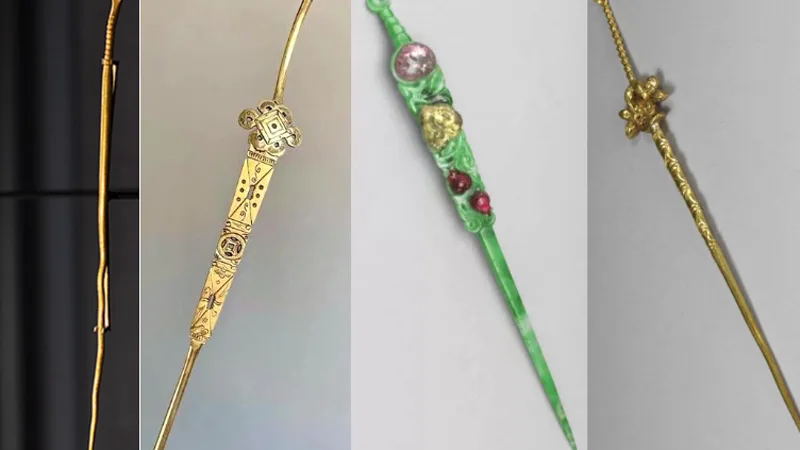
An earpick hairpin has two ends. One is a smooth shaft that holds the bun. The other is a small round scoop. Women wore it as jewelry, then pulled it out when an ear needed cleaning. The scoop could also pick teeth, lift loose threads, or tidy stray hair. Makers used bone, bronze, silver, jade, and jadeite. Some pieces were plain; others carried carving and stone inlay. This double duty made the pin common and familiar. Its form survived because it solved small daily problems without demanding attention. A useful object became a personal ornament, and then a costume detail that feels both strange and believable.
Early examples appear in the Shang dynasty as bone and bronze ear scoops. They were tools, not ornaments, and people did not wear them in public. During the Wei-Jin period, grooming sets became part of a scholar’s manners. Loose scoops were easy to lose, so craftsmen joined scoop and shaft. The hybrid spread among ordinary people. Designs stayed simple, with little decoration. The pin’s story is therefore less about luxury than about convenience that slowly became style. A small answer to a daily annoyance turned into a visible sign of careful grooming, and that sign stayed useful for centuries.
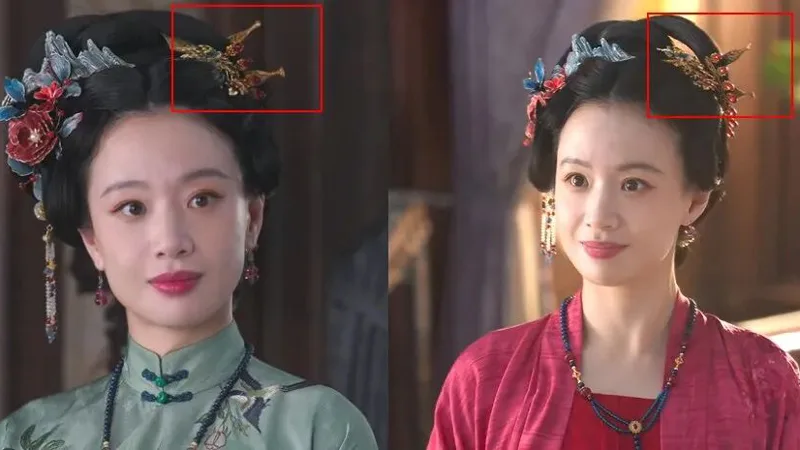
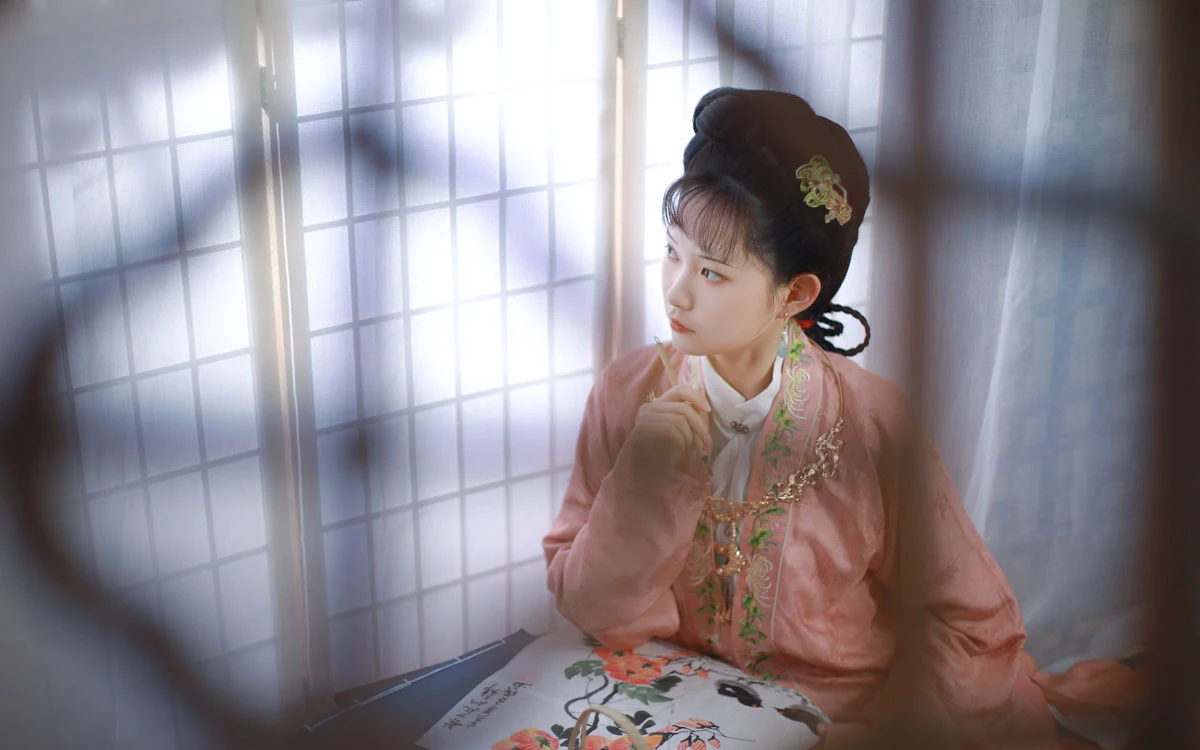
In Tang, Song, and Yuan times, the pin grew more varied. Common households used silver or copper; wealthy women chose gold and added butterflies, flowers, or birds. Excavated pieces survive, especially from Yuan tombs. A record called Sui Jin (碎金) lists a “Ruyi (如意) hairpin,” which scholars link to this type. By the Ming dynasty, the object split into two moods. Some pins kept the working scoop; others became pure ornament, carved and inlaid until the spoon was too precious to use. Zhao’s gold pin belongs to that second mood. It is jewelry first, tool second, and the shift says something about rank and display.
The Qing dynasty brought the widest materials: silver, jade, jadeite, and tortoiseshell. A long-stemmed type called One Zhang Qing (一丈青) could pass twenty centimeters and helped pick up small objects. Women used it often as a headdress. Dream of the Red Chamber (红楼梦) and The Heroes and Lovers (儿女英雄传) both mention it. Late Qing and Republican-era examples still survive in large numbers. This unusually long life came from flexibility: the same basic shape could serve a maid, a scholar, or a rich mistress. It could be plain or lavish, short or long, a private tool or a public statement. That range explains why costume designers keep returning to it.
Screen Logic
Why do period dramas return to it? First, the silhouette reads fast. A spoon tip separates it from an ordinary pin. Plain silver or copper suits a servant or commoner; gilt, kingfisher-feather inlay, and pearls suit a mistress. In the show, Xu Lanxiang’s (许兰香) mother wears modest silver, while Zhao’s gold pin marks rank without a line of dialogue. The contrast is instant. Viewers may not know the object’s name, but they can read the difference in material. That makes the pin a quiet costume tool for class, mood, and household position.
Second, the pin fits many settings. Between the Wei-Jin era and the Qing dynasty, examples exist in enough numbers for designers to copy. A production set in Tang, Song, or Ming can use it without breaking period logic. The shape also flatters the camera. A long bar placed slantwise at the side of a bun stretches the head’s line and gives the hairstyle layers. In profile or close-up, it adds detail near the face but does not cover expression. It gives the frame something to catch without turning the actor into a mannequin for accessories.
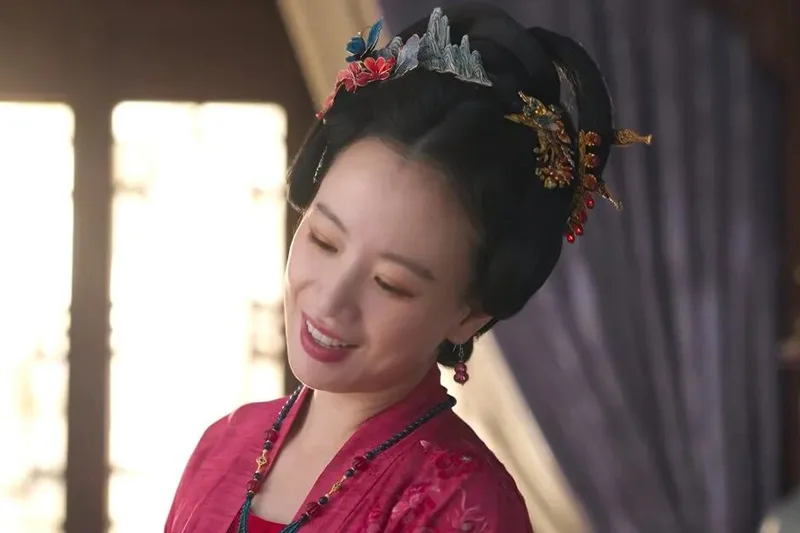
In Zhao’s case, the gold pin balances the weight of her bun and fills empty space. Warm metal lifts her from dark interior backgrounds and sharpens her outline. The pin is small, yet it carries plot information: rank, mood, and the show’s interest in ordinary objects. It also creates a small mystery. A spoon in the hair looks wrong until the history arrives. That pause is useful drama. The costume asks a question before the story answers it, and the answer makes the character feel more grounded in a real material world.
So the next time a spoon seems to sprout from a heroine’s hair, look again. It may be a tiny tool, a status mark, and a clever camera prop all at once. Its oddness is the point. It catches the eye, then rewards attention with a lesson in daily life, craft, and screen design. Do you like the two pins on Li Meng’s head?