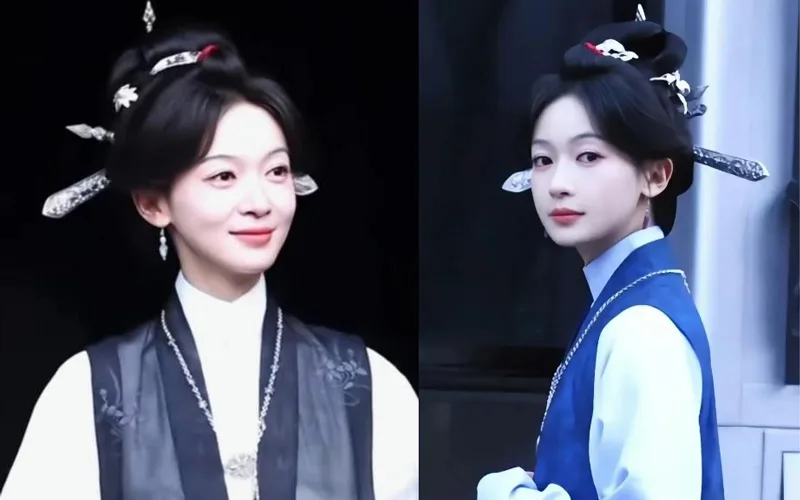
When Wu Jinyan (吴谨言) appeared in first-look photos from her new costume drama Daobi Niangzi (刀笔娘子), viewers noticed the hair before the face. Three long silver pins rose from her bun like short blades, sharp in silhouette yet balanced enough for a historical heroine. The look seemed too bold for a palace story, but the costume team did not invent it. It borrows a real Fuzhou (福州) custom called San Tiao Zan (三条簪), or “three-bar hairpin,” also known as the “three-knife hairpin.” Why would a woman wear weapons in her hair, and why does this old local style suit a new television role so neatly? The answer sits between folk craft, local memory, and the needs of a character who fights with words.
Old Fuzhou Custom
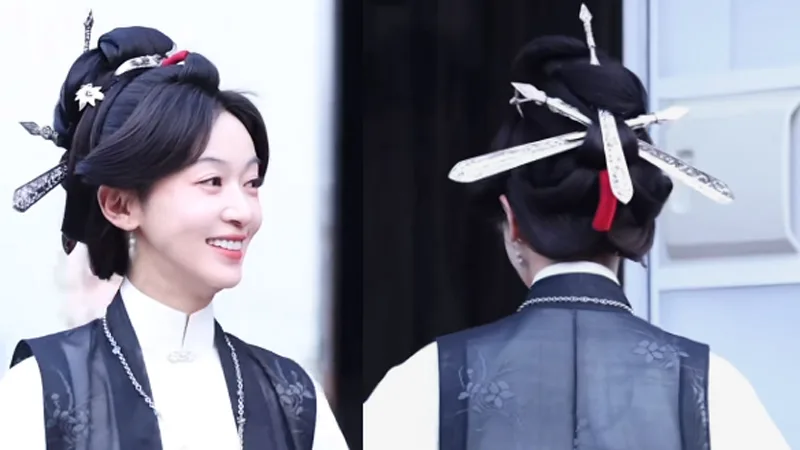
The ornament consists of three silver pins shaped like knives. One sits upright through the center of the bun; the other two slant outward and cross, gripping the coiled hair. The center pin anchors the mass; the side pins keep it from slipping. Most examples are pure silver, some covered with chased patterns, others left matte and plain. They resemble miniature arms, but the edges are never sharpened, so they cannot cut hair or skin. A slight curve at the tip softens the blade shape, which keeps the piece wearable for long ceremonies and ordinary errands. In old photographs and museum cases, the pins read as jewelry first and as tools second. That double nature is useful on screen: the object can look dangerous at a distance and delicate up close.
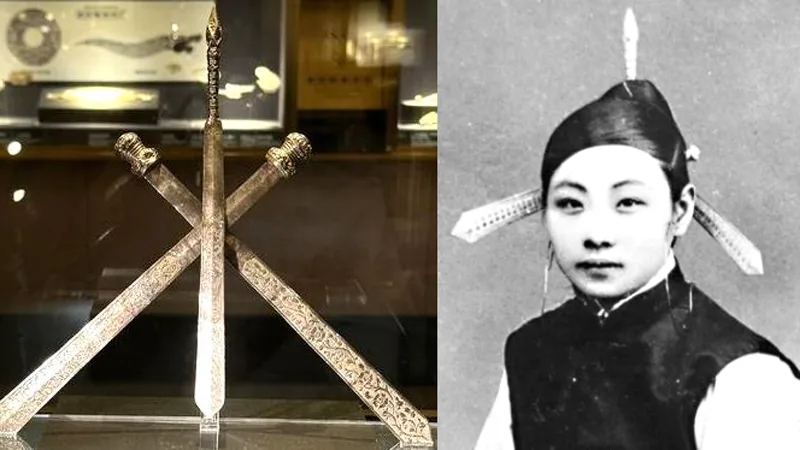
Its roots reach back to the Western Jin. A court record, Jin Shu (晋书), notes that women once wore Wu Bing Pei (五兵佩), tiny pendants modeled on five weapons. After northern families moved south, the habit traveled into Fujian (福建) and settled along the coast. Over time, five symbolic weapons became three hairpins. A Ming-era folk story adds another layer: coastal women supposedly wore knife-shaped pins to defend themselves when pirates came ashore. Historians have found no firm proof for that tale, but it explains why the object feels practical rather than merely decorative. The pins were not a costume trick; they belonged to a world where dress and daily risk shared space.
By the late Qing and early Republic, the style was common in Fuzhou. Women wore it for ordinary days and wedding days alike. Bing Xin (冰心) described hometown women with three pins in her essay “The Style of My Hometown”; Liu Xunchang (刘训瑺) recorded the look in Hongtang (洪塘). Old photos and local museums preserve the shape, and the pins on Wu Jinyan closely follow those sources. New hairstyles and Republican-era restrictions later pushed the custom out of daily life. Today, restored through objects and documents, the dressing technique survives as intangible cultural heritage. The drama therefore carries a local memory into prime time without turning it into a museum label.
Screen Choice
The first reason the crew chose it is character. In Daobi Niangzi, the heroine uses writing as a blade, arguing in court for people with little power. Three knife-like pins above her face make that idea visible without a line of dialogue. They also give her a hard edge: she is not a sheltered daughter waiting in a quiet room, but a woman who walks into a public hall and speaks. The silhouette turns her hair into a small arsenal. The accessory carries the theme quietly, so the costume does not need to shout. When she lowers her head or turns sharply, the pins catch light and repeat the promise of the plot: words can cut.
The second reason is recognition. Recent costume dramas often rely on pearl flowers, dangling ornaments, or tall crowns. Seen again and again, those choices blur together. Three silver pins are rare on screen and instantly readable. Their straight lines create a different silhouette from soft swaying pieces, and one glance fixes the character in the mind. For a new drama fighting for attention, that visual memory matters as much as plot. The pins also invite curiosity: viewers may pause, search the name, and learn that the design comes from Fuzhou rather than from a designer’s sketchbook. That small pause is valuable; it turns a costume detail into a conversation. It also gives fan editors a clean, repeatable image to share.
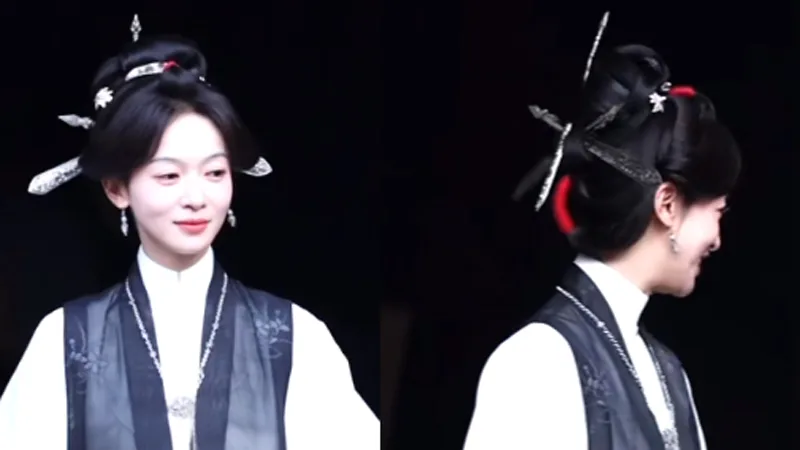
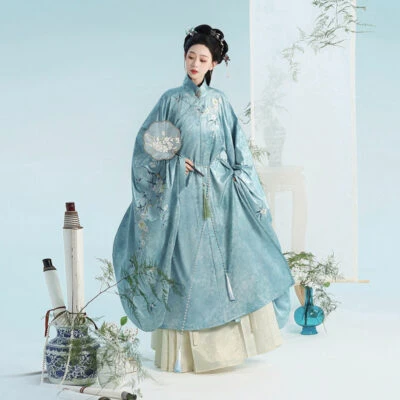
The styling around the pins is deliberately restrained. The team softened the usual glamour and built a cool, quiet look: plain Ming-style stand collar and sleeveless vest, no crowding of jade and pearls, simple colors, clean lines. The result feels modest but strong, matching a heroine whose power comes from words rather than wealth. So, do the three pins work on Wu Jinyan? They do more than look unusual; they connect a local craft, a courtly story, and a clear screen image in one sharp detail. They make her look prepared for argument, not decoration. The question is no longer whether the hairpins are strange. It is whether viewers will remember them after the plot moves on. If memory is the test, the answer is already visible in the first photos.