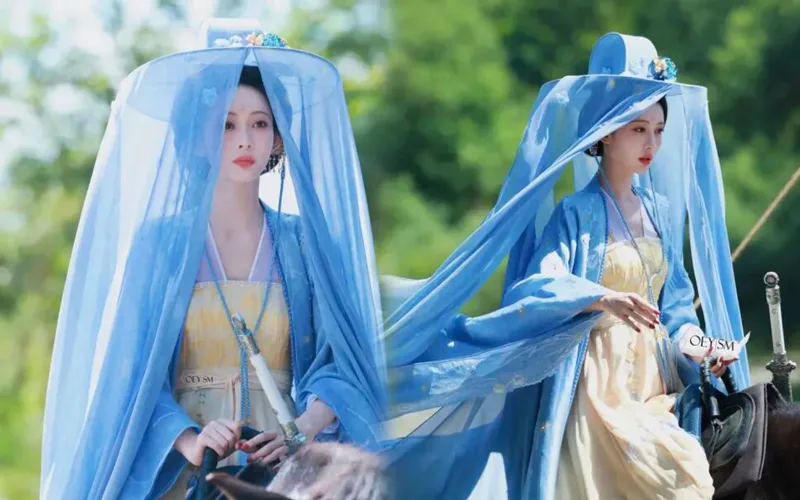
In Tigers Sniff the Rose (尚公主), Meng Ziyi’s veil hat trails almost to the floor, and viewers keep asking a practical question: did women in the Tang era really cover themselves that tightly? The screen image is striking, but it folds two different headpieces into one. A short gauze net called Weimao (帷帽) and a long bamboo-framed curtain called Mili (羃篱) had separate shapes, materials and fashions. Their lengths were not random. They changed with weather, travel habits and women’s public lives. Looking at the hat alone can tell us more about Tang daily life than a dozen palace plots. It also explains why modern costume teams make different choices.
Two Different Hats
The names get mixed up because both hang cloth around a face. Weimao usually used cloth or silk with a wide brim; a short net or thin gauze reached the neck. It hid the face, not the body. Mili had a bamboo frame and much longer gauze. Folded, that gauze looked like a thick bundle; opened, it could wrap a rider almost completely. One tomb mural shows a Tang woman holding such a folded bundle, a small detail that clears up the confusion. The hat on Meng Ziyi belongs to television, where length reads better on camera. It borrows the drama of Mili but keeps the name Weimao.
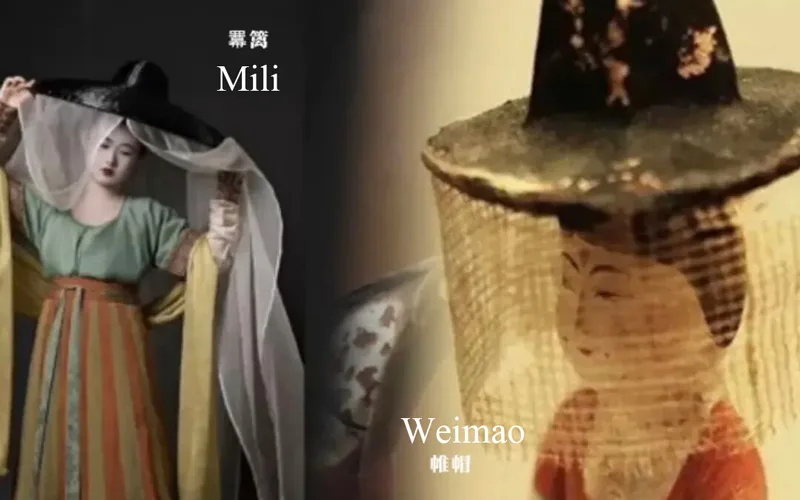
Material matters here. Bamboo gives Mili a stiff, tent-like frame, so long gauze can hang without clinging. Cloth and silk make Weimao softer and lighter, which suits a shorter net. A full-body curtain would be heavy, hot and awkward in a market or on horseback. A neck-length net was easier to wear and easier to lift. Historical records also use “shallow reveal” for the shorter net, a useful clue that visibility was part of the design. The two hats solved different problems. Treating them as one costume ignores the practical thinking behind each.
On screen, Flourished Peony (国色芳华) gives Yang Zi (杨紫) a shorter veil that sits closer to Tang evidence. The shape leaves the shoulders free and the face partly visible. Tigers Sniff the Rose goes bigger: long gauze, strong silhouette, clear emotion in a wide shot. Neither choice is automatically wrong. A costume can follow a tomb mural or answer a camera lens. The trouble starts when a long fantasy veil is sold as a simple historical fact. Viewers notice. They ask. That question is healthy, because it pushes costume teams to explain their sources instead of hiding behind vague “ancient style.”
The confusion also comes from translation. English captions often call every hanging veil a “veil hat,” which flattens the difference. Chinese sources separate the bamboo frame, the wide brim and the gauze length. A museum label can show the gap in one glance: one object stands like a small room, the other sits like a soft hood. Costume designers know this. Some shorten the net for movement; some lengthen it for silhouette. When a show explains that choice, viewers learn something. When it does not, the same choice looks like a mistake. Clear labels help both sides.
Tang Style Shift
The earliest surviving note about Mili does not put it only on women. Book of Jin says men in one northern group wore long skirts and hats or Mili. Wind and dust made a long curtain useful on the road; it also gave a traveler a little privacy when strangers wanted to talk. Later, it became a travel headpiece linked mainly to women. That shift matters. A veil can look like control, but its first job was practical cover. The same object can mean different things in different centuries. Reading only modern ideas about modesty back into Tang clothing misses that change.
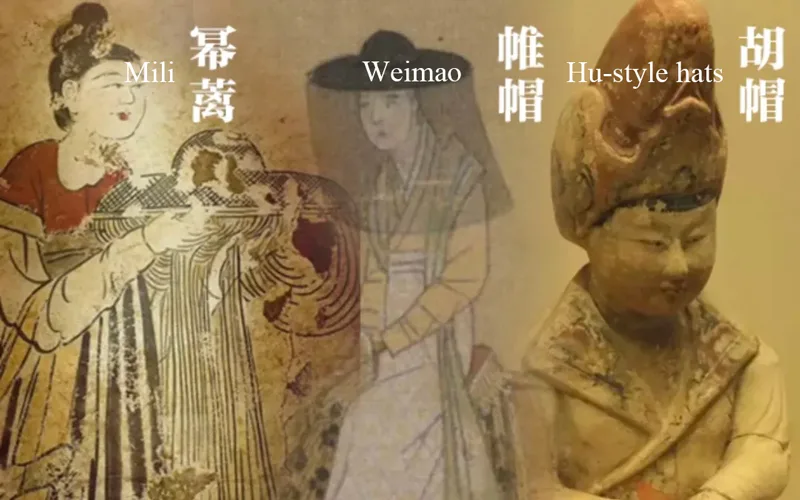
New Book of Tang (新唐书) lays out a clear timeline. Early Tang women wore full-body Mili. In the Yonghui (永徽) era, Weimao with a neck-length net became common. Under Empress Wu (武), it spread widely. By the Kaiyuan (开元) era, Hu-style hats (胡帽) were popular, and riders appeared with makeup and open faces. The court record even says the older Mili faded away. This is not a small fashion footnote. Each step shortened the curtain or removed it. The change tracks women moving through public space with less concealment. It also tracks taste: lighter hats, horse riding, bolder looks.
So why does Meng Ziyi’s veil run so long? On television, length creates mystery and scale; it frames a face and fills a corridor. It can also signal rank or mood without dialogue. Yet ancient length was not a moral score. A short net did not mean loose morals, and a long curtain did not prove stricter virtue. The shape moved with materials, transport and social confidence. Good costume design uses that history with care. It can stretch facts for drama, but it should know what it is stretching. Would you wear a Weimao on a windy day, or choose the open Hu-style hat instead?
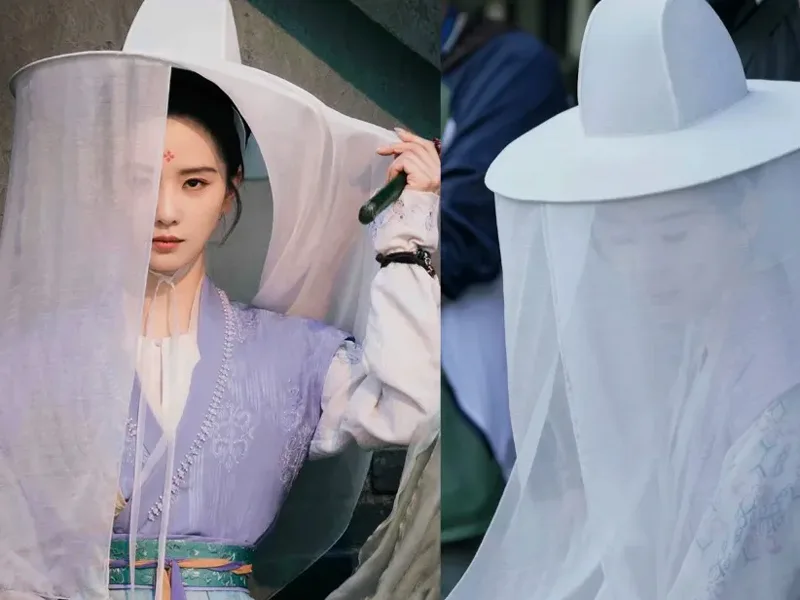
Modern costume teams face a real puzzle. A strict Mili can hide an actor’s expressions; a short Weimao may look plain beside ornate robes. Directors want readable faces. Historians want readable sources. The best solution is not to pick one side and scold the other. It is to say which choice was made and why. A long veil in Tigers Sniff the Rose can work as drama if the show admits it is drama. A shorter veil in Flourished Peony can work as reconstruction. Audiences can enjoy both and still ask better questions about what Tang women actually wore.