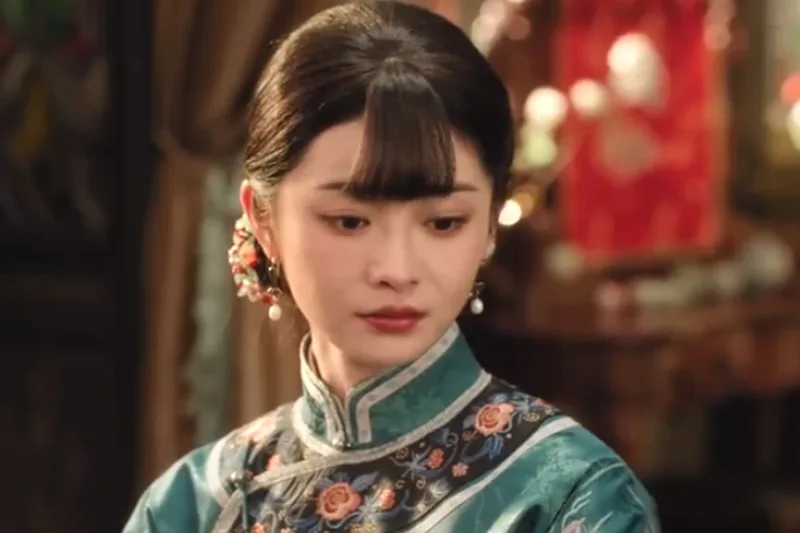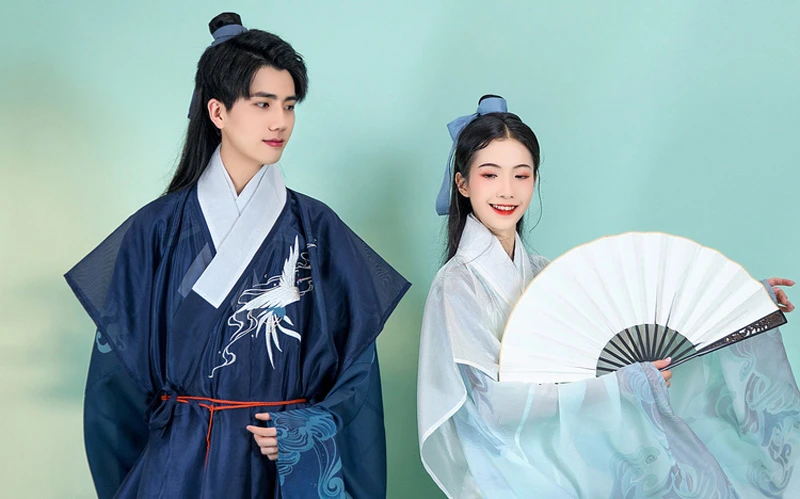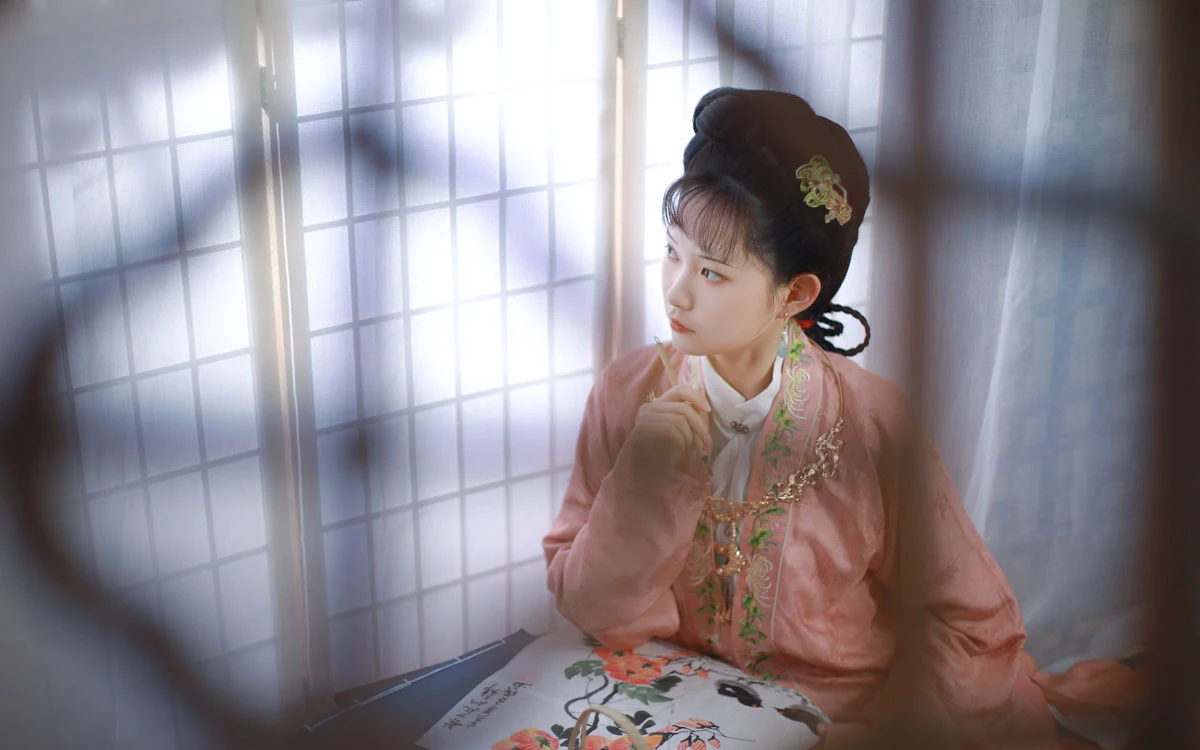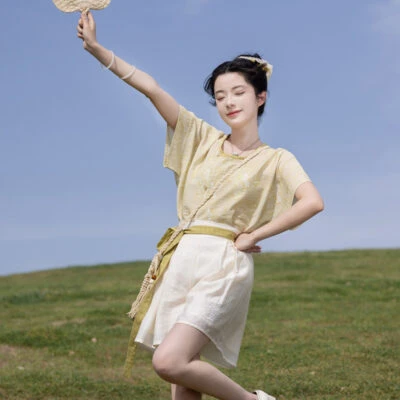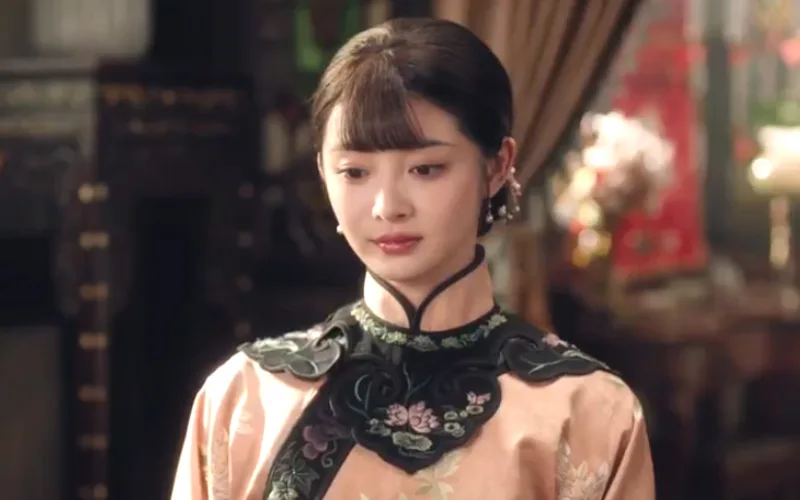
Viewers who meet Zhou Jieqiong (周洁琼) in The Lament of Autumn (玉簟秋) often pause at her forehead. A short tuft hangs near the brows, as if a straight fringe lost its side sections. At first glance, the strand breaks the face’s symmetry and looks odd beside today’s side-swept or airy bangs. The drama places her in the early Republic, where Zhou plays Lan Qing, a Kunqu (昆曲) singer. That tuft is not a styling accident. It is a drooping-silk fringe, a soft arc of hair that follows the brow bone and stops near the eyebrows. Hair can date a scene, signal class, and reveal a character’s mood. The real test is not modern familiarity, but whether the choice serves the story. A tiny strand can carry more period information than a grand set.
Fringe or History?
Short forehead hair has old roots. Children in the late Qing often kept small tufts to protect the fontanelle and carry a blessing. After coming-of-age rites, most people combed every strand into a knot. Adult women did not usually keep a special fringe. Social habits loosened in the late Qing, and Western fashions reached port cities. Some women began to leave a few strands at the forehead. The look branched into crisp straight fringes, fluffy “starry” fringes, pointed swallowtail fringes, and the rounded drooping-silk fringe. Each shape carried a different tone: neat, playful, sharp, or gentle. The drooping-silk version won favor because it softened the face without looking childish. It suggested modesty, but not obedience. The fringe could look modest, yet it also showed that a woman had chosen a visible detail.
Shanghai, Guangzhou, Beijing, and Tianjin saw the style first. These port cities had denser contact with foreign trade, photography, and commercial entertainment. Actresses, singers, and stylish women wore the fringe in public; newspapers and studios spread the image. The style then traveled inland. In old photographs from the late Qing and early Republic, the fringe appears again and again: thin strands, a crescent outline, and a brow-level stop. It was not a wild experiment. It was a recognizable urban look that slowly became ordinary. For a Kunqu singer such as Lan Qing, such a detail can place her in a specific moment without a line of dialogue. It also hints at a public life shaped by stages and audiences. That public identity matters for a singer whose face is part of her work.
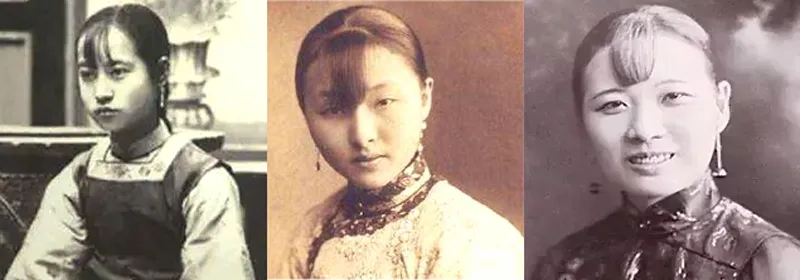
Its best years sat between the late Qing and the early Republic. When Western perms entered Chinese cities in the mid-Republic, women gained new options. Some chose long side-parted fringes; others combined bangs with curls. The drooping-silk fringe did not vanish at once, but its dominance faded. That timing matters for The Lament of Autumn. A modern airy fringe would pull the character out of period. A heavy straight cut might read as too severe. The drooping-silk shape keeps the silhouette soft while staying historically plausible. It also avoids the stagey trap of over-designing a singer’s look. The choice is quiet, and quiet is often harder to get right. In a costume drama, restraint can be a form of accuracy. A small hair choice can hold a scene in its own time.
What Made It Popular?
First, the fringe was adaptable. Its curve is gentle, and its mood is restrained. It did not look as stiff as a straight-cut fringe or as flashy as a swallowtail shape. A sheltered daughter, a schoolgirl, and a theater singer could all wear it without seeming out of place. It also flattered more face shapes. A round face gains a slimming vertical hint; a longer face gains softness near the brow. The fringe hides part of the forehead but does not close the face. That balance made it easy to copy and hard to dislike. For a performer, it frames the eyes without stealing attention from expression. The style works because it adjusts to the wearer instead of demanding a perfect face. That flexibility explains its wide appeal.
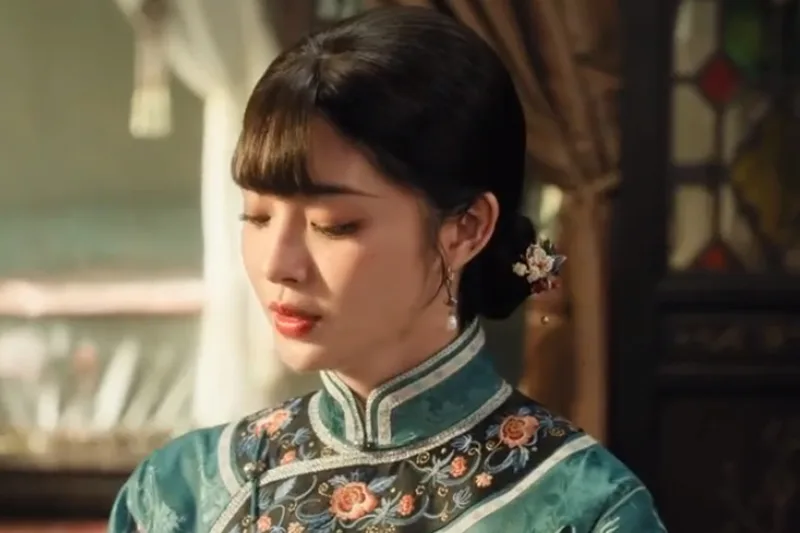
Second, pictures did the selling. Calendar posters and women’s pictorials printed fashionable women with the drooping-silk fringe. Readers saw the style in shops, homes, and magazines. They copied what looked attractive, much as viewers today copy a star’s haircut or coat. The posters were not neutral records; they shaped taste. A fringe worn by a popular model became a small social signal: modern, tidy, and slightly romantic. The style spread through imitation rather than formal rules. That helps explain why it appears in so many old photos. It was visible, wearable, and easy to adapt to different budgets and skills. Fashion often moves through the eye before it reaches the rulebook. A single printed face could teach thousands of readers how to part their hair.
Modern viewers call the look strange because later fringes trained the eye differently. Side parts, wispy air bangs, and volume-heavy styles became familiar. Zhou’s rounder face and fine features change the effect. The fringe covers part of her forehead and pushes visual weight toward her eyes. In close shots, that supports a low gaze, a held-back sorrow, and a sense of restraint. Lan Qing’s hair is not there to look cute; it directs the viewer toward her inner state. Period accuracy matters, but character fit matters more. The tuft may still divide opinion. Yet it gives the role a precise silhouette, and precision often outlasts first impressions. So does the question it leaves: does the fringe look wrong, or have we forgotten how to read it?