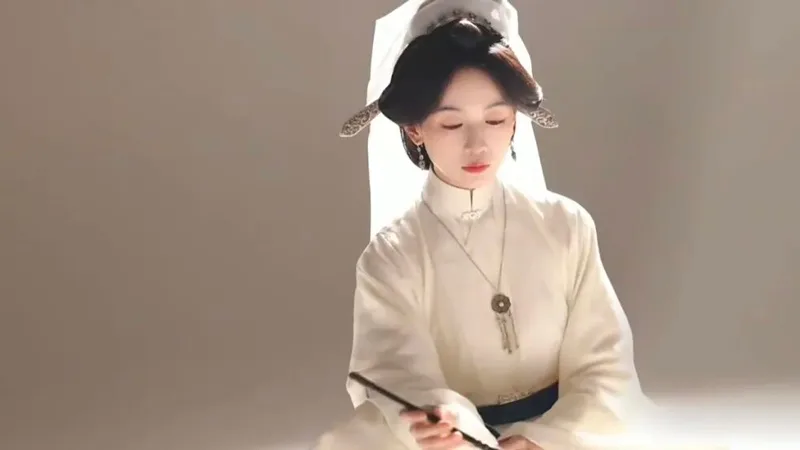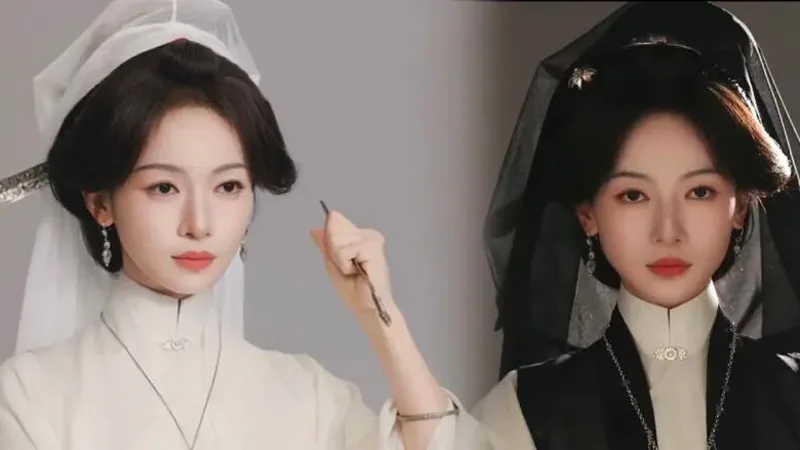
When Wu Jinyan (吴谨言) appeared in the first costume test for Dao Bi Niang Zi (刀笔娘子), viewers noticed a plain white cloth wrap before they noticed anything else. No dense embroidery. No gold. Just a simple robe and a silver hairpin shaped like three small blades. The look felt cool, severe, and slightly strange. Soon the question spread: is this mourning wear?
The answer is more interesting than the joke. The headpiece is a Fujin (幅巾), a soft cloth wrap worn by scholars and refined women in the Ming dynasty. It was never a funeral uniform. Its story explains why a television costume can feel both accurate and unfamiliar. That reaction is useful. It shows how quickly one color can collect one meaning, and how hard it is to unlearn that habit. The debate says less about the outfit than about memory.
Black And White
Ming law did not force every Fujin into two colors. Black and white simply dominated because they answered different needs. Black, called Zise (缁色) in old texts, carried weight. A scholar at home could wear black gauze or hemp, read, receive a friend, and avoid breaking strict dress rules. Bright red, imperial yellow, and gold patterns belonged to rank. Plain black did not. It was affordable, easy to keep clean, and safe. In portraits and woodblock prints, retired teachers and quiet hermits often appear in black wraps. The choice says restraint without saying poverty.
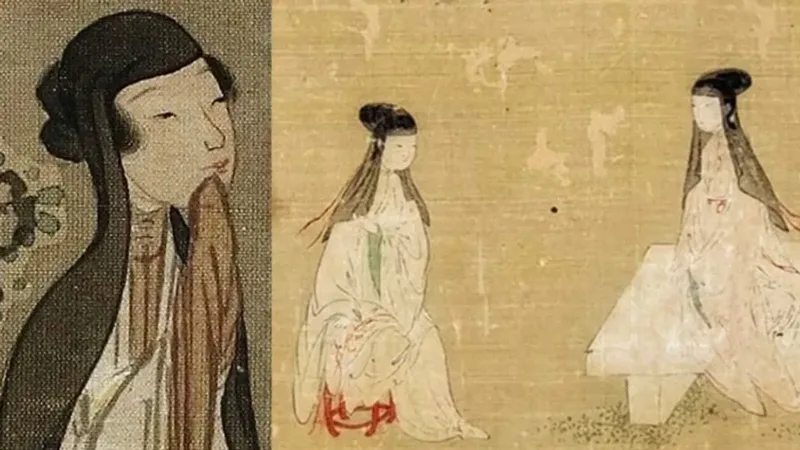
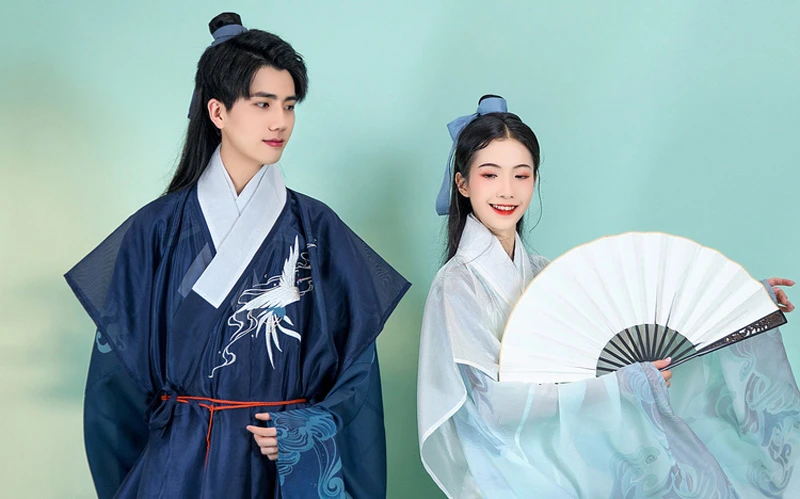
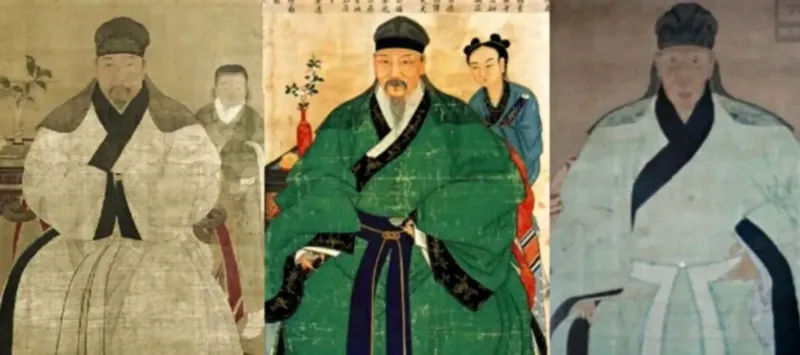
White caused the confusion. Funeral white usually meant coarse hemp, rough and unstarched. Daily white Fujin used fine silk or light gauze, smooth and crisp. The two materials create different messages. A scholar might wear pale cloth while walking in hills, reading in a studio, or visiting a friend. Late Ming taste often favored pale colors as a sign of clean elegance. Women also wore white wraps without pretending to be men. They were borrowing a scholar’s calm, not a mourner’s grief. Sancai Tuhui (三才图会) and surviving albums show this taste clearly.
Other colors existed. Stone blue, moon white, and light blue appear in modified wraps. Some designs leaned toward Daoist or Buddhist use. Wealthy young men sometimes chose louder versions. Yet a strict Confucian scholar rarely picked them. Black and white remained the core because they worked in ritual, budget, and daily life. The headwrap was not an official cap. It had no rank badge, no hard frame, no forced shine. That freedom made color matter. A man or woman could choose a mood: guarded black, open white, or a rare blue for a private day.
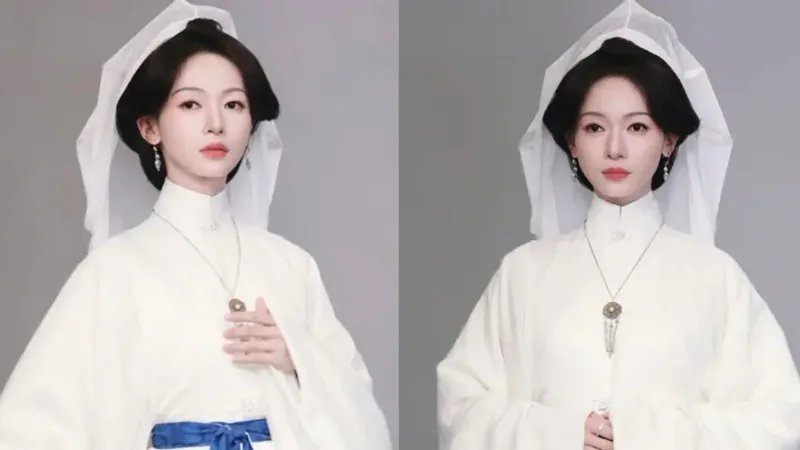
The confusion also comes from later habits. After the Ming, white became more tightly tied to funerals in many ordinary settings. Modern eyes see white cloth and think loss first. That reflex hides an older rule: fabric quality, cut, and occasion decide meaning. A rough white hemp square belongs to grief. A fine white gauze wrap belongs to study, travel, or quiet status. The color alone cannot carry the whole message. Once a viewer knows this, the costume test looks less like a mistake and more like a deliberate test of memory.
A Scribe’s Choice
Now look at Ruan Qingqing (阮卿卿), the heroine played by Wu Jinyan. She moves between street markets and courtrooms. She writes complaints, questions officials, and helps ordinary people seek justice. She has a scholar’s tools but no exam rank. She cannot wear a formal scholar’s cap or an official’s square hat. A white Fujin solves a costume problem with unusual precision. It keeps her modest enough for a magistrate’s gate. It also lifts her above a plain village dress. The wrap says she works with brush and paper, yet stands outside the power that those tools usually serve.
That balance matters. A rich costume would make her a target. A fully ordinary outfit would erase her edge. White gauze is light, quiet, and hard to accuse. It does not shout for attention. Under it, the three-blade silver hairpin becomes the sharper detail. The soft cloth and the cold metal argue with each other. She looks calm, but not harmless. When she walks into a hall full of men, the white wrap gives her a visible calm. It also gives the audience a clue: this woman keeps her own measure of right and wrong.
The drama can use both colors as a quiet code. White suits travel, meetings with common people, and private writing. Black suits a visit to an academy, a formal debate, or a room of Confucian scholars. Neither color is a random “ancient” decoration. Each marks how much distance she wants from the room. The internet debate over mourning wear misses this point. A white headwrap can be clean, not sad. A black one can be solemn, not gloomy. The costume speaks through cloth, cut, and context. Does that make the look plain? Yes. Does plain mean empty? No.
So the white wrap is not a shortcut for “old China.” It is a small argument about class, gender, and work. Ruan Qingqing has no rank, no wealthy household, and no wish to glitter. She needs clothes that let her enter a room without bowing too low or rising too high. White gauze does that. Black silk would do a different job on a different day. The drama’s first image works because it trusts viewers to notice contrast: soft cloth, sharp pin, quiet woman, loud question. Would a black wrap have been safer? Perhaps. Would it tell the same story? No.