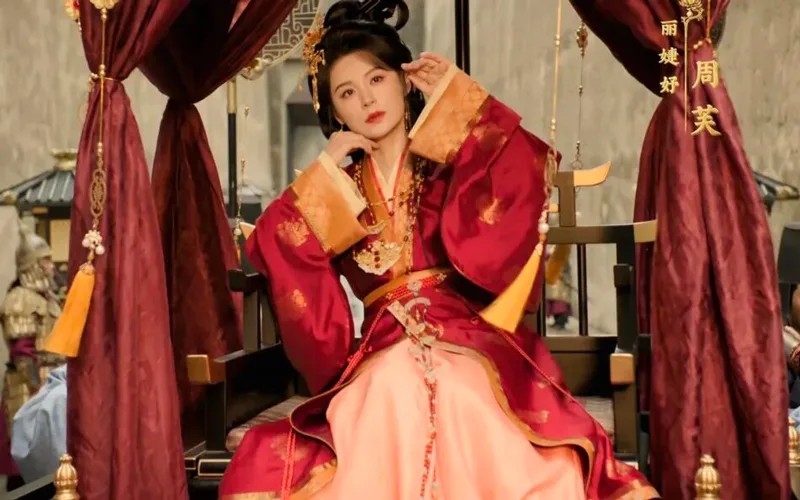
At first glance, Where the Mask Ends (嫁金钗) looks like a court romance built on jealousy and land deeds. Then a woman steps into public view at the city gate, throws gold and jewels into the crowd, and tears up a deed for five hundred mu of good farmland. Wei Rao (魏娆) does not look like a schemer in that moment; she looks like someone refusing to be priced. Han Liao (韩辽) should hate her. Instead, his eyes change. That small shift explains more than a love plot. It also makes the emperor’s choice of Zhou Fu (周芙), a twice-married woman, feel less strange and more human. The question is not why a ruler wants a rare beauty. The question is why he keeps choosing a woman who treats his power as a chair, not a shrine.
Torn Deed, New Love
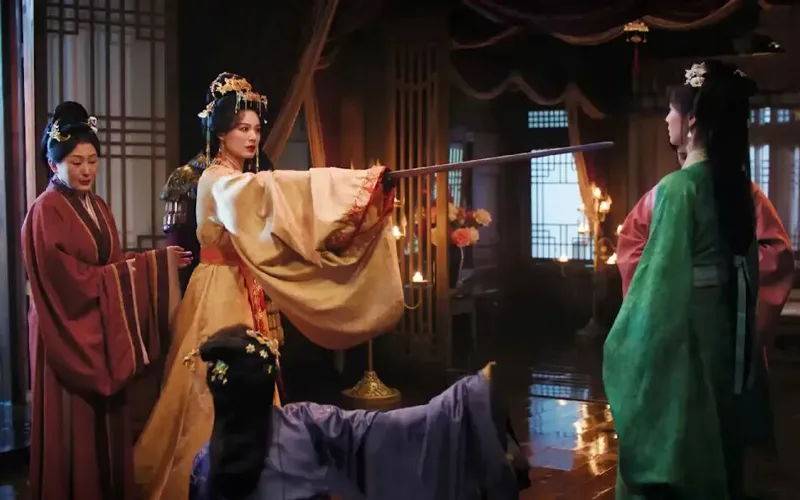
The fight at the Lu family ancestral temple is loud, messy, and almost funny. Everyone grabs something. Even Rong Wang (戎王), the emperor’s younger brother, gets caught in the chaos. Han Liao thinks he has found a trap for Wei Rao and Lu Zhuo (陆濯). He brings her old family members as leverage, sure that the Lu house cannot escape. Wei Rao turns the trap around. She makes Han Liao and Rong Wang pay to keep their legs, and Han Liao is sentenced to a month of hard labor. Viewers expect revenge. He has been humiliated, mocked, and forced to work. Why would he soften?
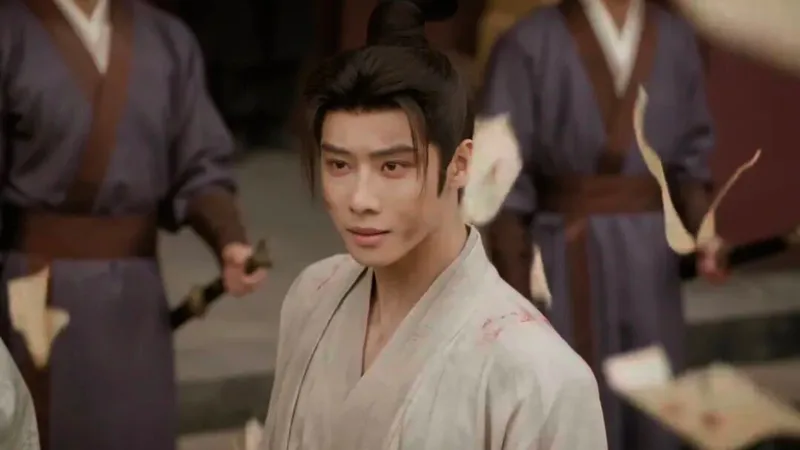
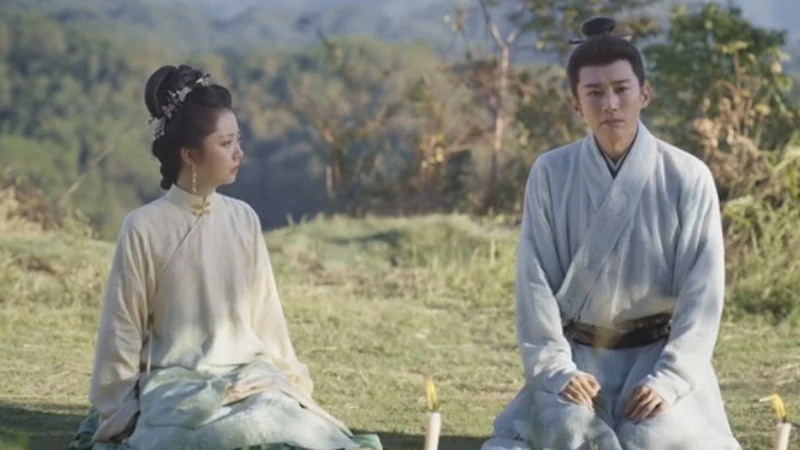
Then Wei Rao comes to watch the joke. Han Liao is still angry. He offers more money to buy himself out. She takes the gold and silver, carries it to the city gate, and throws it down. She also rips the farmland deed apart. Han Liao calls her mad. A second later, his face changes. He sees something he has never seen in his circle: a woman who will not trade dignity for property. Qi Zhongkai (戚仲恺) loves her more. Han Liao does not hate her; he admires her. The look feels like Sui Yuanqing (随元青) has arrived. For a rich young man, money is dull. A person with a strange, fearless spirit is rare.
That scene matters because it reverses the usual bargain. Wei Rao is not proving she is noble by rejecting wealth. She is proving she can choose. Han Liao’s anger needs a target, but admiration slips in before revenge can settle. He is not won by beauty or pity. He is won by the shock of a person who acts against her own advantage. The city gate becomes a stage, and the deed becomes waste paper in the wind. The crowd gets a show. Han Liao gets a lesson. The audience gets the clearest clue: this story likes people who refuse to be owned.
Han Liao’s change also says something about the men around Wei Rao. Qi Zhongkai already sees her worth, but Han Liao’s admiration is sharper because it comes from defeat. He cannot explain her with rank, money, or family. She has embarrassed him, cost him money, and made him work. Yet she has also shown a will that no contract can hold. His interest is not soft romance. It is curiosity with a sting. That sting is why the scene lands. He does not forgive her. He begins to see her. For a man who thinks he can buy or threaten his way through life, that is a dangerous first step.
Warmth Beats Status
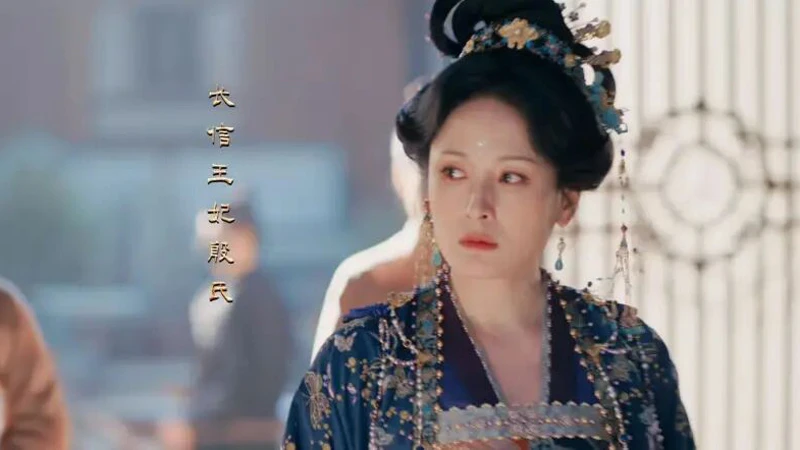
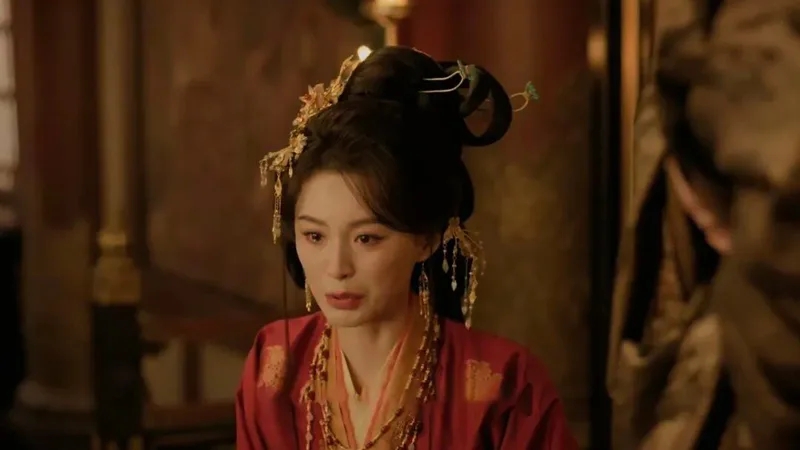
Now the emperor’s love for Zhou Fu makes sense. His mother, the empress dowager, protects Rong Wang no matter what he does. When Rong Wang causes disaster at the Lu temple, the emperor must punish him, but his mother refuses to see fault in her younger son. Both are her children, yet she ignores the emperor’s position and his feelings. He rules the court, but at home he is a son who lacks warmth. Zhou Fu gives him something no title can: ease. She listens, calms him, and offers a practical way out. Her care is not a grand speech. It is timely, specific, and useful.
Zhou Fu’s past also matters. Her mother was the emperor’s wet nurse, so they knew each other early. The age gap did not stop her from being kind to him. In the Rong Wang problem, she shows a bright, active mind. She can scheme, but she does not use every scheme to hurt. When the emperor is tired, she makes him laugh with a dream about a little figure waking her to save him. The joke lands because it treats his worry as real. Half his anger leaves the room. She does not need a crown to give him comfort.
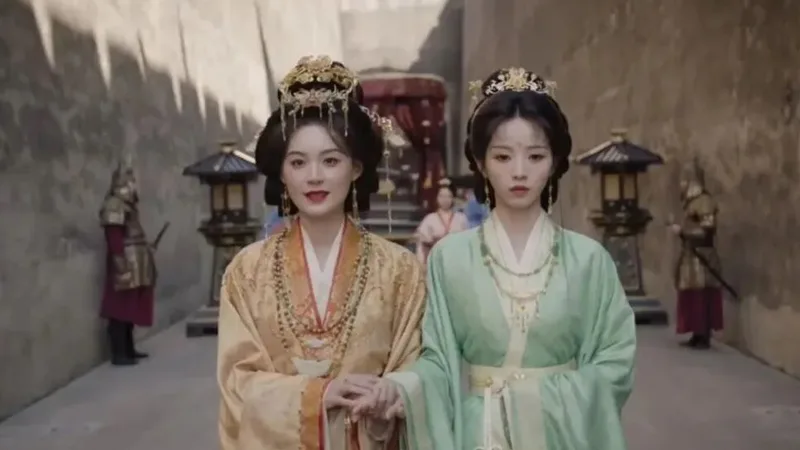
Her difference shows again when she scolds the emperor after being separated from her daughter. She says plain food with family is better than fine food without them. In front of power, she does not flatter. Wealth that others chase for generations means little to her. That attitude makes her stand out. It also links her to her daughter: the mother did not raise the girl, yet their temper is the same. The emperor does not love Zhou Fu because she is twice married. He loves her because she brings warmth and refuses to become a polite shadow.
Other women can offer beauty, obedience, or family connections. Zhou Fu offers a break from court air. She can tease the emperor, argue with him, and still leave him calmer than before. That is a rare skill. It is not about being perfect. It is about being real enough to push back. The emperor spends his days surrounded by people who bow and calculate. Zhou Fu bows when it matters, but she also speaks when it costs her. Her second marriage does not make her less. It makes her a person with a past, a temper, and a clear mind. That is why he keeps looking for her.