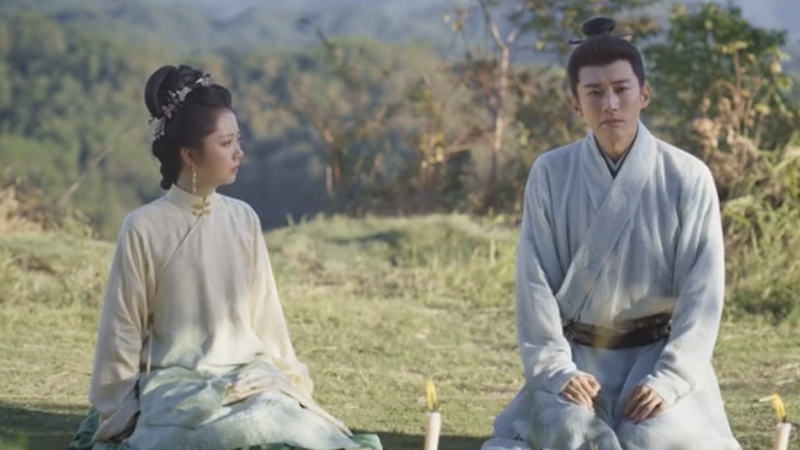
What makes a marriage worth keeping? In Against the Current (兰香如故), the Lin household offers no single answer. Three women face betrayal, violence, ambition, and duty. One leaves. One stays and bargains. One slowly turns a political match into love. Their choices do not compete for a crown; they simply show how survival can look different for each person. The drama avoids easy villains. Even its cruelest moments leave room for women to help women. That is why the finale feels less like a verdict and more like a conversation.
Xiulai Walks Away
Lin Xiulai (林绣莱) begins as a concubine’s daughter, trained to shrink. Her husband Lu Jian (鲁鉴) beats her, steals her dowry, and pushes her toward poison. When Xu Lanxiang (许兰香) helps her escape, Xiulai takes the rare step of suing for divorce at Shuntian Prefecture (顺天府). She returns to the Lin house with Zhijie (芝姐儿). Her son Junge (隽哥儿) remains trapped by the Lu family’s fall after Prince Han (汉王) rebels. Lin Jinqi (林锦岐) earns a title for helping crush the revolt, then brings the boy home. Three generations cannot hold office, but mother and son can still share a roof.
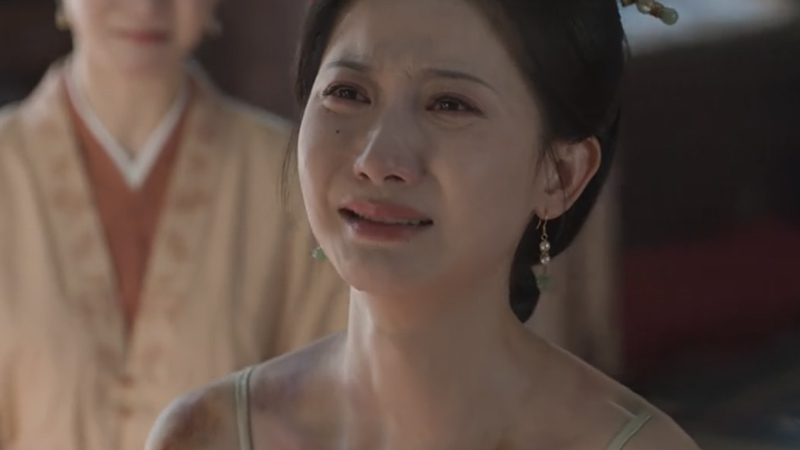
Lanxiang does more than rescue her. She gives Xiulai a managing role, a place with authority rather than pity. Xiulai hesitates; gossip has bruised her for years. Lanxiang asks how a woman brave enough to fight a divorce case in court can fear a few spitful mouths. That line matters because it refuses shame. Xiulai’s new life is not a fairy tale. It is a job, a room, a voice, and a second chance.
Her story argues that leaving can be loyalty to oneself. She does not leave marriage to find a richer husband. She leaves to stop dying inside it. Later, when the Lu house collapses, she does not gloat. She rebuilds. The drama’s warmest idea appears here: women do not need to save men to save each other. They can pass strength hand to hand.
Her choice also changes the house around her. When Xiulai takes charge, servants learn to bring problems to a woman who has survived worse. She does not become hard. She becomes exact. Every ledger, every key, every quiet decision says the same thing: a woman cast out can still be trusted with a household.
Xiuru Holds Ground
Lin Xiuru (林绣茹) chooses a colder path. Yuan Shaohui (袁绍辉) marries for alliance, not romance. She understands this early. Inside Yongchang Marquis (永昌侯), she becomes a capable mistress, managing servants and accounts, bearing three daughters. No son arrives. Since the title passes only to male heirs, the family panics. Old Madam Yuan (袁老夫人) threatens suicide and brings in a fortune-teller who claims Xiuru has no son in her fate. Yuan Shaohui, squeezed by filial duty, agrees to take Biwu (碧梧), a servant, as concubine.
Xiuru does not weep for the neighbors. She uses divorce as leverage. If the Yuan family wants a concubine’s son, it must sign a document protecting the property rights of her daughters. She is not fighting for love; she is building a wall around herself and her children. The move is sharp, unsentimental, and deeply practical.
Later Yuan Shaohui dies while inspecting Zhehai (浙海), betrayed by Du Cuique (杜翠雀), who colludes with pirates. The concubine plan ends in emptiness. Xiuru holds the household together and avenges him herself. When the estate is divided, she treats all six daughters fairly, including the two born to the concubine. A concubine’s daughter became a marchioness, and she survives by refusing to confuse marriage with rescue.
Her daughters watch. They see a mother who can grieve privately and negotiate publicly. That lesson may be colder than romance, but it is not empty. It teaches them that safety can be written down, sealed, and defended. In a house ruled by heirs, Xiuru makes daughters into heirs of their own future.
Love After Duty
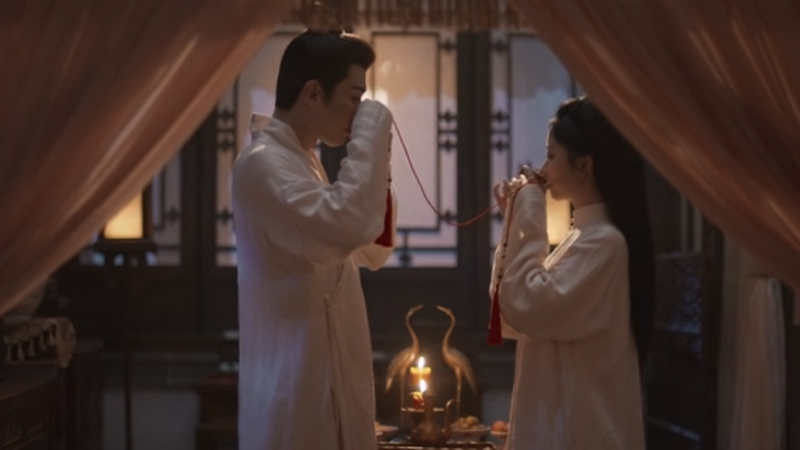
Lin Jinqi and Xu Lanxiang begin as strangers bound by imperial order. Lanxiang carries resentment; Jinqi carries guilt. After Prince Han’s rebellion, he takes her to the Shen family graves and speaks plainly. He is no flawless gentleman, he says. He gets afraid. But he will not betray her. That confession loosens the knot between them. Their marriage becomes real, not because fate softens, but because they finally tell the truth.
Lanxiang grows into the Lin house’s backbone. She helps Xiulai replace a lawsuit and divorce, helps Lin Xiuwan (林绣芄) enter a weaving workshop, and helps Xiuru negotiate the concubine arrangement. When First Madam Lin dies, she entrusts Xiushu (绣菽) and the household token to Lanxiang. Jinqi watches and understands what he has. When Yuan Shaohui takes a concubine, Jinqi refuses to imitate him. His wife, he says, has given him kindness, loyalty, and love. To abandon her for an unborn child he has never met would make him less than human.
Yuan Shaohui cannot feel that truth. Lanxiang later gives Jinqi a daughter, Lin Zhangcheng (林张成), and a son, Lin Zhangrun (林张润). Their bond is not loud, but it lasts. Xiulai leaves and keeps her dignity. Xiuru stays and guards her daughters. Lanxiang and Jinqi remain and choose each other again. Lü Jier (吕蕺儿) sums it up: however we live, we must live well. Marriage has no standard answer, only people trying to stand upright inside their own choices.
Their ending is quiet, but not small. After rebellion, divorce, concubinage, and murder, the Lin house does not become a paradise. It becomes a place where people can speak honestly and choose again. That may be the drama’s most radical claim: love is not the opposite of duty. Sometimes it is what duty becomes when two people finally stop pretending.