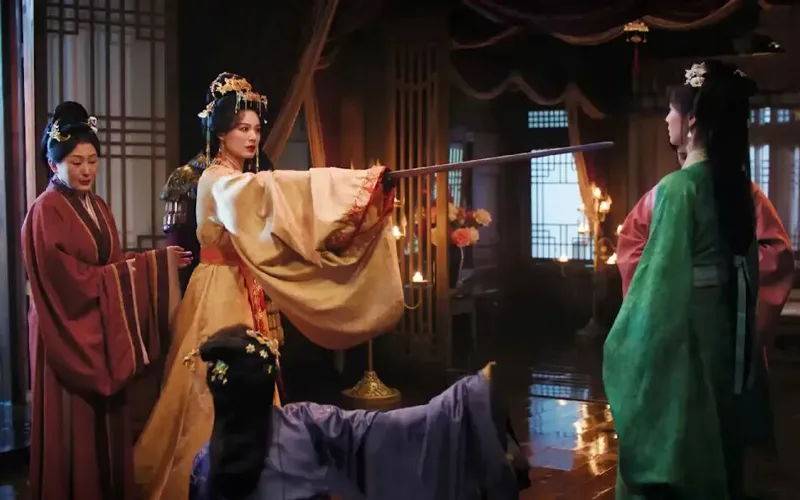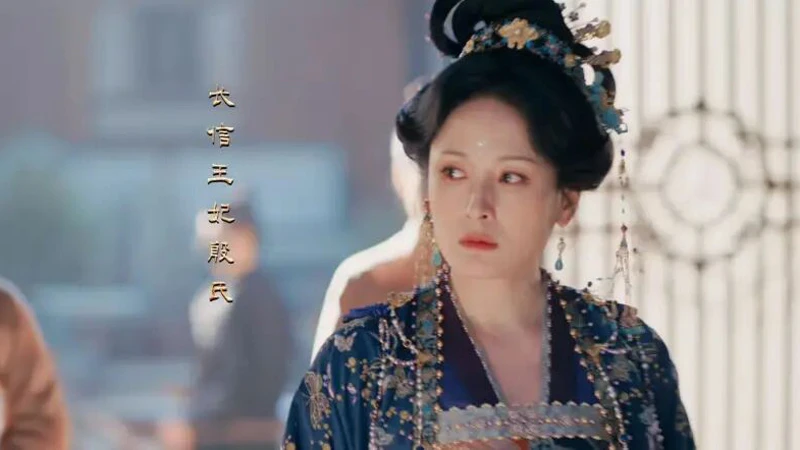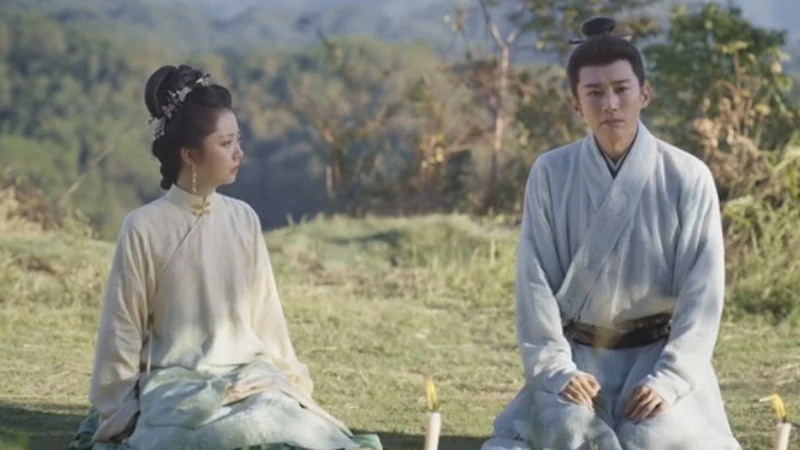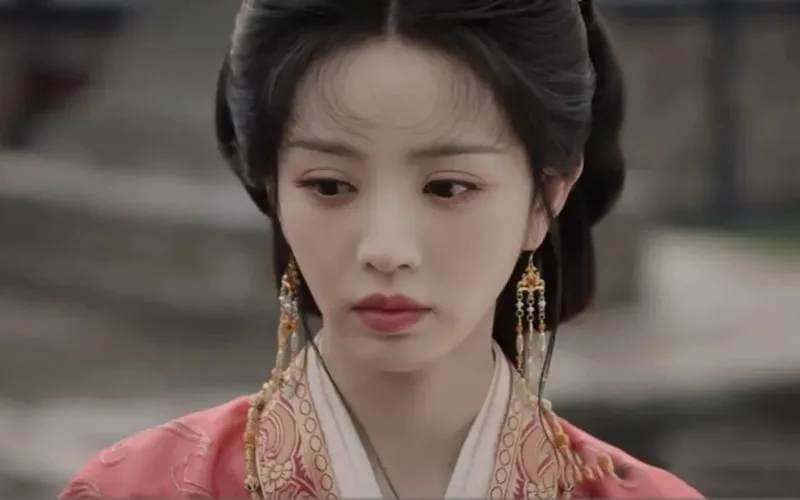
In Where the Mask Ends (嫁金钗), the meeting between A Chou (阿丑) and Zhou Fu (周芙)looks like a quiet mother-daughter reunion. It is not. A Chou panics because she is a fake Wei Rao (魏娆), and every new tie makes her escape harder. She plans to leave in a year; recognition is a debt she cannot pay. Zhou Fu keeps her close, asking careful questions while Yinggu (樱姑) gathers facts. When the truth lands, Zhou Fu does not hide the girl inside Lu household. She pushes her out and sends Jun Dai (君黛) back. Many viewers call this maternal protection. The scene plays colder than that: a woman closing a door on her own blood to keep her own life intact, while everyone else searches for a warmer explanation.
A Mother’s Test
Zhou Fu’s past explains her reflexes. After her first husband dies, she marries the emperor and becomes a favored woman. That is not a passive fate; it is a climb. The old baby-swap scandal inside Wei household taught her how quickly a family can turn a child into evidence. She says she crawled out of a place like that and will not go back. Her fear is specific. If people learn A Chou is her daughter, old questions return with new teeth. So the meeting is not a reunion. It is an audit, and Zhou Fu is checking the risk while pretending to care about the girl’s comfort.
A Chou’s panic helps her. The younger woman does not want a mother; she wants distance. She treats the encounter as a trap and counts the months until she can leave. That suits Zhou Fu. She can watch without embracing, question without claiming, and let Yinggu confirm what blood already suggests. Once the identity is certain, affection should mean concealment. The drama chooses a stranger move: controlled exposure. A Chou is kept near enough to study and far enough to deny. The mother does not soften. She manages. That is why the girl’s fear never turns into trust, and why the scene feels less like a rescue than a quiet interrogation.
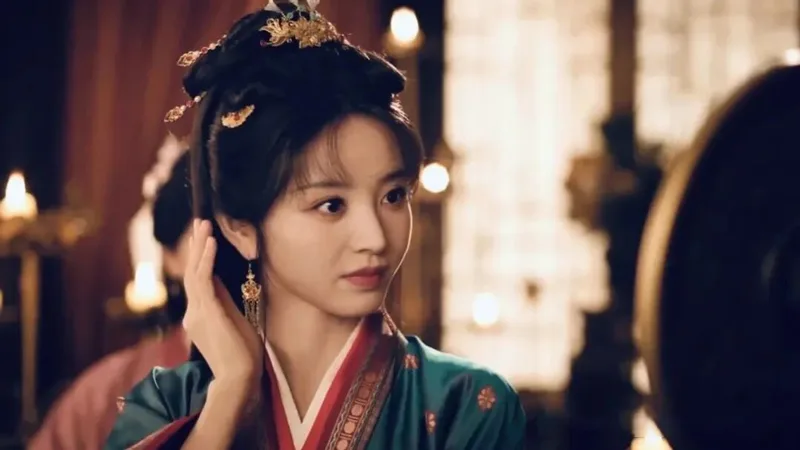
The test also uses Jun Dai as a shield. Zhou Fu does not simply remove a false daughter; she redirects the search. If Jun Dai returns to Lu household, investigators will follow that path. Names like Wei Heng’e (魏恒娥) can absorb suspicion while Zhou Fu stands apart. A Chou becomes a temporary piece on the board. The audience wants a mother’s love; the scene offers strategy. A Chou may feel the difference. A real protector would give her a hidden road, not a public shove. The meeting ends with two women guarding separate secrets, and neither one is safe.
Self-Preservation First
The popular defense says Zhou Fu sends A Chou away to protect her from palace politics. Protection usually leaves a hidden door, a trusted contact, a plan. Here the push is public and messy. It creates exactly the attention a secret daughter should avoid. If safety were the goal, silence would cost less. Zhou Fu chooses a visible shuffle because it protects her own position. She already abandoned the child once to enter the palace. Repeating that choice is not a contradiction; it is a pattern. The mother’s love, if it exists, arrives after the calculation, and the calculation always wins first.
Her selfishness is practical, not cartoonish. She knows what happens when a favored woman’s past becomes a weapon. A Chou is both evidence and threat. Jun Dai is a buffer. Lu household is a stage where blame can move. Zhou Fu can claim ignorance, let others chase the wrong thread, and keep the emperor’s favor. That is why the loving-mother reading feels forced. Love would require admitting the daughter or giving her a clean exit. Instead, she gives her a scripted exit that serves the mother. The choice is cruel because it is efficient, and because it asks A Chou to pay for a decision she never made.
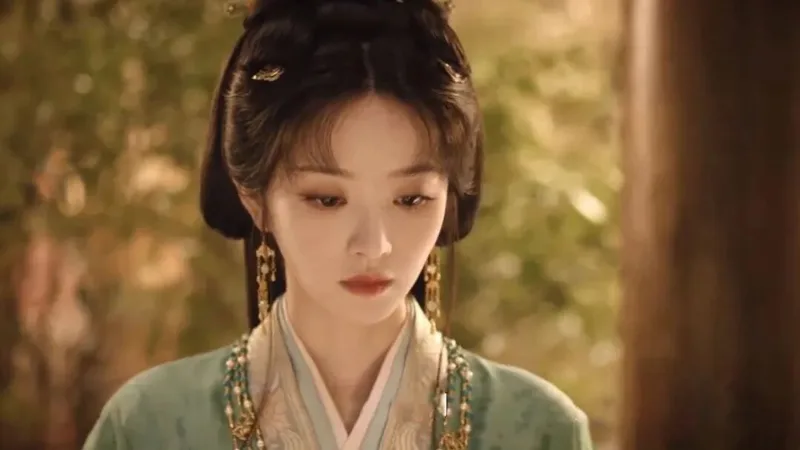
The drama’s logic has cracks. Two cousins who look identical? A mother who confirms a daughter and then uses her? These leaps weaken the emotional payoff. Still, the character’s choice is clear enough: survival comes first. A Chou may never forgive her. Zhou Fu may never ask for forgiveness. The real question is not whether she loves her daughter. It is whether she loves her own safety more. In this episode, the answer is yes. That is the uncomfortable point ninety-five percent of viewers may miss, and it is also what makes the mother’s calm so unsettling.