Article
搜索结果:
-
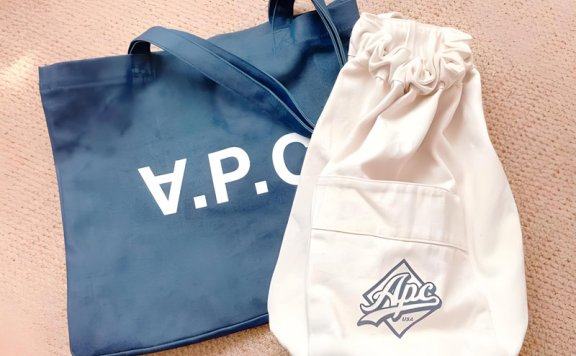
Canvas Bag: A Popular Fashion Item
That unassuming canvas tote slung over your shoulder isn’t just carrying your essentials—it’s rewriting fashion’s rulebook. Once confined to art galleries and indie bookshops, these humble carriers now stride confidently down metropolitan streets and Instagram feeds. They reject luxury branding, champion sustainability, and broadcast individuality through bold prints and minimalist silhouettes. In an era of curated aesthetics, canvas bags offer authenticity—a tactile rebellion against fast fashion’s excess. Canvas Totes A decade ago, canvas totes signaled underground credibility—the unofficial uniform of art students and thrift-store regulars. Their migration from fringe to mainstream began when social platforms like Instagram transformed them into viral style statements. Film festival merch bags and museum collaborations became instant collectibles, merging cultural cachet with everyday utility. Celebrity sightings accelerated the shift. When A-listers traded designer purses for souvenir-laden canvas sacks during travel shows, they validated the trend’s practicality and charm. Suddenly, "unpolished" became aspirational. The bag’s journey mirrors a broader cultural pivot: where status once whispered through logos, it now shouts via curated authenticity. Prints as Personality What elevates canvas beyond mere function? Its canvas becomes a billboard for self-expression. A Klimt reproduction, a line of Sylvia Plath poetry, or a protest slogan—each print serves as a… -
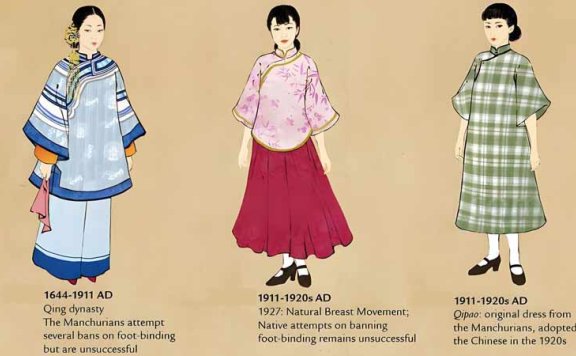
Threads Through Time: How Ancient Dynasties Would Style Modern Streets
Imagine silk-clad scholars from the Wei-Jin period stepping onto a bustling high-speed rail platform, or Tang dynasty noblewomen browsing a sleek concept store. China's sartorial legacy, spanning millennia from the understated elegance praised in the Book of Songs (诗经) to the dazzling Fashion Makeup (时世妆) of the High Tang, possesses an enduring vitality. Far from being relics confined to museums, the core design philosophies – the ethereal drapery of Wei-Jin guīyī (袿衣), the flattering lines of Song bèizi (褙子), the intricate pleating of Ming horse-face skirts (马面裙, mǎmiàn qún) – are experiencing a vibrant renaissance, seamlessly woven into the fabric of contemporary global fashion. This isn't mere revival; it's a dynamic dialogue where whispers from ancient looms inspire cutting-edge design, proving that true style transcends the confines of any single era. The flowing sleeves and structured silhouettes of the past are finding fresh expression on today’s catwalks, city sidewalks, and digital feeds, becoming powerful emblems of cultural confidence and innovative aesthetics. Wei-Jin: Ethereal Flow Reimagined The Wei-Jin period (220-420 AD) prized transcendence and natural grace, reflected in the iconic guīyī. This garment evolved from the deep robe (深衣, shēnyī), distinguished by its dramatic guī (圭) shaped fabric panels and trailing… -
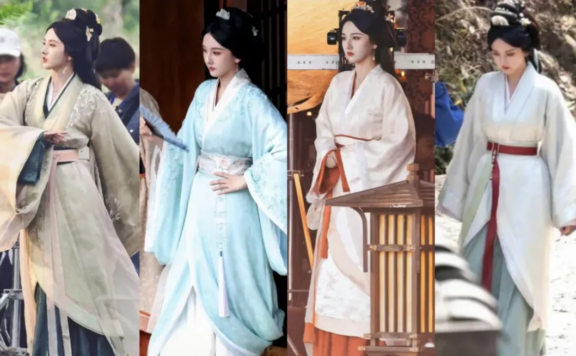
Unveiling the Truth of Hanfu in Ancient Cdramas
No ancient costume drama has truly done justice to Hanfu! In the TV drama The Prisoner Of Beauty (折腰), we can see a kind of "dress" with a curved hem. When worn, it makes one look dignified and slender. Its prototype is the one - piece Shenyi (深衣) popular in the Qin and Han dynasties. However, few ancient costume dramas have managed to get it right. When it comes to Shenyi, we have to mention Quju (曲裾). And when talking about Quju, we can't ignore the Mawangdui Han Tomb. The reports and unearthed cultural relics from this Western Han tomb have further confirmed the structure of Quju, refreshed the understanding of most Hanfu enthusiasts, and reorganized the early systems of "small Quju", "single - wrapped Quju", and "X - wrapped/multiple - wrapped Quju". The Quju robes unearthed from the Western Han tomb are regarded as the orthodox physical standard representing the clothing of the Qin and Han dynasties. The upper - body effect of this type of Quju robe shows a triangular overlapping of the continuous front panel. By the width of the skirt edge, we can distinguish the forms of inner and outer clothes. This form of cutting the… -
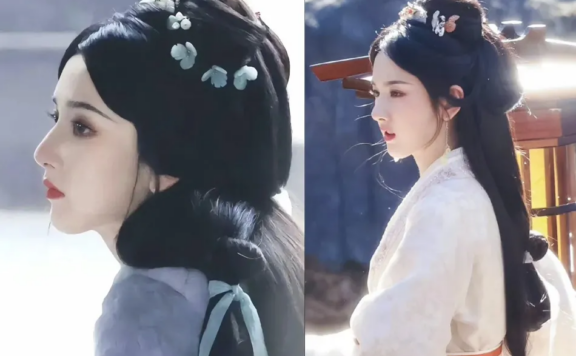
Song Zuer's Han-style Look in The Prisoner of Beauty
Is Song Zuer's Han-style look in The Prisoner Of Beauty praised? Some netizens think the makeup and styling of this drama are delicate, while others believe they are overly in the style of internet celebrities. Evidently, the costumes and props in The Prisoner Of Beauty draw inspiration from the Han Dynasty. During this era, the aesthetic of Han-style hair buns was 'hanging without falling apart', rather than the prevalent loose - hair style. Let's start with the conclusion. From various Han Dynasty female figurines, we can observe the gentle and grand style of Han - style hairstyles. Generally, they were hanging buns without loose hair. Although it seems like a simple center - parting from the front, the hair ends were coiled into a bun or wrapped and tied up at the back, revealing elegance and fashion. There were no high buns or high - padded hair like in later times, nor the common loose - hair styles seen in today's TV dramas. Despite being understated, it had a more genuine, classical, and daily - life beauty. This hairstyle with coiled hair ends was a classic in the Western Han Dynasty, sometimes called the 'Falling Horse Bun' or 'Hanging Bun'. Its… -
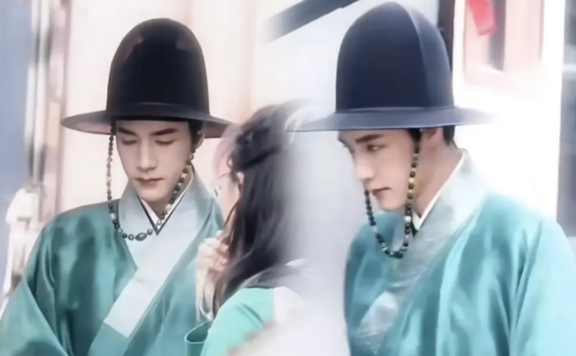
Ci Sha's Hanfu Image in the New Cdrama
Netizens have questioned whether Ci Sha's Hanfu image in the new drama has a Korean style. Some netizens pointed out that his styling in the drama A Good Time and Beautiful Brocade contains elements from Korean historical dramas. Is it really the case? It seems that people don't really understand Ming Dynasty costumes. Let's start with the conclusion. This kind of hat can be generally called "big hat" or "wide - brimmed hat". It was inherited from the Yuan Dynasty and was an important headgear in the Ming Dynasty. Korea was a vassal state of China in the Ming Dynasty, and its clothing was also influenced by China. However, we shouldn't cede our own culture because of the influence of early Korean dramas. Even earlier, the prototype of this kind of hat appeared in the Five Dynasties. It was mostly worn by men to avoid sand and relieve social awkwardness. The bamboo - woven straw hat was a must - have for many scholars when traveling because of its coolness. Women wore veiled hats with gauze. Ming Dynasty big hats had straight brims and wide hat brims. The hat shapes varied in height and could be round or square (nearly… -
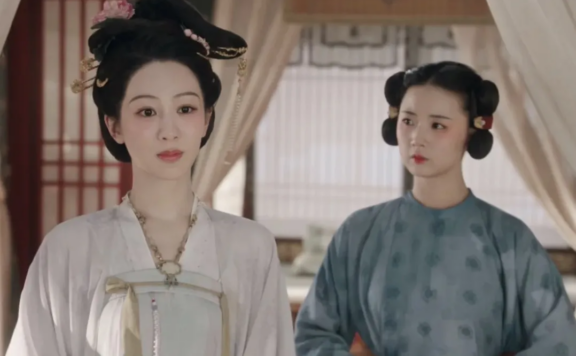
How to Distinguish Maids from Young Ladies in Cdrama?
What exactly do the hairstyles that can clearly distinguish between young ladies and maids look like at a glance? In some current period cdramas, it's really hard to tell who is the young lady and who is the maid because the basic hairstyles and clothing of maids and young ladies are almost the same, with only the difference between a simplified version and an elaborate one. Some maids even dress more 'formally' than the young ladies. Clothing Styles Regarding the maid's styling, although clothing styles have changed over dynasties, hairstyles and hair buns have changed less. Maids' clothing mainly consists of segmented dresses and round - collar robes, presenting a distinct image difference in ladies' paintings. Usually, we can distinguish their dressing styles from ancient paintings, but it's not absolute. Maids mostly wear dresses and trousers inside. In the Tang and Song Dynasties, round - collar robes/shirts were popular, but they became less common after the middle of the Ming Dynasty. In the Tang Dynasty, maids' round - collar robes were looser, with wide sleeves, and a belt was often used to cinch the waist. The colors were bright and eye - catching, and their heads were decorated with various… -
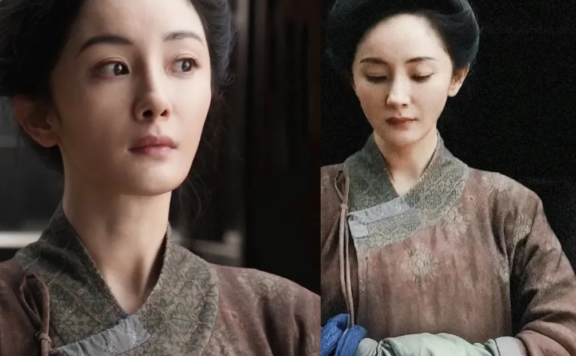
Yang Mi's Latest Tang-style Look: Plain but Daily
Yang Mi's look in the upcoming TV drama The Lychees of Chang'an has caught netizens' attention. They commented that although it's plain, it looks very daily! First, Yang Mi's outfit resembles a Tang-style collar. It can be worn as a draped jacket or buttoned up, with hair styled in a bun. The draped jackets we've seen before usually have widened collars and are worn with the collar turned up. When not worn with the collar turned up, it's similar to a round - collared robe. By adjusting the position of the ties, it can also show a double - overlay effect of a cross - collar and a round collar. The color scheme of this outfit uses earth tones, giving an overall feeling of simplicity and a daily look, and it's very approachable in terms of color. Similar outfits can be seen on Tang dynasty figurines. The round - collared draped jacket generally refers to the round - collared robe and the front - opening robe in terms of its style. When the two sides of the round - collared robe are opened and worn as a draped jacket, it's this style. This draped jacket can be worn open as… -
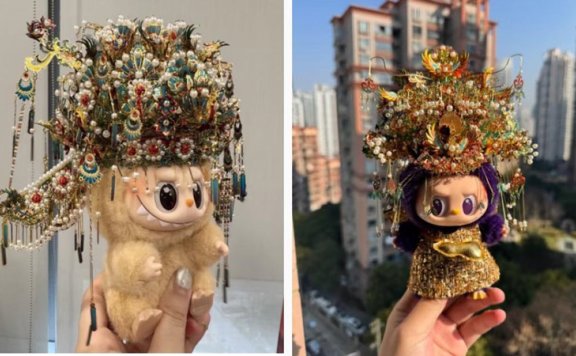
Why Labubu's Crown Outshines Royalty?
"Wait... did Labubu just become queen?" "Is this a coronation?" This might sound like a fever dream to anyone unfamiliar with China's current toy scene, but yes—Labubu, the mischievous little vinyl gremlin from Pop Mart, is now the proud owner of a collection of handmade Chinese imperial crowns. We're talking intricate, blinged-out headdresses inspired by historical palace dramas like Empresses in the Palace—crafted not by costume designers, but by DIY-loving fans with way too much patience and a healthy dose of imperial obsession. Let's back up. The Toy Queen Rises Pop Mart's Labubu has long been a favorite among Chinese collectors. But lately, the fandom has taken a sharp turn toward Qing dynasty cosplay. Why? Because someone, somewhere, realized the elaborate metal puzzle sets from a local brand called Piececool—originally marketed as romantic wedding-themed crafts—fit Labubu's rubbery little head perfectly. And when we say "elaborate," we mean hand-assembled metal pieces smaller than a pinky nail, forming full-on phoenix crowns (a traditional Chinese bridal accessory, often seen in palace dramas). Can't afford the real Qing dynasty phoenix crown on display at the National Museum of China? No worries. Just spend ¥339 (about $45) and a few late nights, and you too… -
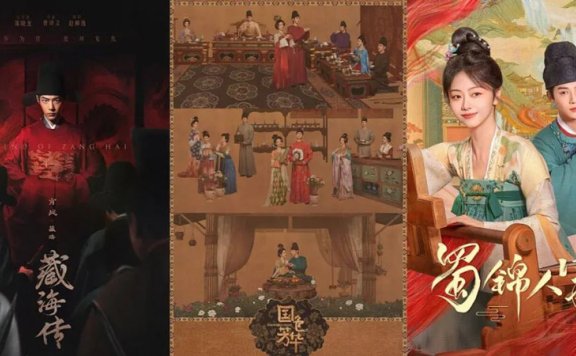
Who's Truly Honoring Tradition in Chinese Costume Dramas?
Integrating traditional culture into historical dramas isn't new. But more and more recent productions are going beyond aesthetics—embedding cultural heritage into the storylines themselves. Take Legend of Zang Hai (藏海传), a recent release that weaves an intricate political tale around the ancient art of geomantic architecture, or kanyu (堪舆营造)—a feng shui-based approach to site planning in traditional Chinese construction. And this is far from an isolated case. In A Dream of Splendor (梦华录), Song dynasty tea culture is not just a visual garnish—it defines the heroine Zhao Pan'er's livelihood and values. Similarly, The Scent of Time (为有暗香来) showcases the traditional art of herbal perfumery, Flourished Peony (国色芳华) explores plant-based fragrance making, and Brocade Odessey (蜀锦人家) dives into Sichuan's iconic brocade weaving. And more of these culture-driven dramas are in the pipeline. Could this be a meaningful evolution in the genre? As traditional Chinese culture continues gaining mainstream appeal, what should period dramas aim to achieve in order to truly tell cultural stories well? Why Does It Feel So Right? The fusion of traditional culture and historical drama isn't exactly groundbreaking—it's just finally being taken seriously. The first phase of this integration largely involved the adoption of Eastern aesthetics across costumes,… -
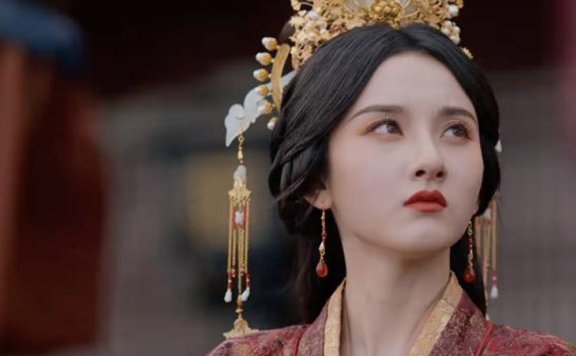
Jewelry in The Prisoner of Beauty
You've probably already heard the buzz around The Prisoner of Beauty—this season's hot topic in Chinese historical TV. But let's forget about the plot for a second. As a jewelry person, I couldn't take my eyes off the accessories. The hairpieces, the pendants, the gemstone details—they're not just for show. They're little time capsules of Han dynasty aesthetics, each piece tied to materials and craftsmanship that were actually used two thousand years ago. The story seems set around the late Eastern Han period (roughly 2nd to 3rd century AD). So let's talk about what jewelry looked like back then—what stones they had, where they came from, and who got to wear what. First, let's talk about the crown jewel of the era: Hetian jade (a highly prized nephrite jade from Xinjiang). This wasn't something ordinary people could casually buy. Most of it traveled along what historians call the "Jade Road", a network of ancient trade routes connecting Xinjiang to central China. According to excavated Han dynasty documents from Dunhuang, one stone could cost up to 300 qian. Back then, large-scale mining wasn't really a thing. Miners would wait for seasonal floods to reveal river-polished pebbles, then trek on foot through… -
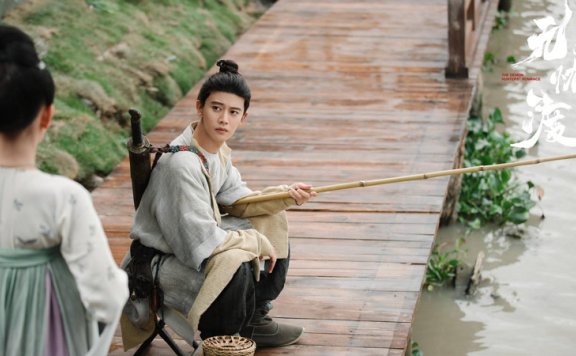
7 Essential Allen Ren Series That Define a Genre
For over a decade, Allen Ren Jialun (任嘉伦) has reigned as Chinese television's undisputed "Costume Drama King"—a master of emotional depth who transforms mythical worlds into visceral human experiences. From tortured immortals to morally complex half-demons, his performances fuse breathtaking aesthetics with soul-wrenching storytelling. Here's your definitive guide to his seven most iconic roles. Under the Power 锦衣之下 Aired: December 2019 Period Background: Ming Dynasty Genres: Historical Suspense, Romance, Detective. Main Roles: Ren Jialun (Lu Yi), Seven Tan (Yuan Jinxia) Adapted From: Blue Lion's novel Set in the Ming Dynasty's Jiajing era, the series centers on Lu Yi, a feared Jinyiwei commander whose icy efficiency masks a tormented past, and Yuan Jinxia, a street-smart detective from the Six Gates investigative bureau. Initially adversarial—Lu Yi views Jinxia's optimism as naïveté, while she resents his ruthless methods—their dynamic shifts when ordered to collaborate on a high-stakes corruption case involving royal intrigue and salt smuggling. As they uncover layers of conspiracy, their friction evolves into mutual respect, then forbidden love, complicated by Jinxia's discovery that Lu's father orchestrated her family's massacre years prior. The plot masterfully balances political tension with emotional stakes, culminating in their alliance against a common enemy: a royal faction… -
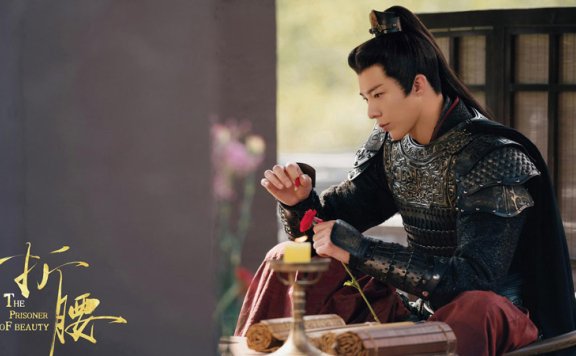
6 Period Dramas Charting Liu Yuning's Acting Journey
Once known primarily as a singer, Liu Yuning (刘宇宁) has rapidly ascended as a powerhouse in Chinese historical and fantasy dramas. With his commanding presence (cm height), deep vocal delivery, and nuanced portrayals of complex anti-heroes, he's redefined the archetype of the "ruthless yet redeemable" male lead. Here are five essential series showcasing his evolution—and why they dominate streaming charts. The Prisoner of Beauty 折腰 Aired: May , 25 Period: Warring States-inspired fictional dynasty Genres: Historical romance, political intrigue, family saga Main Roles: Liu Yuning (Wei Shao), Song Zuer (Qiao Man) Adapted From: Novel by Penglai Ke Set in a war-torn realm mirroring China's Warring States period, warlord Wei Shao is consumed by vengeance after his family's massacre by the rival Qiao clan. To cement a fragile truce, he forces a political marriage with Qiao Man, the daughter of his enemies. Their union begins as a cage of mutual suspicion: Wei Shao views Qiao Man as a pawn to humiliate her family, while she navigates his court as both hostage and diplomat. Yet Qiao Man transcends her role through strategic brilliance—exposing grain-hoarding conspiracies, redirecting Wei Shao's rage toward shared foes, and brokering alliances using ancestral rituals. As external threats mount… -

China's Visa-Free Shopping Revolution Sparks Global Spending Surge
China's bold visa relaxation and innovative tax refund reforms are igniting an unprecedented wave of international tourism and cross-border shopping. Cities like Beijing, Shanghai, and Chengdu have become magnets for global travelers seeking unique experiences and value, transforming China from the "world's factory" into a burgeoning "global consumption hub". Turkish tourist Feridun Koc exemplifies this trend, marveling at Li Ning's (李宁) innovative footwear in Shanghai while his wife Hande stocks up on traditional Chinese remedies, all facilitated by instant tax refund counters that make purchases feel like direct discounts. This synergy of open-door policies and shopping convenience is reshaping perceptions and fueling an economic renaissance, with cultural ambassadors like Italian blogger Ale and influencers such as "Agent00" bridging global audiences through authentic digital storytelling. Policy Innovation: Fueling the Shopping Frenzy The cornerstone of this boom is the groundbreaking "instant refund at purchase" service, now operational nationwide. International shoppers receive their 11% Value-Added Tax (VAT) rebate immediately at partner stores upon presenting their passport and invoice, eliminating the traditional airport queue. This instant gratification, as noted by Huang Huang (黄璜) from the China Tourism Academy, creates a powerful "spending-reimbursement-spending" loop, encouraging tourists to reinvest their refunds in further purchases during their… -
When Global Travelers Become China's New Dynasty Stars
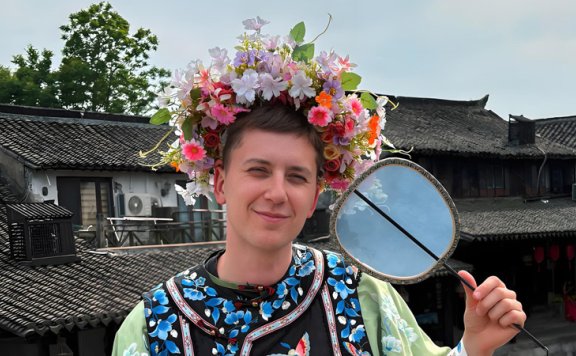
As international tourism rebounds across China, an unexpected cultural phenomenon has emerged: foreign visitors donning elaborate historical costumes to pose against imperial backdrops. French traveler Titi became an overnight sensation after sharing photos of himself dressed as a Qing Dynasty "gege" (imperial prince) in Xitang Water Town, his green silk robe and floral headdress contrasting strikingly with ancient stone bridges. "People kept telling me I looked beautiful," Titi remarked, describing how the costume transformed his travel experience. His social media post attracted floods of comments like "You look like a real prince!" and "That floral crown is perfection!" This trend reflects a deeper cultural engagement, with China welcoming 736,740 foreign tourists in Q1 2025 alone—a 39.2% year-on-year surge. Ancient palaces and gardens now serve as open-air studios where travelers from Malaysia to South Africa reinvent themselves as Ming scholars, Tang empresses, or Qing nobility. For many, these photoshoots represent more than souvenirs; they're immersive journeys into China’s living history. As Titi explained while quoting classical poetry in a later post: "Dressing in period clothing makes historical sites feel alive. When Chinese tourists ask for photos with me, it becomes a shared celebration." Selfies That Transcend Cultures What began as curiosity… -
Silk Road Renaissance: Hanfu Fever Sweeps Global Social Media
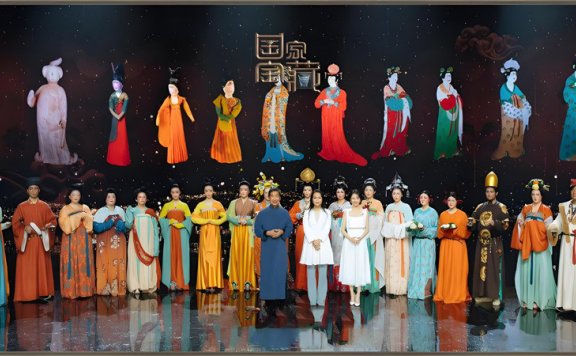
The rustle of embroidered silk now echoes from Shanghai's Tianzifang to Xi'an's ancient walls as international travelers embrace hanfu with infectious delight. What began as cultural curiosity has blossomed into a full-blown transnational phenomenon, with foreign influencers and tourists donning Ming dynasty robes and Tang-style ruqun to create viral content that transcends language barriers. This sartorial bridge between eras and continents reveals how traditional Chinese garments are becoming 21st-century cultural connectors. Destination Dressing Historic sites transform into immersive stages where hanfu unlocks deeper travel experiences. In Suzhou's Humble Administrator's Garden, Slavic creator Ana Petrovna floats across zigzag bridges in blush-pink chiffon, her movements harmonizing with centuries-old pavilions. The visual poetry of her ensemble against classical architecture drew thousands of Instagram saves. Urban studios cater to global clients with specialized services. Shanghai's Hanyi Huashang studio stocks plus-size options and offers bilingual styling consultations. "We adjust makeup for deeper eye sockets," explains owner Li Mei, noting 40% of June bookings came from overseas visitors. Iconic landmarks inspire theatrical transformations . At Xi'an's Drum Tower, British photographer Tom Higgins commissioned a dragon-embroidered emperor's robe. "The weight of the gold-threaded cloak made me stand differently—more regal," he laughs. His "Three Imperial Poses" reel trended on TikTok… -
Dong Jie’s Second Act Beyond the Silver Screen
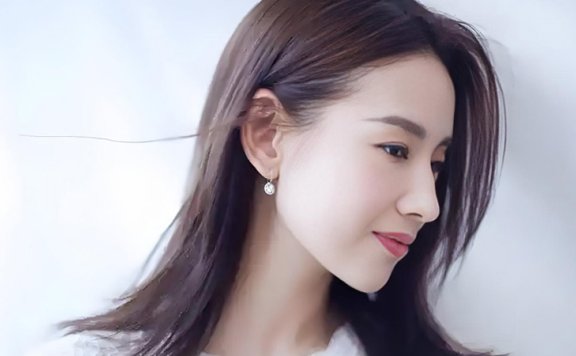
The spotlight shifts from film sets to clothing racks as 45-year-old actress Dong Jie (董洁), once the nation’s beloved "Cold Girl" fromThe Golden Era, embarks on an unexpected entrepreneurial journey. Recent candid photos reveal her meticulously arranging garments in a soon-to-open boutique in Hebei—a quiet yet powerful declaration of her new identity beyond acting. This unscripted career pivot, stripped of celebrity pretense, showcases resilience forged through personal and professional storms. From Camera to Clothing Rack Dong Jie’s transition from acclaimed actress to fashion entrepreneur defies the typical celebrity endorsement path. Photos captured by customers reveal her scrutinizing fabric textures and adjusting displays with artisan-like precision. Dressed in minimalist white cotton and denim, her effortless grace mirrors the aesthetic philosophy of her brand: understated luxury anchored in craftsmanship over ostentation. Her career’s trajectory reads like a screenplay itself—meteoric fame via iconic roles, followed by a devastating fall from grace during a tumultuous divorce and scandal. The ensuing years saw her retreat from public life, with brief attempts at resurgence, like 2023’s Sisters Who Make Waves, yielding muted applause. Acting’s instability ultimately steered her toward fashion, where control replaces casting calls. The seeds of this reinvention were sown during 2022 lockdowns, when… -
A Dream of Red Mansions Inspires a New Era
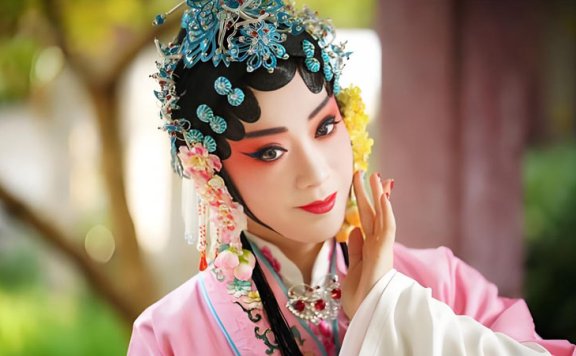
Beneath the stage lights of a Kunqu opera performance, Du Liniang (杜丽娘) glides forward, the iridescent blues and greens of her diancui (kingfisher feather art) headdress shimmering with every step. In the audience, 90s-generation jewelry designer Wang Shenglin (王圣临) watches his creation come alive, a testament to centuries-old craftsmanship captivating a modern crowd. This scene encapsulates a vibrant cultural renaissance: young artisans are breathing new life into China’s imperial jewelry traditions, transforming intricate techniques like diancui (点翠), filigree, and enamel work from museum relics into coveted “New Chinese Chic” accessories. From social media sensations to sold-out night classes, these artisans aren’t just preserving history—they’re rewriting it for a generation proud of its heritage. Artisans Rekindle the Flame Social media platforms buzz with admiration for Wang Shenglin’s creations. His designs—a diancui coronet adorned with “mountain-sea” motifs, silver-gilded filigree peony hairpins, or butterfly earrings inspired by Palace Museum treasures—garner thousands of “stunning!” and “so ethereal!” comments. Followers eagerly inquire about purchasing these wearable pieces of history, blurring the line between cultural appreciation and contemporary fashion. The passion extends beyond online admiration. Young creators immerse themselves in meticulous apprenticeships. Lü Jikai (吕纪凯), another 90s talent, spent a year painstakingly recreating a Qing Dynasty… -

2025 Huairou National Trend Culture Season Kicks Off
The series of activities of the 2025 Beijing Great Wall Culture Festival in Huairou District - the "2025 Huairou National Trend Culture Season" will set off a national trend fashion in Huairou District, Beijing from July to October. Chinese and foreign Hanfu enthusiasts experienced immersive Hanfu travel photography in Qinglong Gorge, Huairou, Beijing, preheating the "2025 Huairou National Trend Culture Season" which will kick off in July. Hanfu Tourism Photography Theme Experience As the first pre - heating event, the immersive Hanfu travel photography theme experience was recently held in Qinglong Gorge. Twenty Chinese and foreign Hanfu enthusiasts gathered in Huairou, becoming the first batch of "Hanfu experience officers" to feel the charm of the integration of the national trend and nature, and let the world see the new expression of Chinese aesthetics where tradition and modernity are intertwined. "This is a blue - and - white porcelain bowl with a painting of ladies from the Ming Dynasty. We dressed up and took photos imitating the scene here, which made me feel the fun of the ancients painting their lives on porcelain." The influencer "Xiaoxi", who participated in the event, has had a strong interest in traditional culture since childhood.… -
How The Princesss Gambit Masters Political Intrigue and Forbidden Romance
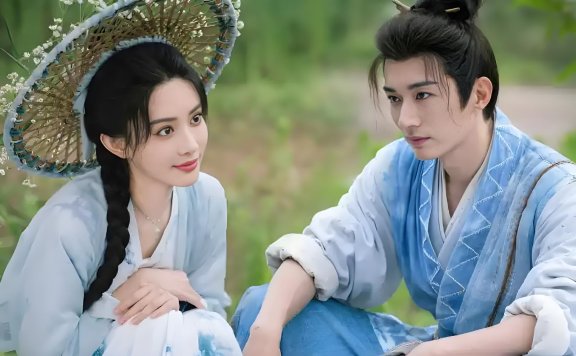
Within days of its premiere, The Princesss Gambit (桃花映江山) has ignited fervent discussion, its viewership soaring past 23,000 and climbing rapidly. This adaptation of Bai Lu Cheng Shuang's novel The Peach Blossom Folds the Rivers and Mountains (桃花折江山) thrusts viewers into the treacherous courts of Northern Yan and Da Qi. Princess Jiang Taohua (Meng Ziyi), a disposable pawn sacrificed in a royal power play, finds herself in a forced marriage to the formidable and morally ambiguous Prime Minister, Shen Zaiye (Liu Xueyi). Their union, born from desperation and political maneuvering, sets the stage for a dangerous dance where survival hinges on outwitting enemies, navigating palace conspiracies, and deciphering each other’s motives. Directed by the acclaimed Yi Jun (The Tribute of Youth,The Legend of Fuyao), the series wastes no time plunging audiences into a world of razor-sharp tension, breathtaking visuals, and complex characters whose motives are as layered as the intricate plots they weave. Yi Jun's Signature Precision Director Yi Jun's (易军) masterful control is evident from the opening frames. The premiere episode efficiently establishes the dire stakes: Taohua's desperate escape attempt, her heartbreaking sacrifice to save her brother, and the perilous journey to Da Qi. Yi Jun utilizes stark lighting… -
Let the Music Fly Promises a Surreal Ride Through Genius
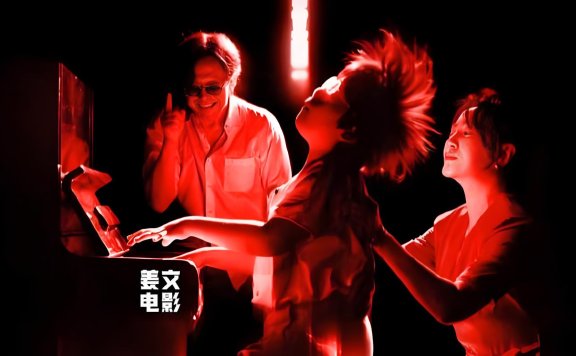
After a prolonged seven-year hiatus, legendary Chinese auteur Jiang Wen (姜文) storms back into cinemas with Let the Music Fly (你行!你上!), slated for release on July 25. The film chronicles the tumultuous upbringing of world-renowned pianist Lang Lang, refracted through Jiang’s signature hyper-stylized lens. Its bombastic trailer—teeming with A-list stars, surreal imagery, and kinetic chaos—ignites both fervent anticipation and skeptical eyebrows. This isn’t just a comeback; it’s Jiang Wen defiantly planting his flag in the summer box office wars. Shifting its release date from July 15 to 25 strategically dodges clashes with DC’s Superman (超人) and the dark horse fantasy Liao Zhai: Lan Ruo Temple (聊斋:兰若寺). More intriguingly, it avoids a face-off with The Stage (戏台), starring Jiang Wen’s brother Jiang Wu (姜武). The siblings’ uncanny resemblance risks audience fatigue if both films opened simultaneously. Instead, Jiang Wen positions his opus against the historical drama The Litchi Road, betting his flamboyant vision can outshine safer bets. Initial reactions to the trailer reveal a polarized camp. Supporters champion Jiang’s audacious visual language—a whirlwind of masked figures, gravity-defying leaps, and cars chasing trains. Detractors, however, question the appropriateness of such extravagance for a biopic. Comparisons to his divisive 2014 film Gone with the Bullets (一步之遥) (rated 6.7) surface, alongside concerns that star power overshadows substance. Can Jiang…