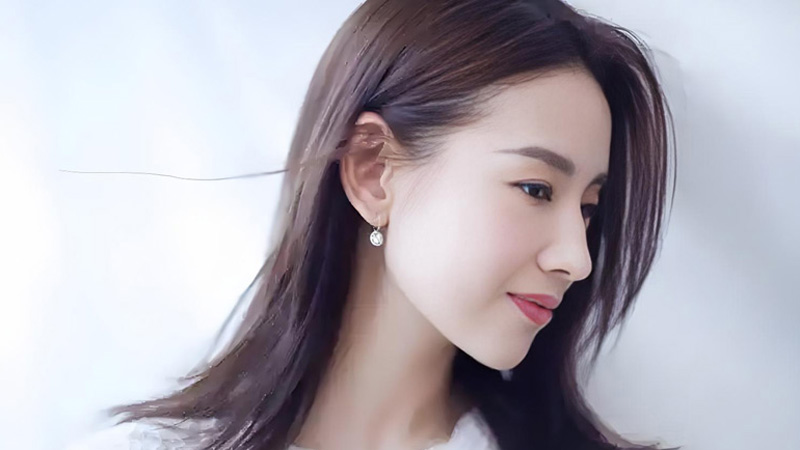
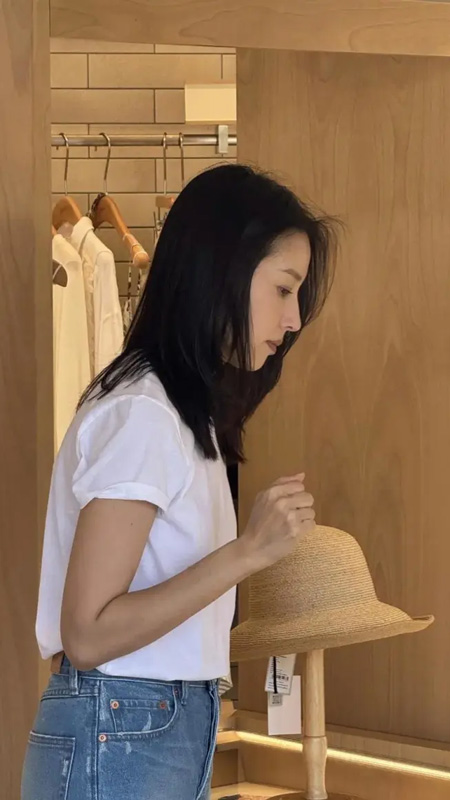
The spotlight shifts from film sets to clothing racks as 45-year-old actress Dong Jie (董洁), once the nation’s beloved "Cold Girl" fromThe Golden Era, embarks on an unexpected entrepreneurial journey. Recent candid photos reveal her meticulously arranging garments in a soon-to-open boutique in Hebei—a quiet yet powerful declaration of her new identity beyond acting. This unscripted career pivot, stripped of celebrity pretense, showcases resilience forged through personal and professional storms.
From Camera to Clothing Rack
Dong Jie’s transition from acclaimed actress to fashion entrepreneur defies the typical celebrity endorsement path. Photos captured by customers reveal her scrutinizing fabric textures and adjusting displays with artisan-like precision. Dressed in minimalist white cotton and denim, her effortless grace mirrors the aesthetic philosophy of her brand: understated luxury anchored in craftsmanship over ostentation.
Her career’s trajectory reads like a screenplay itself—meteoric fame via iconic roles, followed by a devastating fall from grace during a tumultuous divorce and scandal. The ensuing years saw her retreat from public life, with brief attempts at resurgence, like 2023’s Sisters Who Make Waves, yielding muted applause. Acting’s instability ultimately steered her toward fashion, where control replaces casting calls.
The seeds of this reinvention were sown during 2022 lockdowns, when Dong Jie began sharing curated outfit ideas online. Her subsequent foray into live stream commerce stood apart from peers’ chaotic sales pitches. Instead, she adopted the demeanor of a seasoned stylist, dissecting garment construction and textile origins with academic rigor—a format that cultivated a niche audience valuing substance over hype.
This evolution culminates in her brick-and-mortar store, a physical manifestation of her curated vision. Targeting discerning urban professionals, the space prioritizes timeless silhouettes and natural materials, rejecting fast-fashion disposability. Her hands-on involvement—from selecting organic linen to approving store layouts—signals a commitment beyond celebrity branding.
The Quiet Revolution
Dong Jie’s boutique embodies a retail philosophy as deliberate as her on-screen performances. Eschewing flashy logos and influencer collabs, the store champions "slow fashion" principles: ethically sourced fabrics, versatile designs transcending seasons, and meticulous tailoring. This approach attracts clients weary of trend-chasing, seeking instead investment pieces whispering elegance rather than shouting status.
Managing this venture demands navigating labyrinthine operational challenges—lease negotiations, inventory forecasting, and team coordination—a stark contrast to memorizing scripts. Yet Dong Jie approaches these hurdles with the same discipline once reserved for character study. She delegates logistics to seasoned professionals while personally overseeing creative direction, ensuring each garment reflects her exacting standards.
This calculated pragmatism reveals personal growth. Where past career decisions were clouded by impulsivity, her entrepreneurial strategy exudes methodical patience. The boutique’s gradual rollout, coupled with her immersive learning curve in textile sourcing, suggests hard-won wisdom: sustainable success requires foundations deeper than fleeting fame.
Her transition resonates within China’s entertainment industry, where shrinking production budgets and censorship have left many actors seeking alternative income. While peers flood e-commerce with slapdash merchandise, Dong Jie’s focus on craftsmanship offers a blueprint for meaningful reinvention—proving that an artist’s integrity can thrive beyond traditional stages.
Beyond the Final Curtain
Fans inevitably question whether this venture signals her acting swan song. Dong Jie remains publicly ambiguous, leaving room for selective projects while channeling primary energy into design. This duality reflects a modern artist’s reality: creative expression needn’t be confined to one medium. Her clothing line extends the narrative-building skills honed through acting into tangible, wearable art.
Critics might dismiss this as a celebrity vanity project, yet her meticulous approach disarms skepticism. Unlike star-studded labels reliant on namesake hype, Dong Jie’s collections emphasize technical literacy—she speaks fluently about seam finishes and fiber blends, knowledge acquired through apprenticeships with Guangzhou garment masters. This authenticity converts curiosity into customer loyalty.
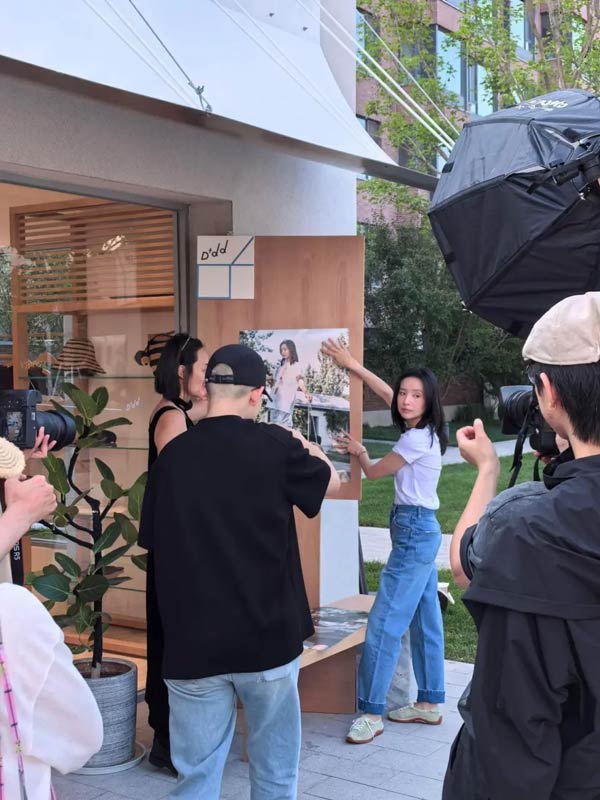
The Hebei storefront, with its warm woods and tactile textiles, functions as a cultural statement. In an era of algorithm-driven fast fashion, it champions human-centered design—garments meant to be touched, tried on, and cherished. Dong Jie’s presence there, welcoming patrons without airs, completes this ethos: true luxury lies not in exclusivity, but in intentionality.
Her journey mirrors the wardrobe evolution of her most iconic role,The Golden Era’s Leng Qingqiu—transitioning from youthful idealism to grounded sophistication. Dong Jie’s narrative arc, however, surpasses fiction. Where Qingqiu’s story ended with marriage, Dong Jie’s continues through entrepreneurial independence—a real-life third act proving that sometimes, the most compelling roles exist off-script.