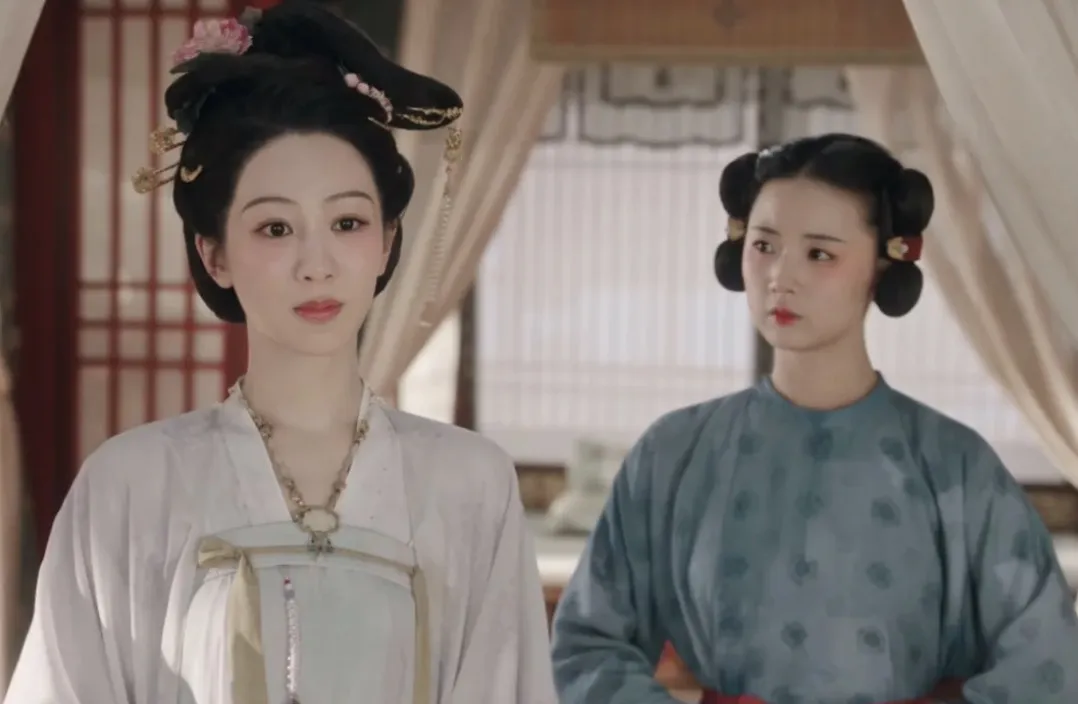
What exactly do the hairstyles that can clearly distinguish between young ladies and maids look like at a glance? In some current period cdramas, it's really hard to tell who is the young lady and who is the maid because the basic hairstyles and clothing of maids and young ladies are almost the same, with only the difference between a simplified version and an elaborate one. Some maids even dress more 'formally' than the young ladies.
Clothing Styles
Regarding the maid's styling, although clothing styles have changed over dynasties, hairstyles and hair buns have changed less. Maids' clothing mainly consists of segmented dresses and round - collar robes, presenting a distinct image difference in ladies' paintings. Usually, we can distinguish their dressing styles from ancient paintings, but it's not absolute. Maids mostly wear dresses and trousers inside. In the Tang and Song Dynasties, round - collar robes/shirts were popular, but they became less common after the middle of the Ming Dynasty.

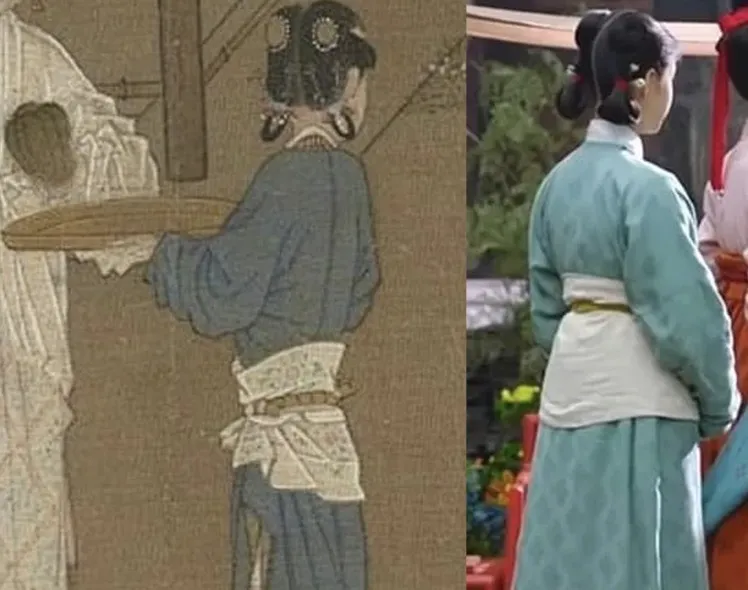
In the Tang Dynasty, maids' round - collar robes were looser, with wide sleeves, and a belt was often used to cinch the waist. The colors were bright and eye - catching, and their heads were decorated with various hair combs and ribbons. In the Song Dynasty, noble maids' round - collar robes were more form - fitting, with narrow sleeves.
They could wear an 'abdominal wrap' around the waist, and the goose - yellow one was called 'waist - yellow'. They used a leather or cloth belt to cinch the waist, and their heads were decorated with hair accessories like pearls. The colors were more elegant and dull. According to Yue Ke of the Song Dynasty, in the last years of the Xuanhe period, people in the capital all used goose - yellow as abdominal wraps, called waist - yellow. This 'abdominal wrap' was a bit like the 'wraparound skirts' of previous dynasties, similar to modern aprons, which could protect clothes during work and were mostly light - colored, showing the tidiness of clothing.
Hairstyles
The double - hanging buns are characterized by 'hanging down'. Sometimes they are two buns behind the ears, and sometimes multiple loops hanging down. Without the hanging - down characteristic, they are usually called 'Ya Ji' (丫髻) or 'double buns'. Besides double - hanging buns, the Ya Ji style is also common among maids.
Ya Ji is a hairstyle for children, with hair tied into small tufts on one or both sides, looking like tree branches. Most maids in ancient times were young and couldn't coil their hair, which is where the term 'Yahuan' (丫鬟) comes from. In some ancient paintings, we can see hairstyles where maids with double - hanging buns 'leave their hair long', indicating that their hair hasn't grown long enough to be coiled up, which is evidence of their young age.
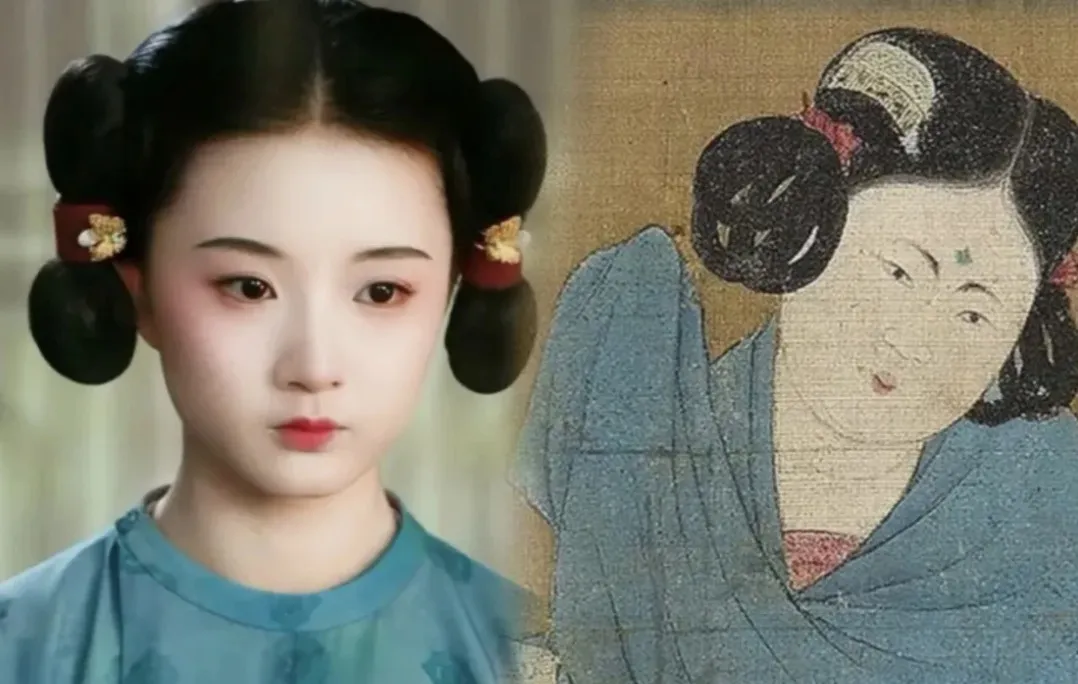
In the ladies' paintings by Qiu Ying (仇英) of the Ming Dynasty, we can see various styles and clothing of maids, confirming the above points. Adult maids' hairstyle in ancient paintings is rare. Their status is generally that of a steward, and they can coil their hair up, with relatively simple hairstyles. In the Ming Dynasty, the jacket - skirt style was popular. In the early Ming Dynasty, maids wore jacket - skirts, but their hairstyles were still mainly the above - mentioned ones. In the middle and late Ming Dynasty, especially at the end of the Ming Dynasty, maids wore standing - collar and cross - collared styles, with an abdominal wrap around the waist, showing their working identity and facilitating daily service work.

Most current period dramas refer to the styles of the Tang, Song, and Ming Dynasties. With more historical and ancient - painting materials as a basis, the styling is getting better. However, some TV dramas still have maids' clothing styles similar to their masters', which is perfunctory and causes trouble for character identification. Actually, it's not difficult to understand maid styling; we just need to learn more about it. In conclusion, by understanding these clothing and hairstyle features, we can better distinguish maids from young ladies in ancient - themed works and appreciate the details of ancient culture.