Article
Search results:
-
Early Tang Dynasty Female Makeup History
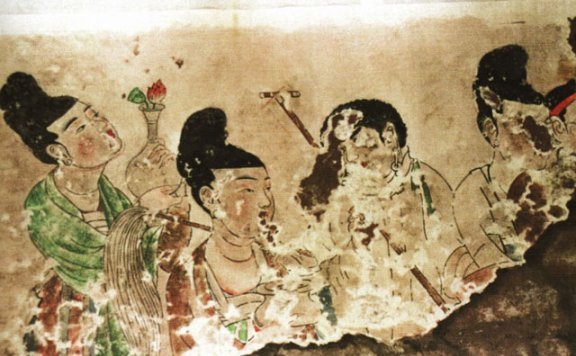
As for the most powerful woman in ancient China, Wu Zetian must be mentioned. From the time she entered the palace to the time she abdicated, Wu Zetian's life spanned nearly seven decades from the early Tang Dynasty to the peak of the Tang Dynasty, nearly a quarter of the reign of the Tang Dynasty. With the overall national power, economy, customs, and even climate change of various factors, this period of court makeup, whether the overall aesthetic, or makeup, hair, jewelry, and even clothing, have undergone huge changes. As a woman who eventually rose to the top of imperial politics, Wu Zetian had the powerful energy for changing the makeup fashion of the day. 01 From the simple charm of the old dynasty Wu Zetian was born in the seventh year of Wu De (624), and entered the palace at the age of fourteen in the eleventh year of Zhenguan (637). After twelve years as a concubine, she followed the other concubines without children into the Temple of Sensationalism as a nun. The style of Tang women's clothing in the Zhenguan period was similar to that of the late Northern dynasty and Sui, advocating a slender figure and… -
The Most Classic Tang Dynasty Hanfu Look - in the National Treasure
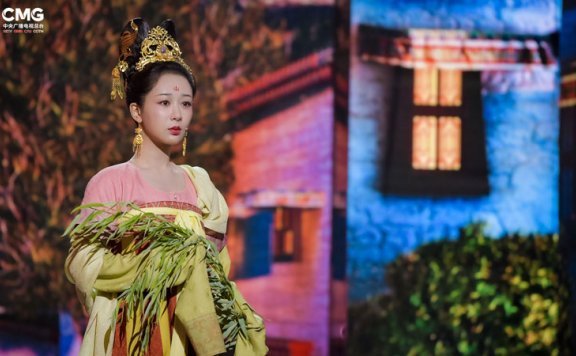
National Treasure (国家宝藏) can be said to be one of the must-see programs for lovers of traditional Chinese culture in recent years. In the last three seasons, the program teamed up with museums around China to present a large number of Chinese treasures and relics for viewers, telling their past and present, bringing contemporary people closer to historical relics. The Chinese traditional costumes - hanfu, that appear in the program are fully restored according to history, allowing viewers to appreciate the most authentic historical costumes of China. Such as Princess Wencheng, played by Yang Zi in the third episode of the third season, telling the story of her past life and present life, which has attracted a lot of attention. In addition, Yang Zi's Princess Wencheng styling broke the audience's inherent impression of Tang Dynasty costumes, and was even called the new template for cdrama costumes. 01 Styling Origins In fact, Yang Zi made such a stunning appearance, thanks to the program's restoration of history. In the program, Yang Zi did not wear a Tibetan robe, but a red + gold Banbi high waist ruqun hanfu. The first appearance, there are many viewers wondering, why Yang Zi since wearing… -
A Guide to Identifying the Hairstyles of Tang Dynasty Female Figurines
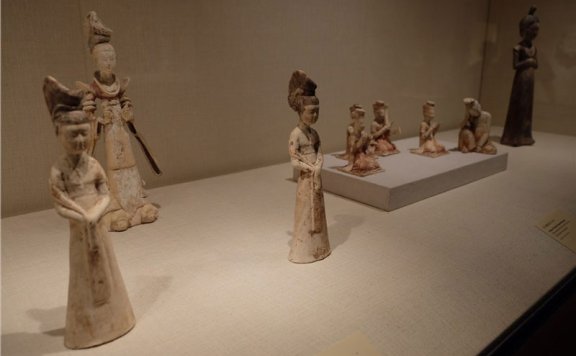
In museums, we can often see many female figurines from the Tang Dynasty. In this article, we will select some of the common female figurines to introduce their hairstyles. Duo Ma Ji (堕 马 髻) Duo Ma Ji is perhaps one of the most familiar hairstyles of the Tang Dynasty. In fact, this name already appeared in the Han Dynasty, but the exact form of Duo Ma Ji in the Han Dynasty is still uncertain. The name was used during the Tang Dynasty to describe a bun that was tilted to one side. The shape of the Duo Ma Ji is the hair falls between the ears and is combed towards the face, and the bun is not located in the middle of the head, but to the side. It is also known as the "Pao Jia Ji". This kind of bun is especially common in the late Tang Dynasty. In the famous "Lady Guoguo's Spring Outing", you can see the image of woman wearing the Duo Ma Ji. Wo Duo Ji (倭堕髻) Wo Duo Ji also has the form of double sideburns holding the face, with single or multiple buns placed on top of the head from… -
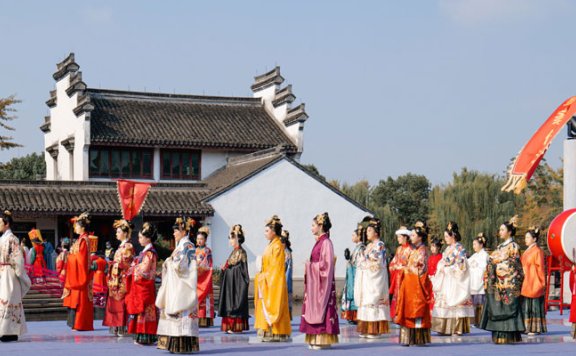
Live Photos - From the 9th Xitang Hanfu Culture Week
The 9th Xitang Hanfu Culture Week has started, let's take a look at the wonderful pictures of the scene. -
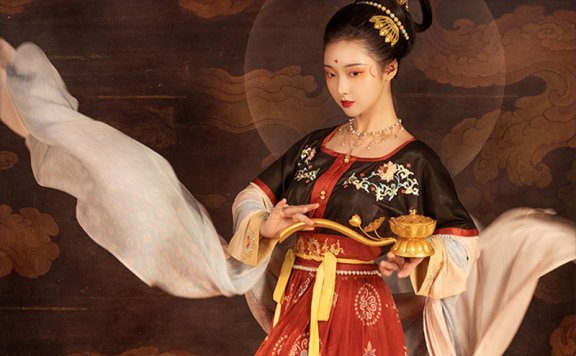
3 Classic Types of Tang Dynasty Patterns
Decorative patterns are the wisdom creation of mankind into civilized society. In order to perfect oneself and beautify one's life, human beings need not only the satisfaction of material life, but also the communication of spiritual life. Decorative patterns, through the beautification of practical objects of clothing, food, housing and transportation, make aesthetic ideals reflected in the practical life and play a subtle role, thus further promoting the improvement and development of human civilization. -- Chinese Decorative Patterns Through the Ages Today, let's follow the Modern Hanfu and learn about the history and modern application of the classic Tang Dynasty patterns. History of Traditional Patterns As early as the Neolithic era, patterns appeared, and the ancestors painted their inner desires and aesthetic interests into various patterns, which were entrusted with good luck and good wishes, and incorporated them into their lives. These patterns can be found on pottery and stone carvings, and probably on costumes as well, but unfortunately we do not have many costume artifacts yet. The culture of costume is closely related to the development of society, as early as before the Han Dynasty, dyed fabrics have been printed (with) traditional Chinese patterns, with the opening and… -
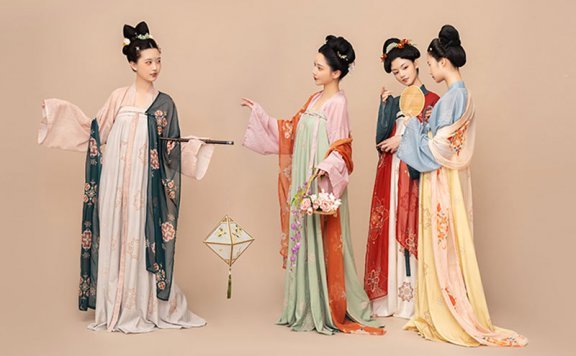
History of Chinese Dress: Kaleidoscope of Tang Costume
In terms of the cultural and economic development of Chinese feudal society, the Tang Dynasty was undoubtedly an apogee in the development of human civilization. The Tang government not only opened its country to the outside world, allowing foreigners to enter for business or study, but even allowed them to participate in the selection examinations for government officials. It was tolerant, and often appreciative of religions, art and culture of the outside world. Chang'an, the Tang capital, became the center of exchanges between different cultures. It deserves special mention that women of the Tang dynasty did not have to obey traditional dress codes, but were allowed to wear clothing that exposed their arms and chest, or dress with exotic elements. They could also wear riding clothes if they wanted to and enjoyed the freedom to choose their marriage and to divorce. The abundance of materials and a relatively relaxed social environment gave the Tang dynasty an unprecedented opportunity to develop culture, reaching new heights in such fields as poetry, painting, music and dance. Based on the development of the textile industry in the Sui Dynasty, and progress achieved in reeling and dyeing, the variety, quality and quantity of textile materials… -
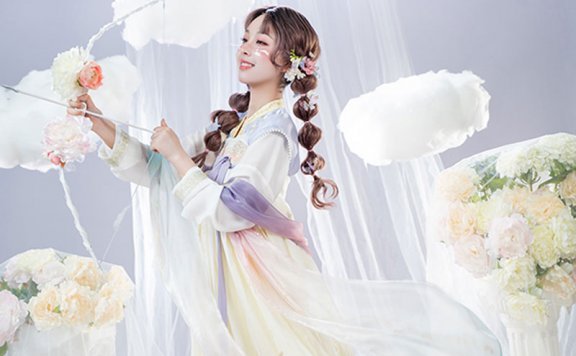
8 Different Styles of Tang Style Hanfu for Girls
This year, Tang Dynasty Hanfu has quietly become popular. In addition to the familiar Qixiong Hanfu, there are more and more styles of Tang Beizi (背子). Playful and lovely, the style is versatile, soft and cute, fresh and flashy ...... all kinds of styles can be found in the Tang style Hanfu. Today for you to select 8 Tang Dynasty women's Hanfu, if you also like Tang style Hanfu, don't miss it. Elegant white and cuffs pink and blue two-color splicing design, elegant between adding the sweetness of girls. The body of the top uses the group flower print and embellished peony embroidery at the chest, a noble atmosphere without losing the spirit. The skirt with lilies and letterhead combined with lace check print design, showing the spring romance. Wearing a lovely Tang Beizi, just like a small princess of the Tang Dynasty. The hem of the Beizi adds pearl design, with a more lovely style, bow style pin buckle, add a spirited novelty to the clothing. The outer layer of tulle silver silk strung with gold beads under the skirt, a sense of girlhood. With a cute little bag, let's go for a spring trip. The… -

Timeline of Ancient China: From Shang to Tang Dynasty
The Chinese culture forms a world apart from strong isolation. Only in prehistoric times, especially the Neolithic, can we point to any contact between such distant worlds. The pottery with painted spirals of the Chinese Yang-Chao culture, in the 3rd millennium, resembles that of Southern Russia and the Danube at the same time. It has been brought from the West, perhaps by the first Chinese, farmers and herdsmen arriving from the Turkestan districts, where they were in contact with Caucasians and Indo-Germans and with other Mughal groups, the Uralo-Altaic and Turkic. Early History of Chinese Culture People were already living in the large region we now call China long before the beginning of recorded history. About 9,000 years ago, the ancestors of today's Chinese created agricultural settlements near two mighty rivers, the Yellow River and the Yangtze. Near the northernmost Yellow River, the earliest agricultural settlements consisted of wooden houses plastered with mud and roofed with reeds. Farmers cultivated a plant called millet, as well as fished in the river and hunted. Further south, people built houses on stilts in the swampy land near the Chang Jiang or "Long River". They grew rice on the waterlogged land and archaeologists have… -
Tang Suit - Chinese Traditional Costume (History & Change)
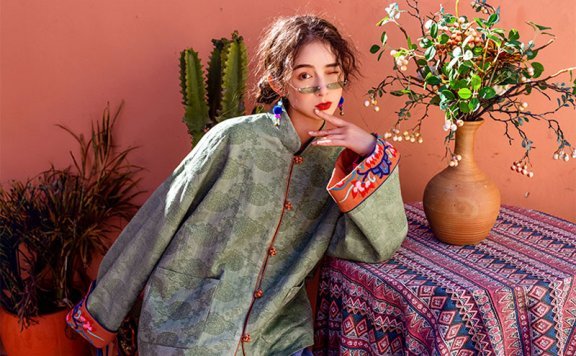
Tang suit (唐装, Tang Zhuang), also known as Chinese jacket. A newer form of Qing Dynasty Magua (马褂), is a modern costume with traditional elements, based on the prototype of a Chinese traditional lapel jacket, with the addition of stand collar and western-style three-dimensional cutting. Origin of the name of Tang suit Perhaps you may be puzzled, since Tang suit is a new form of Magua in the Qing Dynasty, why is there Tang in the name? Is it directly related to the Tang Dynasty costume? The reason is that the Tang Dynasty was a powerful dynasty in Chinese history and had a great influence on overseas countries, and in the Song Dynasty, "Tang" had become the pronoun of the overseas countries in the southeast for China. Throughout the Song, Yuan, and Ming dynasties, things related to China were called "Tang", and not only "Tang" was used as a proxy for the land of "China", but also the Chinese were called "Tang", overseas Chinese often call themselves "Tang people", they live in places called "Tangren Jie (唐人街, Chinatown)", so this Qing-style costume is also called "Tang suit". In modern times, the Tang suit has more diverse names, such as… -
4 Stunning Tang Style Hanfu for Women That Look Pretty
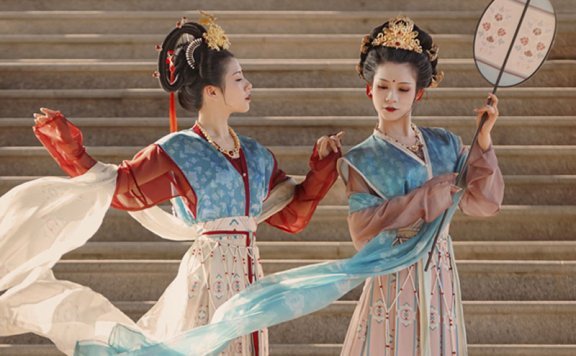
The Tang Dynasty was one of the most prosperous periods in Chinese history, a time when the arts flourished. This year, the Tang style Hanfu has become particularly popular, although the Qixiong suit has always been popular, but the fact is that there are many styles of Tang Hanfu, different styles can bring different visual effects, some handsome and some fresh. This article introduces 4 stunning Tang style Hanfu for women. The first set is the Tang style Beizi set, different from the Song dynasty Beizi, the Tang Beizi is mainly round neck and straight collar two forms, there are sleeveless and short-sleeved two, it is often worn with the Shan inside. In this set, the top half is a straight-necked style with a light blue printed Beizi and a light pink wrap around the lapel position, which looks fresh and sweet. Inside is an apricot-colored round neck short Shan, the short Shan is a solid color design, can give a very dignified and elegant visual effect. The bottom half of the suit is a very classic Po skirt (破裙) in the Tang style Hanfu, which is very thin, and the overall color of the skirt is a very gentle… -
Greet Spring with Tang Dynasty Peach Blossom Makeup!
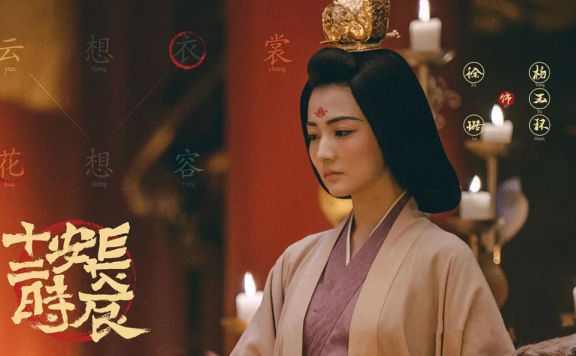
The Tang Dynasty, one of the most prosperous dynasties in Chinese history, not only opened the door to foreign exchanges, but also gave women a new attitude to show off their charm. As we know, it was popular in that era to have a chubby-body, a high bun, a light, and fluttering Pibo, and colorful makeup, which made the gorgeous "Tang style". We have previously introduced the makeup of the Tang Dynasty, today we introduce you to the details of the peach blossom makeup (桃花妆, táo huā zhuāng). Steps of Tang Dynasty Makeup Tang Dynasty period, makeup according to the application of different shades of powder, and can be divided into wine Jiuyun makeup (酒晕妆, jiǔ yùn zhuāng), peach-blossom makeup, Feixia makeup (飞霞妆, fēi xiá zhuāng). Yu Wen Shi's "Zhuangtai Ji" has recorded: "The beauty's makeup, face not only apply powder, but also blended with rouge palm, applied to both cheeks, thick for 'Jiuyun makeup'; light for 'peach blossom makeup'; playing a thin vermilion, with a pink cover, known as"Feixia makeup". Overall, the entire Tang Dynasty makeup look can be divided into seven steps: apply lead powder (敷铅粉) apply the rouge (抹胭脂) draw eyebrows (画黛眉) Tie hua dian (贴花钿)… -
Awesome! Pretty Hanfu Dance Show - Tang Palace Night Banquet
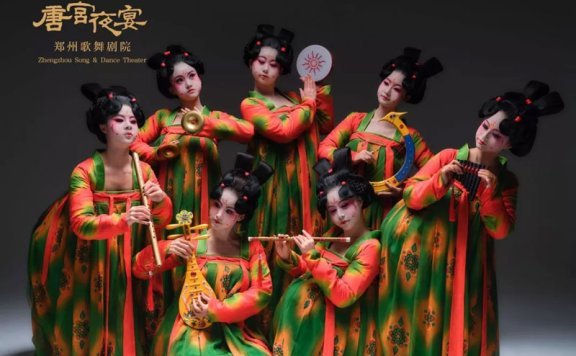
These days, China Henan TV's Spring Festival Gala Hanfu dance program: Tang Palace Night Banquet (唐宫夜宴, Tanggong Yeyan), has gained a lot of popularity among netizens. "Tang Palace Night Banquet" features the musicians of the night banquet, showing the process of the Tang Dynasty girls from preparing and finishing their makeup to playing at the night banquet. 14 lively and dynamic "Tang Dynasty girls" from the ancient paintings, the actors playful and lovely dance, the traditional cultural image of the Tang Dynasty perfectly presented on stage, combined with AR technology to show the virtual scene, presenting more stunning visual effects. Full video of the program: The main body of the Hanfu dance show is a team of young palace maids attending the night banquet, who sometimes laugh and play, sometimes dress up, with a delicate and charming expression. And when the scene switched to the formal court performance, the palace dancers instantly atmosphere magnificent up. What is particularly attractive is that the image of the palace maids is taken from the Tang figurines, from makeup to actions, all have the style and spirit of the Tang figurines, so that the audience as a experience"Museum of Wonderful Night". The gala's general… -

How to Make a Hanfu(2) – Tang Dynasty Shawl: Peizi
Today, we'll be sharing a tutorial on Hanfu make, by Midnoonight: how to make a Tang dynasty shawl - Peizi. In the Tang Dynasty, Shan + Qun + Peizi is a classic three-piece set for girls. They can be worn in many ways and are very easy to match. A Video explanation is available at the bottom of the article. Sketch Let's confirm the shape of the Peizi, by drawing a rectangle and curving the sides of the rectangle to form the shape of a boat. Some decorations can be added to the Peizi, such as a Yinluo (璎珞) pattern. The fabric used is narrow floral silk. Cut & Sew up Align the ends, draw a curve according to the paper pattern, and cut it out. As the fabric is narrow, the edges do not need to be hemmed, just hemmed where the ends have been cut. Sew and iron smooth. Decorative Now it's time for Yingluo decorative stitching, let's call it a 1Y1 formation. Calculate the approximate amount of material to be used. Mark each cycle 2.5cm apart on the fabric. Make the "1" first, noting that the last bead is used to block the garnet, and… -
Types and Wear Styles of Tang Dynasty Women’s Clothing
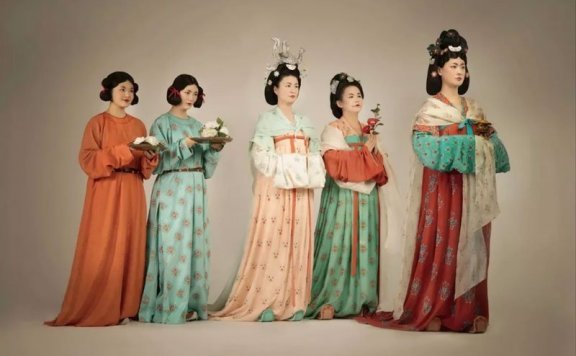
Ordinary Tang dynasty women's clothing we are all familiar with, a short blouse, a long skirt, and then shawls, which is often referred to as "Tang Ru", "high-waisted Ruqun" or "shawls Ruqun". And so on with this set of clothing. But what exactly were these garments called in ancient times, and what were the specific wearing sequence? Let's take a look. The basic equipment of daily women's clothing in the Tang Dynasty is: shirt, skirt, and shawls. In addition, depending on the situation, they also included a Beizi, Mofu (陌腹, underwear), shoes and socks, etc. The following is a description of the types of Tang Dynasty women's clothing for daily and the way to match in the four seasons. Shanzi (衫子, shān zi, shirt) · Ru (襦,rú) Women in the Tang dynasty wore long-sleeved blouses with narrow sleeves and short bodies, now generally called "Ru (襦)", but according to Tang custom it should be called "Shanzi". Various Tang dynasty documents, unearthed clothing records and poetry novels in the costume vocabulary, mention of daily women's clothing, from the early to mid-to-late Tang dynasty, almost all the tops are "Shanzi". Shanzi were very short in length, mostly less than the waist, and… -
Live Photos - From the 8th Xitang Hanfu Culture Week
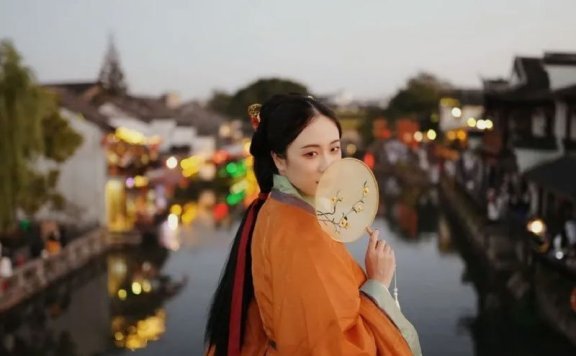
8th Xitang Hanfu culture week was held from October 31 to November 3. We also found some wonderful pictures to share with you. Let's enjoy the visual feast of Hanfu. -
Grand Opening of the 8th Xitang Hanfu Culture Week
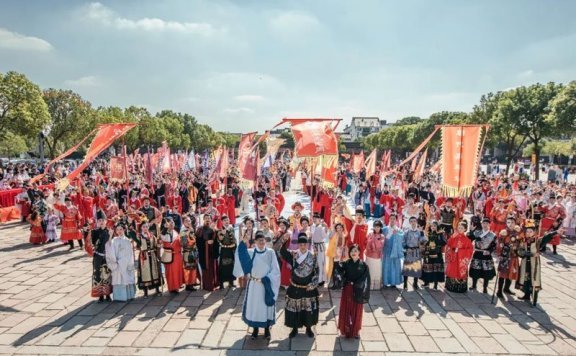
In the bustling crowd, women in Hanfu, men in armor, passing by. This beautiful dream, has been realized in Xitang. October 31, the eighth Chinese national costume show and China Xitang Hanfu culture week in Zhejiang Xitang ancient town grand opening, from all over the country tens of thousands of traditional culture lovers and tourists gathered in Xitang, to watch the national costume show, to promote traditional Hanfu culture, to enjoy the scenery of Xitang. https://youtu.be/mw0kOrUPHpQ ▲Video of the opening ceremony of the 8th Xitang Hanfu Culture Week Let's take a look at the highlights of this year's Xitang Hanfu Culture Week Carnival by following the Xitang Travel. First up was the carnival float. The float beats the drum to symbolize the pioneering spirit of Wu Zixu. The float extracts the elements of the ancient architecture of Xitang in the Ming and Qing dynasties, combines the humanistic atmosphere of "poetry and painting" with the traditional calligraphy and painting, and is designed from the Yongning Bridge, the symbol of Xitang ancient town, which conveys people's beautiful vision of "eternal peace and prosperity", and creates a "poetic and picturesque" "dream Xitang" cultural visual feast. Followed by the honor guard, riding… -
History of Tang Dynasty Makeup Style
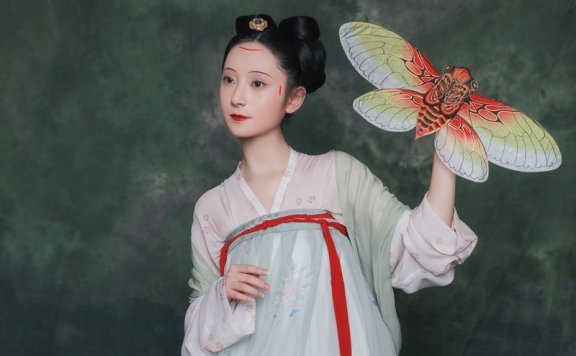
The Tang dynasty makeup style can almost be said to be the most versatile in the entire ancient history of China, because both in terms of national power and politics, the Tang dynasty almost reached the pinnacle of history, and because of this prosperity, the makeup of the women's makeup in the people's peace of environment constantly changing refinement. With the transformation of the early Tang Dynasty, the flourishing Tang Dynasty, and the middle and late Tang Dynasty, the makeup was also making different changes, and for this reason, some special makeups were created, as we can see from the many ancient wall paintings and drawings. Early Tang Dynasty makeup style: the beauty of simplicity In the early Tang Dynasty, influenced by the short-lived Sui Dynasty (581-617), the royal family did not pursue luxury and advocated simplicity. Therefore, the overall makeup of the women's more subtle and graceful, to lightly coated with lead white makeup and lightly coated with rouge red makeup mainly. | White Makeup | Since ancient times, people have advocated the beauty of white, so women have the custom of powder, only to the Tang Dynasty, women's powder and style more diverse and prevalent. During the… -
Chinese Historical fashion Items for Tang Dynasty Women
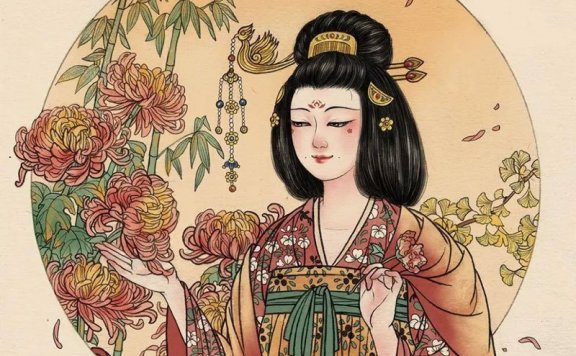
As we all know, the Tang Dynasty had unprecedented national power, strong economic strength, people lived in peace and happiness, and the people's pursuit of fashion is also increasing. Today for you to introduce the women fashion items in the Tang Dynasty, let's take a look at Chinese historical fashion together. The Essential Diexie Belt (蹀躞带) for Tang Dynasty Women The movie "The Assassin" released in 2015, in which the female protagonist Nie Yinniang is dressed in a black robe, wearing a very fashionable belt at the waist, which is a popular "Diexie belt" in the Tang Dynasty. Diexie belt was originally a kind of waist belt of the Hu people, since the Wei and Jin Dynasty, introduced into the Central Plains, to the Tang Dynasty was once set as civil and military officials must wear something. An antique Tang dynasty Diexie belt, now in the Shaanxi Provincial Institute of Archaeology. It is 1.5 meters long and 1.2 centimeters thick and is made of white jade, some of which is light green. The jade belt is made of using traditional decorative techniques, inlaid gold in Hetian white jade, and the quality of the jade is warm, luxurious, and beautiful.… -
Modern Hanfu Drawing & Cosplay - Restore the Tang Dynasty
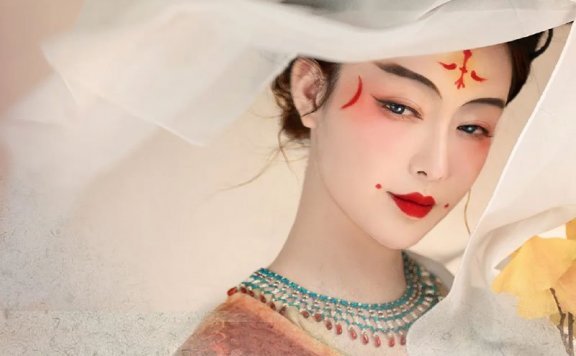
The Tang Dynasty (from 618 to 907) was extremely important in the history of China. Many Chinese TV dramas and movies have been filmed with the Tang Dynasty as the background. We have introduced the costume culture of the Tang Dynasty before, today we will show you the beautiful makeup and the history of the rise and fall of the Tang Dynasty through the Hanfu drawing of illustrator @Yucha Guozi (御茶菓子) and the Hanfu model @Zhende Caicai (真的菜菜), present the stunning makeup and the history of the rise and fall of the Tang Dynasty, and feel the aesthetic spirit of the Tang Dynasty which is diverse, confident and inclusive. Early Tang dynasty: the first year of Wude: 618 AD (武德元年) Narrow-sleeved short garments were popular in the early Tang dynasty. The picture shows a double-bun maid, wearing a shawl collar, a half-sleeved garment with a long skirt, and a skinny shape. Gaozong period of the Tang Dynasty: 628-683 AD (高宗时期) Next is a "woman in men's clothing", during the Tang dynasty, women often wore men's clothing. This is because during the period of Gaozong, society gradually became more elegant and open, and the body shape that was favored… -
Hanfu Festival - The 8th Xitang Hanfu Culture Week is Coming
The eighth Xitang Hanfu Culture Week this year demands the origin of the word "Hanfu" and its connotation of the same lineage. Promoting the significance of Hanfu clothing is consistent with our consistent beginnings. Hanfu is more than just a piece of clothing, so we need to delve into the realm of traditional culture and combine it with contemporary expression and content. Introducing dynastic carnivals, Hanfu runway shows, weddings, coming of age ceremony, and more. Integrating the thinking of etiquette and aesthetics, advocating the rule, integrity, balance, and harmony of the Han clothing culture. Traditional renewal, innovative Chinese style. Xitang Hanfu Culture Week is willing to spread Hanfu culture with positive energy and experience the ritual of life in the culture with you. https://youtu.be/iGvJ6JJWUQQ Event Time: 2020 the Eighth Chinese National Costume Exhibition & Xitang Hanfu Culture Week: October 31 to November 3, as scheduled How to Register: Registration for all events of Xitang Hanfu Culture Week will be opened soon, so stay tuned! Appreciation of Previous Activities: