Article
Search results:
-

Hanfu Making(6) - Quju Cutting & Sewing Patterns
This section contains Quju (曲裾). Size range: 155/80A to 175/96A. Please read the introduction of the topic and how to use this guide in advance. Introduction The basic style of the Quju is the Jiao Ling You Ren, the back lapel is lengthened to form a triangle, which passes down the back and around to the front lapel, and then a Dadai (大带) is tied around the waist to cover the end of the triangle, with a pleated skirt underneath. The Quju was popular from the pre-Qin to Han dynasties, before the invention of the Ku (袴), and could be worn by both men and women, with the hemline of the men's Quju being wider and the hemline of some women's Quju taking on a unique "trumpet flower" style. Later, men's Quju gradually disappeared, and for a long time, Quju remained in the mainstream of women's clothing. However, in the Wei and Jin Dynasties, the Ruqun, which was easier to wear and more convenient for walking, became widely popular, while the Quju began to disappear, and in the long history that followed, the most popular women's clothing was the Ruqun style. Although the Quju disappeared early in history, it… -
Hanfu Making(5) - Pan Collar Aoqun Cutting & Sewing Patterns
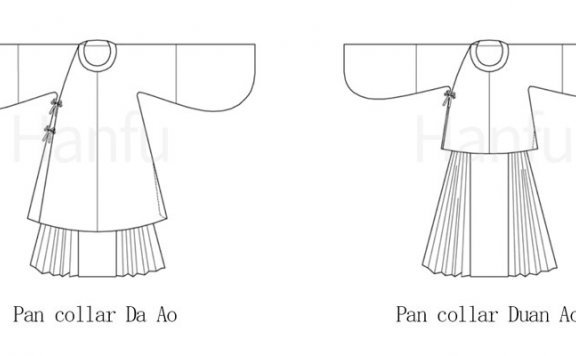
This section contains Pan collar Aoqun (盘领袄裙), which can be divided into: Pan collar Da Ao (盘扣大袄), Pan collar Duan Ao (盘扣短袄). Size range: 155/80A to 175/96A. Please read the introduction of the topic and how to use this guide in advance. Introduction The round collar tunic was not originally a Han dress, but a new type of dress introduced in northern China during the Sixteen Kingdoms period (when the southern part was under the Eastern Jin Dynasty), and became completely popular in ancient China after the Sui and Tang dynasties. However, this costume has evolved over time and has become completely Han Chinese, and as such has become an important and indispensable style in the Han clothing system. The Ming system Pan collar is a kind of round collar, evolved from the Sui and Tang round collar, generally straight cloth is first folded in half, then ironed into shape, along the inner circle with thread sewn tightly, so that the collar edge curved into a round shape, and the end of the collar edge nailed with buttons for fixed. The Pan collar Da Ao (盘扣大袄) can be used as a woman's formal dress, usually with Pipa sleeves or wide… -
Hanfu Making(4) - Beizi Cutting & Sewing Patterns
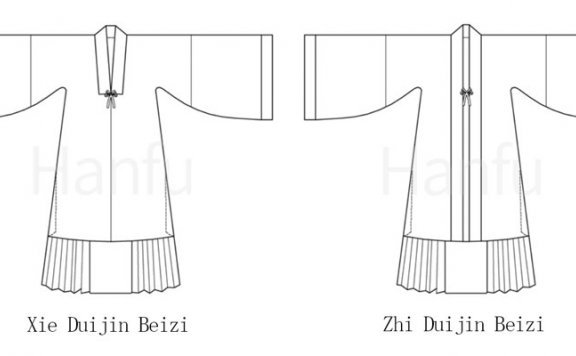
This section contains Beizi (褙子), which can be divided into: Xie Duijin Beizi(斜对襟褙子), Zhi Duijin Beizi (直对襟褙子). Size range: 155/80A to 175/96A. Please read the introduction of the topic and how to use this guide in advance. Introduction Beizi is a kind of top with a pair of lapels, which relies on two ties in front of the chest to hold it in place, so it must be worn over other clothes, and is knee-length with slits on both sides. In the Ming Dynasty, it was also called "Pifeng". Beizi can be worn by both men and women, with men mostly using them as Bianfu (便服) and women using them as Lifu (礼服, formal dresses). There are two types of Beizi painted in this section: Xie Duijin (diagonal lapels) Beizi and Zhi Duijin (straight lapels) Beizi, mainly women's wide-sleeved Beizi, with a Ma Mian Qun or pleated skirt underneath. In addition, for the Zhi Duijin Beizi, you can make men's Beizi by enlarging the size and making slight alterations, or you can make women's narrow-sleeved Beizi by reducing the size of the sleeves. Size chart Xie Duijin Beizi(斜对襟褙子) Zhi Duijin Beizi (直对襟褙子) More Hanfu Style… -
![[Interview] How to Become a Hanfu Model](https://www.newhanfu.com/wp-content/uploads/thumb/2021/05/fill_w576_h356_g0_mark_Interview-How-to-Become-a-Hanfu-Model-3-1.jpg)
[Interview] How to Become a Hanfu Model
Hanfu models are arguably the luckiest of all, as they are always the first to try on the latest hanfu and take beautiful photos. But becoming a good hanfu model also takes a lot of hard work. Modern Hanfu found four hanfu models and let's hear their stories. No.1 A Shang (阿尚) I am a college student studying drama performance, and I chose to join the hanfu modeling industry in my freshman year because I wanted to gain more shooting experience to better train myself and to reduce some economic pressure for my family, and I had participated in some aspects of modeling work. When I first joined the hanfu modeling industry, I thought hanfu modeling was the same as print modeling, but then I realized that I had to have my own "Yun Wei (韵味, charm)" to make it work. And the outside world's opinion about hanfu is really too single, each hanfu model as a "show" on stage for a minute or even a dozen seconds, may have to do a full month or two months of preparation off stage. From the understanding of the costume, to the selection of the overall style, to the design of… -
How Popular is Hanfu Now
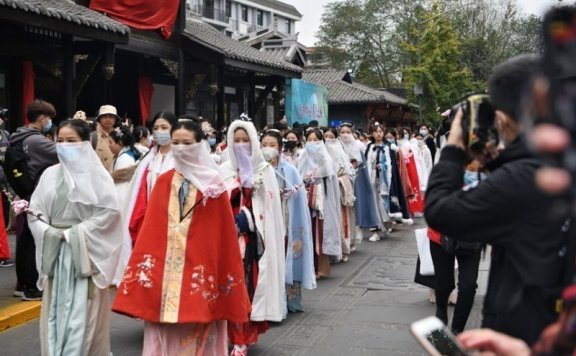
Source: China Daily According to data from people.cn, Chinese hanfu consumers surpassed 2 million in 2018, tripling the level of 2017. A recent report from Guangzhou-based consultancy iiMedia Research estimated that by 2021, China’s hanfu fans will reach 6.89 million, and the hanfu sales volume will total 10.16 billion yuan ($1.58 billion). Popular Hanfu Currently, there were more than 3,000 registered hanfu-related enterprises in China, among which over 60 percent were registered in the past five years, data from business information provider Tianyancha showed. Guangzhou-based bespoke hanfu manufacturer, Minghuatang, is known as the “Hermes of hanfu.” Data from Minghuatang’s official website on May 17 showed that the customer service is busy handling orders submitted on May 11, and the tailoring period has been scheduled to mid-March 2022. Apart from high-end markets, inexpensive hanfu is also popular. Data from Alibaba’s Taobao platform showed that hanfu that are priced between 100 yuan and 300 yuan took up over 60 percent of sales, while those over 500 yuan accounted for roughly 30 percent of sales. Why Hanfu became popular Zhang Yi, the chief analyst at iiMedia Research, said during an interview with online fashion media Vogue Business, that from a niche hobby… -
History of Chinese Dress: Kaleidoscope of Tang Costume
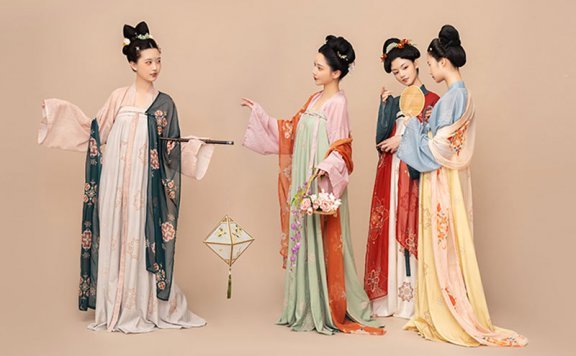
In terms of the cultural and economic development of Chinese feudal society, the Tang Dynasty was undoubtedly an apogee in the development of human civilization. The Tang government not only opened its country to the outside world, allowing foreigners to enter for business or study, but even allowed them to participate in the selection examinations for government officials. It was tolerant, and often appreciative of religions, art and culture of the outside world. Chang'an, the Tang capital, became the center of exchanges between different cultures. It deserves special mention that women of the Tang dynasty did not have to obey traditional dress codes, but were allowed to wear clothing that exposed their arms and chest, or dress with exotic elements. They could also wear riding clothes if they wanted to and enjoyed the freedom to choose their marriage and to divorce. The abundance of materials and a relatively relaxed social environment gave the Tang dynasty an unprecedented opportunity to develop culture, reaching new heights in such fields as poetry, painting, music and dance. Based on the development of the textile industry in the Sui Dynasty, and progress achieved in reeling and dyeing, the variety, quality and quantity of textile materials… -
Hanfu Making(2) - Aoqun Cutting & Sewing Patterns
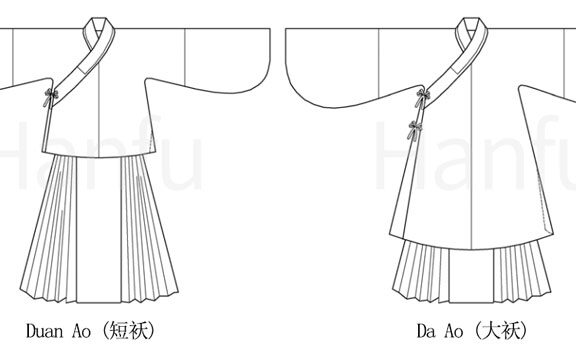
This section contains Aoqun (袄裙), which can be divided into: Duan Ao (短袄), Da Ao (大袄), Mamian Qun (马面裙). Size range: Duan Ao and Da Ao (155/80A to 175/96A), Mamian Qun (155/80A to 175/80A). Please read the introduction of the topic and how to use this guide in advance. Introduction In the Ming Dynasty, women's Hanfu clothing is very popular in the form of clothes cover skirt way of dress, the most common "Aoqun (袄裙)" is a Ming Dynasty women's clothing general term, that is, the upper Ao (袄, jacket) with the lower Qun (裙, skirt) with the way, and not a single piece of clothing. The "Ao" in this section refers to a cross-necked female top, and the "Qun" refers to a Mamian Qun (horse-face skirt). Early Hanfu tops were mostly called "Ru (襦)", and after the Wei and Jin Dynasties, they were also called "Ao" and "Shan (衫, shirt)". Nowadays, it is generally considered that the Aoqun is longer and covers the waist of the skirt, while the one that requires the clothes to be tucked into the waist of the skirt is the Ruqun (襦裙), but both belong to the Ruqun system. The Ming-style Aoqun… -
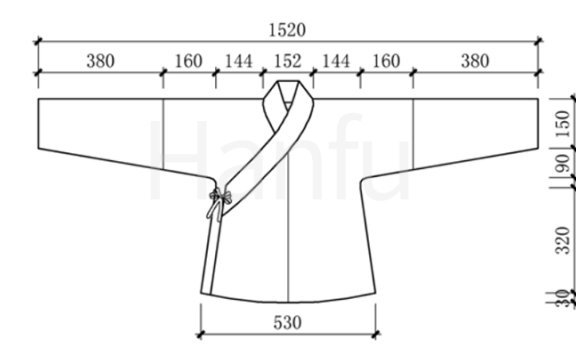
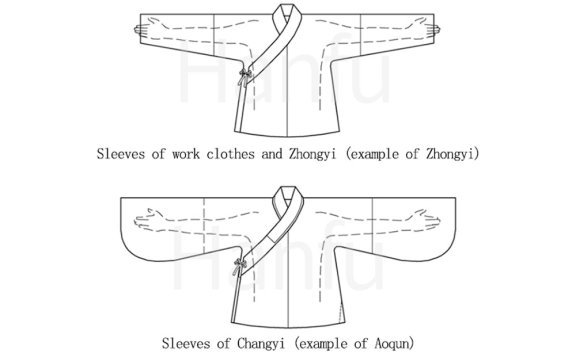
Hanfu Making(1) - Zhongyi Cutting & Sewing Patterns
This section includes Zhongyi (中衣) and Zhongku (中裤). Size range: Zhongyi (155/80A to 185/104A), Zhongku (155/64A to 185/88A) Please read the introduction of the topic and how to use this guide in advance. Introduction Zhongyi, also known as Liyi, is worn outside of underwear and within outerwear (the Chinese meaning of 中 is equivalent to the middle), and its role is similar to that of a shirt in modern clothing, which can be used to match and complement the role of Zhongyi. Zhongyi cannot be worn outside, and in addition to playing the role of a shirt, it can also be used as home wear and pajamas. The Zhongyi illustrated in this section is the common cross-collar arrow-sleeved Zhongyi, while the broad Zhongyi also includes Zhongdan (中单), Zhongku (中裤, pants), and Zhognqun (中裙, skirts). Zhongyi common fabric types are cotton, cotton linen, chiffon, monochrome satin, etc. In addition to the most commonly used white fabric, girls can also choose colored fabrics when they match the Ruqun, the colors of which are bright green, soft yellow, peach, purple and gray, etc. Men wearing Pan collar robe with Zhongyi can also choose red. Because Zhongyi's body and collar than the outer clothing… -
Guide of Chinese Traditional Hanfu Sewing Patterns
Original Author: Huafeng Mozhu (华风墨逐) Hanfu Cutting & Sewing Patterns Detail Zhongyi (中衣) Aoqun (袄裙) Ruqun (襦裙) Beizi (褙子) Pan collar Aoqun (盘领袄) Quju (曲裾) Banbi (半臂) Shuhe (裋褐) Zhiduo/Zhishen/Daopao (直裰/直身/道袍) Panling Pao/Lanshan (盘领袍/襕衫) Shenyi (深衣) Yisan (曳撒) Inspired Hanfu (改良汉服) Updating Preface Ethnic costumes are different from ordinary clothes that only play the role of warmth and decoration, but they are one of the elements of the appearance of a nation and an important carrier of its traditional culture. It is also an important carrier of the traditional culture of a nation. The cultural connotation of traditional costumes of different nationalities is different, and it can naturally show the spiritual civilization and aesthetics of the nation. Hanfu is the traditional costume of the Han people, also known as "Han Zhuang" or "Hua Fu".Since the time of the Yellow Emperor, Yao and Shun, hanfu has taken a basic form, and after the inheritance of the rituals of the Zhou Dynasty, it has formed a perfect system of clothing and crown and spread to the people in the Han Dynasty. The hanfu had been developed for thousands of years until the fall of the Ming Dynasty, when it was temporarily stopped.… -
My Story with Hanfu: Hanfu Makes Me Beautiful - Xiayang
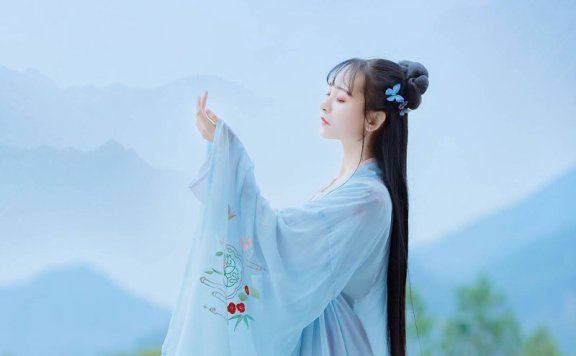
Contributed article from user xiayang for 2021 Hanfu Free Giveaways & Contests PLAN C (My Story with Hanfu). Recently, I cleaned up my closet and found that I bought a lot of hanfu, some of which I haven't worn for a long time, as time goes by, I've been in love with hanfu for some years now, so I'd like to take this opportunity to write about my story with hanfu. I. First encounter I can't remember when the word Hanfu entered my field of vision, but at that time I had heard a little bit about the "Hanfu revival", and I couldn't help but look at the pictures of beautiful hanfu girls on the internet, but I wasn't a fan yet. Around 2011, I started to notice some girls wearing hanfu in school, and I knew there was a hanfu association, but I was too busy with my studies to care about anything else. 2012 was the year of graduation, and it was popular to take traditional-style graduation photos, and hanfu graduation photos became popular on a small scale. But I didn't have a hanfu yet. Later, I met a schoolmate, and I found out that she was a Hanfu Tongpao (同袍),… -
My Story with Hanfu - Camille
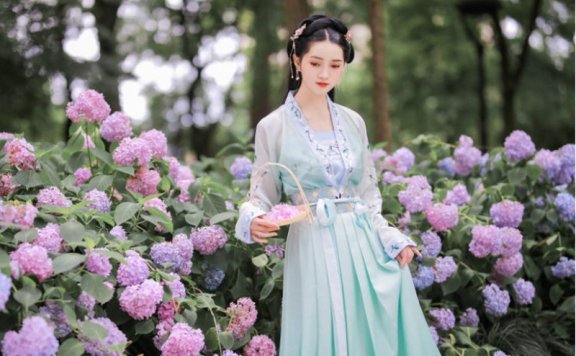
Contributed article from user Camille for 2021 Hanfu Free Giveaways & Contests PLAN C (My Story with Hanfu). It's my first time writing an article, so maybe the content is rather simple, thank you for reading. The first time I came across hanfu was through the TV series: Dream of the Red Chamber, which is probably a common starting point for many people, we are always unconsciously attracted by the beautiful costumes in TV series. But at that time, I didn't know that it was called hanfu, but later I read articles about hanfu, and only then I connected the two together, and in fact. It seems like it was a long time ago that I liked hanfu, but it seems like it happened recently, probably because I used to like it, but I never had the money to buy a set of hanfu of my own, so I remember the state of it very clearly. But the real reason I got my own hanfu was after I worked and took out a little bit of my monthly salary and I got a hanfu. I still remember how excited I was when I got that set of clothes, it was… -
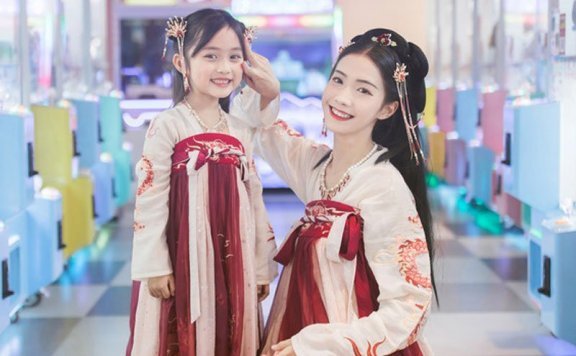
Latest Traditional Chinese Dress for Kids
Hanfu & Traditional Chinese Dress for Kids Hanfu is becoming more and more popular among young people, and traditional clothing has also attracted more attention. And children have always been cute pronouns, but what kind of surprises will there be for children to wear traditional Chinese clothes. This issue brings traditional Chinese dress for kids, so that they can also wear Chinese clothes and feel the power of traditional culture together. What kind of clothes did children wear in ancient China? It is generally believed that children in the history of China do not have their own clothes, and children have been wearing a reduced version of adult clothes, but in fact, but it's not all that. Ancient Chinese Dress for Kids Qiangbao (襁褓, swaddling) The clothing of newborn babies is more common: Qiangbao. Qiangbao was widely used in ancient China from the court down to the people. According to the literature, Qiangbao as an ancient child care product has been widely used as early as the Shang and Zhou dynasties. The term "Qiangbao" was later used to refer to babies under the age of one year. Doudu (兜肚) Doudu, with naked back when wearing, has the function of heat… -
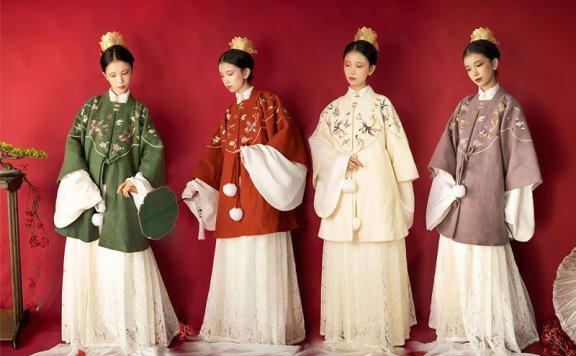
10 Traditional Chinese Colors & 4 Patterns Applied to Hanfu
The Colors of the Four Seasons | Chinese Dressing Aesthetics Color, is an important factor that constitutes the beauty of the art of dress. The ancients naturally did not ignore it. Classical Chinese dress colors originated from ancient times, as early as 18,000 years ago when the Beijing Cavemanused stone powder red to dye jewelry. For a long time, Chinese colors learned from the bright nature of birds' feathers, flowers, and so on, imitated the dyeing, and gradually became a system of its own, following the rules to use, expressing the transformation of seasons. Rites of Zhou has recorded: "For painting, the five colors are mixed. The symbol of the east is called cyan, the symbol of the south is called red, the symbol of the west is called white, the symbol of the north is called black, the symbol of the sky is called Xuan (dark black), and the symbol of the earth is called yellow." The center is also yellow. The colors of the Wuxing (五行, Five Elements) are yellow (earth, 土), white (metal, 金), cyan (wood, 木), red (fire, 火), black (water, 水), the colors of the four seasons are spring green, summer red, autumn white, winter… -
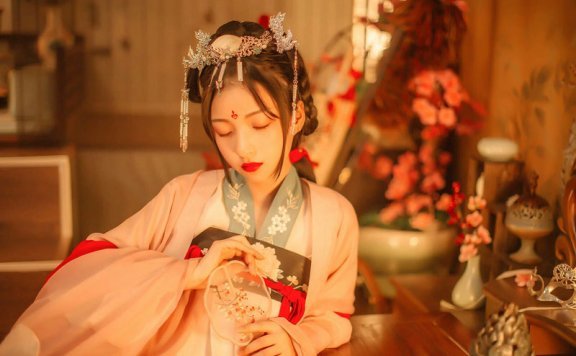
Where to Buy Hanfu Online
Many new Hanfu fans have bought Hanfu online before, probably on Amazon, eBay, or other shopping websites. However, they are not very satisfied with the Hanfu that they purchased, not only high price low quality, but the style is mainly not good-looking. Most of them finally very disappointed, even give up the love of Hanfu. Where can buy Hanfu with good quality and price become a big problem. Therefore, I compared a lot of Hanfu shopping online store, but they are not professional and have no brands. Their shop usually sells a lot of products that are not related to Hanfu. When I want to give up, I finally met a very professional website focus on Hanfu, and it is called Newhanfu, a Hanfu Design Studio from China, founded in 1998. Best Hanfu Buy Online Store 2021 - Newhanfu The Newhanfu has more than 20 years of experience in Hanfu, and they have rarely participated in marketing activities online before so that it is difficult for you to find them. They design a wide range of Chinese Hanfu, including men's Hanfu, modern Hanfu, as well as a variety of Hanfu accessories. And the most important thing is that their style… -
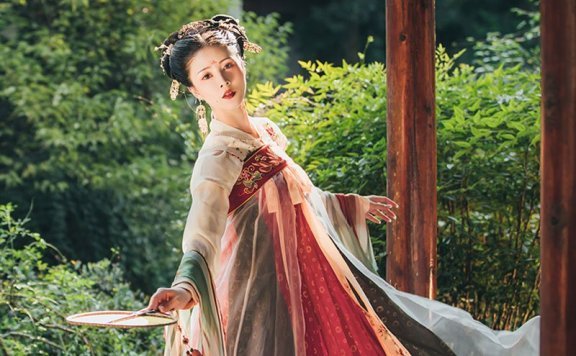
The 5 Most Popular Styles of Oriental Dress & Clothing - Asian Robe
What is the oriental dress, clothing? Due to the differences in history, culture, and geographical location, the traditional costumes of different countries in the world are not the same. Even in Asia, the oriental dress clothing of different countries is also colorful. On the continent of Asia, each country has its own unique and proud culture. Different states have different characteristics in their clothes, food, residence, and travel. And clothing is one of the things that can best record and show the cultural changes of a country. There are many kinds of traditional asian clothing, including Hanfu, Qipao, Kimono, Hanbok, Sari, Ao Dai, Chut Thai, Tajik clothing, etc. Today, let's learn about some of the most distinctive and representative traditional oriental dress, clothing. 1. Hanfu / Cheongsam China has a long history and its traditional costumes are constantly changing. From the upper and the lower garments system of the Yellow Emperor era, to the crown and uniform system of the Han Dynasty, to the Zhongshan costume of the Republic of China, it is a miniature of China's social environment in different periods. Hanfu: Hanfu is the general designation of "Han traditional costume", also known as Hanyiguan (汉衣冠), Hanzhuang (汉装),… -
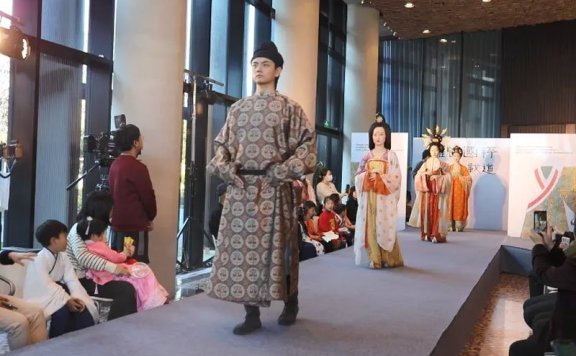
Hanfu Show: Guan · Guocui - Chinese Traditional Costumes
Recently, the Chinese Academy of Sciences University held an Hanfu show on the theme of "Guan·Guocui - Chinese Traditional Costumes (觀•国粹 服以载道 中国传统服饰主题嘉会)". The actors for this event were all students from the Chinese Academy of Sciences University. Ten students were dressed in costumes recovered from archaeological data and documents from the Western Han, Eastern Han, Tang, and Song dynasties, demonstrating the beauty of Hanfu. Rhythmic classical music was heard from afar, and a woman in a Quju robe, holding a censer, walked slowly toward the audience accompanied by drum beats. The costumes of the Han Dynasty, represented by the Quju robe, integrated the costumes of the pre-Qin Dynasty and laid down the basic style and tone of Hanfu costumes. Next were men in Eastern Han Zhiju robes and women in Eastern Han Ruqun, who was elegant and square. The woman with a towering bun and a Buyao(步摇) in front of her hair was wearing a big-sleeved Shanqun from the Southern Tang Dynasty, with a graceful, bright, and enchanting figure. The traditional costumes were so different from the modern ones that the teachers and students were amazed and impressed by the exquisite Chinese costumes. The music suddenly turned to lively… -
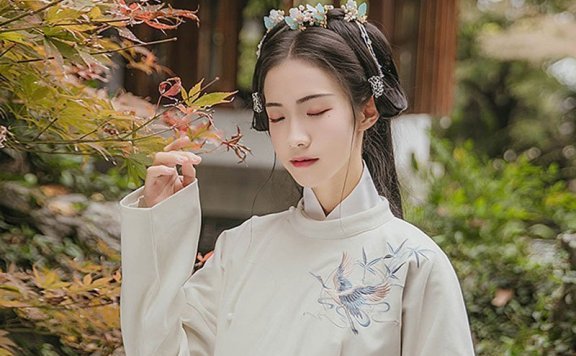
The Most Classic Hanfu of All Time
In the process of evolution, there are dozens or even hundreds of styles of Chinese clothes. This article mainly introduces the most classical styles of Chinese Hanfu clothes. Women's clothing Suit Ruqun(襦裙) Ruqun is a kind of hanfu, also call: Shanqun (衫裙), short clothes worn on the upper body, call "Ru", and the dress of the lower body, call "Qun", together call "Ruqun". It is a typical "Shangyi Xiachang(top clothes and underdress) " form. Ruqun has an obvious feature: short top and long dress. The Ruqun appeared in the Warring States Period, Ruqun was worn by ordinary people(female) until the end of the Ming and Qing Dynasties. Jiaoling Ruqun/ Shanqun(交领襦裙/衫裙) Jiaoling Ruqun is a kind of Ruqun, the main feature is: the top collar is cross. It is quite common in the Song Dynasty. Wearing method: First: Wear top clothes, Align the collar of the top clothes; Tie a knot in right Jin(襟, the chest part of the top); Tie a knot in left Jin. Second: tie up the dress, Put the dress in front of you, wrap the skirt behind you; Two sides of the dress overlap behind; Folding outwards the pressing on the inner layer of dress;… -
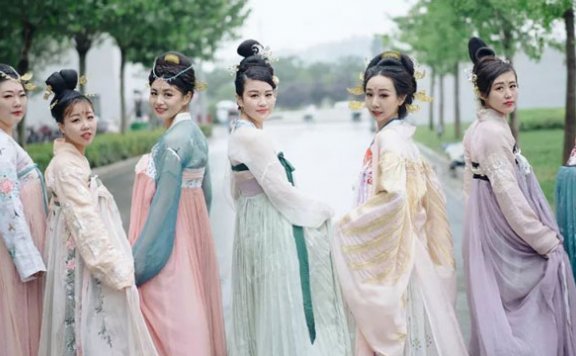
Top 5 Styles of Traditional Chinese Dress & Clothing
The story of clothing and costumes is one of the most fascinating developments in human history. Traditional Chinese Dress & Clothing has a long history and cultural content, and it is an important part of Chinese excellent cultural heritage, so It has particular researching value. https://www.youtube.com/watch?v=YaD4vS2GQxw Every nation in the world has its unique traditional clothing. The particular histories and cultures could be recognized so as for people to distinguish one citizen from another. China, as a multi-ethnic and time-honored country, has many ethnic minorities who have their indigenous culture. The mutual influences among these different cultures have contributed to the rich textures and fabrics of history and have made Chinese clothing with great variation and glory. Traditional Chinese dress & clothing has been shaped and developed alongside the interactive influences between the outside world and China’s own dynastic traditions. Every different dynastic has different scopes of territory, social values, social norms, etc. Therefore, many aesthetic standards were made according to the environments (socially, geographically, economically, politically) of certain dynastic. This is the main reason why traditional Chinese clothing has such many styles. 5 Types of Traditional Chinese Clothing & Dress For exploring the world of traditional Chinese clothing, it is necessary… -
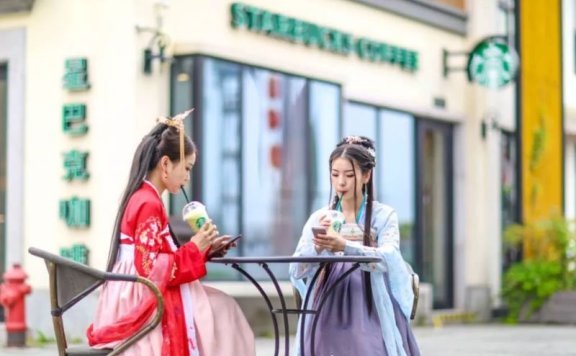
What is Hanfu? What does it Stand for?
What is Hanfu? At present, the full name is widely recognized as the “traditional costume of the Han nationality”, that is, the clothes worn by the Han nationality from the Yellow Emperor’s accession to the throne to the late Ming and early Qing Dynasty. On September 30, 2019, a group of young people in Chinese costumes Hanfu came to the streets of Sydney Opera House with zither and pipa. They sang "my country and me" with music in foreign countries. According to @Ms. Tingyue, the initiator of the event, this is a Hanfu flash event in three landmarks in Sydney, aiming to promote traditional Chinese culture. What is Hanfu? At present, the full name is widely recognized as the "traditional costume of the Han nationality", that is, the clothes worn by the Han nationality from the Yellow Emperor's accession to the throne to the late Ming and early Qing Dynasty. On the Internet, the most popular styles are Qiyao-Ruqun (齐腰襦裙) in the Wei and Jin Dynasties, Qixiong-Ruqun (齐胸襦裙) and large sleeved shirt (大袖衫) in the Tang Dynasty, as well as Beizi (褙子) in the Song Dynasty and Horse-face Dress (马面裙) in the Ming Dynasty. The earliest appearance of Hanfu was… -

Introduction of Chinese Traditional Hanfu Wedding
Hanfu wedding, which is wearing traditional Chinese clothing: Hanfu, and taking the traditional Chinese wedding system as the prototype. Modern people restore the traditional Chinese wedding, they roughly sum it up as follows The Zhou Hanfu wedding (周制婚礼), represented by the pre-Qin and Han Dynasties. Tang Hanfu wedding (唐制婚礼) represented by Wei, Jin, and Tang Dynasties. Ming Hanfu wedding (明制婚礼) represented by song and Ming Dynasties. The traditional Chinese Hanfu wedding ceremony is generally divided into three parts: pre-wedding ceremony, formal wedding ceremony, and post-wedding ceremony. As we all know, culture is the life of a nation, and etiquette is one of the main signs of all civilized nations and an important window of national culture. As the Chinese nation with a long civilization of 5000 years, attach great importance to marriage. The book of Zhouyi said: Only when there are heaven and earth can there be everything. Only when there is everything can there be men and women. Only when there are men and women can there be couples. Only when there are couples can there be fathers and sons. Only when there are fathers and sons can there be princes and ministers. Only when there are princes and…