Article
Search results:
-

How Real Is the Qixiong Ruqun?
There’s a certain kind of outfit that turns heads, not just because it’s beautiful, but because it leaves people wondering: Is this really how ancient people dressed? Enter the Qixiong Ruqun (齐胸襦裙), a style of Hanfu where the skirt is tied all the way up to the chest—sometimes even under the armpits. It’s dramatic. It’s feminine. And it’s sparked years of debate over whether it’s based on history or pure fantasy. The Rise of a Silhouette That Defies Gravity At a glance, the Qixiong Ruqun feels like a distant cousin of the Korean Chima Jeogori—a wide-skirted dress worn high on the torso, paired with a short jacket. In fact, when you fluff out the skirt and widen the waistband, the two styles can look eerily similar. But the rabbit hole runs deeper than visual resemblance. Questions around the Qixiong Ruqun don’t just come down to aesthetics. They ask something more fundamental: How do you even keep this thing from sliding down? Anyone who’s tried wearing one has likely felt that awkward sensation—the pull of gravity on a waistband that doesn’t seem to be anchored to anything solid. It’s not a minor wardrobe inconvenience. It’s a design flaw. And it’s raised… -
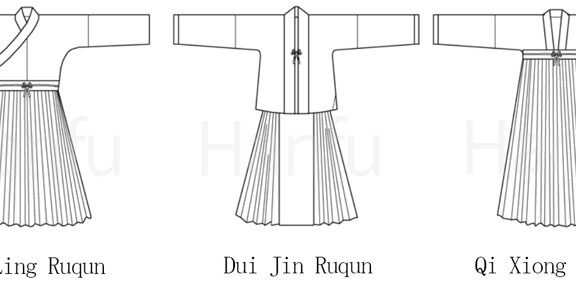
Hanfu Making(3) - Ruqun Cutting & Sewing Patterns
This section contains Ruqun (襦裙), which can be divided into: Jiao Ling Shang Ru (交领上襦), Dui Jin Shang Ru (对襟上襦), Zhe Qun (褶裙) type A, Zhe Qun type B, Qi Xiong Shang Ru (齐胸上襦). Size range: Jiao Ling Shang Ru, Dui Jin Shang Ru, and Qi Xiong Shang Ru (155/80A to 175/96A), Zhe Qun (155/64A to 175/80A). Please read the introduction of the topic and how to use this guide in advance. The Ruqun in this section should actually be called "Shan Qun (衫裙)". Ruqun is supposed to refer to the Hanfu style from the Wei and Jin dynasties, with a Yaolan (腰襕). Introduction Ruqun (襦裙) is one of the earliest and most basic clothing forms in the history of Chinese dress. The Ruqun described here generally has a short upper Ru, reaching only to the waist or flush with the chest, while the Qun (skirt) is long and hangs down to the ground. According to the different styles of the collar, can be divided into: Jiao Ling Ruqun(交领襦裙, cross-collar); Dui Jin Ruqun(对襟襦裙, lapel). According to the height of the skirt waist, can be divided into: Zhong Yao Ruqun(中腰襦裙, mid-waist), the same as the Qi Yao Ruqun(齐腰襦裙); Gao Yao… -
How to Wear Hanfu (3) – Tang Dynasty Qiyao Ruqun
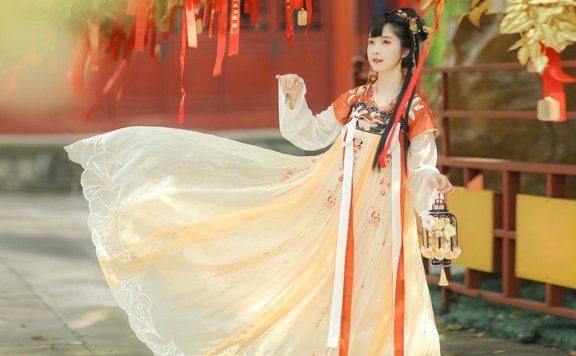
Ruqun (襦裙), is one of the earliest and most basic forms of Hanfu. Ru means top garment, and Qun means skirt. There are two types of Ruqun if categorized by where the skirt is tied, one with the skirt tied above the chest (the chest-high Ruqun - Qixiong Ruqun), and the other one is tied on the waist, and for today, we are going to talk about the waist-high Ruqun - Qiyao Ruqun. Let's take a look at history and how to wear the Qiyao Ruqun. 1: History of Qiyao Ruqun Ruqun is one of the styles under the Yi Chang (衣裳) category of hanfu, Yi Chang basically means top and skirt, although traditional Chinese clothing varied greatly from each dynasty to the next, the few basic styles remained unchanged for the most part. During the Tang Dynasty, other than the iconic Qixiong Ruqun, a variety of Qiyao Ruqun styles were also in favor. In this famous Chinese painting “Night Revels of Han Xizai (韩熙载夜宴图)”, all the musician ladies were wearing Qiyao Ruqun, with bold and vibrant colors. 2: Wear the Top Garment of Qiyao Ruqun Unlike Qixiong Ruqun, you have to wear a camisole with the Qiyao… -
How to Wear Hanfu (2) - Tang Dynasty Qixiong Ruqun
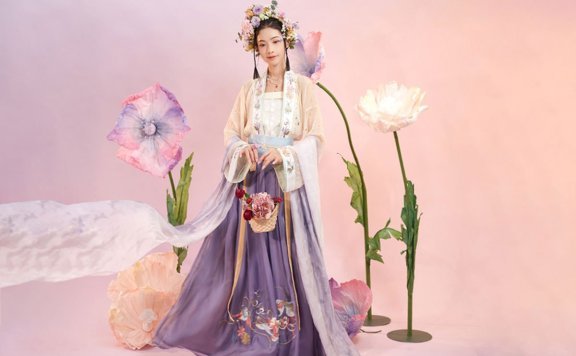
Qixiong Ruqun(齐胸襦裙) is a typical style during the Tang Dynasty, the golden age of China. You can find similar styles of clothing in the famous Tang Dynasty paintings. This is a type of Ruqun with the skirt tied above the breasts and worn with short blouses. Now let’s look at the individual pieces and how to wear Hanfu - Qixiong Ruqun. 1: Wear the Blouse of Qixiong Ruqun The word Ruqun translates into top garment and skirt in Chinese, it is one of the earliest and most basic forms of Hanfu. This blouse has parallel collars and is relatively short to match the long skirt, it is very common to find flower and plant shaped patterns on fabrics during the Tang Dynasty. Put the blouse on first, and tie the knot. 2: Wear the Skirt of Qixiong Ruqun Moving onto the skirt, it is long and pleated, unlike traditional skirts which are usually one piece of fabric wrapped around the body, this modern twist separates the back and front panel and has two sets of ties, it is designed to ensure a better fit and help it stay put on the body. The first step into the center… -

Hanfu Photo Sharing of Ruqun-Return to the Tang Dynasty
Today, we share a group of photos of Ruqun, the posture and style is worth learning Ruqun has always been a popular style, put on your ruqun and take beautiful pictures~ -
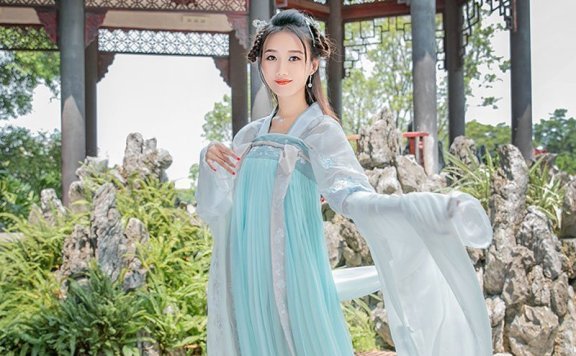
How to Wear Chest Ruqun Hanfu
Before, we introduced the way to wear a wist ruqun(one slice), and next, we will simply tell you how to wear a Qi xiong Ruqun(Chest Ruqun). Qi Xiong Ruqun is made up of front and back pieces(as the picture show). Step 1: Separate the front and back pieces and wear the back ones first. Step 2: tie up the back pieces. Step 3: tie up the front one(put white tape and red tape together). Step 4:Put an X-fork behind you, then take the tape to the front. Step 5: Make a knot. Step 6: The next step is to decorate the extra tape, wrap them in circles, just like a kind of Chinese food: Mahua (麻花, Fried Dough Twists). Step 7: Tie a knot at the end. Step 8: The red tape also needs to be wrap in circles. Finished~ Wearing Hanfu does not seem to be such a difficult thing, but it also requires repeated attempts to get the best look. If you have any questions during the wearing process, you are welcome to contact us by email, we will give you a more detailed explanation. More about how to wear Hanfu can be found here. -
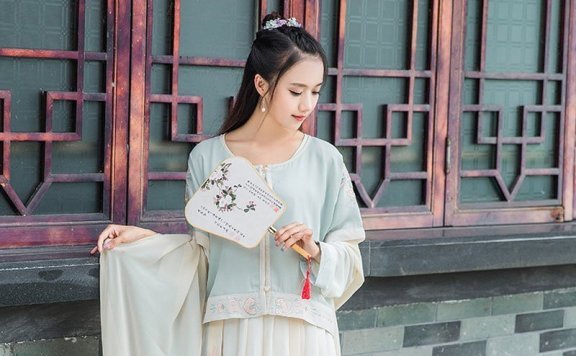
How to Wear a Waist Ruqun
Many friends who have not touched Hanfu will have a lot of confusion when they wear Hanfu for the first time. How to wear it? Well, we will have a series of articles to simply tell you how to wear Hanfu. Today, let me show you how to wear a Waist Ruqun. First of all, what you have to know is that the Hanfu were without belts and buttons, all by lacing. The first one to introduce is Waist Ruqun(one slice), one slice means that the only one piece of dress. Step 1: Put the skirt over the waist, align the center of the skirt with the middle of the body, wrap the skirt around the waist and wrap the lower body. (This process is similar to a bathrobe after bathing.) Step 2: Sort out, and from the side, the place to be tied is left out. Step 3: Wrap the rope around the back (Note: cross the rope twice) Step 4: Then wrap around the front of the body. Step 5: Pass the rope through the part of the rope that has been tied to the waist Finished~ Wearing Hanfu does not seem to be such a difficult thing, but… -
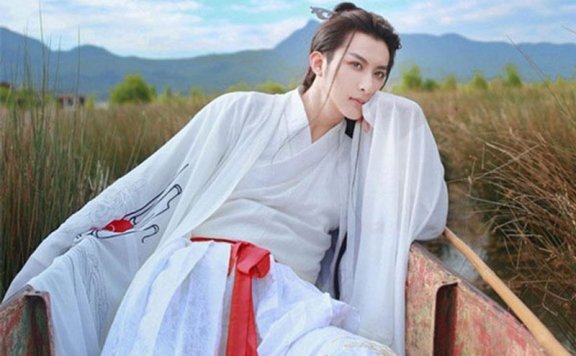
The Difference Between Male and Female Ruqun Hanfu
The previous article's introduction focuses on women's Ruqun, and then we introduce men's Ruqun. The men's Ruqun is a male dress, composed of a top blouse and a lower dress, and the upper jaw is mostly handed over(Jiaoling). Compared with the women's skirts, the men's skirt style and pattern are plainer. "Zhou Yi(周易)" said that “Yellow Emperor, Yao, Shun is wearing clothes and the world is ruled”, which shows that in the Yellow Emperor's era, the tops of the blouses were the styles of the ancient Chinese people. This is the prototype of the Ruqun (a top blouse and a lower dress)of the next generation, costumes of the blouses, and other costumes. Although its specific shape still needs further research, but the suit of a top blouse and a lower skirt lays the foundation of Hanfu. Until the appearance of Zhiju, Quju, and so on, the number of people wearing Ruqun(Ru dress) has been reduced, but the official high-standard men's dress was still the Ruqun system(a top blouse and a lower dress), which continued until the Ming Dynasty. The traditional dress of Hanfu is an enclosed skirt, which is made up of several pieces of skirts and is connected to… -

About Ruqun, You Should Know These
In the previous article, we introduced the Ruqun(襦裙), The Ruqun is composed of a short top and a long dress, that is, composed of a top and a lower dress. Song Suzhen's "Silkworm" poem: "I don't worry about the bread bait, I have fortunately had a Ruqun(Ru dress)." The style of the Ruqun has appeared in the Warring States period. The collar of the scorpion is divided into "Jiaoling Ruqun" and "Zhiling Ruqun". The waist of the dress is divided into"Zhongyao Ruqun", "Gaoyao Ruqun" and "Qixiong Ruqun". Ruqun is classified according to whether they are clipped or not. The Ruqun can be divided into single Ruqun and double Ruqun, single Ruqun close to the shirt, and double Ruqun are close to coat. Next to introduce is "Banbi (半臂, half arm)", it and the shawl constitute an important part of the Ruqun. "Banbi" classification: 1.according to the collar type, which can be divided into : Duijin half-armed dress Jiaoling half-armed dress Tanling half-armed dress (Tang Dynasty). It is a short-sleeved top for summer use in ancient China. It was only popular in the private sector and was convenient for the daily life and labor of the working people. The length of… -
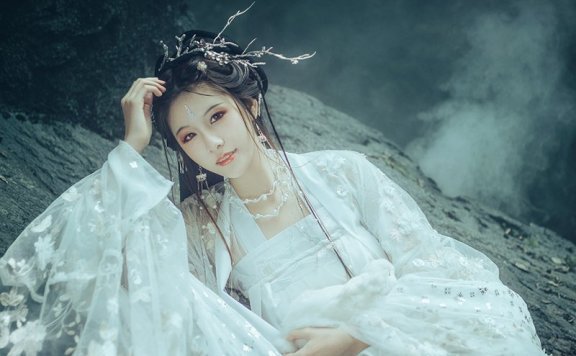
4 Tips You Should Know about Ruqun
The Ruqun(襦裙) is one of the earliest and most basic forms of clothing in the history of Han costumes. From the Warring States period with physical evidence, at the end of the Ming and Qing Dynasties with the "shaving and easy clothing". Is the most basic form of traditional Han costumes. In the meantime, more than 2,000 years, although the length and width have changed, the basic form has always maintained the original style. The Ruqun(襦裙) consists of the lower dress and the upper jaw (is short coat) and is generally called the Changfu (常服, uniform). According to the collar type, the Ruqun can be divided into: "Jiaoling Ruqun (交领襦裙, cross collar Ruqun)" "Zhiling Ruqun (直领襦裙, straight collar Ruqun)" According to the waist position of the dress, can be divided into: "Zhongyao Ruqun (中腰襦裙, a middle waist Ruqun)" "Gaoyao Ruqun (高腰襦裙, a high waist Ruqun)" "Qixiong Ruqun (齐胸襦裙, a chest Ruqun)" the Jiaoling Ruqun: the cross-collar dress is quite common in the Song Dynasty, it is characterized by the captain for the cross-collar.Can be subdivided into three: Jiaoling-Qiyao Ruqun(交领-齐腰襦裙,cross-collar Qi waist Ruqun): Qiyao Ruqun: dress's waist and waist are flush. Jiaoling-Gaoyao Ruqun (交领-高腰襦裙,cross-collar high waist Ruqun): Gaoyao Ruqun: The line… -
Jiang Qinqin Shines in Song - Style Hanfu
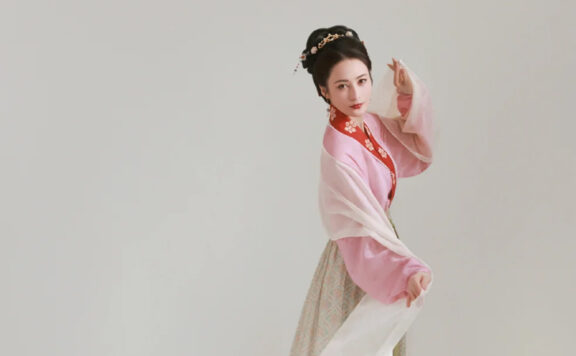
At a recent gala celebrating intangible cultural heritage, Jiang Qinqin (蒋勤勤) stepped back into the public eye. She didn't just appear; she arrived wrapped in the quiet elegance of Song-style Hanfu. The photos quickly rippled across social media, sparking a familiar question among viewers: Why has she stepped away from the screen so completely? The collective hope is for her to bring this very aesthetic—the muted tones and classic lines of the Song Dynasty—to life in a period drama. It feels like the perfect fit. Style Notes The outfit she wore is deceptively simple, yet it represents one of the most classic silhouettes in Hanfu. It’s a style centered on the Jiaoling (交领) or cross-collar, often paired with a long silk scarf known as a Pibo (披帛). Depending on the season and layering, a single layer is typically called a Shan (衫), while a lined garment is a Ru (襦). Historically, the combination of top and skirt was termed Ruqun during the Han and Jin dynasties. By the warmer Tang and Song periods, people often called it Shanqun. It's a subtle linguistic shift, but it reflects a real evolution in comfort and wearability. The genius of Song-style clothing lies in… -
Why Hanfu’s Zhongfeng Endures—Beyond a Simple Stitch
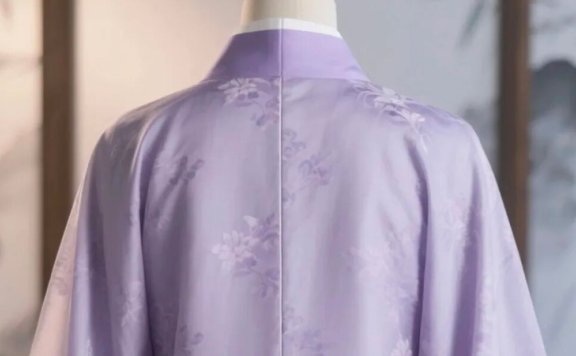
Have you ever noticed the perfectly straight vertical line running down the front and back of traditional Hanfu? This is no mere decorative stitch or accidental wrinkle. In an age of seamless, stretch-knit fabrics, this deliberate opening in the garment tells a story far older than fast fashion, weaving together threads of ancient necessity, structural genius, and profound philosophy. This central seam, or Zhongfeng (中缝), is a signature element, a quiet yet powerful statement embedded in the cloth itself. While its presence is now a defining characteristic, its origins are remarkably humble, born from the simple limitations of the loom. Loom to Line Centuries ago, textile technology set clear boundaries. The width of a single bolt of handwoven cloth was narrow, often just 50 to 60 centimeters. This presented a practical puzzle for tailors: how to create a garment wide enough to comfortably drape the human body. The ingenious solution was both simple and elegant. Two lengths of cloth were joined together along their selvedges, creating a single, wider panel with a seam precisely down the middle. This was the birth of the Zhongfeng, a direct result of material constraints. Yet, what began as a necessity quickly revealed an unexpected… -
Lin Yun's Wei-Jin-Inspired Look in The Road to Glory
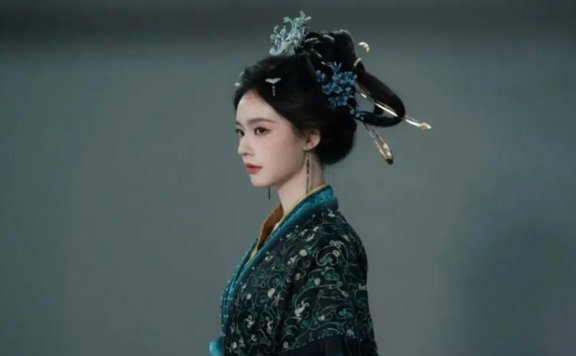
The recent unveiling of actor Lin Yun's (林允) official look for the upcoming historical series The Road to Glory (归鸾) has sparked more than just casual discussion; it has ignited a wave of enthusiastic approval online. In an era where period dramas often favor fantasy-inspired, anachronistic designs, her ensemble stands out for its deliberate grounding in the historical aesthetics of the Wei and Jin dynasties. This choice resonates deeply with an audience increasingly weary of generic "Xianxia" (仙侠) fairy costumes that, while visually pleasing, lack cultural roots. The design philosophy here is clear: true ethereal beauty stems from historical authenticity, not from arbitrary layers of sheer fabric and elaborate hair ornaments. Lin Yun's look, therefore, is being celebrated not merely as a pretty costume, but as a statement of intent—a call for costume design to reconnect with its source material. The Silhouette of History The core of the ensemble is a Banxiu Ruqun (半袖襦裙), a style of short-sleeved jacket and skirt that adheres closely to Wei-Jin tailoring. The wide sleeves and crossed collar are classic elements, but the inclusion of the documented "half-sleeve" design is a meticulous touch. The skirt, constructed from trapezoidal fabric panels, creates a unique, fluttering movement… -
Bai Lu Embraces the Spirit of Traditional Chinese Style
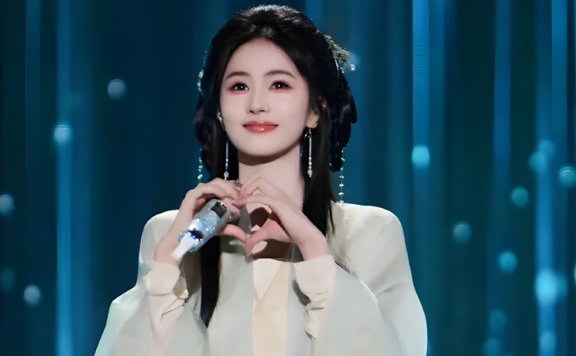
In a recent series of images that swiftly captivated the internet, actress Bai Lu (白鹿) presented a vision of ethereal elegance that seems to transcend time. Dressed in a soft goose-yellow Ruqun (襦裙) robe overlaid with a sheer, misty cyan gauze outer garment, she appeared not as a modern celebrity, but as a celestial being from an ancient painting. The ensemble masterfully blends traditional Chinese aesthetics with a contemporary sense of grace, creating a "soft-fog" effect that is both delicate and profoundly arresting. This look doesn't just clothe the wearer; it surrounds her in an aura of timeless, gentle beauty that feels both familiar and wonderfully new. A Closer Look at the Details The magic lies in the meticulous craftsmanship. The pale cyan outer layer is light and translucent, reminiscent of morning mist clinging to a hillside. It adds depth and a dreamlike quality without obscuring the beauty beneath. The inner robe, in its warm, muted yellow hue, glows softly, its color evocative of sunlight on new blossoms. Upon closer inspection, exquisite embroidery reveals itself along the hems, each stitch a testament to refined artistry. These subtle details embody the quiet sophistication central to traditional Chinese design. Her hairstyle completes… -
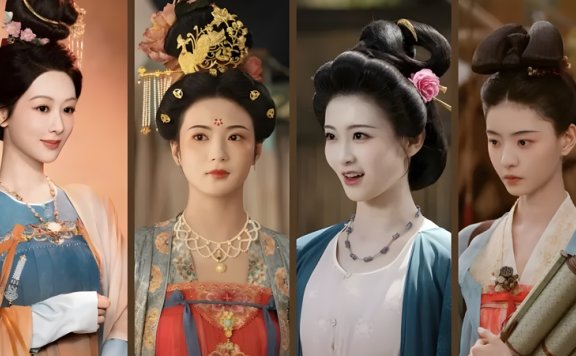
How Chinese Period Dramas Bring Traditional Clothing to Life
Audiences often question the authenticity of clothing in period dramas. What appears on screen blends artistic vision with historical reference, creating a visual language that speaks to modern viewers while hinting at the past. Accurate garment reconstruction offers more than beauty; it provides a tangible link to bygone eras, functioning as an informal guide for those curious about traditional dress. Yet, perfect fidelity remains elusive, as every production makes compromises between fact and spectacle. Several recent series have attempted serious sartorial homage. For instance, The Wind Blows From Longxi (风起陇西), set in the Three Kingdoms period, features layered robes and specific sleeve cuts that reference Han Dynasty styles. Similarly, The Longest Day in Chang'an (长安十二时辰) meticulously presents Tang era Hanfu, with its distinctive silhouettes and rich fabrics. These details matter, as they ground the narrative in a specific time and place, allowing viewers to sense the weight of history through cloth and stitch. Other productions, like Generation to Generation (江湖夜雨十年灯) and Flourished Peony (国色芳华), draw inspiration from Wei-Jin and early Tang aesthetics. They capture a certain mood—the flowing drapery, the subdued palette—but often blend elements for dramatic effect. This approach can illuminate broader stylistic trends while sacrificing precise replication. Even well-regarded… -
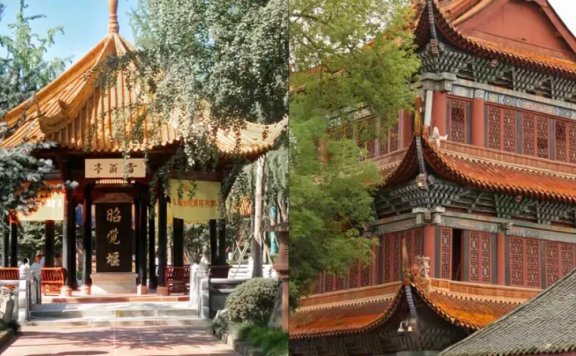
Why Was Hanfu Banned at a Sacred Temple in 2026?
In early 2026, a social media post sparked widespread discussion. A visitor wearing a meticulously recreated ensemble from the Tang Dynasty's Wu Zhou (武周) period was denied entry to Zhaojue Temple (昭觉寺) in Chengdu (成都). The reason given by staff was "wearing exotic costume." The visitor's attire, based on artifacts unearthed from the Hejiacun (何家村) collection, was historically accurate, complete with period accessories. This single incident reignited the persistent debate: does traditional Hanfu have a place in modern public spaces? While the temple later apologized, clarifying that Hanfu is welcome, the event exposed a lingering disconnect. How, in 2026, can a garment representing millennia of Han Chinese heritage still be mistaken for a mere costume? Misplaced Blame The refusal at Zhaojue Temple is not an isolated case. Similar incidents often surface online, creating a narrative that cultural sites are hostile to traditional dress. A closer look reveals a common thread. In many instances, the core issue is not the clothing itself but unauthorized commercial photography. A restaurant near West Lake once turned away a group because their Hanfu and professional camera equated to a "commercial shoot" in the management's eyes. Shanghai Disneyland once stopped an adult guest wearing a Disney-themed… -
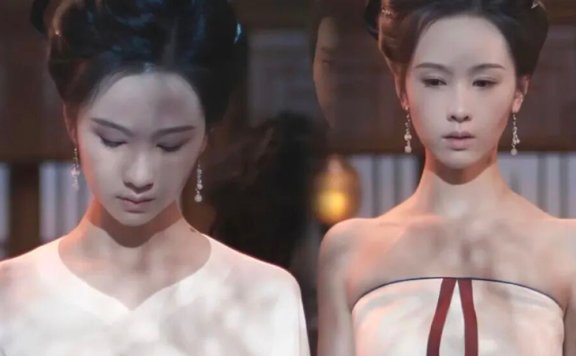
Unveiling Practical Functions of Zhongyi in Ancient China
Have you ever noticed how characters in historical dramas often retire for the night dressed in pristine white garments, and wondered if they ever worry about stains? This common visual isn't a costume designer's oversight or a symbol for something else; it is a deliberate and historically accurate representation of a fundamental layer of traditional attire known as Zhongyi (中衣). Far from being simple sleepwear, this undergarment served as the versatile core of ancient Chinese dress, functioning as both a formal inner layer and comfortable loungewear. Its enduring presence on screen hints at a sophisticated sartorial system where every piece, even the hidden ones, played a crucial role in aesthetics, etiquette, and personal comfort. Historical Roots The concept of Zhongyi is deeply embedded in classical texts. Its name, literally meaning "middle clothing," originates from the ancient glossary Shi Ming (释名), which describes its position between the innermost undergarments, or Xieyi (亵衣), and the outer robes. This placement was not merely practical but symbolic, representing a structured approach to dressing that prioritized propriety. In the hierarchical system of traditional dress, the Zhongyi was the essential buffer, a layer of modesty and refinement that separated the private self from the public presentation.… -
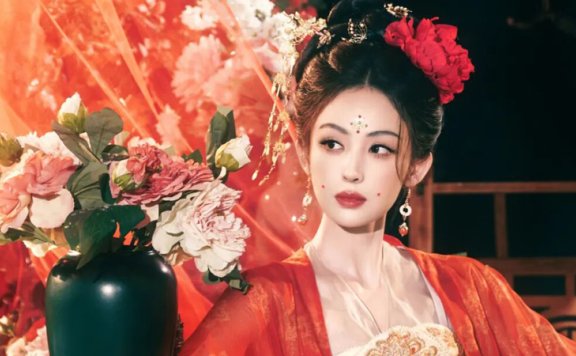
Tang Dynasty Hanfu: How Celebrities and Flattering Styles Win Hearts
In today's fashion landscape, traditional attire from China's Tang Dynasty is experiencing a vibrant resurgence. This era, celebrated for its cultural prosperity and artistic innovation, has left a lasting legacy in clothing that emphasizes grace and adaptability. Hanfu styles from this period, with their flowing silhouettes and intricate details, are being rediscovered by a new generation. What makes them particularly appealing is their ability to flatter diverse body types and facial features, moving beyond rigid beauty standards. From curvy figures exuding opulence to slender frames radiating elegance, Tang Hanfu offers a versatile canvas for self-expression. Recent television series and celebrity endorsements have amplified this trend, making it more accessible and inspiring people to embrace their unique beauty through historical fashion. Flattering Designs The Qixiong Ruqun (齐胸襦裙) stands out as a quintessential Tang Dynasty garment, known for its high-waisted cut that rests above the bust. This design creates a universally flattering shape by avoiding tight fits and instead using soft, draping fabrics that flow with the body. For those with curvier builds, the loose structure and billowing sleeves help smooth lines and convey a sense of dignified luxury. Slimmer individuals find that the lightweight materials enhance their natural grace, adding an… -

How Costumes in Love & Crown Whisper the Plot
In the realm of historical television, where stories of love and power often blend into a familiar tapestry, Love & Crown (凤凰台上) distinguishes itself through an unexpected narrator: its costumes. Beyond the compelling performances of Ren Jialun (任嘉伦) and Peng Xiaoran (彭小苒), the series has captivated audiences with its sartorial eloquence. Each robe, crown, and accessory is imbued with meaning, silently charting character arcs and emotional undercurrents. This attention to detail transforms clothing from mere backdrop to active participant in the storytelling, inviting viewers to look closer and discover a hidden language stitched into every fiber. Imperial Robes Emperor Xiao Huan's (萧焕) wardrobe serves as a visual diary of his burdens. His dragon robes defy traditional bright yellows, opting instead for subdued hues like pale gray and charcoal. Upon closer inspection, these garments reveal a secret: intricate mountain and river patterns embroidered with thread matching the base color, visible only under specific lighting. This design mirrors his life sentence to the throne, where the weight of the nation is a constant, invisible pressure. When he ascends the dais in court scenes, the faint outlines of these landscapes seem to cling to him, a ghostly map of his responsibilities. The evolution… -
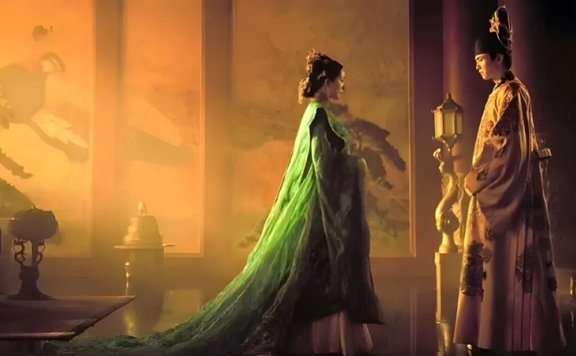
The Long Skirts in China's Historical TV Series
When watching Chinese period dramas, viewers often notice characters wearing elegant gowns with long, flowing trains that sweep the ground. This style sparks curiosity about its origins. Is this a genuine element from ancient Chinese fashion, or has it been influenced by Western costume design? The answer lies in a fascinating journey through history, where clothing served as a symbol of status and cultural identity. This article delves into the evolution of these trailing garments, examining their roots in early Chinese dynasties and how they compare to similar trends in Europe. By understanding the past, we can appreciate the blend of tradition and artistic license in modern storytelling. Ancient Roots In the Warring States Period, early forms of trailing clothing appeared, as seen in silk paintings from Chu State tombs. These garments evolved into more structured robes during the Eastern Han Dynasty, where long trains became associated with formal wear for nobility. Over time, this style adapted, influencing later periods like the Tang Dynasty and Song Dynasty. Artworks such as Admonitions of the Instructress to the Court Ladies (女史箴图) depict women in layered outfits with distinct trailing elements, showcasing how these designs were idealized in court life. The persistence of…