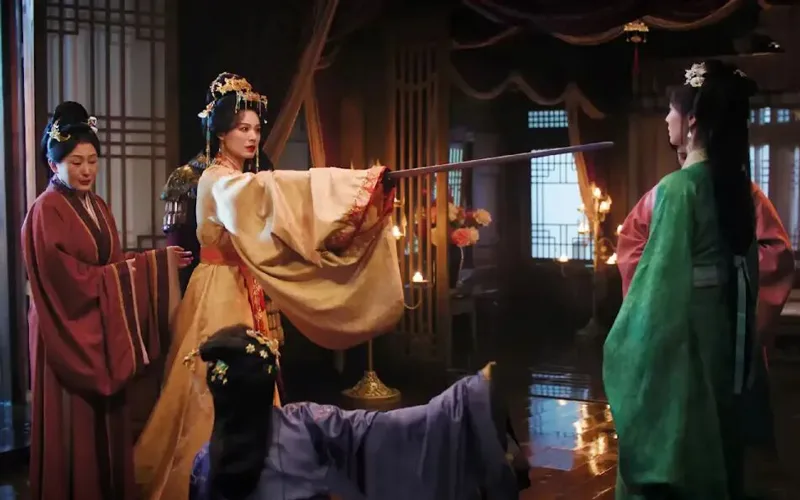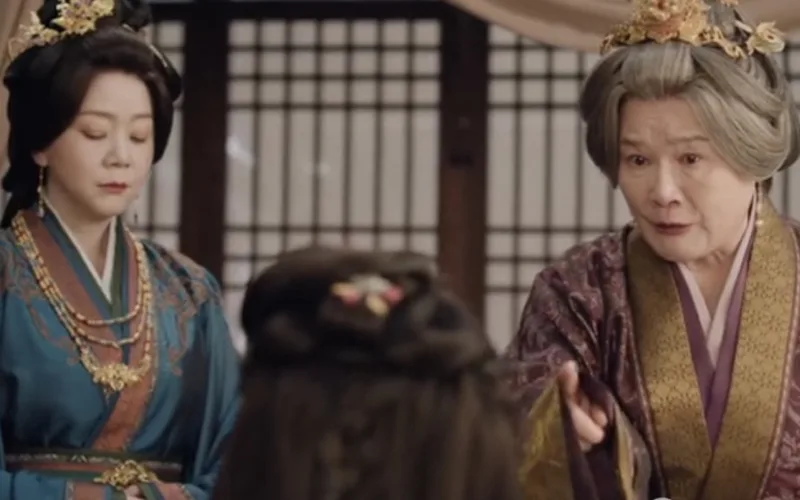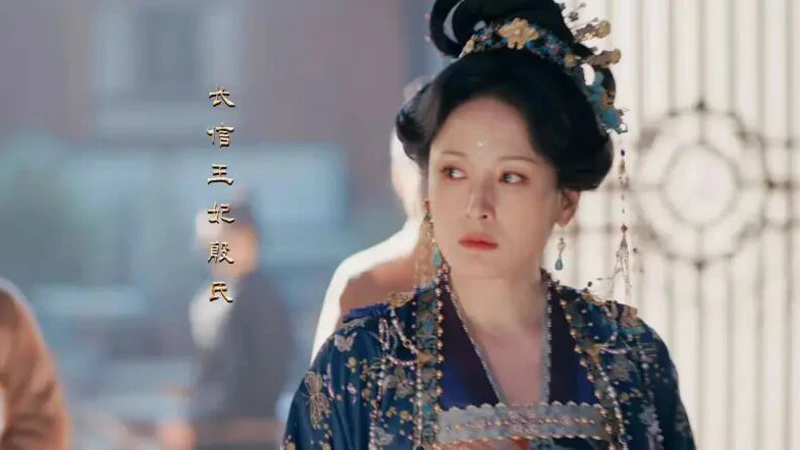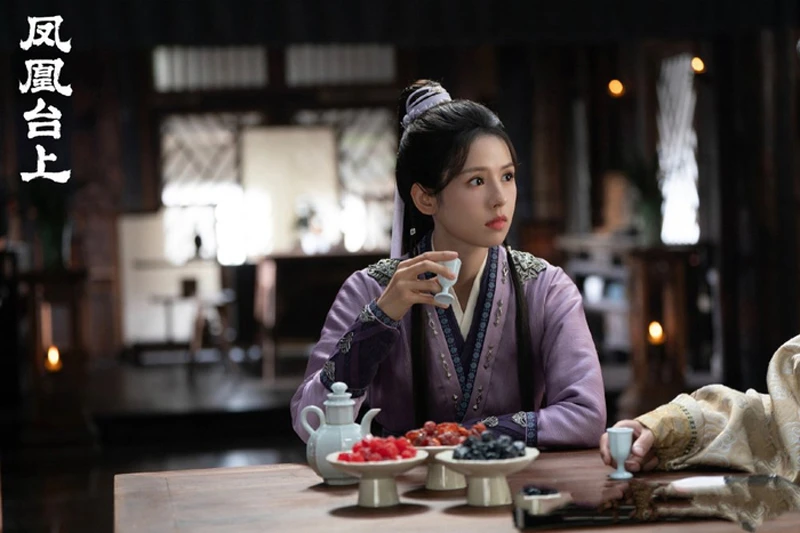
In the realm of historical television, where stories of love and power often blend into a familiar tapestry, Love & Crown (凤凰台上) distinguishes itself through an unexpected narrator: its costumes. Beyond the compelling performances of Ren Jialun (任嘉伦) and Peng Xiaoran (彭小苒), the series has captivated audiences with its sartorial eloquence. Each robe, crown, and accessory is imbued with meaning, silently charting character arcs and emotional undercurrents. This attention to detail transforms clothing from mere backdrop to active participant in the storytelling, inviting viewers to look closer and discover a hidden language stitched into every fiber.
Imperial Robes
Emperor Xiao Huan’s (萧焕) wardrobe serves as a visual diary of his burdens. His dragon robes defy traditional bright yellows, opting instead for subdued hues like pale gray and charcoal. Upon closer inspection, these garments reveal a secret: intricate mountain and river patterns embroidered with thread matching the base color, visible only under specific lighting. This design mirrors his life sentence to the throne, where the weight of the nation is a constant, invisible pressure. When he ascends the dais in court scenes, the faint outlines of these landscapes seem to cling to him, a ghostly map of his responsibilities.
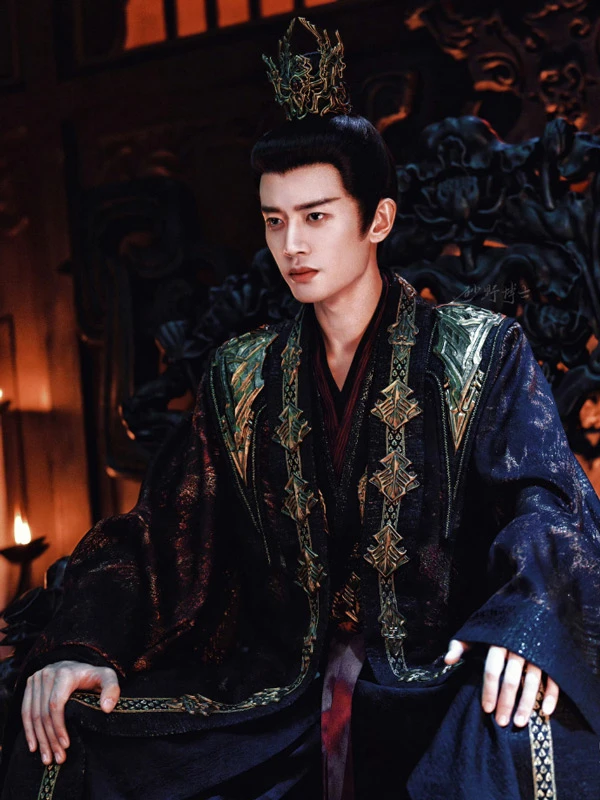
The evolution of his attire reflects his deteriorating spirit. In earlier episodes, hints of warm tones appear near his collar, suggesting fleeting moments of warmth with Ling Cangcang (凌苍苍). As betrayal and illness consume him, his palette darkens to stark grays and blacks. His coronation ensemble is particularly telling—a solemn black cloak with only a sliver of dark gold at the neckline. This choice subverts the expected celebration, instead announcing his isolation. The robes do not just cover him; they confess his solitude.
In pivotal moments, the costumes amplify the drama. During a confrontation where Ling Cangcang wears a hopeful yellow gown, Xiao Huan stands shrouded in gray, his attire blending into the shadows. The visual contrast needs no explanation: one character reaches for light, while the other has become part of the darkness. When he coughs blood and grips the throne, the camera lingers on the distorted mountain patterns on his robe, as if the very land he rules is crushing him.
Her Transformation
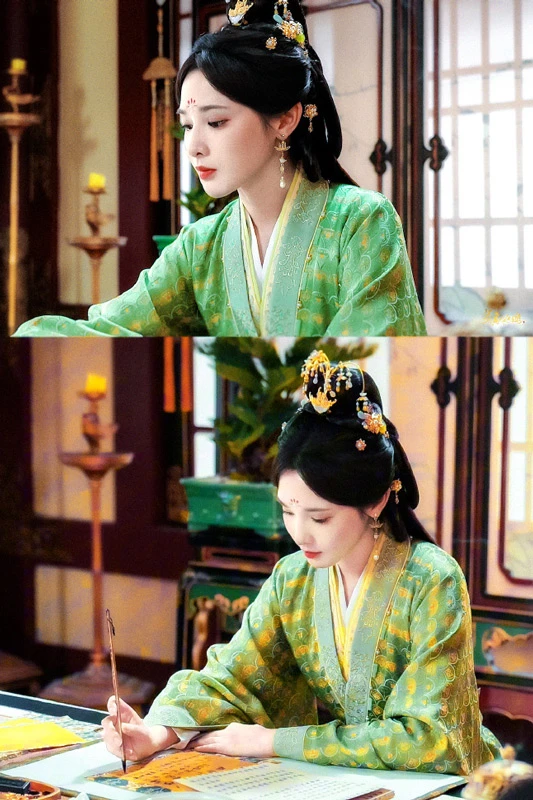
Ling Cangcang’s clothing charts her journey from a refined noblewoman to a resilient leader. Initially, she dons soft pinks and watery greens in flowing Ruqun styles, her hair adorned with playful tassels and faux flowers. This reflects her innocent, sheltered life as a minister’s daughter. As she assumes the role of a strategic master, her wardrobe shifts to deep blues and purples, with structured fabrics and metallic hairpieces that convey authority and resolve.
Her wedding day marks a significant turn. She is resplendent in bright red bridal wear and a magnificent phoenix crown, yet the stiffness of the outfit mirrors her constrained new status. The crown, crafted using the Diancui (点翠) technique with dyed feathers instead of kingfisher feathers, took artisans a month to complete. Its heaviness forces her to hold her head high, a subtle metaphor for the burdens of her position. Every movement in this regalia speaks of duty and sacrifice.
Later, as she embraces her role as a military commander, her armor is practical and light, her hair tied simply. The only remnant of her queenly identity is a pair of plain gold earrings. This simplification underscores her core strength—she adapts her exterior without losing her essence. Her costumes are not just changes of clothes; they are chapters in her story of empowerment and self-discovery.
Artisan Secrets
The series is a tribute to traditional Chinese craftsmanship, with each piece meticulously researched and executed. Ling Cangcang’s court dresses feature Suxiu (苏绣) embroidery, supervised by inheritors of this heritage art. Dragon scales and phoenix feathers are raised using Panjinxiu (盘金绣), a technique that creates a three-dimensional effect. In a ritual scene, Xiao Huan’s ceremonial robe is adorned with the twelve imperial symbols, each meticulously recreated based on Zhou dynasty rites, showcasing a commitment to historical accuracy.
Even secondary characters receive thoughtful design. The antagonist minister wears dark green robes with twisted bamboo patterns, hinting at his deceitful nature. The empress dowager’s garments use Jiaoxie (绞缬) dyeing to create blurred color transitions, reflecting her enigmatic personality. Court ladies are differentiated by embroidered motifs on their collars—plum blossoms for senior ranks, orchids for others—adding layers of hierarchy without dialogue.
Audiences have enthusiastically dissected these details online, creating frame-by-frame analyses. Some tracked the gradual darkening of Xiao Huan’s robes across thirty-two episodes, noting he only wears a light blue garment in the finale, symbolizing his eventual peace. Forum discussions even drew recognition from museum accounts, confirming the accuracy of armor patterns. This engagement highlights how the series’ dedication to craft fosters a deeper connection with its viewers, turning costume into a shared language of discovery.