Article
Search results:
-
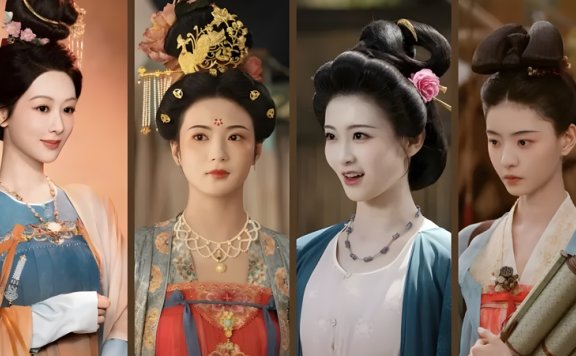
How Chinese Period Dramas Bring Traditional Clothing to Life
Audiences often question the authenticity of clothing in period dramas. What appears on screen blends artistic vision with historical reference, creating a visual language that speaks to modern viewers while hinting at the past. Accurate garment reconstruction offers more than beauty; it provides a tangible link to bygone eras, functioning as an informal guide for those curious about traditional dress. Yet, perfect fidelity remains elusive, as every production makes compromises between fact and spectacle. Several recent series have attempted serious sartorial homage. For instance, The Wind Blows From Longxi (风起陇西), set in the Three Kingdoms period, features layered robes and specific sleeve cuts that reference Han Dynasty styles. Similarly, The Longest Day in Chang'an (长安十二时辰) meticulously presents Tang era Hanfu, with its distinctive silhouettes and rich fabrics. These details matter, as they ground the narrative in a specific time and place, allowing viewers to sense the weight of history through cloth and stitch. Other productions, like Generation to Generation (江湖夜雨十年灯) and Flourished Peony (国色芳华), draw inspiration from Wei-Jin and early Tang aesthetics. They capture a certain mood—the flowing drapery, the subdued palette—but often blend elements for dramatic effect. This approach can illuminate broader stylistic trends while sacrificing precise replication. Even well-regarded… -
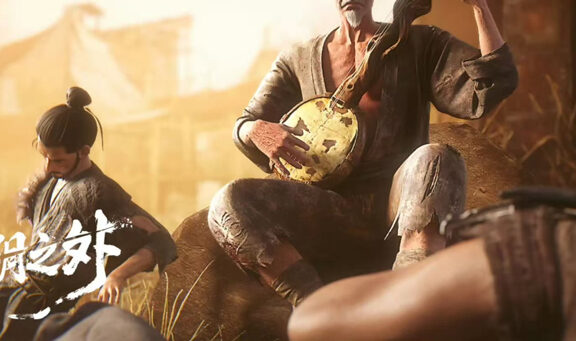
The Bold Dark Fantasy of Beyond Time's Gaze
Youku Anime recently showcased its new series, Beyond Time's Gaze (光阴之外), a project steered by the original author, Er Gen (耳根). He detailed the story's bleak survival ethos. The series presents a distinct post-apocalyptic cultivation world, a rarity in the current market. Its visual style, particularly the eerie designs of the Yangbao Ren (养宝人), is arresting, described by the team as thrilling to animate. This release signals a strategic shift. Facing a saturated landscape of similar themes, Youku is moving beyond competing solely on viewer numbers or production polish. Instead, it is redefining boundaries by committing to distinct genre innovation. This stark dark fantasy experiment could chart a new course for the platform's animation endeavors. A New Brutal Dawn In a landscape often painted with familiar tropes, one animated series carves its own stark path. Beyond Time's Gaze breaks from tradition, not through incremental change but through a foundational overhaul of its world and the soul of its protagonist. It presents a vision where the pursuit of power is stripped of grandeur, becoming a raw, ugly, and essential act of survival. A World Unmade The old rules are dead. In this narrative, the cataclysmic arrival of the Shenling Canmian (神灵残面)… -
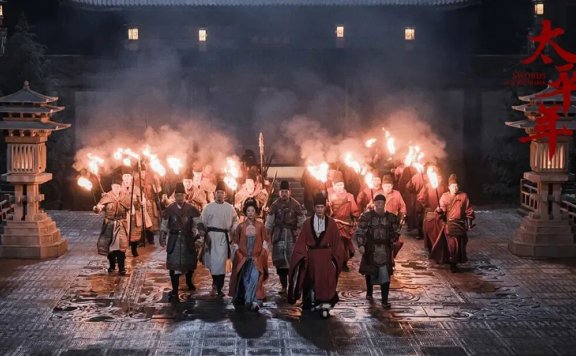
Swords into Plowshares: The Wuyue King’s Sacrifice for a Unified China
What does true leadership look like when an empire is at stake? This is the central question posed by Swords into Plowshares (太平年), a sweeping 40-episode historical saga premiering on China Central Television. Set against the chaotic backdrop of the Five Dynasties and Ten Kingdoms period, the series promises more than just palace intrigue and battlefield heroics. It delves into the profound moral weight of power, asking what a ruler must ultimately surrender for the sake of his people's welfare. With a powerhouse creative team behind acclaimed works like The Red (红色) and The Three-Body Problem (三体), and a cast filled with revered performers, the drama aims to transform dusty historical records into a gripping, human-centered narrative. It frames a pivotal, often-overlooked moment of Chinese unification not as a simple conquest, but as a deliberate, agonizing choice made by a king. Converging Paths The narrative hinges on the intertwined destinies of three ambitious men. Qian Hongchu (钱弘俶), played by Bai Yu (白宇), ascends to the throne of the Wuyue (吴越) kingdom. His reign is defined not by expansion, but by a dogged pursuit of stability and prosperity for his subjects within a fragmented empire. In the north, Zhao Kuangyin (赵匡胤) employs… -
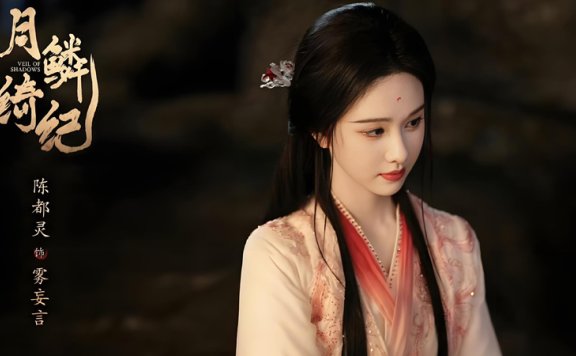
Veil of Shadows Premieres Jan 16
A new drama arrives to challenge the well-trodden paths of Chinese fantasy television. Veil of Shadows (月鳞绮纪), a 29-episode series premiering on Youku, brings together a blend of youthful star power, distinctive visual direction, and a narrative promise that shifts focus from individual romance to collective sacrifice. Helmed by the stylistically bold director Guo Jingming (郭敬明) and featuring Ju Jingyi (鞠婧祎), Zeng Shunxi (曾舜晞), and Chen Duling (陈都灵) in leading roles, the series aims to weave a tale where ancient legends and complex loyalties collide. Guo Jingming’s Visual Signature Director Guo Jingming’s name guarantees a specific aesthetic. His past works, like Tiny Times (小时代) and My Journey to You (云之羽), are known for meticulous costume design, dramatic lighting, and a highly polished, almost painterly frame composition. This approach, often called "the Guo Jingming aesthetic," treats each scene as a deliberate visual tableau. For a fantasy genre often reliant on digital backdrops, this attention to tangible texture is significant. Fabrics appear weighted, jewelry catches light deliberately, and settings feel architecturally considered rather than digitally inserted. This style prioritizes mood and beauty, creating a world that is immediately arresting and immersive for the viewer. Veil of Shadows continues this tradition. Early promotional… -
Wang Lin’s Ultimate Escape in Renegade Immortal
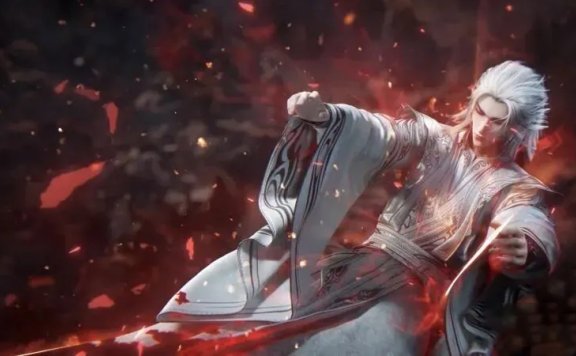
The latest episode of the animated series Renegade Immortal (仙逆) doesn’t just escalate the action—it plunges headlong into a philosophy of calculated madness. In the treacherous Demon Spirit Land, power is fleeting and survival is a razor's edge. The story delivers a devastating one-two punch: the tragic, ambition-blinded demise of Hu Pao (虎咆), followed by the shocking self-annihilation of our protagonist, Wang Lin (王林). Yet, beneath this layer of spectacular destruction lies a meticulously laid plan. The secret isn't in avoiding death, but in mastering its illusion. Hu Pao's Folly Hu Pao was once a testament to terrifying potential. While the prodigy Hong Die took a century to reach Deity Transformation, Hu Pao raced to the Nascent Soul Transformation mid-stage in mere decades. Fueled by the forbidden Yishi Jue (一时诀) technique, he forcibly elevated his cultivation to the Ascension stage. This was no glorious ascent; each surge of power cannibalized his own life force. Wang Lin watched with a mix of awe and pity. Such talent, if honed with wisdom, could have reshaped the cultivation world. Instead, Hu Pao’s path twisted into vengeance and tyranny. His goals expanded from killing Wang Lin for past grievances to a mad desire to monopolize… -
The Outcast 6 Episode 3: Solar Valley’s Secrets
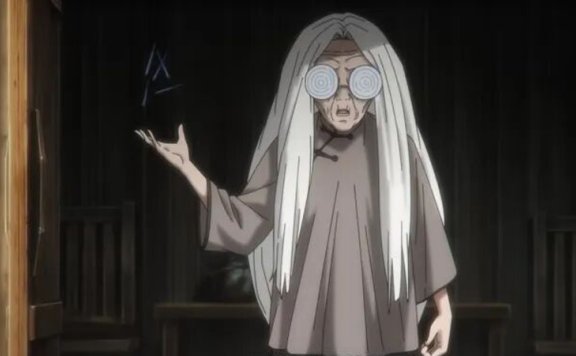
The third episode of The Outcast 6 (一人之下6) propels its eclectic cast toward the mysterious Twenty-Four Solar Valley. The catalyst for this movement is the return of an old key: Jin Feng (金凤), an elderly woman whose youthful devotion to the enigmatic Wugen Sheng (无根生) led her to join the controversial Quanxing (全性) sect. Her mysterious reappearance, unharmed after being held by the manipulative Qu Tong (曲彤), acts like a magnet. It draws together two separate parties, forcing a temporary and uneasy alliance between them. One group consists of the calculating Zhang Chulan (张楚岚) and his ever-loyal, perplexing guardian Feng Baobao (冯宝宝). The other includes the mischievously unpredictable Qiu'er (球儿), who has brought along the aging Xia Liuqing (夏柳青) and the formidable Barlow. This "party of six" now travels together, a collection of conflicting agendas bound by the common goal of uncovering Wugen Sheng's secret treasure. Their internal dynamics, however, are as treacherous as the path ahead, creating a volatile mix of cooperation and competition that defines this leg of their journey. Masters of Misdirection Among the younger generation, Zhang Chulan prides himself on strategic foresight and clever schemes. His usual advantage is neutralized by the presence of Qiu'er, a… -
The Kunlun Mirror's Final Secret: Was Hong Ye's Sacrifice Truly Noble?
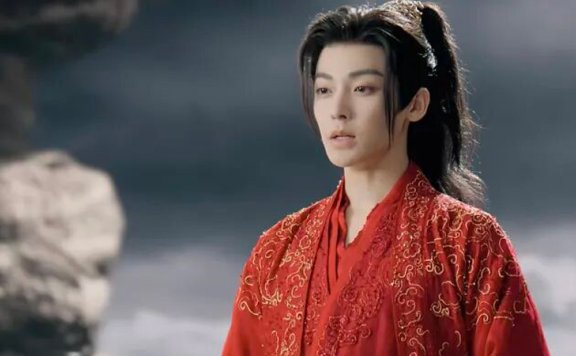
The finale of the fantasy drama The Unclouded Soul (逍遥) left audiences stunned and divided. After enduring a journey through millennia and finally marrying the powerful demon lord Hong Ye (红烨), the protagonist Xiao Yao (肖瑶) faces an ultimate separation. To prevent endless strife, Hong Ye uses his own body to seal the mythical Kunlun Mirror (昆仑镜), an act widely interpreted as a heroic sacrifice for the greater good. Yet, a closer look suggests his motivation was far more complex. It wasn't merely selfless devotion or a quest for redemption, but a stark acceptance of a circular destiny—one that he himself had set into motion ten thousand years prior. A Poisoned Promise For countless generations, a singular legend has driven both humans and demons to madness: the promise of the Yuli Spring (玉醴泉). A single sip was said to grant immortality to humans or immense power to demons. This elusive prize fueled endless conflict. The demon Sui Meng sought it to save her husband. A fallen immortal desired it for restoration. A human Emperor manipulated Hong Ye a century ago to obtain fragments of the Kunlun Mirror, which were believed to lead to the spring, setting off a chain of… -
The Heartbreak of Wang Lin and Hu Pao in Renegade Immortal
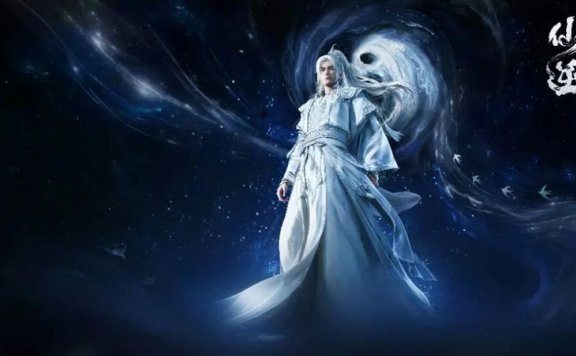
In the vast, ruthless world of the cultivation novel Renegade Immortal (仙逆), relationships are often transactions, and trust is a currency spent cautiously. Against this bleak backdrop, the bond between the master Wang Lin (王林) and his disciple Hu Pao (虎咆) emerges as a poignant story of mentorship, choice, and heartbreaking betrayal. Their saga is more than a simple plotline; it is a deep examination of what it means to teach, to learn, and to fail one another. It asks a difficult question: when a student nurtured with care turns their blade on their teacher, whose heart is truly pierced by the thorns grown in the dark? The Master's Path Wang Lin recognized Hu Pao's prodigious talent immediately. Unlike others in the cultivation world who might view such a gift with envy or fear, Wang Lin saw its potential and its peril. His decision to take the young man as a disciple was not for prestige or utility. It stemmed from a quiet sense of responsibility. He understood that untamed genius, left alone in a treacherous world, could become a destructive force. Wang Lin's first act of wisdom was to neither suppress the talent out of fear nor indulge it… -
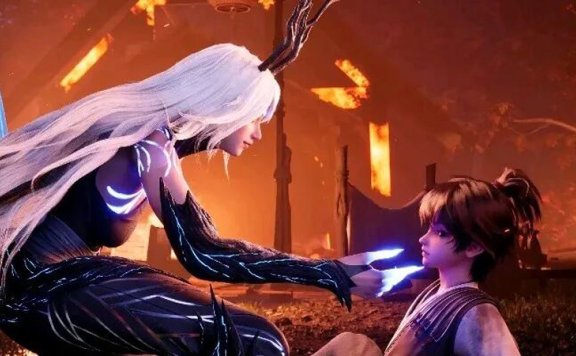
The Epic Narrative of The Demon Hunter Season 1
In 2023, a new name surged to the forefront of Chinese animation, breaking through the crowded fantasy genre with a combination of raw emotional power and visual spectacle. The Demon Hunter (沧元图), adapted from the popular web novel, became an undeniable phenomenon. It dominated platform charts, amassed billions of views in related discussions, and earned high praise from critics. Its success lies not in a simple tale of power escalation, but in a deeply personal story of trauma, resilience, and the heavy weight of a promise made in blood. The series follows Meng Chuan (孟川), whose childhood is shattered in an instant, setting him on a path where his blade becomes both an instrument of vengeance and a shield for the innocent. The Blood Oath The story's foundation is laid in tragedy. A young Meng Chuan witnesses the brutal destruction of his village by demonic forces. In a final, desperate act of protection, his mother reveals her true, powerful form to shield him, only to fall to a treacherous foe. This searing loss ignites something within the boy. In his grief, a latent and formidable power awakens, allowing him to strike back. It is in this moment of anguish that… -
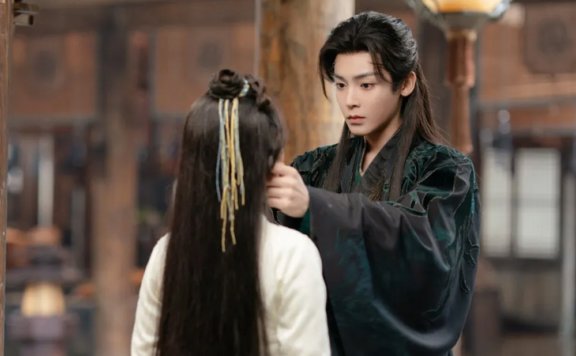
The Bittersweet Romance of The Unclouded Soul
The finale of the drama The Unclouded Soul (逍遥) has left a complex aftertaste for its audience. Starring Hou Minghao (侯明昊) and Tan Songyun (谭松韵), this Xianxia tale promised a grand, multi-life romance but delivered a conclusion that feels less like a resolution and more like a poignant, unanswerable question. Instead of offering neat closure, it doubles down on its core, tragic mechanic: a love story perpetually out of phase, where the protagonists are forever chasing each other's shadows across fractured timelines. This narrative choice, born from its status as an original script unburdened by source material spoilers, has ignited fervent discussion. The ending doesn't simply tie up loose ends; it holds a mirror to the entire journey, asking viewers to reconsider every moment of connection between Hong Ye (红烨) and Xiao Yao (肖瑶). A Premise of Painful Repetition At its heart, the drama is built on a foundation of painful repetition. The story follows Hong Ye and Xiao Yao through multiple lifetimes, but with a cruel twist: their memories and identities are never synchronized. One always arrives carrying the baggage of a shared past the other cannot recall. This creates a persistent sense of longing and misunderstanding. For much… -
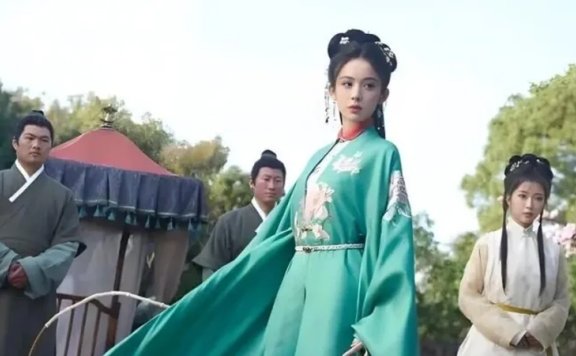
Glory: Breaking the Cycle of Manipulation and Cruelty
When Rong Shanbao (荣善宝) collapses in the rain, shielded by Yan Bailou's (宴白楼) umbrella and caught in his embrace, this moment is far from romantic. It is the culmination of a lifetime spent as a chess piece. The separation of the Second Miss from her child, the Fifth Miss's blindness, and the vicious conflicts among the sisters—all were engineered outcomes. The true puppeteer is the Matriarch, whose desires shape every tragedy within the mansion. The drama Glory (玉茗茶骨) dissects not just family strife, but the cold machinery of control, where affection is a liability and individuality a threat. The Pawn's Awakening Shanbao's decision to marry Lu Jianglai (陆江来) at the ancestral hall is her final attempt to claim autonomy. The Matriarch's response is not a blessing, but a calculated warning. She recounts her own bitter past: a youthful elopement with a scholar who later betrayed her, stealing precious tea seeds and scriptures. This man, Shanbao's biological grandfather, now lives confined within the clan temple, a permanent trophy of the Matriarch's vengeance. Her story is a clear message: romantic trust is foolish, and personal happiness is irrelevant. Shanbao's value lies solely in her utility to the family's—and the Matriarch's—power. Despite understanding… -
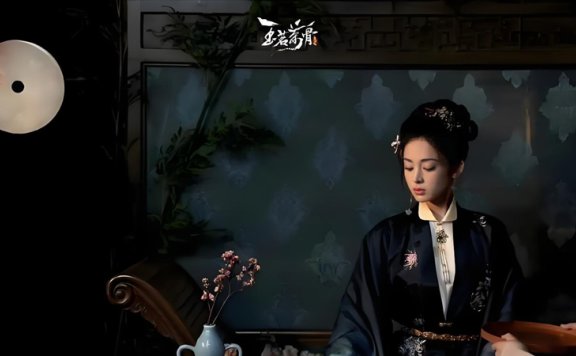
Glory: A Devil’s Bargain Over 30,000 Catties of Illicit Tea
In the world of Glory (玉茗茶骨), a Qipao is not merely a dress, and a teacup is never just a drink. They are weapons, currencies, and shields in the intricate wars fought within gilded mansions. The series presents a society where bloodlines are leveraged, emotions are bargained, and personal identity is the ultimate contested territory. At the heart of its latest storm is Rong Shanbao (荣善宝), the designated heir to a prestigious tea empire, whose destiny is hijacked not by market forces, but by a devastating familial secret and a woman who wields politeness like a scalpel. The Calculated Sister Xie Huiqing (谢惠卿) arrives at the Rong residence not with force, but with a devastating smile and impeccable manners. Her words to Shanbao are soft, dripping with concern for an aging father and a longing for a lost brother. Yet, each syllable carries a precise, unspoken threat. She holds the key to a catastrophe: the secret of the 30,000 catties of illicit tea sold by Shanbao's father, a debt poised to crush the family after a hailstorm ruins their harvest. Xie's offer is a devil's bargain. The powerful Duke's mansion will clear the debt, but only if Shanbao can persuade… -
Explore Its High-Stakes Battles and Evolving World in The Great Ruler 2!
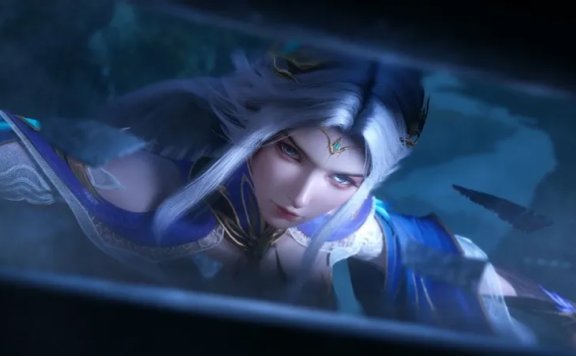
The return of the annual series The Great Ruler 2 (大主宰2) promises more than just a continuation; it heralds an evolution. Our protagonist, Mu Chen (牧尘) , steps out from the competitive halls of the Beicang Academy (北苍学院) into the vast, treacherous landscapes of a world brimming with conflict. From the lawless deserts of the Western Wastelands to the covert schemes of rival factions, he is thrust onto a grander stage where every decision carries weight, and every battle shapes destiny. This season intensifies everything—the action, the emotional stakes, and the scale of the world itself, inviting viewers to dive deeper into a realm where power, loyalty, and love are constantly tested. Unrelenting Action From its very first moments, the new season plunges viewers into a relentless cycle of conflict. Over twenty episodes, confrontations unfold in rapid succession. These range from the structured chaos of academy hunting games and brutal challenges from the three generals of the Punishment Hall to life-and-death pursuits on the Western Wastelands bounty board. Major set pieces like the Sacred Spirit Baptism and the defense of Beicang Academy ensure adrenaline levels remain perpetually high. This season sharpens the visceral feel of every clash. Clear distinctions are… -
Beyond Time's Gaze: Youku's Record-Breaking Wasteland Cultivation Anime
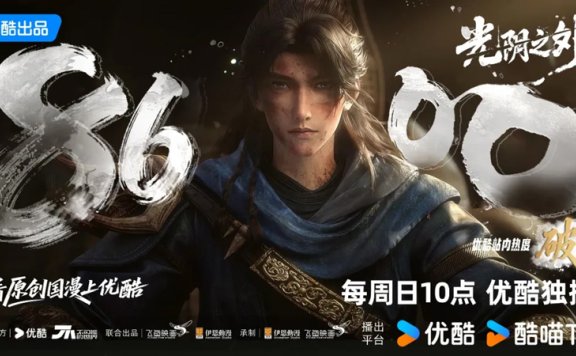
The digital landscape for Chinese animation was quietly reshaped one week in March. Youku's latest original series, Beyond Time's Gaze (光阴之外), didn't just premiere; it exploded onto the scene. Its debut shattered the platform's own historical record for a new anime release, soaring past 8,600 in real-time popularity metrics. It swiftly claimed the top spot across Youku's animation, new release, and male-viewer charts, maintaining a dominant position. This immediate and overwhelming reception marked Beyond Time's Gaze as the undeniable breakout hit, a dark horse that captured the zeitgeist of a generation of viewers seeking something beyond the conventional. Genre Fusion Breakthrough At its core, Beyond Time's Gaze represents a bold experiment in genre fusion. It transplants the traditional Chinese cultivation narrative—a journey of spiritual and physical ascension—into the bleak, unforgiving soil of a post-apocalyptic wasteland. This is not the romanticized world of elegant immortals floating amongst misty peaks. This is Wasteland Cultivation, a world defined by scarcity, shattered social order, and a constant struggle for survival against a dying earth. The protagonist, Xu Qing (许青), fights not just rival sects, but the very environment itself. The series deliberately subverts the established "leveling up" tropes common to the genre. His progression… -
Beyond Time's Gaze: The Glitch That Shattered Godly Hierarchy
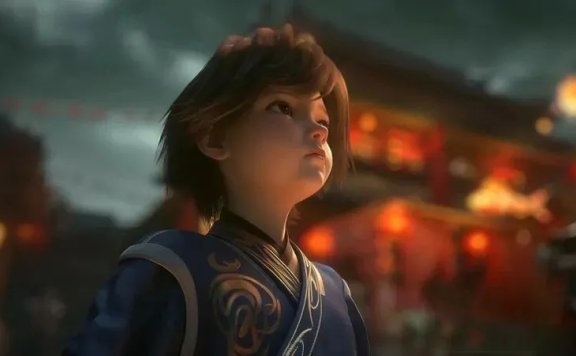
What if the apocalypse is just a god's careless breath? In the vast, despairing cosmos of the web novel Beyond Time's Gaze (光阴之外), this is not a philosophical question but a daily terror. The land of Wanggu (望古) Continent lives under the perpetual, silent gaze of a divine, slumbering face in the sky. Its occasional, reflexive actions—a blink, a sigh—unleash cataclysms upon the mortal world below. Into this grim hierarchy steps Xu Qing (许青), an ostensibly ordinary youth whose existence threatens to unravel the very fabric of a system built on predation and absolute power. His journey is the story of a cosmic anomaly, a living contradiction navigating a world where gods farm immortals, and survival is an act of rebellion against universal law. A World Built on Misunderstanding The universe of Beyond Time's Gaze originated from a single beam of light, which expanded into the Primordial Sea—a reservoir of fundamental energy. At its heart lies the primal mother star, with energy radiating outward to form 36 distinct star rings, layered like celestial bracelets. The upper rings, known as the Ascendant Soul Rings, are the domain of the Shenling (神灵), beings who seek to devour and accumulate divine essence. The… -
A Tea Master's Vengeful Path in Glory
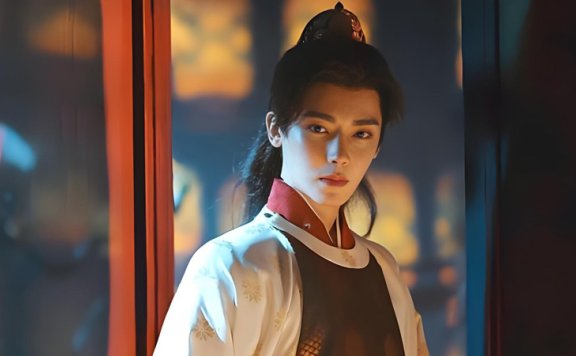
In the refined world of aristocratic mansions, where the steam from a teacup can veil murder and a whispered secret can topple a dynasty, who is the man serving the tea? The period drama Glory (玉茗茶骨) presents a mystery wrapped in ceremony, where the elegant art of tea brewing becomes a facade for a chilling decade-long quest for vengeance. At the center is the gentle-mannered Yan Bailou (晏白楼), whose arrival at the prosperous Rong Manor seems to herald nothing more than philosophical discussions and perfect brews. Yet, his true purpose is as dark as the leaves at the bottom of a cup: to find and destroy the woman responsible for his family's ruin and to win the heart of the eldest Rong daughter, Rong Shanbao (荣善宝). The two goals are tragically intertwined, setting a course where love and retribution cannot coexist. A Ticking Clock Beneath the Robes The plot accelerates with the shocking death of Lady Yang. Deciding to forsake her worldly life, she seeks refuge in a nunnery, only to meet a brutal end. The audience, privy to a truth the characters are not, watches as the kindly Yan Bailou sheds his gentle disguise. The black cloak he wore… -
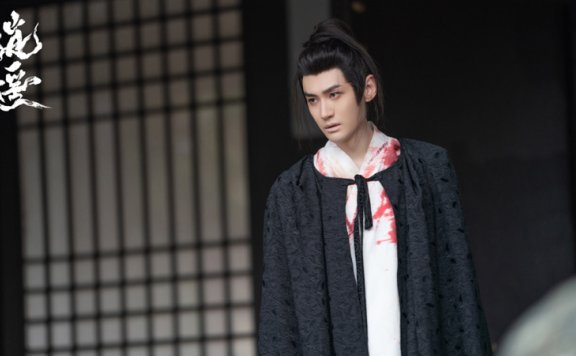
3 Lost Hearts: Moral Decay in The Unclouded Soul’s Finale
The finale of the fantasy drama The Unclouded Soul (逍遥) left audiences with a haunting question: what is the cost of survival and success? Over a concise eleven-episode run, the series delivered not just spectacular visuals, but a piercing exploration of moral decay. Its true brilliance lies in tracing how three central characters, each beginning with clear convictions or simple desires, are warped by circumstance, power, and desperate choices. They do not simply change; they morph into grotesque versions of their former enemies, becoming the very things they once swore to destroy or escape. This narrative arc moves beyond simple villainy, presenting a tragic portrait of corruption as a gradual, often unconscious, process. 1. Bing Zhu (秉烛) Bing Zhu started with a pure, if painful, purpose. Born into poverty, he carved a wooden sword to practice, his determination unwavering even without proper tools. His sister, Tan'er (昙儿), made the ultimate sacrifice, becoming a Yao's (妖) bride to buy him a real blade. This act of love fused her spirit with the weapon, creating the demon-slaying sword that defined his path. He vowed to eradicate all evil Yao, a mission that led him to prestige as a royal demon hunter. Yet,… -
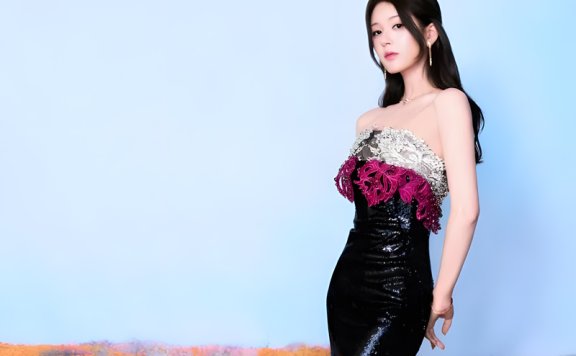
Zhao Lusi Stuns in Floral Fantasy
When actress Zhao Lusi (赵露思) appeared against a boundless sea of blossoms, the image instantly captivated millions. The setting was not merely a backdrop but a narrative device, framing her not as a fleeting trend but as a timeless vision. Her latest ensemble, a masterful juxtaposition of shimmering silver and deep noir, sparked a conversation that transcends typical celebrity fashion commentary. It presented a compelling case study in balancing audacious glamour with relatable charm, a formula increasingly sought after but rarely perfected in today's entertainment landscape. This look, achieved through meticulous design and atmospheric staging, signals a deliberate and sophisticated evolution in her public persona. The Dress Code The centerpiece was a gown of remarkable duality. Its bodice, a Moxiong (抹胸) style, was a constellation of silver sequins meticulously arranged beside panels of rose-pink woven texture. This wasn't just sparkle; it was topographic, catching light in varied, fascinating ways. It drew the eye immediately to her collarbone and shoulders, highlighting their elegant line without overt exaggeration. The choice of a cool metallic silver against a warm, floral pink created a visual tension that was both modern and romantic, avoiding any hint of saccharine sweetness. From the waist descended a sleek,… -
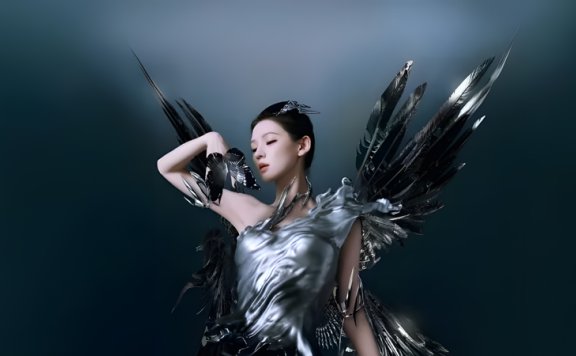
Zhang Yuxi’s Bold Cyberpunk Style Leap
A recent public appearance by actress and style icon Zhang Yuxi (张予曦) has sent waves through fashion circles. Stepping out in a stunning silver-to-black gradient gown, she embodied a character straight out of a cyberpunk fantasy—a dark elf from a futuristic realm. The look masterfully blended cold, metallic elegance with an edgy, avant-garde sensibility, marking a significant departure from her previous style chapters and signaling a bold new direction. Anatomy of a Look The power of the ensemble lies in its meticulous construction. The single-shoulder design immediately commands attention, creating an asymmetrical line that feels both modern and daring. The seamless gradient from luminous silver to deep matte black mimics the look of molten metal cooling into obsidian, a visual metaphor for fluidity meeting solid form. This is not mere color transition; it is a statement of metamorphosis. Further examination reveals the genius in the textile manipulation. The gown’s folds are not accidental gathers but sculpted, three-dimensional waves frozen in time. They add profound depth and a tactile quality to the silhouette. This interplay between the soft, flowing fabric and the garment’s sharp, architectural lines generates a captivating tension, a sartorial representation of controlled power. Accessories were chosen not as… -
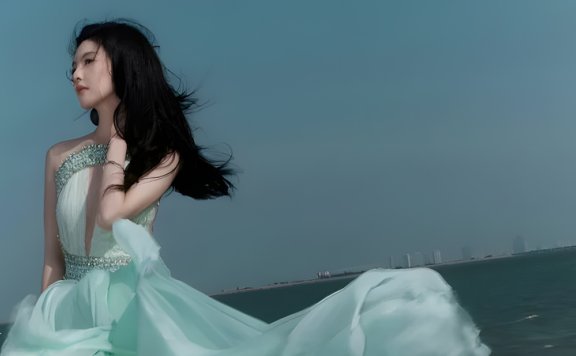
Zhang Ruonan’s Sea Mist Noble Moment
The image is arresting: an expanse of pale, hazy green billowing against a windswept shore. Actress Zhang Ruonan (章若楠) stands as the focal point, her mint-colored gown melting into the sea mist behind her. This is more than a celebrity photoshoot; it is a character study, a fleeting scene from an unwritten film. She is not merely wearing a dress. She embodies a persona—a 'Sea Mist Noble,' ethereal yet grounded, delicate but commanding. This single look, captured against the elemental backdrop of ocean and sky, has sparked widespread admiration, transcending typical fashion commentary to become a cultural talking point. It represents a pivot in red carpet narrative, away from overt glamour and toward a more resonant, atmospheric storytelling. Anatomy of an Aura The power of the look lies in its masterful contradictions. The gown’s construction balances structure and fluidity. A halter neckline, meticulously embroidered with gradient crystals, frames the shoulders and provides a defined silhouette. This jeweled element suggests luxury and craftsmanship. From this anchored top flows an immense skirt of layered tulle, a weightless cloud of fabric that surrenders completely to the coastal breeze. The deep V-neck adds a subtle hint of classic Hollywood sensibility without overshadowing the overall…