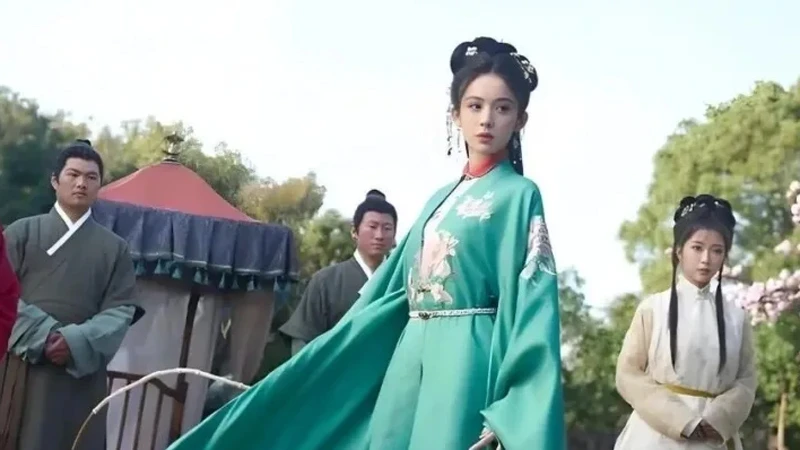
When Rong Shanbao (荣善宝) collapses in the rain, shielded by Yan Bailou’s (宴白楼) umbrella and caught in his embrace, this moment is far from romantic. It is the culmination of a lifetime spent as a chess piece. The separation of the Second Miss from her child, the Fifth Miss’s blindness, and the vicious conflicts among the sisters—all were engineered outcomes. The true puppeteer is the Matriarch, whose desires shape every tragedy within the mansion.
The drama Glory (玉茗茶骨) dissects not just family strife, but the cold machinery of control, where affection is a liability and individuality a threat.
The Pawn’s Awakening
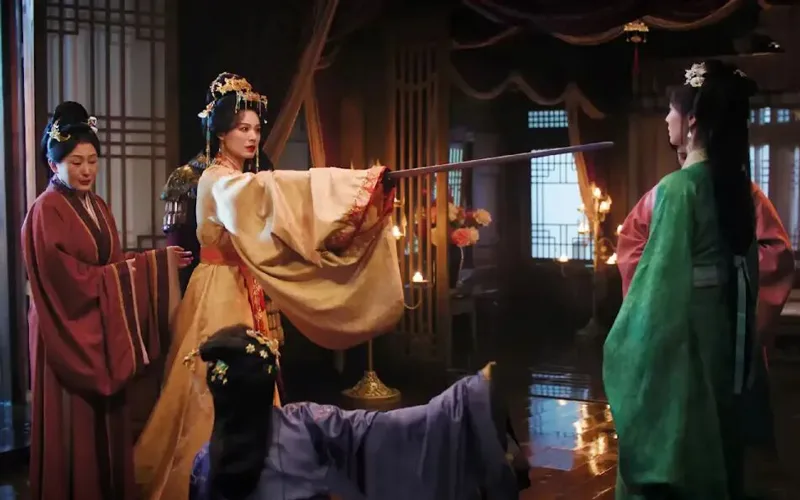
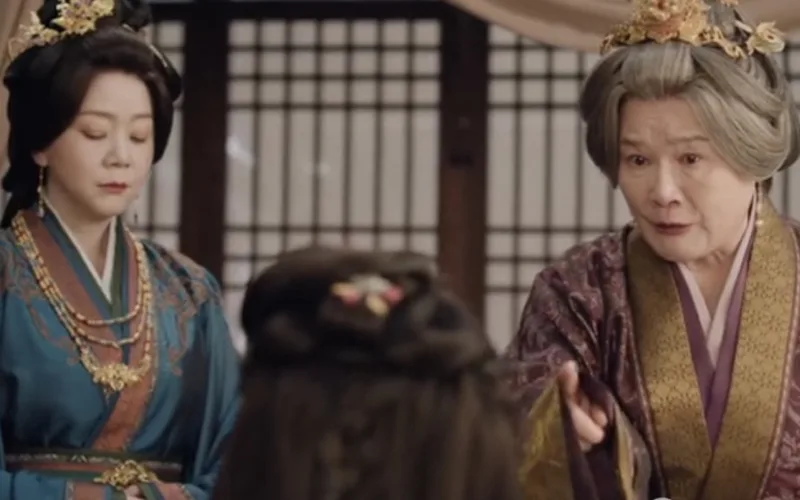
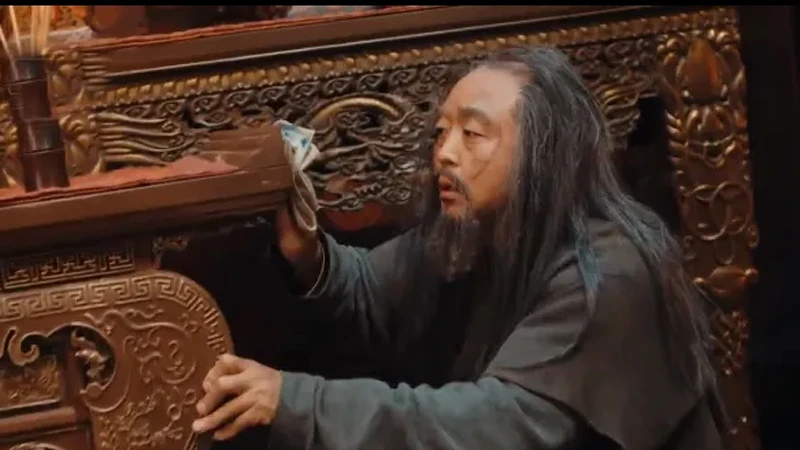
Shanbao’s decision to marry Lu Jianglai (陆江来) at the ancestral hall is her final attempt to claim autonomy. The Matriarch’s response is not a blessing, but a calculated warning. She recounts her own bitter past: a youthful elopement with a scholar who later betrayed her, stealing precious tea seeds and scriptures. This man, Shanbao’s biological grandfather, now lives confined within the clan temple, a permanent trophy of the Matriarch’s vengeance. Her story is a clear message: romantic trust is foolish, and personal happiness is irrelevant. Shanbao’s value lies solely in her utility to the family’s—and the Matriarch’s—power.
Despite understanding her role, Shanbao’s inherent compassion rebels. When Lu Jianglai captures Yang-shi (杨氏), the Matriarch orders Shanbao to testify against her, prioritizing political expediency. Yang-shi, however, showed Shanbao maternal kindness. Unable to condemn her, Shanbao orchestrates a rescue, using her Sixth Sister as a witness. This act of defiance saves a life but shatters the delicate, ruthless balance the Matriarch maintains. It proves Shanbao is no longer a passive tool, sparking the Matriarch’s fury.
The subsequent punishment—kneeling in the storm until collapse—is not just for disobedience. It is the Matriarch’s rage at losing control. The pawn is thinking for itself. This moment underlines the drama’s core tension: a struggle between inherited cruelty and an emerging moral conscience. The wet courtyard becomes an arena where humanity challenges despotism.
A Garden of Thorns
The Matriarch’s manipulation extends far beyond Shanbao. Second Miss Rong Yunxi’s (荣筠溪) secret child is known but tolerated, as her struggles serve to test and harden Shanbao. Her happiness is inconsequential; she is merely a whetstone. Once her purpose is spent, she too will be discarded. Fifth Miss Rong Yunshu (荣筠书) suffers a crueler fate. Born to a concubine who was a maid, she is deemed unworthy of investment. Denied medical care for her eyes, she is allowed to go blind. In the Matriarch’s calculus, a person’s worth dictates the resources they merit.
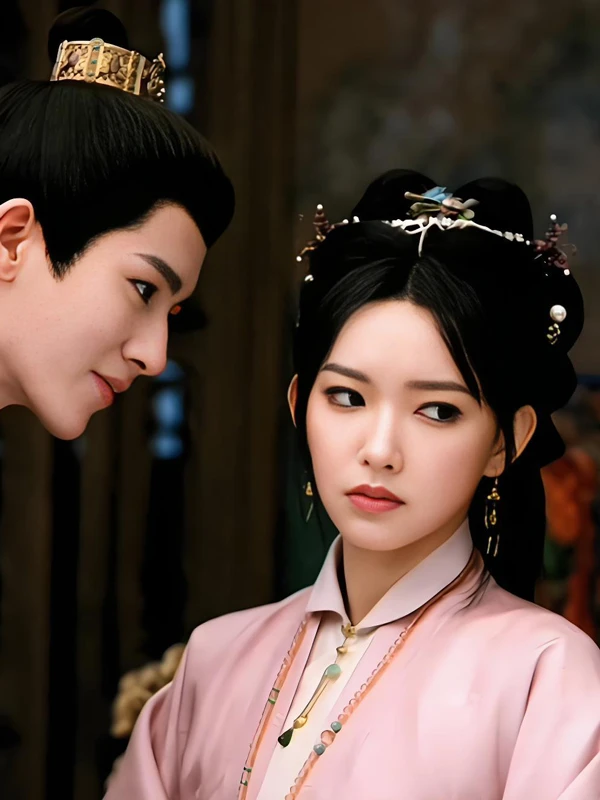
This philosophy turns the family home into a gladiatorial pit. The conflicts are not merely personal failings but cultivated phenomena. The Fourth Miss’s rivalry with Shanbao, the Third Miss’s schemes, the Eldest Young Master’s traps—the Matriarch is aware of all. These fractures are essential. They keep potential rivals divided, preoccupied with internal battles, and forever dependent on her arbitration. Unity is the enemy of her absolute rule.
Shanbao often reminisces about a different past, when sisters worked in harmony to manage the household and aid the community. That collective spirit has been systematically eradicated, replaced by a survival-of-the-fittest mentality engineered by one woman. The sisters are not just fighting each other; they are performing in a tragedy scripted to ensure no one can challenge the director.
Breaking the Mold
Shanbao’s expulsion from the mansion, intended as her ultimate defeat, paradoxically becomes her liberation. Forced out of the gilded cage, she escapes the immediate sphere of the Matriarch’s influence. Her path forward is no longer about navigating petty family politics but about confronting the source of the poison itself. True agency begins when the piece leaves the board.
The drama suggests that reclaiming the family’s leadership is not about seizing the Matriarch’s throne to wield the same cold power. The “great female lead” it champions does not prioritize wealth and dominance. Instead, the core struggle is to restore the values the Matriarch destroyed: familial harmony and a legacy of communal benefit. Shanbao’s fight is to redefine what leading the Rong family means.
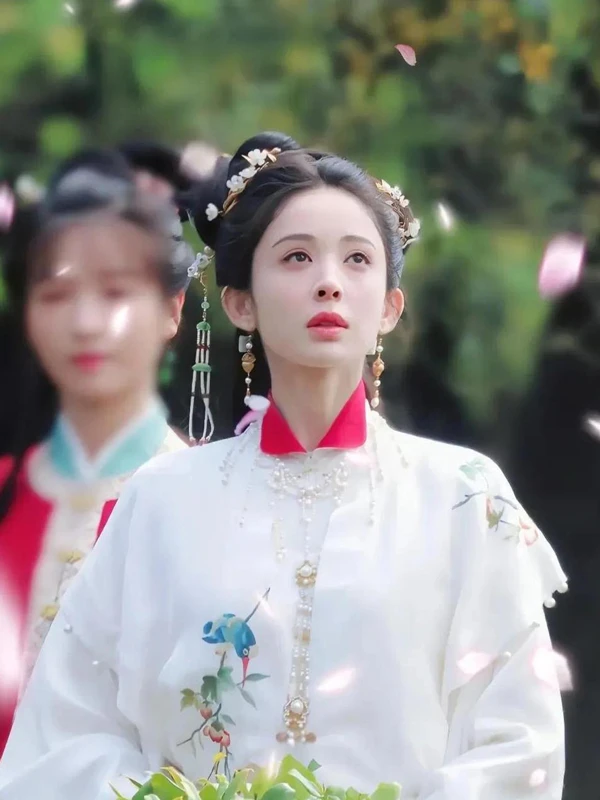
Glory moves beyond simple revenge narratives. It questions whether cycles of manipulation can truly be broken without replicating their methods. Shanbao’s challenge is immense. She must defeat a system built on emotional tyranny without becoming a tyrant herself. Her weapon may not be sharper tactics, but the very humanity the Matriarch spent a lifetime eradicating.