The digital landscape for Chinese animation was quietly reshaped one week in March. Youku’s latest original series, Beyond Time’s Gaze (光阴之外), didn’t just premiere; it exploded onto the scene. Its debut shattered the platform’s own historical record for a new anime release, soaring past 8,600 in real-time popularity metrics.
It swiftly claimed the top spot across Youku’s animation, new release, and male-viewer charts, maintaining a dominant position. This immediate and overwhelming reception marked Beyond Time’s Gaze as the undeniable breakout hit, a dark horse that captured the zeitgeist of a generation of viewers seeking something beyond the conventional.
Genre Fusion Breakthrough
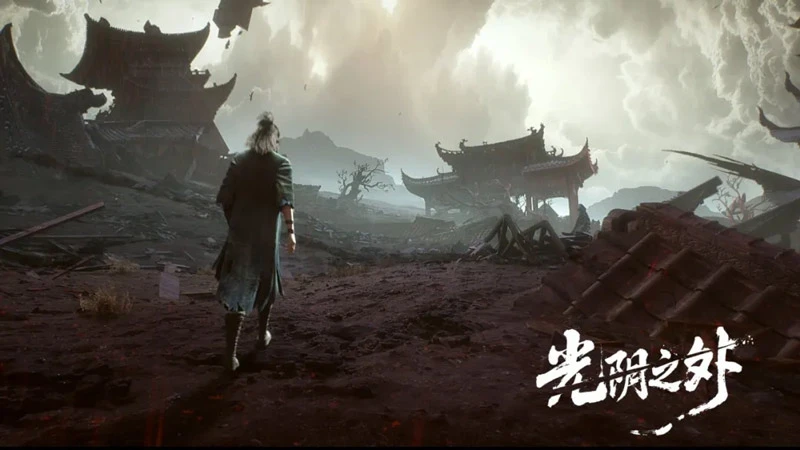
At its core, Beyond Time’s Gaze represents a bold experiment in genre fusion. It transplants the traditional Chinese cultivation narrative—a journey of spiritual and physical ascension—into the bleak, unforgiving soil of a post-apocalyptic wasteland. This is not the romanticized world of elegant immortals floating amongst misty peaks. This is Wasteland Cultivation, a world defined by scarcity, shattered social order, and a constant struggle for survival against a dying earth. The protagonist, Xu Qing (许青), fights not just rival sects, but the very environment itself.

The series deliberately subverts the established “leveling up” tropes common to the genre. His progression is neither assured nor glamorous. Every gain is hard-won, every survival a testament to grit over destiny. This “hardcore survival” ethos grounds the fantastical elements in a palpable sense of desperation. The creative team, led by chief director Zhang Shuai, committed to this vision by meticulously designing a world that feels authentically worn and torn.
This approach has resonated powerfully. Audiences, perhaps fatigued by predictable power fantasies, have embraced this grittier, more psychologically complex narrative. It presents a cultivation journey stripped of pretense, where advancement carries the weight of real consequence and moral ambiguity. The success of this formula suggests a growing appetite for stories that challenge genre conventions while expanding their boundaries.
A Stark Sensory Experience
The innovation of Beyond Time’s Gaze is profoundly visual and auditory. Visually, it trades lush, vibrant palettes for a desolate canvas of endless yellow sand and crumbling ruins. The animation pays painstaking attention to tactile details: cracked and weathered skin, clothing frayed and repeatedly patched, tools that are crude and utilitarian. These are not aesthetic choices but narrative ones, building a world with a heavy, tangible texture that communicates its history of decay through every frame.
Perhaps its most audacious creative decision lies in its soundscape. Instead of a typical orchestral or electronic score, the series employs the raw, powerful strains of Qinqiang (秦腔) Opera, a centuries-old form of Chinese opera from Shaanxi province. The soaring, often mournful vocals and resonant percussion are a perfect match for the narrative’s tone.
This fusion is not merely accompaniment; it is a vital layer of the world-building. The music’s inherent emotional weight—its themes of hardship, heroism, and raw human emotion—amplifies the on-screen drama. It forges a unique auditory identity that immediately separates the series from its peers. This bold integration of traditional art form with modern animation has been widely praised as a masterstroke, achieving a haunting and unforgettable synergy between sight and sound.
The Human Core
Beyond its novel setting and aesthetic, the series’ heart lies in its nuanced character work, particularly that of Xu Qing. Described by fans as “beautiful, tragic, and ruthless,” he is a product of his merciless world. His “ruthlessness” is not villainy but a necessary adaptation, a hardened shell forged in a crucible of loss and survival. As screenwriter Liu Shipeng (刘士朋) explains, this exterior masks a core that still respects life and harbors warmth.
His journey transcends a simple quest for personal power. It evolves into a symbolic struggle to retain one’s humanity when everything incentivizes its abandonment. The narrative posits him as a figure who, after enduring the world’s cruelty, must decide whether to perpetuate it or “hold an umbrella” for others. This complexity elevates the story beyond a straightforward power fantasy.
This depth of characterization has struck a chord. It provides a compelling psychological anchor amidst the grand-scale desolation. The positive reception from the original novel’s author, Er Gen (耳根), who praised the adaptation’s fidelity and artistic enhancement, further validates the creative team’s approach. In Xu Qing, viewers find not an infallible hero, but a profoundly relatable study of resilience, making the epic stakes feel intimately human.