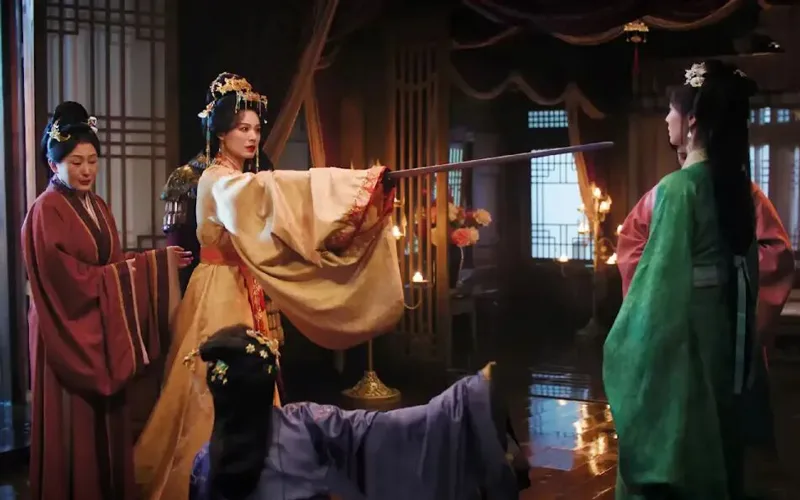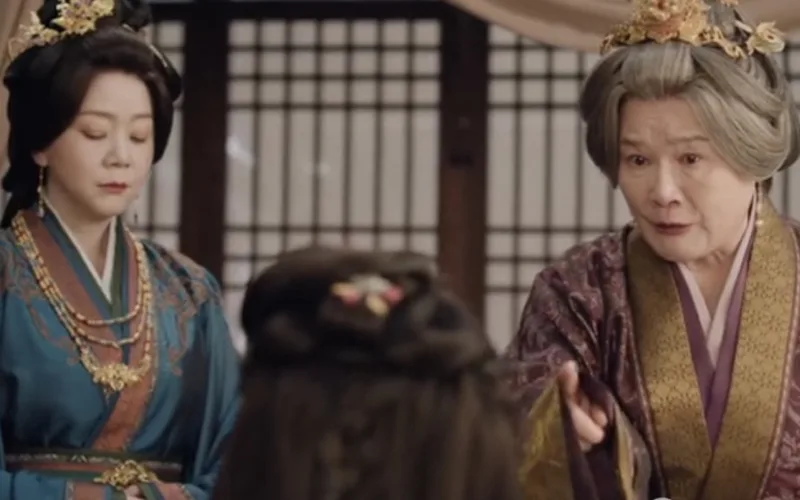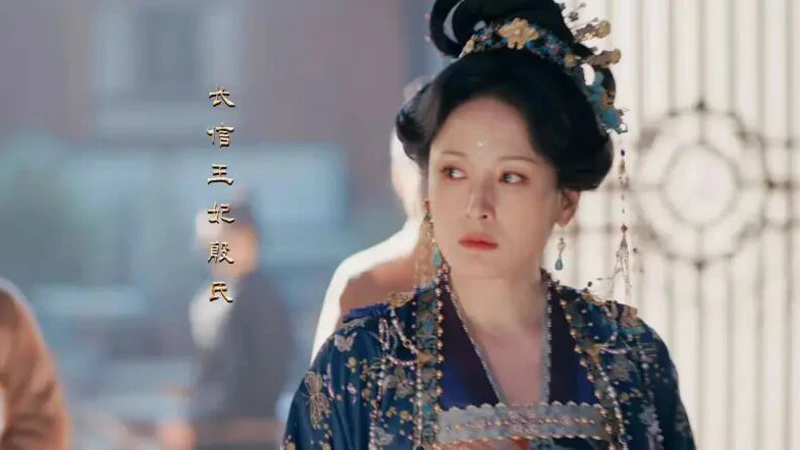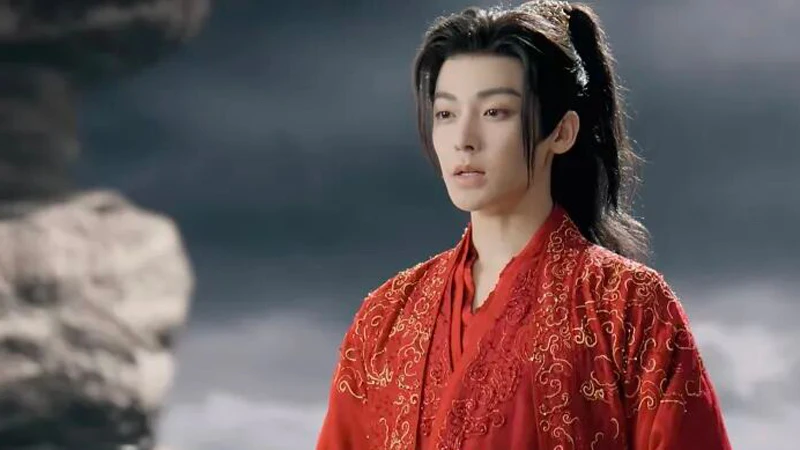
The finale of the fantasy drama The Unclouded Soul (逍遥) left audiences stunned and divided. After enduring a journey through millennia and finally marrying the powerful demon lord Hong Ye (红烨), the protagonist Xiao Yao (肖瑶) faces an ultimate separation. To prevent endless strife, Hong Ye uses his own body to seal the mythical Kunlun Mirror (昆仑镜), an act widely interpreted as a heroic sacrifice for the greater good.
Yet, a closer look suggests his motivation was far more complex. It wasn’t merely selfless devotion or a quest for redemption, but a stark acceptance of a circular destiny—one that he himself had set into motion ten thousand years prior.
A Poisoned Promise
For countless generations, a singular legend has driven both humans and demons to madness: the promise of the Yuli Spring (玉醴泉). A single sip was said to grant immortality to humans or immense power to demons. This elusive prize fueled endless conflict. The demon Sui Meng sought it to save her husband. A fallen immortal desired it for restoration. A human Emperor manipulated Hong Ye a century ago to obtain fragments of the Kunlun Mirror, which were believed to lead to the spring, setting off a chain of tragedies that destroyed lives like that of Bing Zhu (秉烛). Even the righteous Qiong Hua Sect (琼华门) dedicated generations to the search.

Each seeker, whether human or demon, walked a path littered with collateral damage, causing innumerable innocent deaths. Yet, in their desperate pursuit, none paused to question the origin of this potent myth. Who first spoke of the spring’s power, and why? The legend itself became a self-perpetuating curse, an unquestioned truth that justified any atrocity committed in its name. The quest was always presented as a means to a noble end—salvation, strength, or love—obscuring its nature as a primary source of suffering.
The true cost was never the effort of the search, but the moral decay and violence it unleashed. Families were torn apart, trusts were shattered, and kingdoms fell, all for a promise that seemed to recede further with each step taken. The spring’s legend acted less like a beacon of hope and more like a malevolent entity, consuming all who sought it. This cycle of desire and destruction forms the critical backdrop against which Hong Ye’s final act must be judged.
The First Sinner
The answer to the legend’s origin lies in a journey to the distant past. Xiao Yao’s temporal travel brought her to a time when humans were weak and subjugated. There, she met Hong Ye in his original form: a human prince. Desperate to uplift his people, he claimed to have received divine guidance that the Yuli Spring was their key to survival and supremacy. With Xiao Yao’s inadvertent help from the Dragon Clan, he pursued this goal with relentless focus.
His method, however, was one of profound betrayal. The divine guidance later specified that the spring required the Eight Demon Pearls. To obtain them, Hong Ye employed a shape-shifting E Shou (讹兽), a creature of deceit, to impersonate Xiao Yao. Using her trusted identity, he deceived mighty demons like Ao Hen (奥狠), Qiong Qi (穷奇), and Teng She (腾蛇), stealing their pearls and even swapping the crucial Dragon Origin Pearl. His actions were calculating and ruthless, placing personal ambition and racial destiny above all bonds of trust.
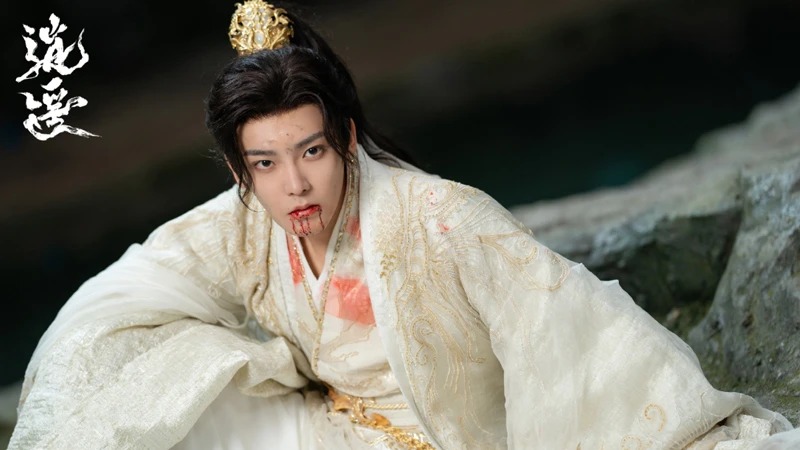
His scheme succeeded. The Yuli Spring manifested. Although Xiao Yao intervened, shattering the pearls and causing the spring to vanish, Hong Ye had already partaken of its waters. He became the first and, for a long time, the only being to taste its power. More significantly, he became the patient zero of the idea. The legend was born from his quest and spread outward across the millennia. Every subsequent war, every life lost in the search, can be traced back to this original sin committed by the human prince who would become the Demon Lord.
An Inescapable Fate
Given this history, Hong Ye’s final sealing of the mirror appears as straightforward karmic justice—a life spent atoning for the chaos he originated. He paid an immediate price: after drinking the spring, he was struck down by Xiao Yao and slumbered for five thousand years. Upon awakening as the ruler of the demon tribe, he spent further millennia in tireless service, protecting the very beings he once wronged. This could be viewed as his prolonged penance.
However, viewing his final act purely as redemption is incomplete. By the story’s conclusion, his debt, through suffering and service, could be considered paid. His choice to merge with the Kunlun Mirror—the artifact born from the same pearls he stole—transcends mere restitution. It is a philosophical closing of a circle. He recognized that the cycle of desire he ignited had spiraled far beyond anyone’s control, perpetuating itself independent of his later guilt or good deeds.
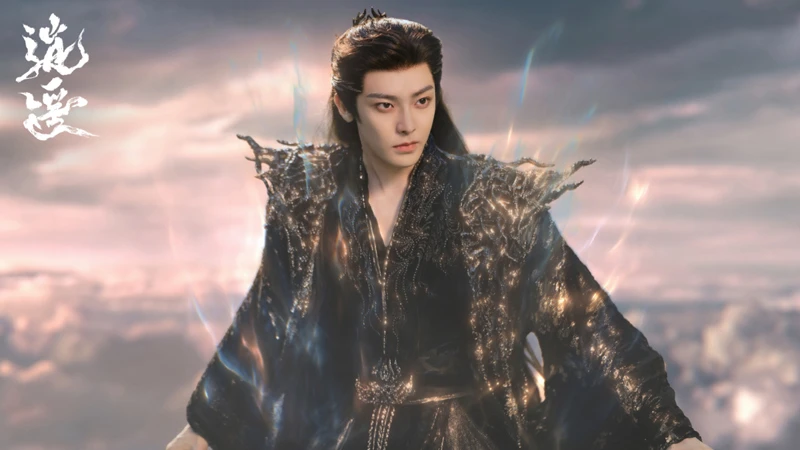
The instrument of the world’s obsession had to be removed, and only its creator was a fitting vessel for its nullification. His sacrifice was not an offering to the world, but the acceptance of a personal, inexorable fate. The story that began with his ambition had to end with his annihilation. In sealing the mirror, he didn’t just save the world; he finally ended the story he started. It was not a hero’s goodbye, but an author’s final, definitive punctuation mark on a tale that had caused too much pain. True peace for Xiao Yao and the world could only begin once the origin point of the conflict was permanently erased.