Article
Search results:
-
Top 5 Cdramas & TV in 2020 New Season
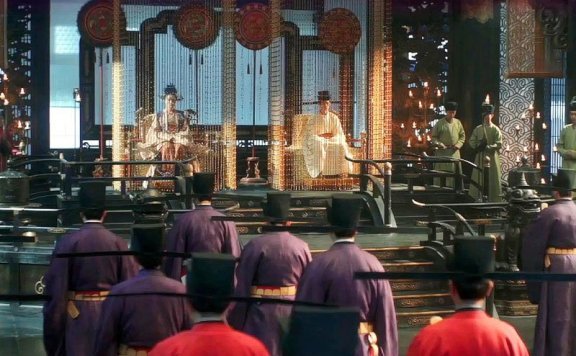
Halfway through 2020, there have been a lot of new dramas aired this year, and netizens have voted for the 5 most popular dramas of the past half-year. Which one do you think is the best? 1. Fox Hunting It is a drama series on the subject of economic investigation starring Wang Kai, Wang Ou, Hu Jun and Liu Yijun, written by Zhao Dongling, directed by Liu Xin and produced by China International Television Corporation and Youku. The play tells the story of Xia Yuan and Wu Jiaqi, the investigative police officers who solve major economic crimes and carry out multinational cross-border pursuit of fugitives. 2. Qingping Yue It is an ancient legendary drama co-produced by Zhengwu Film, Zhonghui Film, and Tencent Video, starring Wang Kai, Jiang Shu Ying and Ren Min. The Northern Song Emperor Zhao Zhen (played by Wang Kai) learns that the Empress Dowager, who raised herself, is not his birth mother, and that his real mother is Li Lanhui, Empress Dowager's maid at the time. To repay the Li family, Zhao Zhen marries his beloved daughter Hui Ruo (played by Ren Min) to Li Wei, the grandson of the Li family. But the princess, having developed… -
How Whispers of Fate Weaves Heritage into Its Visual Storytelling
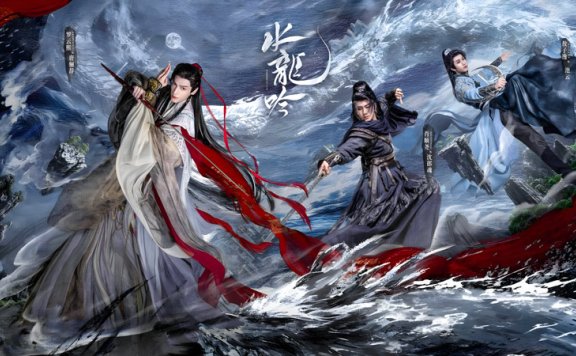
I just finished the opening episodes of Whispers of Fate (水龙吟), and the experience left me eager to discuss it with others. The protagonist, played by Luo Yunxi (罗云熙), stands out as a compelling figure who draws viewers into the story effortlessly. From the outset, the narrative flows smoothly, avoiding any sluggish moments that might lose the audience's interest. Characters are fleshed out with depth, making each interaction feel genuine and engaging. Visually, the scenes are crafted with such care that they could easily serve as stunning backgrounds for any device. Before diving in, I had reservations given the extensive promotions, but those worries dissolved quickly. The team behind this project has delivered something that resonates on multiple levels, blending action and emotion seamlessly. Platforms like Migu Video (咪咕视频) have thrown their weight behind the release, creating buzz through innovative campaigns. This support has amplified its reach, drawing in viewers who might otherwise overlook such offerings. What sets this series apart is how it balances intensity with subtlety, allowing moments to breathe without unnecessary embellishment. He brings a nuanced performance that anchors the entire plot, making it easy to invest in his journey. In an era where content can feel… -
What Makes The Journey of Legend Stand Out?
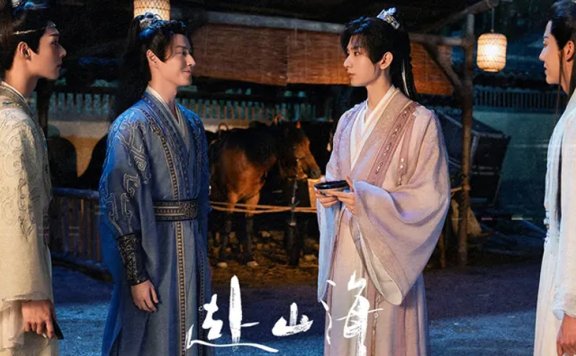
In an unexpected narrative twist, a recent production blends contemporary elements with classic martial arts lore. The Journey of Legend (赴山海) presents a world where modern sensibilities collide with ancient traditions. The central figure, Xiao Qiushui (萧秋水), is not the legendary hero one might expect but a youth grappling with his identity in a Wuxia universe. His journey begins through a Chuanshu (穿书) experience, where he navigates this realm with a present-day perspective, leading to amusing incidents like the inclusion of a Mojito (莫吉托) beverage, reinterpreted to fit the setting. He initially appears as a clumsy, trouble-prone individual, far from the mighty warrior of original tales. Alongside three companions, they form a group that subverts typical hero tropes, focusing on growth through misadventures. Their interactions blend humor with genuine camaraderie, making the storyline feel fresh and engaging without relying on overused archetypes. This approach has struck a chord with viewers, resulting in impressive viewership numbers shortly after its debut. Streaming platforms have enhanced the experience with interactive features, allowing fans to participate in puzzles and earn rewards. Such initiatives foster a sense of community, turning the show into a shared cultural moment rather than just passive entertainment. The drama's success… -
Nail Art is So Fashion in Tang Dynasty
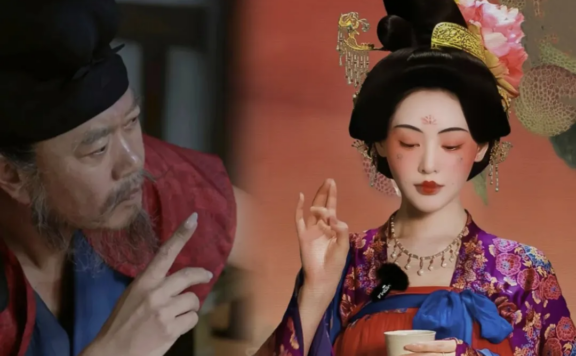
In the cdrama The Lychee Road, not only women but also men are into manicures. He Cishi, a seemingly rugged man, and some officials have well - manicured nails, which challenges many people's modern thinking. What's going on? Were the Tang people more progressive than us? Actually, ancient men also liked growing nails. But it wasn't for beauty. It was a symbol of upper - class status, showing they didn't do manual labor. We can see long nails in some portraits. Take Zhuge Liang, a well - known figure in the Three Kingdoms period. In a Yuan - Dynasty portrait of him (collected in the Palace Museum in Beijing), he has long nails, and the ruyi in his hand is delicate. His black - and - white - and - red clothes are still fashionable today. Nail Art in Tang Dynasty The trend of manicures became more popular in the Tang Dynasty. There were 'nail - dyeing' techniques and a specialized manicure industry. Similar to today, nail - dyeing was a sign of beauty and noble status, especially favored by noble women. In ancient times, 'Koudan' referred to dyed nails or delicate hands with dyed nails. Balsam flowers, also known… -
Why Wear Long Sleeves in Southern China, Lingnan?
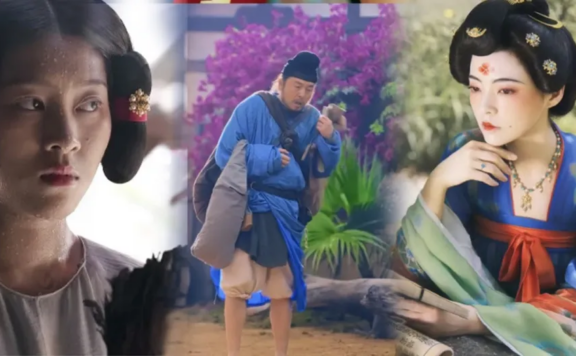
In the ancient cdrama The Lychee Road, Li Shande was sent to Lingnan to transport litchis for the emperor. Attentive netizens noticed that in this drama, Lingnan was extremely hot, with almost everyone sweating. However, except for Governor He, almost everyone wore long sleeves. Weren't they hot? Let's start with the conclusion. During most of the Tang Dynasty, the temperature in Lingnan was actually a bit higher than our current summers. Some scholars pointed out that the temperature at that time was about 1 - 2℃ higher than it is now. People wore long sleeves mainly because of the basic etiquette for formal occasions. Another reason is that although the clothes were long - sleeved, they were made of natural fabrics, which weren't as stuffy as chemical fibers. Moreover, long - sleeved shirts and long trousers could effectively prevent mosquito bites. As we've popularized before, the short - sleeved clothes worn by Governor He were generally used as an inner layer with a round - collared robe. For someone like Governor He to appear directly in short - sleeved clothes alone, such occasions were basically at home or other informal settings. Also, some laborers or working people who needed to… -
Lan Yingying Wears Song Style Hanfu
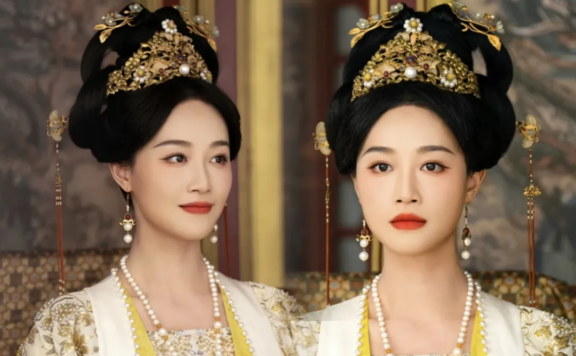
In the cdrama Perfect Match, Lan Yingying (蓝盈莹) played the role of an imperial concubine, a legitimate daughter favored by the emperor. She also planned for her family, and we witnessed her growth and transformation. Let's start with the conclusion. The outfit Lan Yingying wore was a style of the large-sleeved shirt and skirt in Song Dynasty clothing. This kind of large-sleeved shirt was usually worn by women. It had a straight collar and a front-opening design and was mainly used as an outer garment. From Tang Dynasty paintings and unearthed clothing from the Song and Ming dynasties, we can see that the large-sleeved shirt was popular in the Tang, Song, and Ming dynasties. In the Song Dynasty, it developed into an important formal dress for noble women, especially as the daily wear for concubines. By the Ming Dynasty, the way of wearing the large-sleeved shirt was similar to that in the Song Dynasty. It was also listed as the regular clothing for queens and noble women. Typical styles included the bright red large-sleeved shirt and the bright yellow large-sleeved shirt. This evolution of the style reflects the historical continuity of traditional formal dress culture. The exquisite materials and elaborate… -
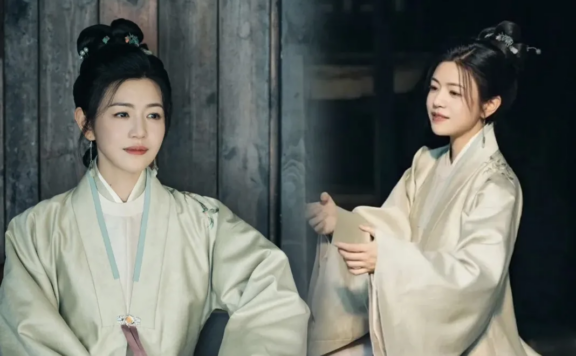
Chen Yanxi's Mother Costume in The Legend of Zang Hai
In the ancient cdrama The Legend of Zang Hai (藏海传), although Chen Yanxi only appeared in a few scenes, she left a deep impression. She played the mother of Zang Hai (played by Xiao Zhan), wearing a Ming-style cape, showing a different kind of mature charm from before. Let's first talk about the outfit on the left side of the main picture. Chen Yanxi wore a front-buttoned narrow-sleeved cape, with a round-collared shirt and a cross-collared middle garment inside, and a horse-faced skirt below. The whole set was in the Ming style. The overall color of this outfit was a combination of light blue and light colors, so it looked gentle and elegant. Her hair was simply styled in double buns or a single bun, making her look fresh, elegant, and refined. The cape is a relatively formal style in Ming Dynasty clothing. Its style features a straight collar and slits on both sides. It evolved from the Bei Zi in the Song Dynasty. In some Ming Dynasty books, the terms 'Bei Zi' and 'cape' were often used interchangeably. The main difference between them is that in the middle and late Ming Dynasty, the collar of the cape was mostly… -
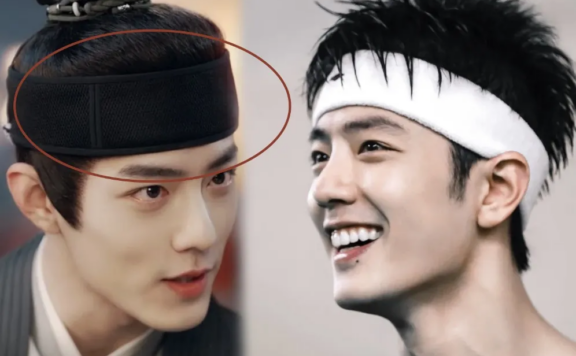
What's the Name of the Hairband in The Legend of Zang Hai
In the ancient costume cdrama The Legend of Zang Hai, when Xiao Zhan's character Zang Hai makes his appearance, he wears a similar 'hairband'. Netizens are saying, 'Isn't this the essential hairband for modern sportswear? Was it already around in the Ming Dynasty?' Let's start with the answer. It's a 'net cap' from the Ming Dynasty, more precisely, a simplified version of the Lazy Net Cap (懒收网巾) that was popular in the late Ming Dynasty. The net cap was a net-like headdress used by adult men in Ming Dynasty China to tie up their hair and gather loose strands. It has the same function as modern 'hairbands'. It can not only gather loose hair but also prevent hats from slipping. It's actually quite practical. The net cap could be worn alone in daily life. In the Ming Dynasty, people of status had to wear a cap over the net cap when attending important occasions. However, for convenience in daily life or among common people, they often didn't need to wear other hats after putting on the net cap. The popularity of the net cap can be attributed to Zhu Yuanzhang. It's said that one day, Zhu Yuanzhang visited the Shenleguan… -
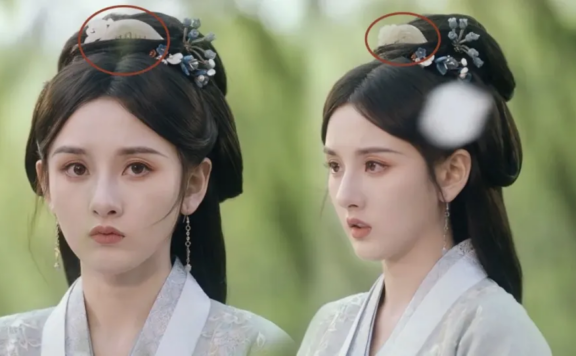
Song Zuer's Hair Accessories Are So Special
In the cdrama "Zheyao" (折腰), Song Zuer's Han - style hairstyle looks elegant and dignified. The comb - shaped hair accessory on her head is as gentle as jade and just right to modify her face shape. Did the ancients really insert combs directly into their hair buns? First, let's talk about the conclusion. In ancient times, combs were originally hair - dressing tools and later could also be used as hair accessories. We often saw comb decorations in dramas with a Tang - style background, but in Han - style makeup and hairstyles, combs were actually also common on hair buns. Combs were collectively called "zhi" (栉) in ancient times, which were divided into combs with sparse teeth and hairpins with fine teeth. In the Han Dynasty's "Shuowen Jiezi", it was said that "zhi" was the general name for combs and hairpins. The two characters "comb and hairpin" should be used separately. The one with sparse teeth is called "comb", and the one with dense teeth is called "hairpin". You use a comb to comb your hair and a hairpin to remove dirt from your hair. When I was a child, there should still be such hairpins at home,… -
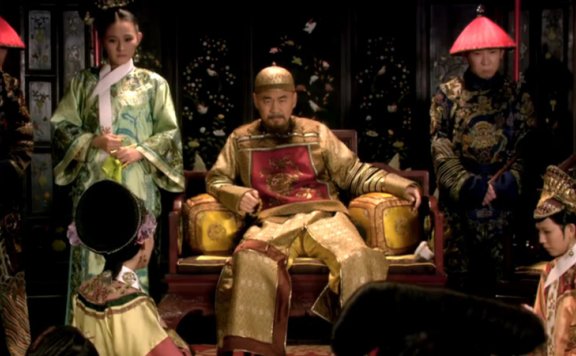
Why Chinese Dramas Can Never Seem to Get Emperors Right
From the moment Qin Shi Huang declared himself the first emperor in 221 BCE to the abdication of Puyi in 1912, China had more than two millennia of imperial history. Yet strangely enough, it wasn't until much later that Chinese audiences began seeing emperors on their screens. Before the 1980s, non-realist genres were few and far between on Chinese television—let alone any depictions of emperors. When Emperors Finally Entered the Frame According to media scholars, the earliest TV portrayals of emperors date back to 1982. That year, Shanxi TV produced Anecdotes of the Tianbao Era (天宝轶事), Shanghai TV aired Prince Qin Li Shimin (秦王李世民), and Hebei TV released Consort Yi (懿贵妃). All of these shows predate Nurhaci (努尔哈赤), a better-known 1986 drama by China Central Television (CCTV), which is often mistakenly believed to be the first of its kind on the mainland. On-screen emperors in Chinese TV dramas generally fall into two categories: the "official history" type and the "unofficial tales" type. Nurhaci is an example of the former. Directed by Chen Jialin—later crowned "the first director of Chinese historical drama"—the show laid out a grand, epic style that would set the tone for later historical blockbusters like Tang Minghuang,… -
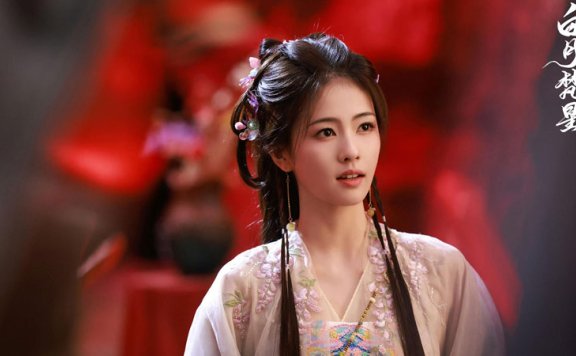
Bai Lu's Triple Win: Acting Range, Commercial Clout, and Industry Influence
In today's fiercely competitive film and television landscape, only a rare few actors manage to level up across all fronts—critical acclaim, commercial value, and industry influence. Among the standout talents of the post-90s generation, Bai Lu has emerged as a model of multi-dimensional growth, propelled by the positive feedback loop between her on-screen performances and market response. As the summer 2025 season kicked off, Bai Lu's costume fantasy drama The Feud landed with impact. Not only did it shoot straight to the top of DeTavin's weekly rankings for historical dramas, but it also cemented her status as the only female lead on iQIYI's platform to headline two shows that surpassed the coveted 10,000 popularity index. What makes The Feud's success even more impressive is that it didn't rely on a big-name IP. Instead, it captured viewers with a tightly written original script and an unconventional, anti-cliché narrative. As the plot deepened, audience engagement soared—within just nine days of release, pop-up comment interactions exceeded 100 million, and the DeTavin buzz index peaked at 2.5, pushing the show past the 10,000 heat threshold. At the heart of this breakout was Bai Lu's portrayal of Li Qingyue (also known as Hua Ruyue). Her… -
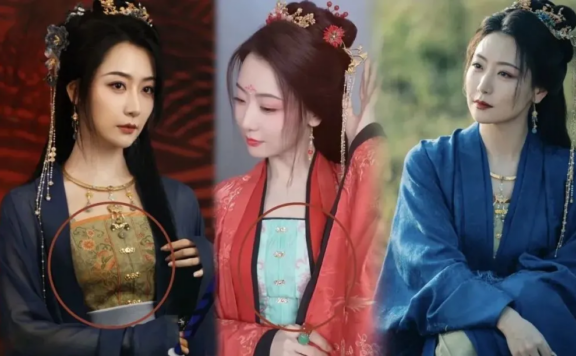
Why Does Bai Bing's Corset Have a Row of Buttons?
In the cdrama The Legend of Zanghai, Bai Bing plays Master Liuchu, and her corset clothing image is very impressive. Netizens are asking: Why does her corset have a row of buttons in the front? Let me give the conclusion first. In fact, there were corsets with front - opening buttons in the Ming Dynasty, called 'Zhuyao' (主腰). They were quite popular during the Yuan and Ming Dynasties and were also known as 'Hehuanjin' at times. Its biggest feature is the front - opening placket, which could be fastened with ties or buttons. Some people also refer to all the underwear styles of the Ming Dynasty as 'Zhuyao' instead of 'corset', which is just a different way of saying it. From cultural relics, it's obvious that this style could have shoulder straps, or not. The shoulder straps could be worn straight or crossed (see the two pictures on the bottom right), showing its flexibility in binding and fashion sense. Those without shoulder straps can also be classified as corsets. However, the common corsets in the Song and Ming Dynasties were mostly one - piece wraparound types with ties, while the 'Zhuyao' was a front - opening style. This one -… -
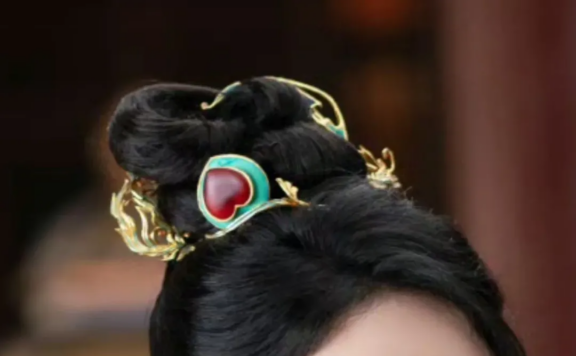
Ancestors Showed a Heart from 3,000 Years Ago
In the cdrama "Huai Shui Zhu Ting (淮水竹亭)", Wang Quanhongye, played by Zhang Yunlong, created a 'heart' for Huai Zhu, played by Liu Shishi. Netizens wondered: Did we have heart - shaped patterns before? I thought they only emerged in modern times. Let me state the conclusion first. As a symbol of love, many believe that the use of heart - shaped patterns on utensils, fabrics, and decorations was introduced into China from the West in modern times. However, this romantic symbol isn't exclusive to the West. The East had its own 'heart - shape' long ago, and it was quite prevalent! As early as in the oracle bone inscriptions unearthed from the Yin Ruins, we found the earliest Chinese character for 'heart'. This indicates that the heart - shape has a long history in China. Through decorative art, more people have a bit of reverie about this kind of romance. Regarding the origin of the character 'heart', there are two main views in the academic circle: one is that it originated from the scene of holding a heart with both hands during sacrifices; the other is that the character 'heart' is a simple pictograph. In 'Shuowen Jiezi', 'heart' is… -
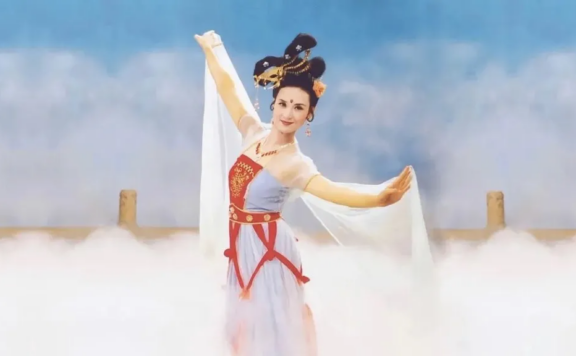
What's the Real Costumes of Chinese Immortals?
Why were the immortals in ancient costume dramas easily distinguishable at a glance? In today's Xianxia (仙侠) - themed movies and TV shows, the image of immortals usually features white, long robes fluttering in the wind, along with a combination of Chinese and Western photo - studio styles. So, which one is the "real immortal"? Let me state the conclusion first. The images in old - fashioned TV shows were mostly modeled after the traditional costumes in immortal paintings, rather than being conjured up out of thin air. In contrast, modern Xianxia dramas adopt a uniform white color scheme and loose - hair makeup due to modern minimalist aesthetics, which has created a stereotypical impression of Xianxia among most young people. However, can we just make wild guesses about immortal costumes without a dynasty background? No. Looking at the Xianxia dramas in recent years, there are those with ancient Chinese styles, Western styles, or a blend of both. But without exception, pure white and light - colored outfits dominate. No wonder fans say, "To look charming, wear all white." When we examine ancient murals, we find that the immortals' clothing was colorful. The ancients also painted immortals, and like us… -

The Stunning Beauty of Leading Actresses in Costume Dramas
Yu Zheng may not have the best reputation, but his aesthetic sense is truly remarkable. The currently airing drama, The Song of River Reeds (临江仙), is a visual feast. Just the looks of the male and female leads are enough to make people enjoy the sweetness of this "divorced" couple. The supporting characters are even more stunning. Zhao Zhaoyi is sweet and elegant. When she makes an appearance, she exudes the charm of an ancient beauty. Even without a white dress to highlight her etherealness, her whole demeanor is lively, making her a perfect fit for a xianxia drama. Zhou Jieqiong, in a purple dress, has a pure face and a somewhat stubborn look in her eyes. She is a beauty who is both clear - cut and impactful. He Ruixian, whom Yu Zheng has tried to promote several times, has big, gentle and bright eyes. Even with a simple hairstyle, she has a transcendent beauty. Yu Zheng selects supporting characters with such high - level looks, even for those marginalized characters with only a dozen - minute appearance. Their appearances stun everyone, and this is the kind of beauty a leading actress in a costume drama should have. Huang Riying's… -
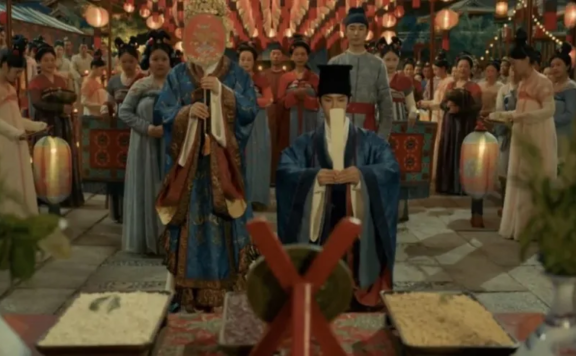
Why Do Newlyweds Bow to a Mirror at Tang Style Weddings?
In cdramas, such as The Gorgeous Princess, The Demon Exorcist, and Wind Blows in Luoyang, during the Tang - style wedding ceremonies, the newlyweds bow to a mirror instead of their parents. What's the story behind this? First, let's get to the conclusion. 'Bowing to the mirror' was an old wedding custom in the Tang and Song dynasties, used to ward off evil spirits, pray for blessings, and encourage self - reflection. Since the Han Dynasty, mirrors have been one of the betrothal gifts and marriage tokens. At that time, mirrors were also called 'yang sui'. They could get fire from the sun, symbolizing brightness and beauty, and might be the prototype of early wedding mirrors. Newlyweds used bronze mirrors to ward off disasters and evil, reflect on themselves, recognize each other's true feelings, and pray for a smoother, brighter, and more beautiful married life. In the Tang Dynasty, the name 'yang sui' was reused. As Du You of the Tang Dynasty wrote in Tongdian: 'There are a total of thirty kinds of gifts for the betrothal ceremony', among which there was yang sui, with the meaning of 'yang sui brings light and peace'. The patterns on bronze mirrors also… -
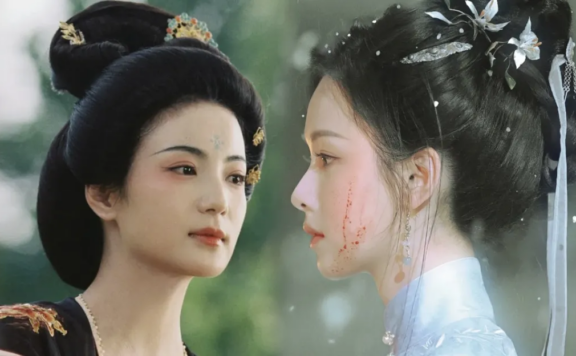
Did Ancient Times Have Realistic Wig Technology?
In historical Cdramas, we often come across women sporting exaggerated and voluminous hairstyles, like the Ming-style makeup in When the Wild Geese Return and the Tang-style makeup in The National Beauty and Fragrance. Netizens can't help but wonder: Did ancient people really have such astonishing hair volume? The answer is no. It wasn't necessarily that ancient people naturally had thick hair. In reality, their hair density might not have been as depicted in films and TV shows. Instead, they wore wigs, known as "Yiji" (义髻) in ancient times, which were the forerunners of modern hairpieces. The trend of wearing wigs started among upper - class women. Their goal was to add volume and create more elaborate hairstyles, similar to today's hair extensions. The materials for Yiji were diverse. It wasn't limited to human hair (which was costly) but also included thin wood shavings, horsehair, etc. Generally, Yiji were made from hair or wood - based substitutes. For example, the lacquered wooden wig unearthed from the Astana Tombs in Turpan, Xinjiang, is a standard 'Single - Blade Half - Turned Chignon'. It's made of wood, painted black, and decorated with white - painted flowers, auspicious clouds, and phoenixes. The base has… -
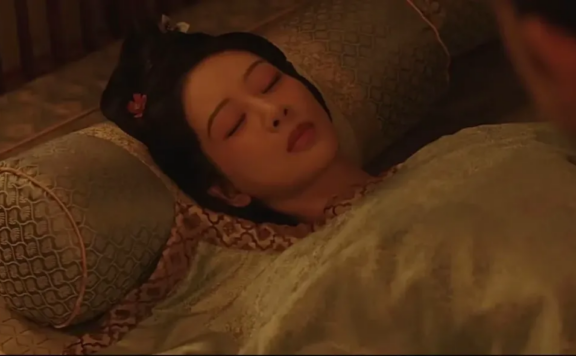
Explore the Ancient Chinese Blankets
Have we been using blankets wrong all these years? In cdramas, the blankets we commonly see are rectangular, similar to what we use today. However, in the TV series Guo Se Fang Hua, Yang Zi's blanket with a unique cut - out design is quite impressive. When pulled up, it snugly covers the shoulders, providing a sense of security. This kind of blanket dates back to the Warring States period, making it a 'classic design'. In contrast, traditional rectangular quilts, though warm, often expose the shoulders because of their straight edges. During seasonal changes and cold winters, shoulders are vulnerable to cold drafts. The ancient concave - backed blanket has an ingenious design. Its tailored cut - out ensures the shoulders are well - covered, offering both comfort and excellent insulation. It's astonishing that this practical design, now seen as innovative, was adopted by our ancestors over two thousand years ago during the Eastern Zhou dynasty. Auspicious Embroidery The ancients loved embroidering auspicious patterns on blankets. The Warring States blanket used ancient lock - stitch embroidery with paired dragon and phoenix motifs in deep blue, emerald blue, red - brown, vermilion, and yellow threads. This is similar to the pattern… -
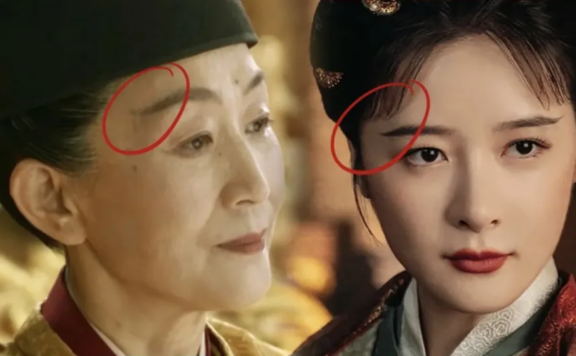
The Power of Upward-Sweeping Eyebrows in Ancient Chinese Makeup
In the historical cdrama, actors Chen Jin and Xu Jiao portray characters with distinctive eyebrow styles that exude an undeniable aura of authority. Unlike conventional female characters whose eyebrows taper downward or remain straight, their eyebrow tails sweep dramatically upward. This unique style, known as Hanyan Mei (涵烟眉) or Fuyun Mei (拂云眉), was particularly popular during the early Tang Dynasty through the Wu Zhou period. Characterized by sharp inner corners and finely separated hairs at the tails, this eyebrow style sometimes featured a narrower, more arched peak, also referred to as Yuanshan Mei (远山眉). Ancient Chinese literature, such as the Fengguang Ci by a Tang Dynasty poetess, describes these eyebrows as ethereal as mist or drifting clouds. Their upward sweep not only added a touch of independence and confidence but also became a defining feature in murals and paintings from that era. Compared to the softer Juan Yan Mei (罥烟眉), Hanyan Mei was bolder and more vibrant, leaving a lasting impression. Modern adaptations in film and television have softened its intensity, blending strength with elegance. Modern Applications and Tips This eyebrow style, often seen in strong female roles like those in Zhang Xin, enhances facial structure by filling the temple… -

Traditional Chinese Hairstyles for Children
Historical Cdramas like 'Qing Ping Yue' and 'Da Feng Da Geng Ren' have showcased authentic children's hairstyles, moving away from the trend of simply shrinking adult styles. This shift highlights that ancient Chinese children, much like their modern counterparts, had their own distinctive looks tailored to their age. Previously, it was common to see ten-year-olds in period dramas styled as miniature adults—boys with tied-up hair and crowns, girls with elaborate buns and hairpins. However, this portrayal is historically inaccurate. In ancient China, adulthood was marked by ceremonies: the Ji Ji Li (及笄礼) for girls around age 15 and the Ruo Guan Li (弱冠礼) for boys around 20. Before these rites, hairstyle options were limited, with the most common being the 'Zong Jiao' (总角), or 'horned hair'. Zong Jiao: A Broad Term Zong Jiao is a broad term referring to the hairstyles of children aged 7 to 15. This period was poetically called the 'Zong Jiao Years,' and childhood friendships were termed 'Zong Jiao friendships.' The 'Jiao' refers to small topknots, specifically the hair tied on either side of a child's head, distinct from the loose 'Chui Tiao' (垂髫) of early childhood or the formal buns of adults. Narrow Definition of…