From the moment Qin Shi Huang declared himself the first emperor in 221 BCE to the abdication of Puyi in 1912, China had more than two millennia of imperial history. Yet strangely enough, it wasn't until much later that Chinese audiences began seeing emperors on their screens. Before the 1980s, non-realist genres were few and far between on Chinese television—let alone any depictions of emperors.
 When Emperors Finally Entered the Frame
 When Emperors Finally Entered the Frame
According to media scholars, the earliest TV portrayals of emperors date back to 1982. That year, Shanxi TV produced Anecdotes of the Tianbao Era (天宝轶事), Shanghai TV aired Prince Qin Li Shimin (秦王李世民), and Hebei TV released Consort Yi (懿贵妃). All of these shows predate Nurhaci (努尔哈赤), a better-known 1986 drama by China Central Television (CCTV), which is often mistakenly believed to be the first of its kind on the mainland.
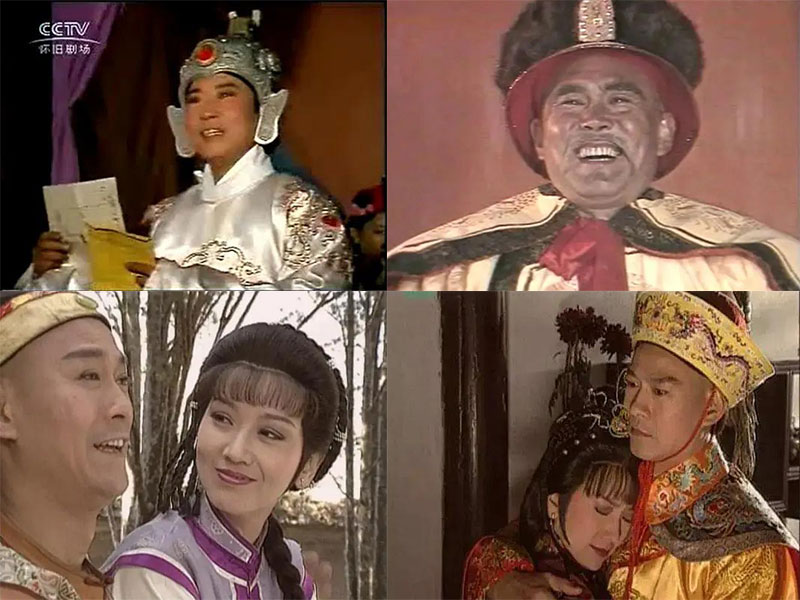
On-screen emperors in Chinese TV dramas generally fall into two categories: the "official history" type and the "unofficial tales" type. Nurhaci is an example of the former. Directed by Chen Jialin—later crowned "the first director of Chinese historical drama"—the show laid out a grand, epic style that would set the tone for later historical blockbusters like Tang Minghuang, Wu Zetian, Emperor Wu of Han, and Kangxi Dynasty. These shows all fall under the category of "serious historical dramas" (历史正剧), built with weight and prestige in mind.
But almost at the same time, the "unofficial" emperor emerged on screen. The word "anecdote" in Anecdotes of the Tianbao Era already hints at this direction. Still, the first drama to really popularize this style was New Legend of Qianlong (戏说乾隆), a 1991 co-production between mainland China and Taiwan.
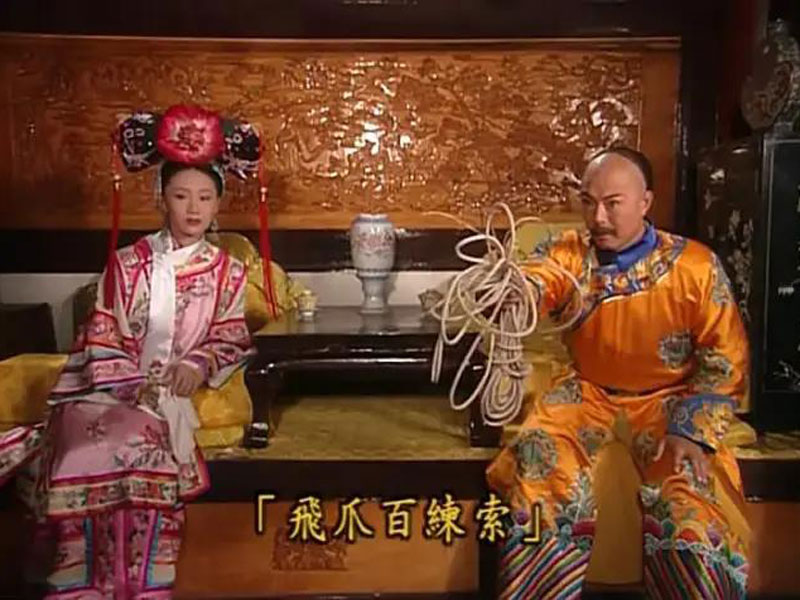
Back then, Taiwan's entertainment industry was far more attuned to what audiences wanted. So, it's no surprise that many of the most iconic "unofficial" emperors bear clear traces of that distinctly Taiwanese touch—charm, playfulness, and a bit of wuxia swagger.
Take Qianlong, for example. In history, he was a cunning strategist with an inflated ego—his nickname was "The Perfect Old Man" (十全老人). The drama draws inspiration from the historical fact that he toured southern China incognito, but it only really highlights one thing: his charm with the ladies. In the show, Adam Cheng's Qianlong is suave but not domineering. He might be the emperor, but he flirts with a modern sense of romance that audiences found irresistible.
Of course, modern here needs air quotes. Qianlong's imperial status is his trump card—like a suit of golden armor he wears beneath his robes. He doesn't flash it around, but when things get out of hand—when love, martial arts, and cleverness no longer cut it—he pulls rank. And just like that, all obstacles vanish.
This mix of absolute power and modern-day romantic appeal turned Adam Cheng's version of Qianlong into the fantasy boyfriend of the era. Later, Cheng even played Chen Jia Luo, the anti-Qing rebel and distant relative of Qianlong, in Jet Li's Fong Sai-yuk. He was full of heroic righteousness—but viewers couldn't help imagining him flirting with village girls again. That vibe stuck.
Besides Adam Cheng, the 1990s gave us two other iconic Qianlongs: Zhang Guoli in Liu Luoguo (宰相刘罗锅) and Zhang Tielin in My Fair Princess (还珠格格). They would later go on to star together in The Eloquent Ji Xiaolan (铁齿铜牙纪晓岚), with Zhang Guoli also starring in Kangxi Travels Incognito (康熙微服私访记). Both actors eventually became known as "professional emperors" in the industry.
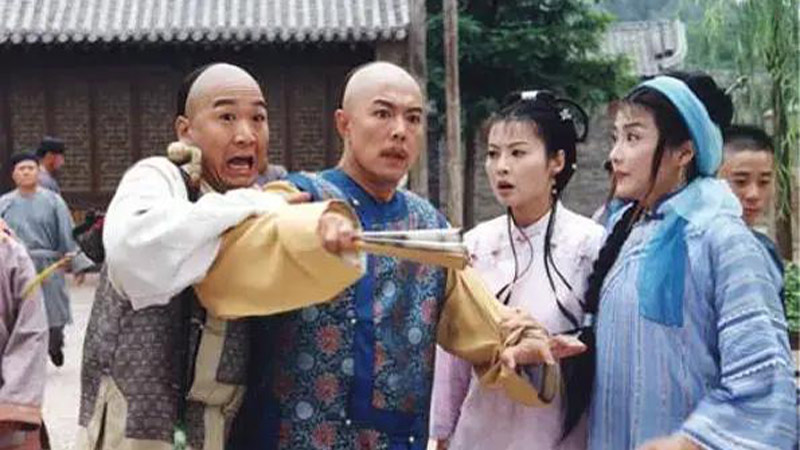
In an interview, Zhang Tielin once joked: "Tang Guoqiang plays the emperor who handles national affairs, Zhang Guoli plays the emperor who goes sightseeing, and I play the emperor who deals with palace drama."
His point wasn't wrong. In both My Fair Princess and Ji Xiaolan, Zhang Tielin's Qianlong is a master of political balancing acts. He never leans too hard toward the "good guys" or the "villains," but he never lets go of control either. No matter how messy the court politics become, he ends up smiling and receiving praise from all sides—"Your Majesty is wise!"—like some wise uncle playing dumb just enough to stay on top. It's a kind of calculated foolishness that almost feels like folk wisdom.
Working to Death in the Forbidden City
 Working to Death in the Forbidden City
Even the "official-history" emperors can fall in love with genuine emotion, and even the "unofficial" emperors can play high-level power games. So what's the real difference between the two?
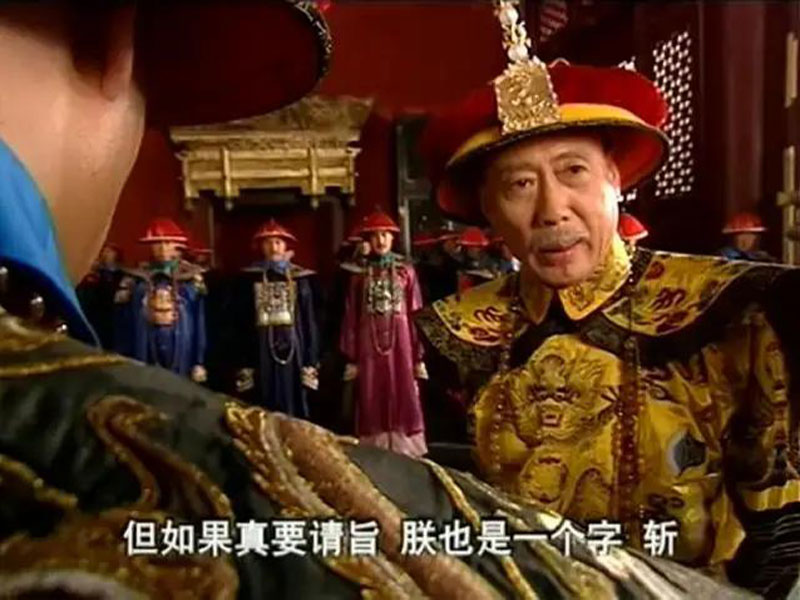
If we just judge by whether the plot is fictional or not, that's way too shallow. Official-history dramas aim for an epic kind of romance; unofficial ones go for a more folk-tale style of charm. Both love to exaggerate, beautify, and dramatize. If we go by Zhang Tielin's earlier joke, the real dividing line is whether the emperor has a sense of ambition. The official-history emperor is basically a workaholic. Turn on the TV and you'd think he's stuck in a perpetual 996 job schedule—working from dawn till dusk, no breaks, no weekends.
The best example of this workaholic spirit is probably Tang Guoqiang's portrayal of Emperor Yongzheng. The man was so diligent in the drama that he literally worked himself to death at the age of 57. In the final episode, Yongzheng quietly coughs up blood, leans against a doorframe, and slides to the floor—absolutely heart-wrenching. His loyal official Tulichen cradles him in his arms, shouting "Your Majesty!" as he dabs his mouth with a yellow handkerchief. And looking at Tang Guoqiang's eyes in that scene, you could still glimpse the charm he had in Prince Peacock (孔雀王子) years earlier.
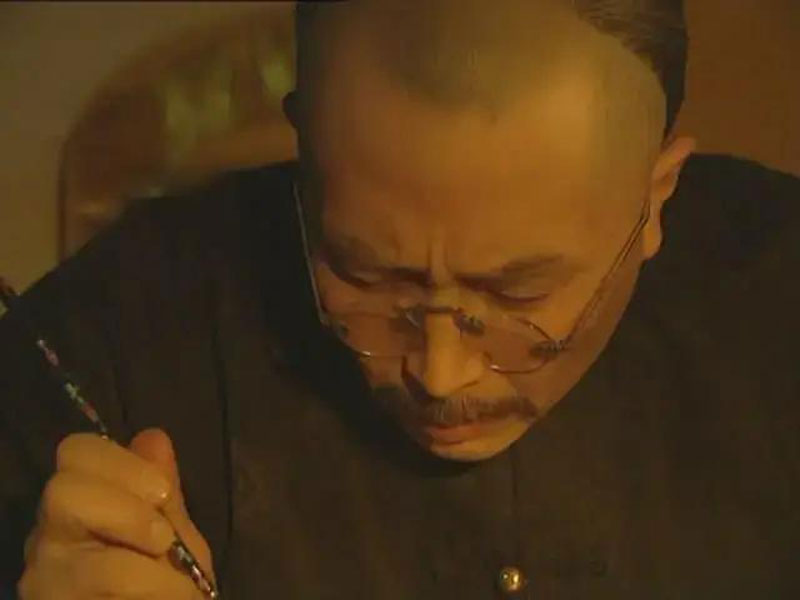
Among all contemporary Chinese male actors, Tang Guoqiang probably has the longest resume when it comes to playing emperors and generals. But even with all that experience, none of his later roles left as deep an impression as his Yongzheng. In fact, in later performances, he often gave off an unshakable "Yongzheng aura," whether he meant to or not.
Of course, it's not just Tang Guoqiang repeating himself. Anyone who's watched a few of these so-called "serious historical dramas" might start to notice a pattern: why do they all start to feel... the same?
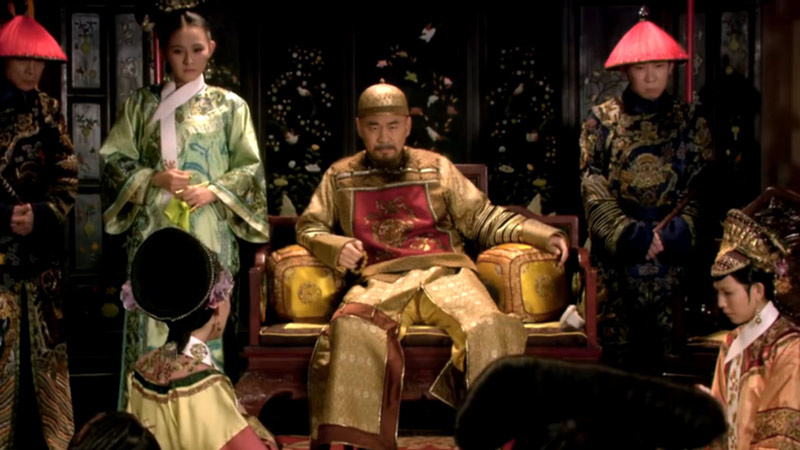
Take Kangxi Dynasty and Qianlong Dynasty, both adapted from novels by Er Yue He (二月河). You get the same sleepless nights, the same "benevolent concern for the common folk," the same "balanced civil and military strategies," and, oddly enough, the same inexplicably recurring bowl of "bird and fish soup." (Note: a generic imperial delicacy used symbolically in multiple scenes.)
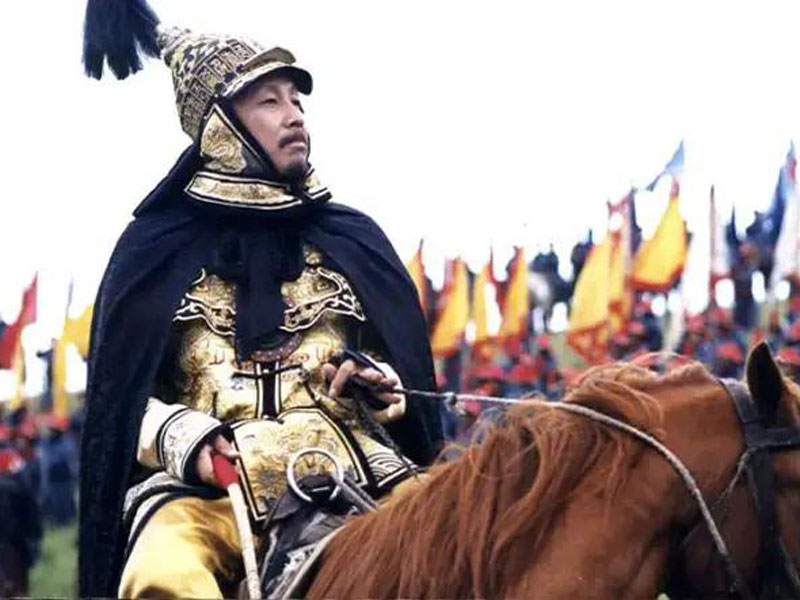
Even though Kangxi was played by the highly respected Chen Daoming, and Qianlong by the veteran actor Jiao Huang—both known for their acting chops—their characters feel almost interchangeable. It's not about portraying a specific emperor anymore. What we're watching is a performance crafted to serve a deeper, more subtle cultural mechanism—something that quietly repeats itself, again and again, behind the scenes.
The Tragic Machinery Behind Qin Shi Huang
 The Tragic Machinery Behind Qin Shi Huang
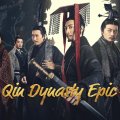
Since the 1980s, the shifting portrayal of Qin Shi Huang has been one of the clearest examples of how this cultural mechanism operates. Throughout the '80s and '90s, Qin was always written as a blend of brute instinct and human vulnerability. To highlight the clash between the two, writers loved giving him a tragic love arc—something that showed how he lost the one person he truly loved.
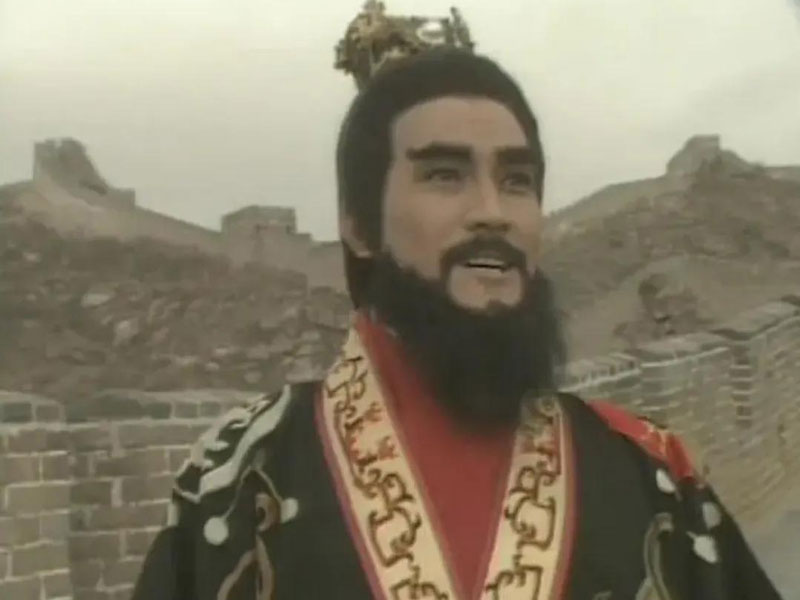
In the 1986 drama Qin Shi Huang, produced by Asia Television (Hong Kong), Ying Zheng and Crown Prince Dan of Yan are reimagined as childhood friends who end up on opposite sides of history—and who both fall in love with the same woman.
In Qin Shi Huang and Lady Afang (1995), starring Liu Dekai and Angie Chiu, the setup is similar, though Crown Prince Dan's role is diminished. Instead, the emperor's great passion is centered entirely on Afang.
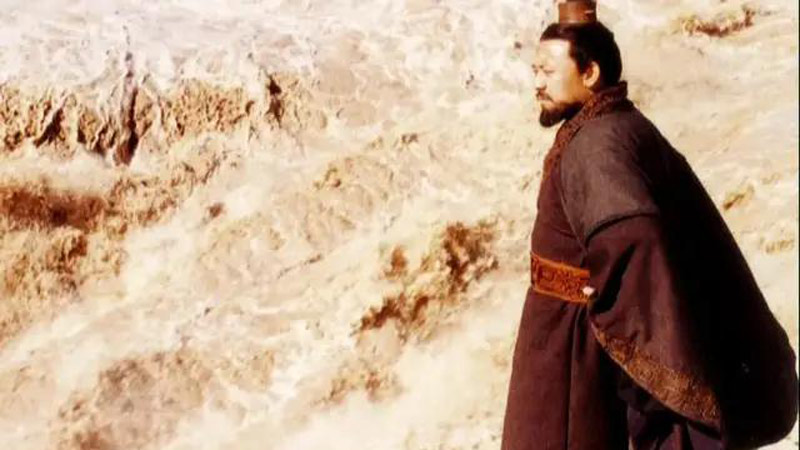
Then came The Emperor's Shadow (秦颂) in 1996. Jiang Wen's Qin Shi Huang is chillingly ruthless—when faced with an assassination attempt, he orders the complete massacre of everyone within five li (about two kilometers), no matter their age, gender, or innocence, and doesn't bat an eye. And yet, somehow, he still dotes endlessly on his daughter Liyang and his childhood friend Gao Jianli.
The irony? The two people he loves most both die resisting his tyranny. In the final scene, as the emperor climbs the towering altar alone for a sacrificial ritual, he silently breaks down before a massive bronze cauldron—no speech, no outburst, just a man crying in front of a symbol of power. The message is hard to miss: Qin Shi Huang's conquest of the known world came at the cost of love, humanity, and everything tender in him.
By the late '90s, TV and film doubled down on Qin's brutality. In Chronicles of the Eastern Zhou Kingdoms (东周列国志), Guo Tao played a version of him that was practically unhinged. Li Xuejian took it even further in The Emperor and the Assassin (荆轲刺秦王), where Qin teeters on the edge of madness.
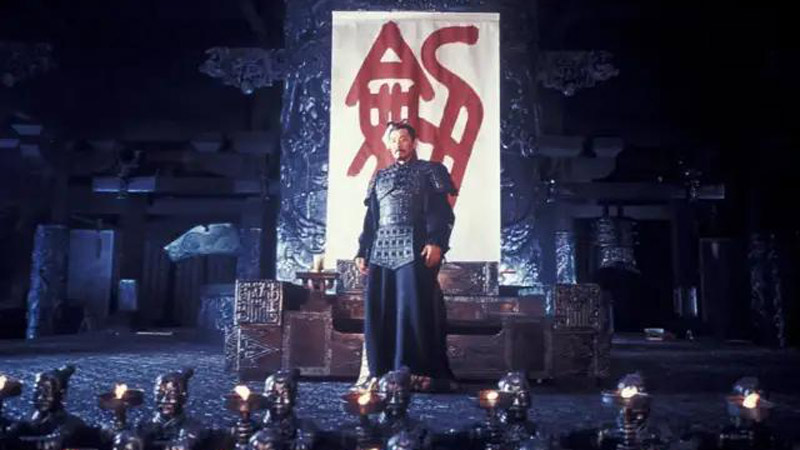
But once we entered the 2000s, the narrative began to shift. Qin wasn't just violent anymore—he became majestic. Zhang Yimou's Hero (英雄) was a turning point. In this film, a would-be assassin has a change of heart after seeing the emperor's sweeping vision for unity. He lays down his sword and dies willingly, letting the Qin soldiers turn him into a pincushion.
It's a wild premise when you think about it—the emperor and the assassin are no longer flesh-and-blood characters. They're stripped of personal identity and turned into symbols, both serving some higher ideological purpose. And it's not just Qin Shi Huang. All "official-history" emperors suffer the same fate: they get abstracted into functional roles, no matter how well the actor plays them.
That's why these characters all start to blur together. Different names, different dynasties, different backstories—but somehow, they all lead to the same place. Because they're not telling different stories. They're just different vessels for the same overarching message.
Cynicism, Palace Fights, and the Emperor in All of Us
 Cynicism, Palace Fights, and the Emperor in All of Us
The irony is that Hero isn't even an "official-history" production—it's completely a "wild-history" reimagining. What we've seen since the 2000s is a clear trend: the once distinct boundary between official and unofficial history has begun to dissolve. What used to be treated as national affairs, with public significance, is increasingly framed as the emperor's personal drama. Meanwhile, the emperor's personal affairs—especially his love life—have become public spectacle.
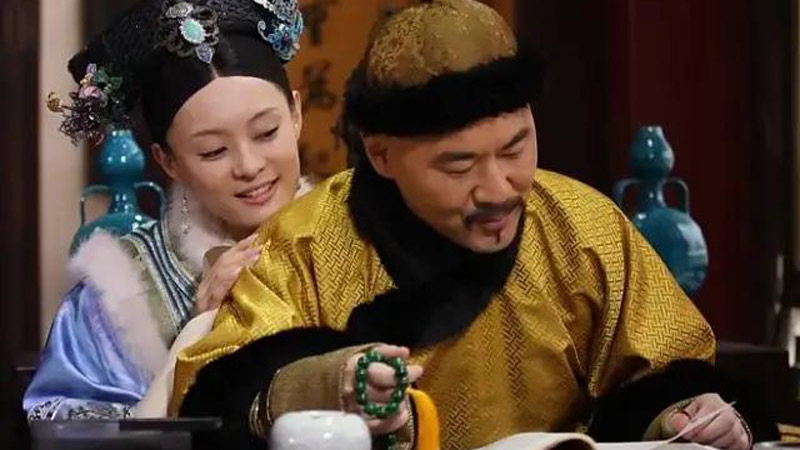
The rise of palace intrigue dramas like War and Beauty, Schemes of a Beauty, Scarlet Heart, and Empresses in the Palace is a direct result of this merging. These shows mark the blending of "official" and "wild" storytelling.
Palace dramas offered a new angle—a closer, more intimate view of power. In doing so, they stripped away the myth-making: the dignified official-history emperor and the romanticized wild-history emperor both had to give up their halos. Take Chen Jianbin's Yongzheng in Empresses in the Palace—he's neither noble nor charming. Just a petty, selfish, egocentric man who happened to be born into royalty.
The catch is: even as palace dramas pointed out "the emperor has no clothes," they also fully embraced his nakedness with a kind of cynical delight. The emperor is no longer an object of resistance—he becomes a mirror of ourselves. We recognize him, maybe even relate to him. He's not them anymore—he's me.
For a long time after the founding of the PRC, emperors and courtly romances were seen as symbols of feudal decay, lumped together under one big red stamp of "reactionary content." Even when emperor-themed dramas made a comeback in the '80s, debates never stopped. In 2003, Wei Minglun—then vice-chairman of the China Television Artists Association—published an article calling for a "sweep of emperors off the screen." His argument? Emperor worship is incompatible with civic awareness and the rule of law.
And truthfully, arguments like this do resurface every so often, always with similar reasoning.
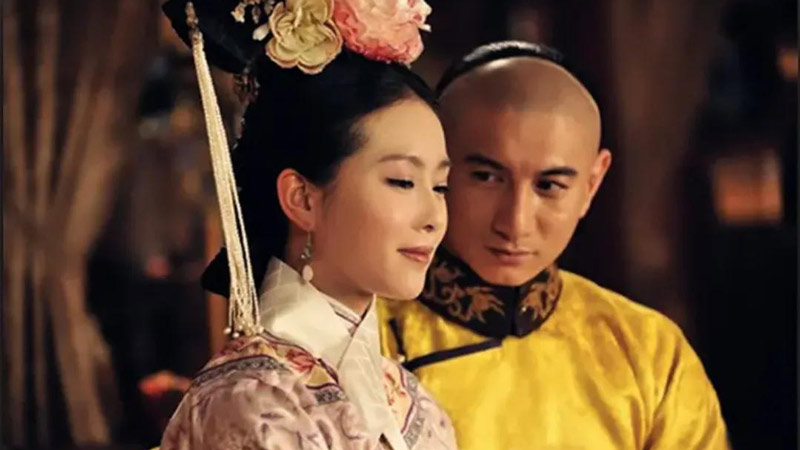
It's not hard to understand Wei Minglun's concern. But I don't believe emperor dramas are inherently at odds with modern thinking. Japan's taiga dramas (大河剧), for example, share a similar tone to China's historical serious dramas, and they've long been part of Japanese contemporary culture. The real danger isn't that emperors are praised too much or too little—it's that they've been flattened, normalized, made boring. People don't see emperors as emperors anymore. They see them as just another job. And when that happens, we lose the caution that should come with proximity to power.
Even Shakespeare wrote plenty of plays about kings and nobles. Some were basically Tudor propaganda—Henry VIII, for example. But no one would confuse the weak-willed Henry VI with the ruthless Richard III, or mistake the ambitious Macbeth for the mad Lear. Each work had its own theme, each king a unique psyche. Just because they were all royalty didn't mean their differences got blurred.
I believe Chinese creators are fully capable of shouldering the weight of history—and producing emperor stories that are sharp, rich in meaning, and distinct in personality. But the prerequisite is this: treat the emperor as someone who happens to be emperor, not just as some "normal person" you casually empathize with and excuse.
Right now, if you look across the landscape of film and TV, emperors fall into two categories. Either they're just a guy with more responsibilities—or just a guy with more problems. The first type is worried about whether the empire is his. The second type is worried about whether the crown prince is really his. Either way, they're busy scrambling around, caught up in trivial, superficial struggles. No one's gotten close to capturing what it actually feels like to be emperor.
In that sense, Chinese screen storytelling still hasn't produced the ultimate emperor.