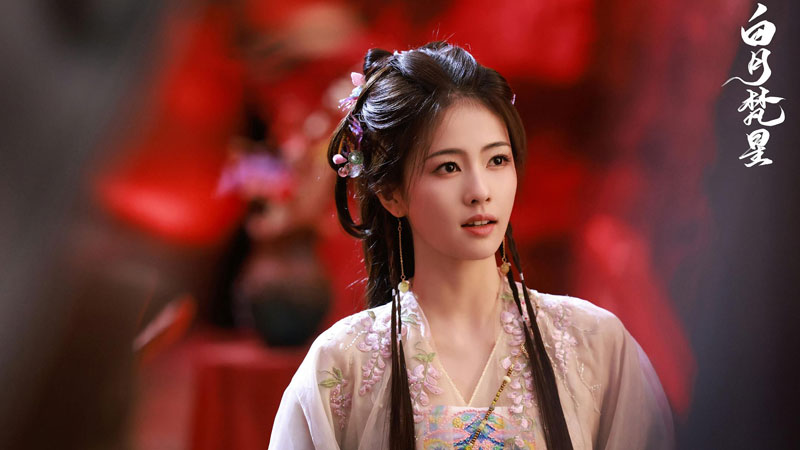
In today's fiercely competitive film and television landscape, only a rare few actors manage to level up across all fronts—critical acclaim, commercial value, and industry influence. Among the standout talents of the post-90s generation, Bai Lu has emerged as a model of multi-dimensional growth, propelled by the positive feedback loop between her on-screen performances and market response.
As the summer 2025 season kicked off, Bai Lu's costume fantasy drama The Feud landed with impact. Not only did it shoot straight to the top of DeTavin's weekly rankings for historical dramas, but it also cemented her status as the only female lead on iQIYI's platform to headline two shows that surpassed the coveted 10,000 popularity index.
What makes The Feud's success even more impressive is that it didn't rely on a big-name IP. Instead, it captured viewers with a tightly written original script and an unconventional, anti-cliché narrative. As the plot deepened, audience engagement soared—within just nine days of release, pop-up comment interactions exceeded 100 million, and the DeTavin buzz index peaked at 2.5, pushing the show past the 10,000 heat threshold.
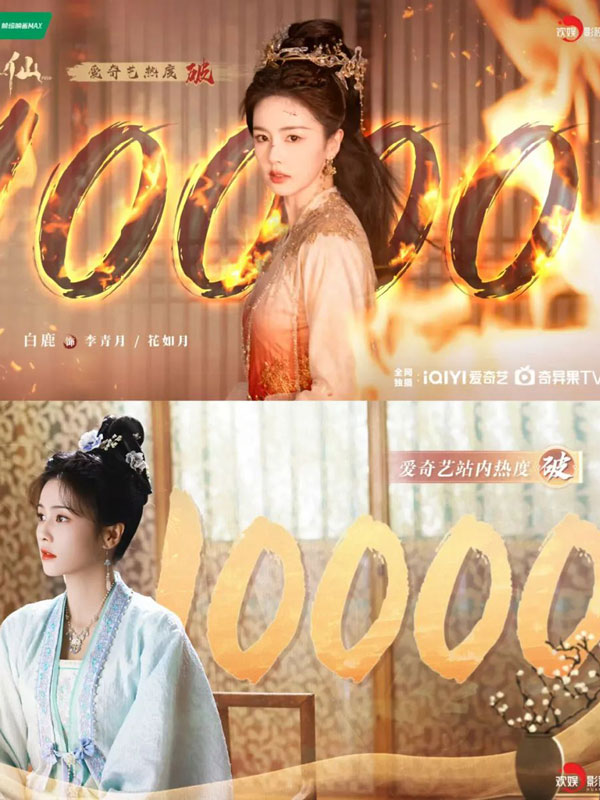
At the heart of this breakout was Bai Lu's portrayal of Li Qingyue (also known as Hua Ruyue). Her performance—layered, emotional, and full of subtle detail—won over both loyal fans and casual viewers. According to DeTavin data, her character contributed a remarkable 53% of the total buzz among historical drama roles during that period. Even more striking, Li Qingyue became the first character on iQIYI's "Peach Bean" platform to break 400 million in popularity—solid proof of Bai Lu's star power and ability to carry a show.
From a lukewarm start to a groundswell of praise, The Feud's journey mirrors Bai Lu's own path—steady, evolving, and full of surprising depth. As her skill in character-building and performance continues to grow, she offers not just a successful case study in how to "lead a drama," but also a compelling new blueprint for what sustainable star power can look like in a saturated market.
 Exploring Multi-Faceted Roles in Fantasy Dramas
 Exploring Multi-Faceted Roles in Fantasy Dramas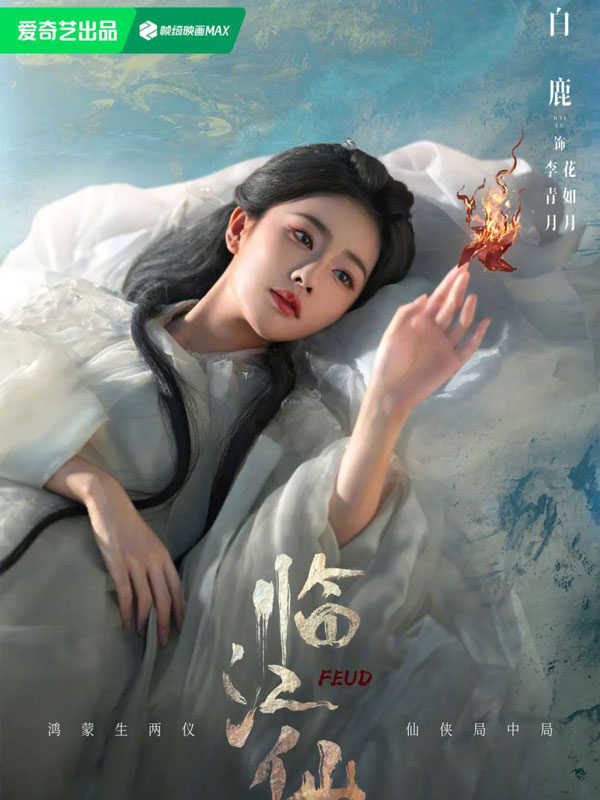
In a market where the output of historical fantasy dramas continues to decline year after year, The Feud stands out as a rare gem—an original script in a genre increasingly dominated by IP adaptations. According to DeTavin data, IP-based productions account for a staggering 88% of all recent fantasy dramas. Among the top five in average performance, four were adapted from existing IPs. Yet two titles—Bai Lu's The Feud and Moonlight Mystique—earned their place on this competitive list, demonstrating the coexistence of originality and IP power.
The Feud became the only original script in this group, thanks to its bold reimagining of the xianxia worldview. By rejecting formulaic storytelling and homogenized aesthetics, and instead embracing a distinctly Eastern visual and narrative style, the drama carved out a unique space. Meanwhile, Moonlight Mystique—a more traditional IP adaptation—showcased the genre's commercial potential through its compelling character arcs and the strong performances of its lead actors.
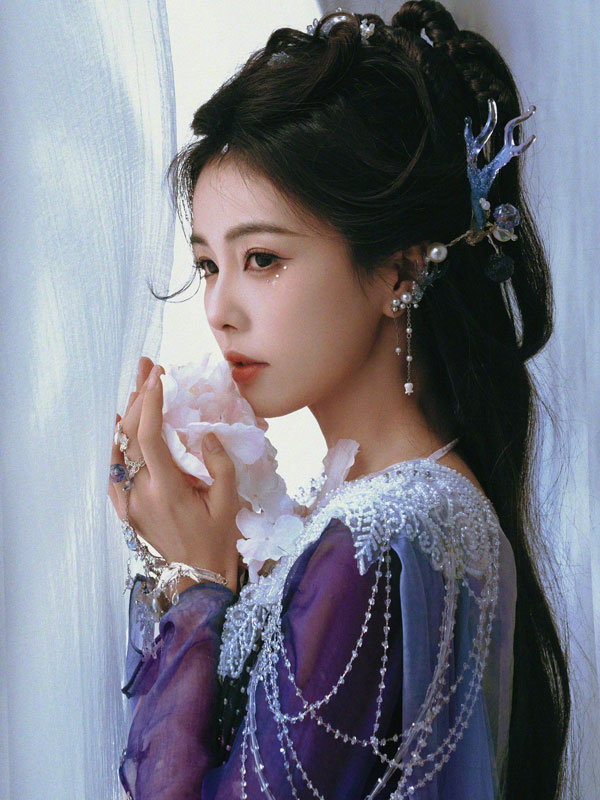
Bai Lu's decision to take on a high-stakes, original script in an increasingly risk-averse market reflects not only her confidence in the creative team behind The Feud, but also her personal ambition to push boundaries. As an actress, she has clearly matured, approaching each new role with a deeper creative sensibility. Her evolution isn't just noticeable—it's palpable, signaling a commitment to both craft and growth that sets a new benchmark for others in the industry.
In costume fantasy dramas, characters are often written in broad strokes, with emotional extremes and theatrical flourishes. But in The Feud, Bai Lu resisted the lure of over-embellishment. Instead, she delivered a restrained, deeply felt performance that radiated authenticity. Her micro-expressions, the rhythm of her emotional transitions, and her clear grasp of her character's internal logic all contributed to a portrayal that was rich in nuance and deeply human.
Several standout moments in the drama captured this transformation in action. In the gut-wrenching scene where Hua Ruyue loses her child, Bai Lu's eyes transition from numbness to anguish. Her lips quiver, her silent sobs tear at the heart, and when she buries her child with trembling hands, a single tear slips down her cheek—breaking the audience's emotional defenses. Many viewers commented that they were "crying silently, just like her," overwhelmed by the raw, restrained grief she conveyed.

In another emotionally charged scene, when Bai Jiushi (played by Zeng Shunxi) seals her spiritual power for ten years, Hua Ruyue moves from disbelief to crushing disappointment. As she collapses onto the bed, too heartbroken to even look at the man she once loved, Bai Lu renders the emotional arc with slow, painful precision. The buildup, subtle and devastating, showed her mastery of emotional timing.
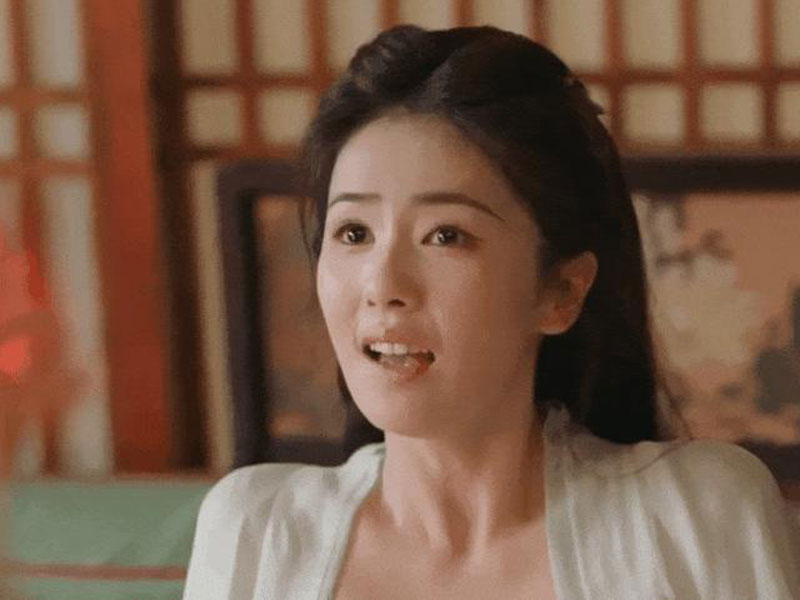
But The Feud isn't all tears and tragedy. In lighter moments, Bai Lu injects warmth and charm into Hua Ruyue's character. In one sweet scene, she playfully rises on tiptoe for a peek—a small but memorable gesture that lights up the screen. Through these playful details, she reveals the full, vibrant spirit of the character, allowing the audience to experience both laughter and sorrow, and to fall in love with the multidimensional woman at the story's center.

With its original storyline, strong script, emotional depth, and well-matched cast, The Feud became a platform for Bai Lu's breakthrough in performance. The drama's innovative narrative structure and her refined acting created a two-way amplification effect—boosting both her career and the show's popularity. As the series surged past the 10,000 heat index, discussions about Bai Lu herself also dominated social media, frequently landing her name on trending searches.
According to DeTavin's analysis of online conversations, recent audience impressions of Bai Lu's performance included: "authentic," "layered," "delicate and vivid," "emotionally resonant," "effortlessly natural," and "expressively nuanced through micro-expressions." These keywords paint a clear picture of a performer who is no longer just admired for her presence, but respected for her craft.
The Virtuous Cycle of Art and Commerce
 The Virtuous Cycle of Art and Commerce
Bai Lu's rising star isn't just confined to the world of television dramas—her commercial value is climbing in tandem with her artistic evolution, forming a virtuous cycle where each new performance boosts her brand appeal, and vice versa. According to industry data, the average investment in dramas where Bai Lu plays the lead consistently ranks at the forefront of the market.
Take The Feud as a prime example. The drama attracted six major top-tier brand placements right out of the gate, and thanks to its high viewership and stellar investment performance, it quickly became a magnet for advertisers. Over the course of its run, the series featured a staggering 109 advertisements, the highest brand count for any iQIYI series this year. This dominance in brand interest wasn't an isolated case—her other recent hits, Moonlight Mystique and NORTHWARD, also performed exceptionally well both in ratings and commercial returns.
Moonlight Mystique, for instance, broke iQIYI's three-year premiere day heat record and was officially crowned the first breakout drama of the year by Shake 2025. Meanwhile, NORTHWARD—Bai Lu's first period drama—delivered commanding ratings. In its first three days alone, the show averaged a viewership rating of 3.863%, the highest for any drama in the past three years. It also dominated the prime-time daily chart, clinching the Top 1 spot a total of 19 times during its run. Thanks to this performance, Bai Lu set a new CVB ratings record for post-90s actresses, firmly solidifying her status as a top-tier performer.
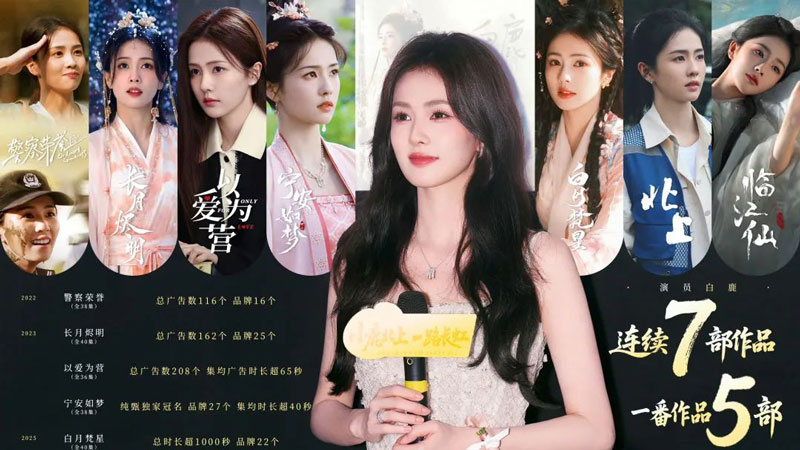
What's even more remarkable is her consistency. Since 2022, Bai Lu has starred in seven consecutive dramas that achieved nationwide coverage throughout their full runs. The 2025 trio—The Feud, Moonlight Mystique, and NORTHWARD—continued this trend, each enjoying immediate "hit" status upon release. This track record has translated into measurable commercial momentum, with brands eagerly tying themselves to her name. Her ability to attract and sustain high-level sponsorships has elevated her into the top ranks of the "Post-90s Flower" actresses, making her a sought-after figure not just for viewers, but for investors and advertisers alike.
But her influence isn't just about numbers—it's about demographic resonance. As The Feud gained momentum, Bai Lu's fanbase showed especially strong engagement among young, mature, and middle-aged female viewers. The show performed well across both first-tier and second-tier cities, reflecting a broad and balanced national reach. Her image bridges age groups and regions, a rare and valuable trait for brand alignment.
All of this becomes even more significant when viewed against the broader backdrop of the current entertainment market. In recent years, traditional long-form dramas have faced stiff competition from the rise of short-form content and shifts in viewing habits. Heading into summer 2025, overall enthusiasm for long dramas showed a noticeable dip compared to the previous year. Yet in this softer market, Bai Lu has emerged as a force of revitalization. Her steady "drama-carrying" ability has injected new energy into the seasonal lineup.
Not only do her works consistently deliver strong ratings, but they also generate substantial buzz on social media, amplifying their reach and cultural footprint. It's this combination—critical acclaim, audience appeal, and brand magnetism—that makes Bai Lu's commercial value more than just impressive; it's a case study in how star power, when anchored in talent and trust, becomes a high-yield asset in a volatile market.
The Power of Female-Centric Roles
 The Power of Female-Centric Roles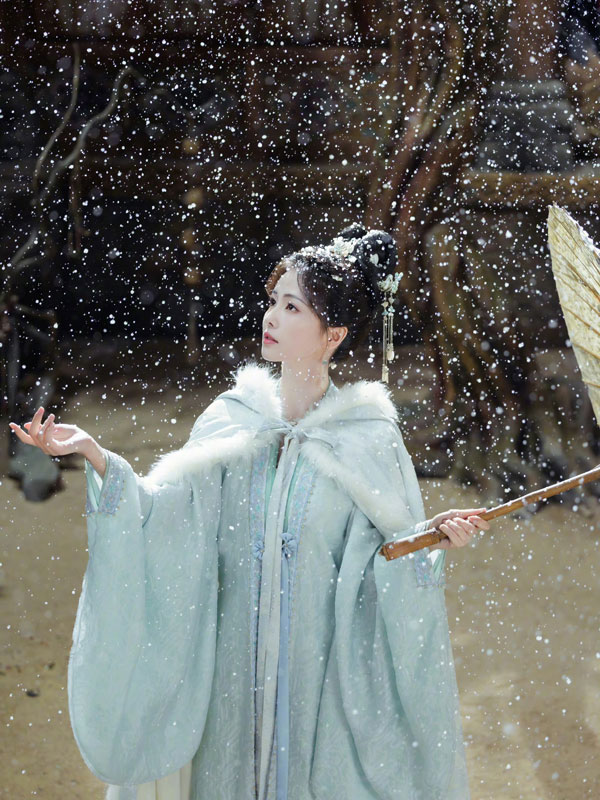
Throughout her acting journey, Bai Lu has shown a deliberate and strategic approach to role selection—consistently breaking thematic boundaries and exploring new genres. From historical fantasy to urban romance, from period dramas to military-themed narratives, she's never allowed herself to be confined by typecasting. This genre-hopping courage has not only broadened her acting range but also built a diverse and loyal fanbase across audience segments.
This year, her two standout fantasy dramas—Moonlight Mystique and The Feud—each feature very different storylines and aesthetics, yet the female protagonists she portrays share core traits: clarity of mind, independence, decisiveness, and bravery. Indeed, most of Bai Lu's roles in recent years revolve around female-oriented narratives, deeply resonating with the values and sensibilities of a new era of audiences.
Through multi-genre projects, she has crafted a rich tapestry of female characters—each distinct, yet universally compelling. In The Feud, she is Li Qingyue, who navigates spiritual mysteries with a heart rooted in compassion. As Hua Ruyue, she commands divine authority as a deity of the Four Spirits. In Moonlight Mystique, Bai Shuo dares to knock on the gates of immortality with nothing but mortal resolve. Meanwhile, in the period drama NORTHWARD, she plays Xia Fenghua, a woman of grace and quiet strength who writes her own life story with poise and determination. And in Story of Kunning Palace, she transforms as Jiang Xue Ning, evolving from cold calculation to a heartfelt pursuit of virtue.

These roles span different time periods, worlds, and identities—each one offering a unique lens on femininity. In Bai Lu's hands, traditional values are given modern expression, while modern female agency is anchored in timeless emotional truth. By capturing the spiritual core of women across eras, she has built a resonant emotional bridge between past and present, and between character and viewer.
Her influence, however, isn't limited to the dramas themselves. Bai Lu's warm, cheerful, and witty presence on social media and variety shows has further deepened her connection with audiences—especially young female fans. She comes across not just as a star, but as a relatable "soulmate" or confidante. This synergy between on-screen character and off-screen persona strengthens the believability of her roles and amplifies their emotional impact.
Looking ahead, Bai Lu's upcoming projects include Tencent's Mo Li (莫离) and Youku's Tang Palace: Strange Case of the Green Mist and Phoenix (唐宫奇案之青雾凤鸣). The latter marks her first foray into the historical suspense genre—a sign of her ongoing willingness to challenge herself while also reinforcing her dominance in familiar terrain. Among post-90s actresses, she stands out as one of the few who dares to stretch across genres and platforms, pushing boundaries without compromising her core strengths.
In an industry where traffic metrics rise and fall overnight, Bai Lu's steady climb from newcomer to headline drama queen is instructive. Her non-acting background has given her a grounded understanding of the entertainment business. She's acutely aware that traffic is fleeting, and the only sustainable path lies in delivering quality performances—one role at a time, one step at a time. She hasn't chased hype; she's built substance.
From Breakthrough to Backbone
 From Breakthrough to Backbone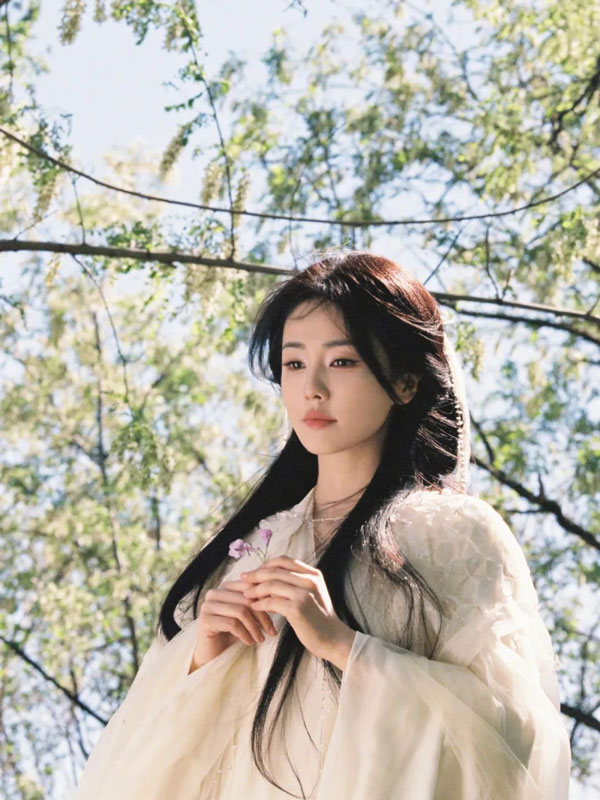
The popularity of The Feud continues to soar, and with it comes a powerful reminder to the entertainment industry: the market isn't weakening—it's evolving. Audiences haven't become indifferent—they're becoming more discerning. It's the artists who dare to innovate, to lead rather than follow, who will carve out lasting legacies.
For Bai Lu, two key themes have defined her rise: breakthrough and return. She breaks through expectations and typecasts, but always returns to a core dedication to acting craft. This commitment has propelled her into the ranks of the post-90s generation's most reliable leading ladies—an actress who can genuinely "carry a drama" from start to finish.
In today's fiercely competitive entertainment arena, Bai Lu has become both a market favorite and an industry benchmark. She enjoys the trust of producers, platforms, brands, and—most importantly—audiences. Her personal growth is now in sync with the evolution of the industry itself. And that kind of synergy—between talent, market, and timing—is exactly the fuel that the film and television world needs to sustain its next wave of creativity and relevance.