
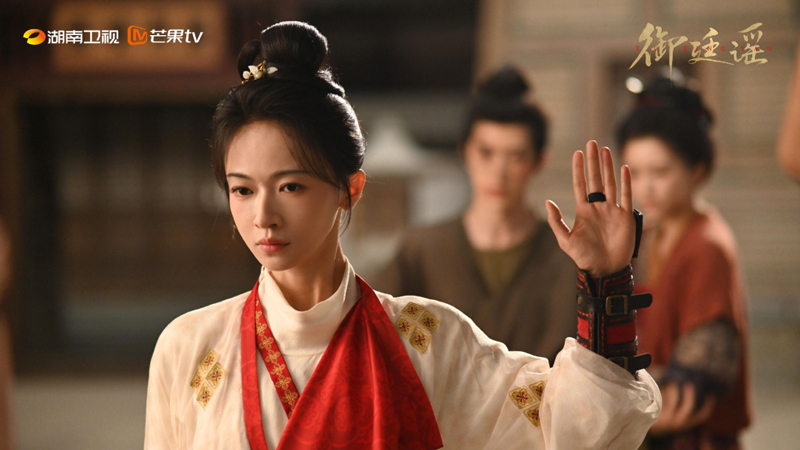
In the middle of a crisis, when a friend is trapped and facing ruin, who among your circle would you trust to pull them back from the edge? A recent plot twist in the historical drama Yu Ting Yao (御廷谣) forces its characters to confront this exact dilemma. One has been wrongfully imprisoned despite outstanding service, and three friends rush to help—but each with a wildly different strategy.
One offers a dagger and sleeping powder, one offers a one-way ticket back to their hometown, and one simply tells everyone to stop and think. This moment isn’t just about the show’s characters; it’s a vivid mirror for our own lives. It asks a question we all face: when we are down, do we need a warrior, a comforter, or a strategist? This article breaks down the three distinct responses, examining their hidden dangers and surprising wisdom, and ultimately reveals which one is truly the lifeboat in a storm.
The Fiery Rescuer: A Hero or a Hazard?
The first to act is Yin Qing (尹清). He smuggles a dagger and a potent sleeping powder into the prison, whispering to the incarcerated Meng Tinghui (孟廷辉), "Take these to break out." On the surface, it is a moment of profound loyalty. He is risking his own safety to offer a physical escape from a nightmare. But Meng Tinghui herself sees the flaw immediately, rejecting the plan with frustration. She points out that the act of escaping would turn her from a victim into a fugitive, confirming the very guilt she is fighting against. His plan, born of pure emotion, is a trap disguised as a rescue.
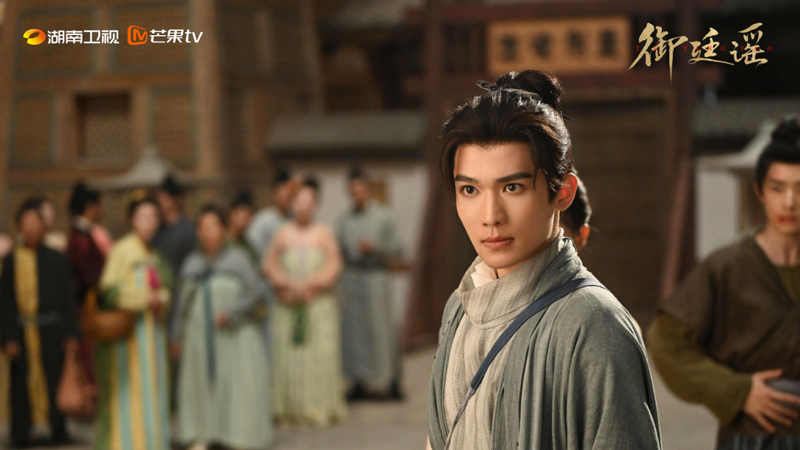
This reaction is intensely human. It is the friend who wants to fight your battles for you, who prioritizes action over analysis. Yin Qing isn’t uncaring; he is impulsive. He sees the immediate pain—the cage, the chains—and wants to break them, no matter the cost. However, he is blind to the larger picture. He fails to consider the legal and political landscape outside the cell, a landscape that would turn a successful escape into a permanent downfall. His compassion is a wildfire, hot and consuming, but it threatens to burn down the very future it seeks to protect.
The Comforting Retreat: Sanctuary or Surrender?
Then comes Yan Fuzhi (严馥之), who takes a softer, more emotionally intelligent approach. She doesn’t offer weapons; she offers a shoulder and a plan to disappear. Her suggestion is to abandon everything, resign from their government post, rent out their newly opened shop in the capital, and return to the comfort of their hometown, Shazhou (沙州). "Let’s live a comfortable life," she pleads. The warmth of this offer is undeniable. In a world that feels like it’s collapsing, she promises a safe harbor, a place where the wounds of betrayal can heal in peace.

Yet, underneath this soothing balm is a dangerous dose of defeatism. While she genuinely believes she is protecting her friend from further harm, she is also unwittingly endorsing the power of the unjust system. She is saying, "You can’t win, so you should stop playing." But Meng Tinghui did not lose because of incompetence or corruption; she was punished for a success. To retreat at that moment is to let the injustice win, to erase all the hard work and sacrifice that earned her position in the first place. This friend provides immense emotional value, but she offers a path of surrender disguised as salvation.
The Calculating Guardian: Why Logic Wins
The final response comes from Shen Zhili (沈知礼), and it is remarkably different from the other two. She doesn’t panic or offer false comfort. Instead, when she sees the knife and drugs, she calmly tells Yin Qing to put them away. Her reasoning is simple and devastatingly logical: such an act would only turn a wrongful detention into a real crime. But she doesn’t stop at blocking bad ideas. She pivots to a strategic analysis, noting that the Emperor has not yet issued an official decree of punishment. This means the situation is not final; Meng Tinghui remains her official self until a verdict is sealed, leaving room for legal and political maneuvering.
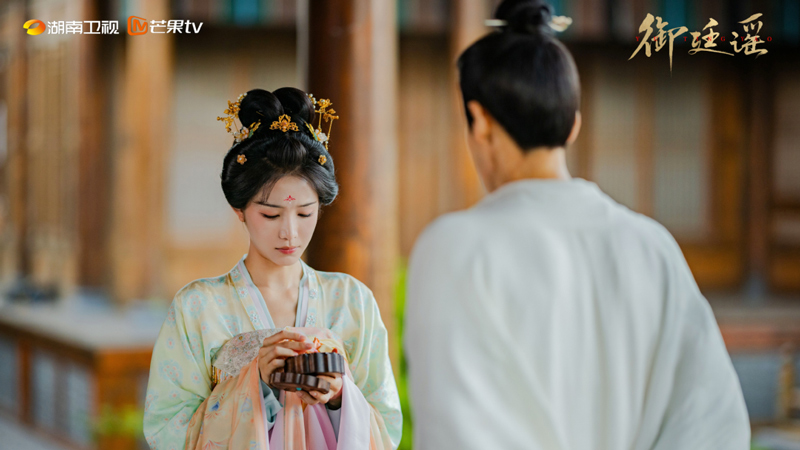
She does not offer a plan, but the blueprint for one. Her role is to stabilize the situation and prevent a catastrophic mistake born of fear or sentimentality. While she may appear cold in the face of her friend’s crisis, she is doing the most selfless thing possible: she is thinking clearly when everyone else is gripped by hysteria. In doing so, she protects not just Meng Tinghui’s freedom, but the integrity of her entire career. This is the true value of the strategist in your corner—she doesn’t just see the crisis; she guards the possibility of a future beyond it.
This moment in Yu Ting Yao resonates because it so clearly mirrors our own lives. We have all experienced a moment of crisis where friends, family, and colleagues showed up with these exact three responses. The firebrand charges in to fight for us, the comforter invites us to give up and go home, and the strategist sits us down to analyze the problem. The first gives us emotional relief, the second gives us a way to escape, but only the third gives us a fighting chance. This episode serves as a powerful reminder that the most valuable friend isn’t always the most passionate; sometimes, it’s the one who trusts you enough to help you think.
