
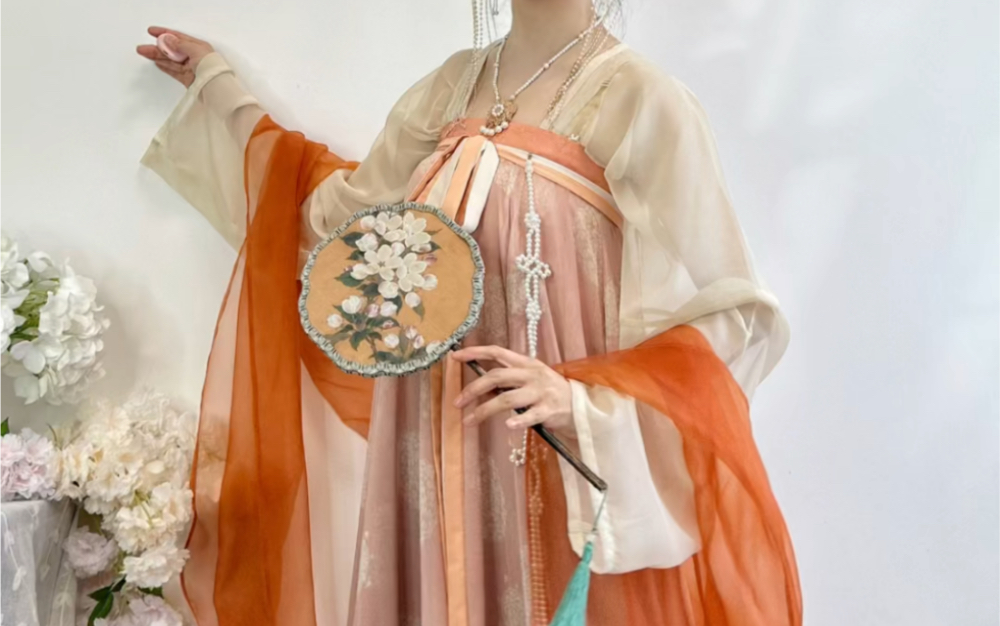
If you have ever seen a hanfu photo of a woman in a high-waisted, wide-sleeved dress with a full flowing skirt and a flower-petal neckline, you have seen Tang dynasty hanfu. Of all the historical periods that hanfu culture has revived, the Tang is the one that shows up most often in travel photoshoots, costume dramas, and museum gift shops. The silhouettes are forgiving, the colors are joyful, and the cultural references are instantly recognizable. This guide is for the beginner who is curious but overwhelmed: it explains what Tang hanfu actually is, how to choose a first set, and how to avoid the most common buying mistakes.
What "Tang Dynasty Hanfu" Actually Means
Tang dynasty hanfu refers to clothing styles worn in China during the Tang dynasty (618-907 CE). The Tang is famous in fashion history for its openness: the dynasty absorbed influences from Sogdian, Persian, and Korean dress, and Chinese women of the upper classes enjoyed a comparatively wide range of silhouettes and colors. Modern hanfu revival is built primarily on three artifact sources: Dunhuang cave paintings, Tang dynasty tomb figurines (especially the sancai glazed pottery figures from the 8th century), and the silk textiles preserved at the Shosoin in Nara, Japan.
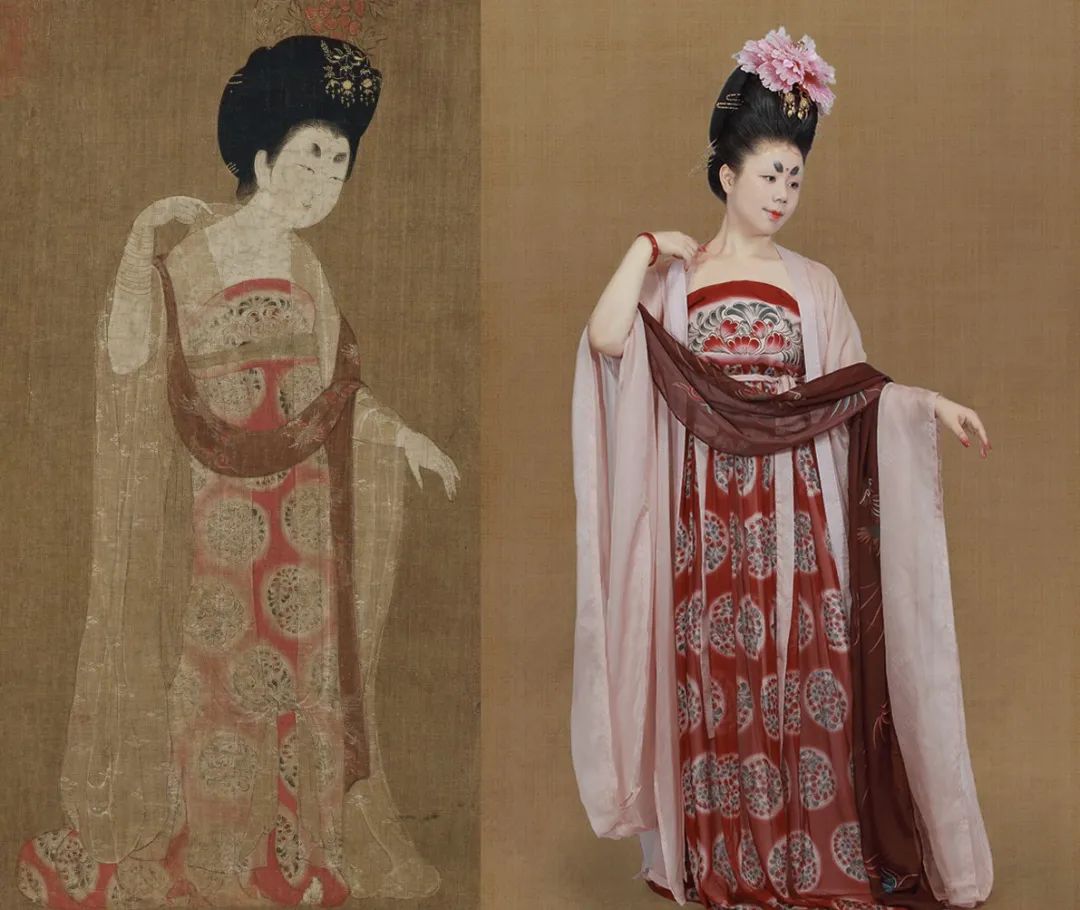
For practical purposes, the Tang hanfu a beginner encounters today falls into four main families: the chest-high ruqun, the low-cut chest-ruqun, the men's round-collar robe, and the female noble's shawl-dress combination. Each has its own visual signature and its own set of styling rules.
The Four Core Tang Hanfu Silhouettes
Chest-High Ruqun
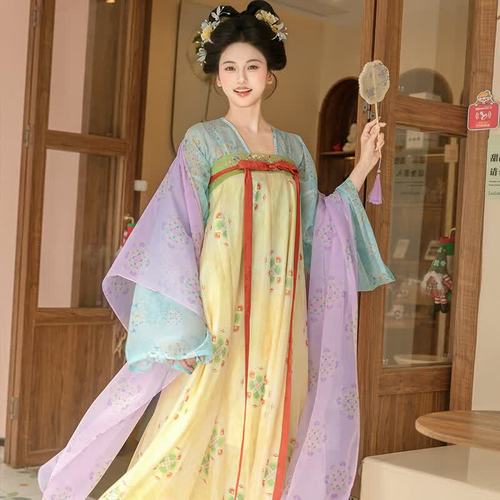
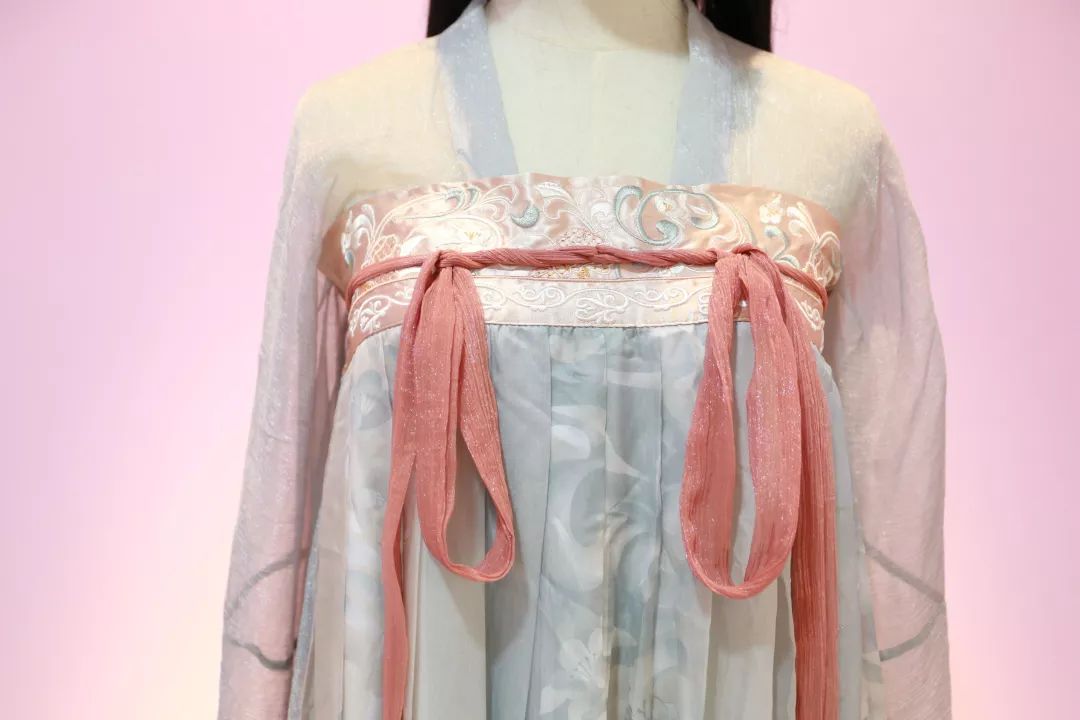
This is the silhouette most people picture when they imagine Tang hanfu. It consists of a short upper garment (ru, 襦) tied with a sash above the bust, paired with a high-waisted pleated skirt (qun, 裙) that falls to the floor. The defining feature is where the sash sits: at or above the bust line, rather than at the natural waist. This pushes the visual eye upward, lengthens the lower body, and produces the wide, soft swag of fabric at the chest that has become a visual shorthand for Tang beauty.
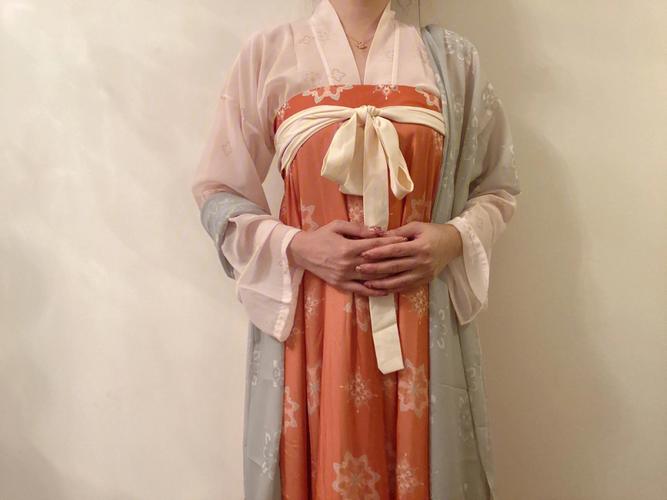
Chest-high ruqun is the easiest Tang silhouette for a first-time buyer. It works on most body types, does not require a tight fit at the waist, and is the most commonly stocked style in hanfu rental shops in cities like Xi'an, Luoyang, and Hangzhou. Two sub-types matter: the ru can be either a fitted jacket (jiaoling) or a wrap-front cross-collar (jiaoling youren), and the skirt can be either a flat-panel (pianqun) or a pleated (jianqun) version. Pleated skirts are more historically accurate and more forgiving on the figure.
Low-Cut Chest Ruqun
This is the more daring Tang silhouette. The neckline of the upper garment dips into a wide U or a heart shape, exposing the upper chest. The style is modeled on Tang tomb figurines of noblewomen and on the figures in Dunhuang cave paintings, but it is not historically accurate for everyday wear — it was associated with aristocratic and entertainment contexts. For a first hanfu, treat it as a costume choice rather than a daily-styling choice.
Men's Round-Collar Robe
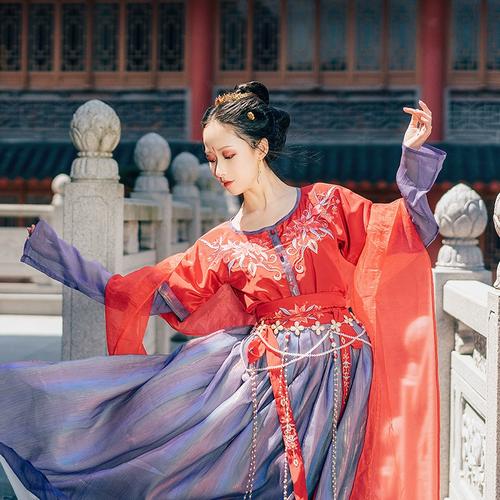
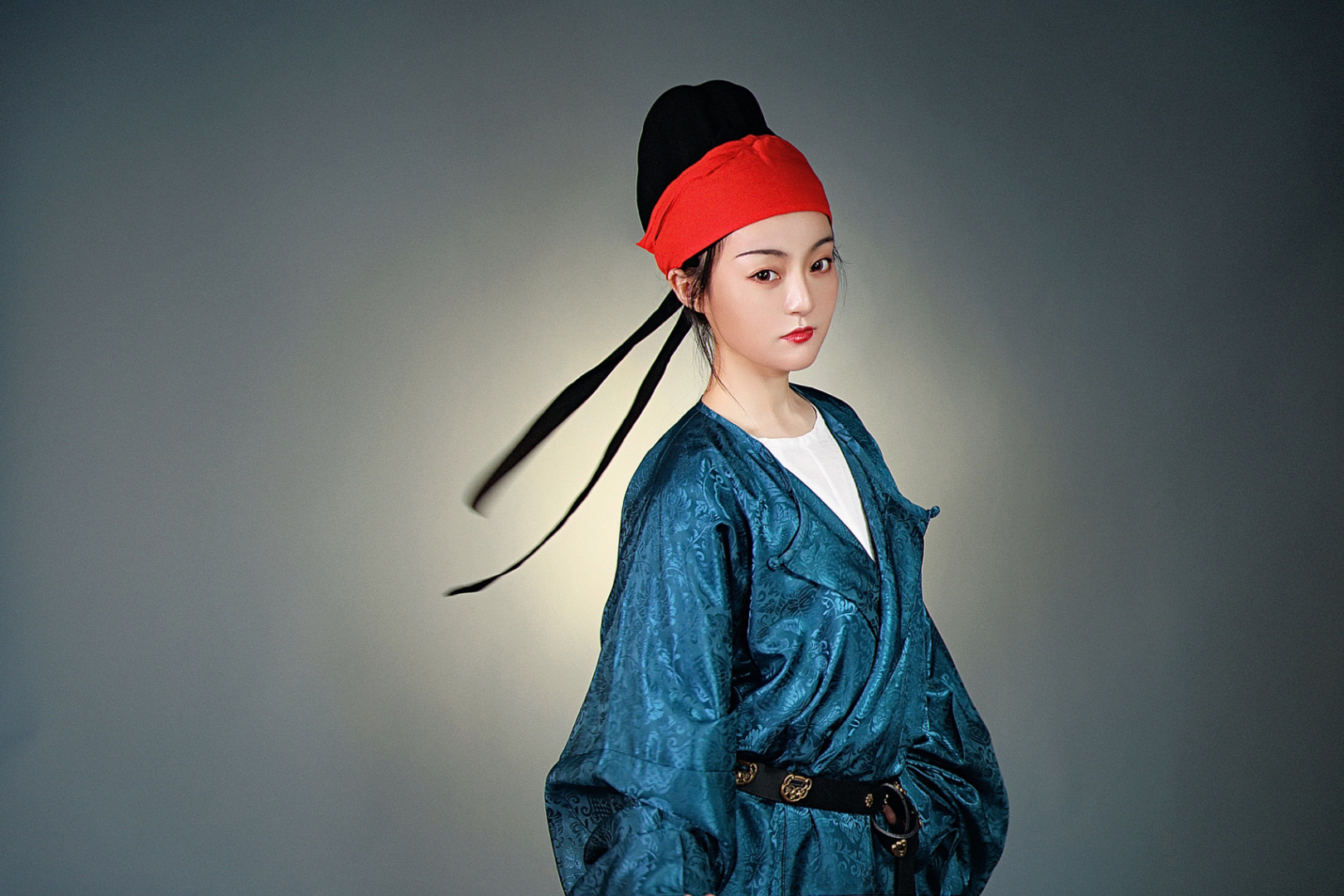
The Tang-dynasty male equivalent of the chest-high ruqun is the round-collar robe, sometimes called a yuanling pao. Worn by Tang officials, scholars, and soldiers, it is a wide-sleeved robe with a round neckline, typically paired with trousers and leather boots. The most photogenic sub-style is the one with contrasting sleeve cuffs, decorative round metal plaques, and a soft-fabric headwear. This is the silhouette that dominates the recent wave of "Tang-style menswear" shoots in Xi'an and Luoyang.
Noble Women's Shawl + Dress
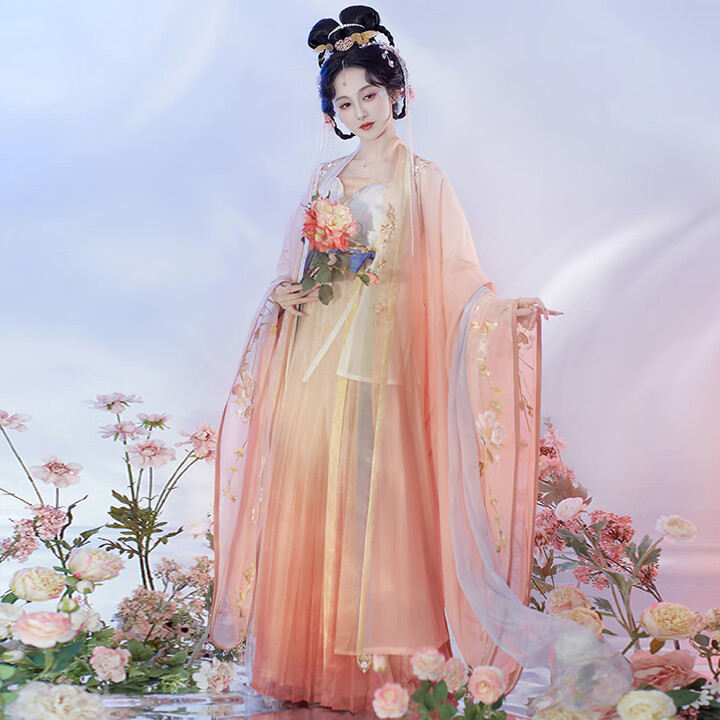
For a more elevated Tang look, the period's noblewomen paired a ruqun with a long, gauzy shawl (pibo) that draped from the shoulders and trailed behind them. The pibo is one of the most recognizable Tang elements in costume drama and is a strong add-on to a basic ruqun set. For a beginner, it is best to buy the base ruqun first and add the pibo later as a styling accessory.
How to Pick a First Set
Decide the Use Case First
Buying a first Tang hanfu for a travel photoshoot is a different exercise from buying one to wear to a hanfu club meeting, which is again different from buying one for a stage performance. For a travel shoot, prioritize a forgiving silhouette, a flattering color, and rental-grade fabric. For a hanfu club, prioritize historical accuracy and a soft, breathable fabric. For stage use, prioritize a heavier fabric with structure. A first set that tries to do all three usually ends up doing none of them well.
Color and Pattern
Beginner-friendly colors are deep red, indigo, ivory, sage green, and warm earth tones. These photograph well against most backgrounds and read as "Tang" without veering into costume territory. Avoid neon or very pale pastel colors, which tend to look washed out under natural light. For patterns, the safest choices are solid colors, subtle tone-on-tone jacquard, or a single accent motif (a peony, a lotus, a small bird) on a plain ground. Avoid the very busy, large-scale prints that dominate cheap rental inventories — they read as modern polyester and pull a viewer out of the historical frame.
Fabric
For a first set, mid-weight polyester satin is the most forgiving option. It photographs well, drapes smoothly, and is far easier to care for than silk. Pure silk is beautiful but expensive, requires dry cleaning, and wrinkles easily. Cotton or ramie are excellent for warm weather but rarely produce the clean drape that makes Tang hanfu look elegant. As a rule, treat fabric as a separate decision from style: pick the silhouette first, then upgrade the fabric in a second set once you know what you actually like wearing.
Fit and Sizing
Most online Tang hanfu uses Chinese sizes labeled by single-letter codes (S, M, L, XL), but sizes vary by shop. Always check the actual measurements in centimeters, not the letter, and pay particular attention to the skirt length (most sets assume a wearer between 158-168 cm tall). For taller or shorter wearers, custom-tailored sets are widely available from established shops at a moderate premium.
Common Beginner Mistakes to Avoid
The most common buying mistake is choosing a set with a top piece that is too short. Tang chest-high ruqun is supposed to be short, but "short enough to be entirely covered by the sash" is the rule, and many cheap sets cut the top too long or too short, producing a silhouette that does not match any historical reference. The second most common mistake is under-buying the skirt length: a Tang skirt is meant to pool slightly at the floor, and a skirt that ends at the ankle looks like a modern maxi skirt. The third is skipping the sash — the sash is not a decorative accessory, it is the structural element that holds the outfit in place and produces the silhouette.
A fourth mistake, common for buyers who do most of their shopping on Taobao, is to pick a set based on the model photo without checking the customer-photo gallery. Model photos are usually color-corrected and the styling is supplemented with custom accessories. The customer gallery is the closest thing to a true preview of the product as it will arrive.
Styling the Set for a Photo
For a chest-high ruqun, the standard styling is a center-parted updo with two small side buns, a flower hairpin, and a pair of dangling earrings. For a men's round-collar robe, the standard styling is a soft fabric cap or a half-up topknot, a small leather belt, and a pair of soft boots. For both, the strongest single add-on is a piece of period-accurate background — a temple pillar, a wooden screen, or a stone wall — over a modern concrete backdrop.
If you are shooting in a city with active hanfu tourism infrastructure — Xi'an, Luoyang, Hangzhou, Nanjing, Suzhou — the local rental shops can usually arrange makeup, hair, and on-location shoot services as a bundle. The bundle is often cheaper than buying the set outright, especially for one-off use.
The Bottom Line
Tang dynasty hanfu is the most accessible entry point into hanfu culture. The silhouette is forgiving, the style vocabulary is rich, and the references in popular media are everywhere. For a first set, choose a chest-high ruqun in a deep solid color and a forgiving pleated skirt, in a mid-weight fabric, from a shop with a strong customer-photo gallery. Pair it with a simple sash, a flower hairpin, and a background that is not a modern concrete wall, and you will have a look that photographs beautifully and reads as Tang at a glance.
