
As graduation season arrives, ancient towns and cultural tourism sites across China are rolling out a 2026-specific offer: free admission for high-school and college entrance-exam graduates. The promotion, running June 10 through August 31 at multiple locations, coincides with the Dragon Boat Festival holiday and summer vacation period — creating a natural audience of young travelers who are hanfu-curious but cost-conscious.
Xixi National Wetland Park in Hangzhou is among the most hanfu-forward: its Han Tide Street (汉潮街) features a hanfu rental shop where visitors swap school uniforms for traditional robes before touring the wetland gardens. Graduates with exam admission tickets get free daytime entry and half-price evening performances — a deal designed to convert first-time visitors into repeat hanfu consumers.
Yixing's Yao Lake (窑湖) pottery village — featured in Ctrip's 2026 summer ancient town guide — offers a different model: indoor pottery workshops as heat refuge, outdoor flower gardens with water-mist installations for cooling, and a designated hanfu photography zone where rented outfits match the village's Ming-era architectural aesthetic. The strategy is "escape the heat, make a pot, take a photo" — a multi-activity day that keeps visitors on-site longer.

The Zhu Sha (朱砂) Ancient Town in Guizhou has gone further: completely free admission for all exam graduates through August 31, with no hanfu rental required — but hanfu is available as an add-on experience at the scenic area's cultural center. The logic is simple: free entry removes the first barrier; the hanfu rental creates the memorable experience; the photo creates the social media share; the share drives the next visitor.
Nationally, Ctrip's 2026 data shows that "hanfu rental + ancient town" search volume has increased 180% compared to summer 2025. The top destinations for hanfu-compatible travel are Xi'an (Tang-style), Suzhou (Song-style), and Hangzhou (Song/Jiangnan style). Each city now has multiple rental shops clustered in scenic zones, with prices averaging ¥50–100 per hour for standard sets and ¥200–400 for premium ceremonial outfits.
The graduation-travel surge is a demographic gift for the hanfu tourism sector: millions of 18–22-year-olds, newly free from exam pressure, with social-media habits that amplify every beautiful photograph. Whether they become long-term hanfu wearers or one-time photo-takers, they are the 2026 growth market that every ancient-town operator is chasing.

The free-admission strategy is economically rational even for sites that lose ticket revenue. Analysis from Xixi's 2025 pilot showed that exam-graduates who entered free spent an average of ¥120 on ancillary services (hanfu rental ¥80, food ¥30, souvenirs ¥10) — more than the ¥60 standard ticket price they would have paid. The free-entry model converts a ¥60 ticket sale into a ¥120 ancillary sale, with the added benefit of social-media amplification that drives future paid-admission visitors.
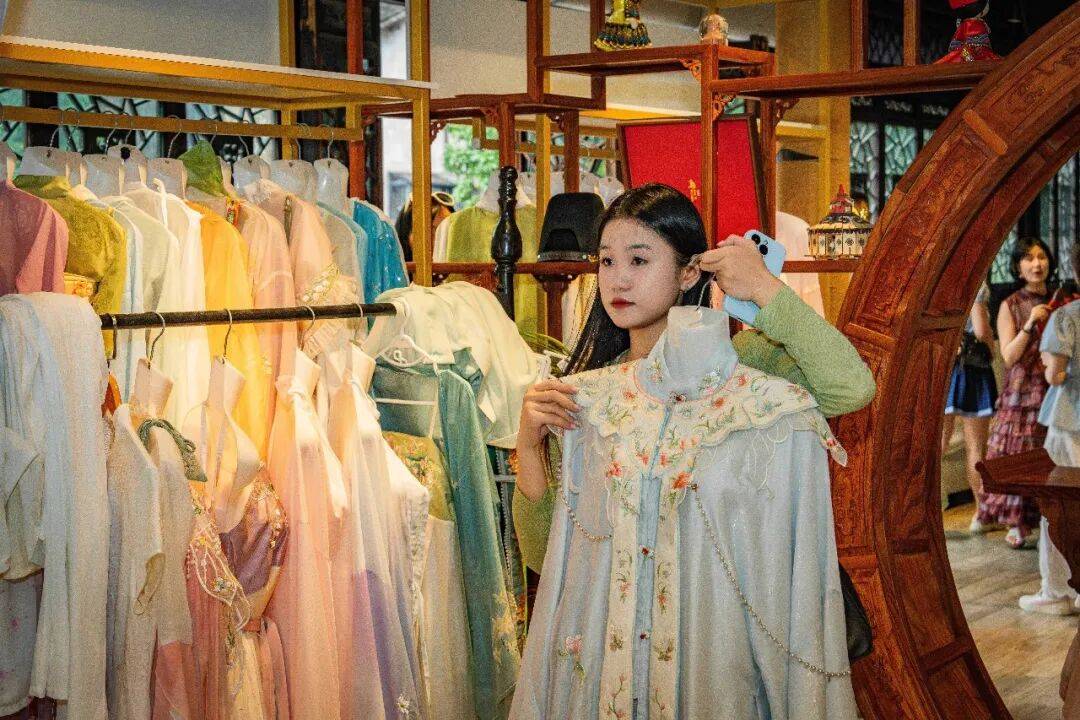
The hanfu rental ecosystem at ancient towns has matured rapidly. In 2024, most rental shops were informal — a rack of costumes, a mirror, no styling assistance. In 2026, the standard offering includes a full styling package: hanfu selection, hair arrangement, basic makeup, and a 30-minute "orientation" where staff explain the garment's dynasty and styling rules. The styling package typically adds ¥50–100 to the rental price but dramatically increases the photo quality — and therefore the social-media shareability — of the visitor's experience.
The heat factor is real. Summer 2026's 38°C temperatures make outdoor hanfu photography physically challenging, particularly for full-length Tang-style ruqun with multiple layers. Smart operators have responded with shaded photography zones, indoor portrait studios, and "early morning / late evening" shooting packages that avoid peak heat hours. The heat also favors Song-style and Wei-Jin lightweight sets over Tang-style and Ming-style formal outfits — a seasonal market shift that rental shops are adjusting their inventory to accommodate.
The convergence of graduation travel, Dragon Boat holiday, and summer vacation creates a three-week peak window (June 19 – July 10) that ancient-town operators consider their annual revenue anchor. 2026's peak is expected to be the strongest yet, driven by the 9-day leave-stacking window around Dragon Boat Festival that gives many workers an extended holiday. The question is whether the post-peak period (July 11 – August 31) can sustain momentum, or whether the season's energy dissipates after the holiday rush.
