In The Mo (家业), a drama set in the ink stick-making heartland of historical Huizhou (徽州), two families face the same question: what happens when a daughter’s marriage clashes with family interest? Tian Hua’er (田华儿) comes from a household that owns its own ink studio—far wealthier than Li Zhen’s (李桢) impoverished, clan-expelled family.
Yet when it comes to wedding decisions, the contrast is brutal. Hua’er is forced into a match she despises, with no one raising a real objection. Meanwhile, Li Zhen calls off her engagement on the spot, and her entire family stays silent—in support. Why? The answer isn’t about money or status. It’s about something deeper: self-worth, boundaries, and the invisible chains that bind a family together—or tear it apart.
Calculated Love
The Tian family looks solid on the outside. They have two sons, a daughter, and a small ink business. Hua’er is gentle, capable, and loved by her parents and brothers. But when the family needs a favor from the powerful Luo (骆) clan, they offer Hua’er like a bargaining chip. Her future husband? The Luo family’s eldest son, a man who has already buried two wives. Hua’er’s eldest brother hesitates at first—briefly, weakly. Then their father lays out the arithmetic: if Hua’er marries into the Luo clan, the Tians become relatives. Relatives can ask for favors. Contracts, connections, protection—all within reach. So the brothers nod. Their sister’s happiness becomes the price.
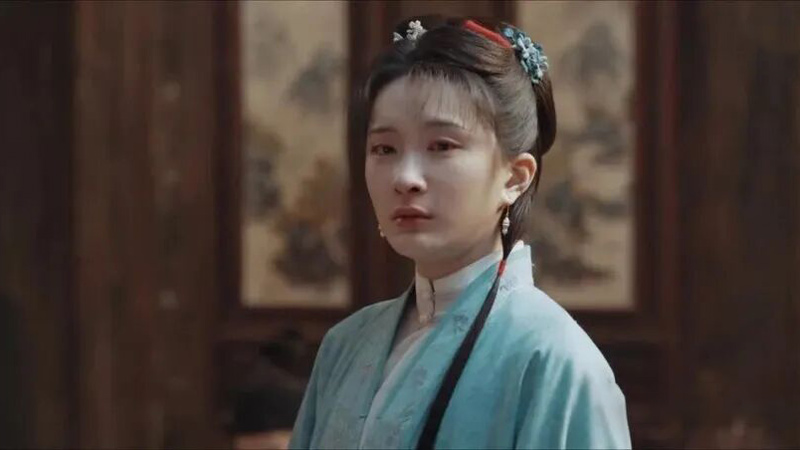
This is not love. It is a transaction. The Tian family never truly believed in themselves. They had only been making ink sticks for a few years, while the Luos and the Lis had built their reputations over generations. Rather than grind through decades of honest work, the Tians looked for shortcuts. Marriage was the perfect shortcut. They bent their backs in front of the Luo steward; they smiled too much and bowed too low. Outwardly, they dreamed of rising to the level of old ink families. Inwardly, they felt small. That mixture of grand ambition and deep insecurity turned Hua’er into a coin to be spent.
Even the eldest son, Tian Benchang (田本昌), who truly loved Li Zhen, was part of the calculation. His father encouraged the relationship not out of warmth, but because Li Zhen’s grandfather held a secret ink formula. Every kindness shown to the struggling Li family was an investment. When Benchang failed to deliver an oversized order, the crisis revealed the truth: the Tians had never cared about the Lis as people. They only cared about what the Lis could give. And Hua’er? She had no voice at all.
True Riches
Now look at Li Zhen’s household. They live in real poverty. Her father is gone. Her grandfather can no longer make ink sticks full-time and works as a carpenter to put food on the table. Her mother raises silkworms, grows vegetables, keeps chickens and ducks. Her older brother is a little simple, but gentle. There is no extra money, no powerful allies, no safety net. When Tian Benchang secretly copies the family’s ink formula—the fruit of a century of the Li family’s labor—Li Zhen does not hesitate. She breaks off the engagement immediately. Not a single family member objects.
Why? Because the Lis have something the Tians destroyed in themselves: a clear line they will not cross. For Li Zhen, that line is family. The ink formula is not just paper and strokes; it is her grandfather’s life’s blood, and a hundred years of Li ancestors’ sweat. She loved Benchang truly, but love does not mean handing over everything that makes her family who they are. She does not need a wealthy marriage. She needs integrity. Her mother taught her that when she was a child, drawing a blueprint of their small homestead—here we raise silkworms, there we grow vegetables, we will be fine. That blueprint was not about money. It was about self-reliance.
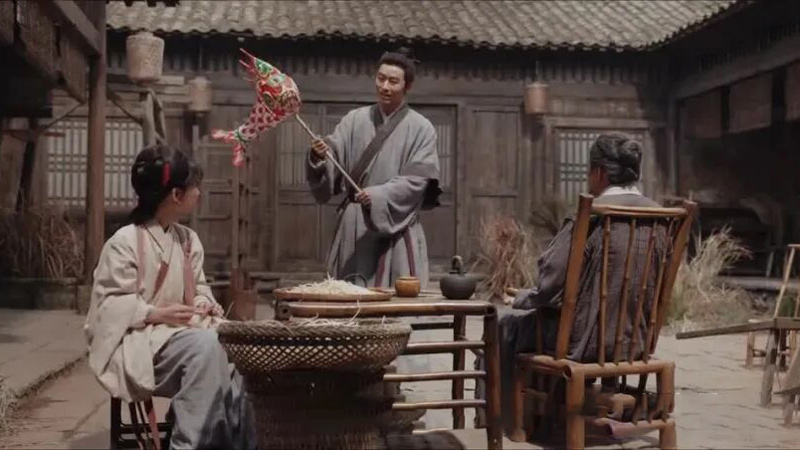
Li Zhen is not arrogant. She does not pretend to be rich or powerful. But she is never servile. She knows her own talent. At the ink workshop run by Uncle Shui (水伯), she can look at a customer and guess exactly where they come from, then solve their problems before they ask. Later, when the Luo clan holds a pine tree evaluation event, Li Zhen helps not only herself get fair pay but also other small pine farmers sell their wood. She acts without fear because she was raised without fear. Her family may be poor, but they are not broken. They stand straight.
Unbowed Spirit
The difference between the two families comes down to one question: where does your sense of safety come from? For the Tians, it comes from controlling others. They try to hook the Luos through marriage, extract secrets from the Lis through false friendship, and push their daughter into a miserable match to buy business favors. But that kind of safety is an illusion. A family that constantly leans on one person—or sells one person—while everyone else hides behind her is a house of loose bricks. The more they scheme, the more unstable they become. Hua’er’s silent suffering is the proof.
For the Lis, safety comes from within. Li Zhen’s grandfather could not make ink sticks for a while, so he picked up carpentry. Her mother sketched a future not of luxury, but of sufficiency—mulberry leaves, chicken coops, a small pond. Her brother might not be sharp, but he never once stopped Li Zhen from doing what she loved, even when their mother scolded him for it. That is not romantic idealism. It is practical, everyday love. When you know your family has your back no matter what, you do not need to marry for status. You do not need to steal formulas. You can walk away from a bad engagement with your head high.
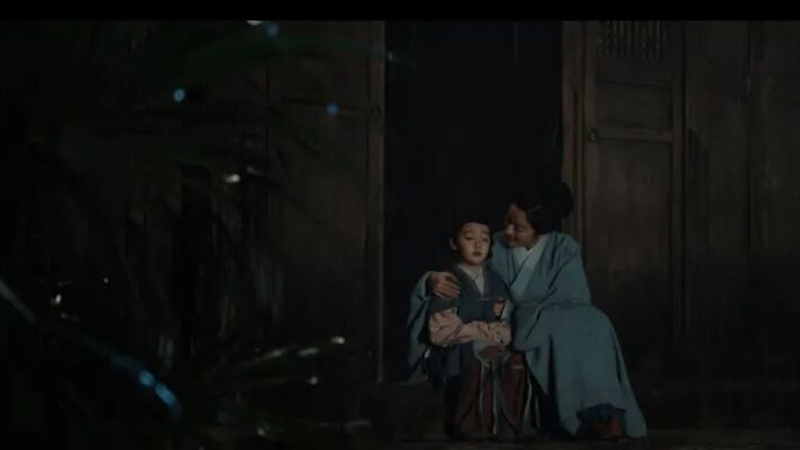
So here is the real lesson from The Mo. A rich family that cannot respect itself will crush its own daughter. A poor family that holds its ground will raise a woman who can say no. Hua’er had a warm bed and two brothers who claimed to love her—but they sold her for a business deal. Li Zhen had a patched roof and a worn-out inkstone—but she also had a mother who drew maps of possibility, a grandfather who worked with his hands, and a brother who simply said, go ahead. That is why she could call off her wedding without a single objection. That is why Hua’er, for all her family’s money, had no choice at all.