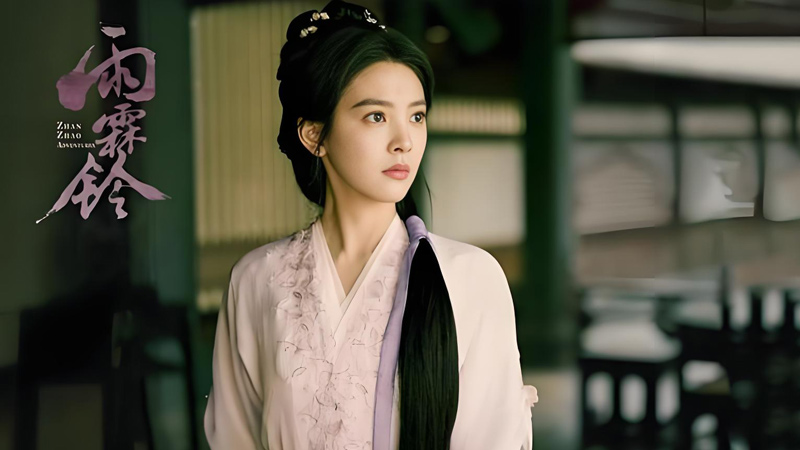
For decades, the Wuxia (武侠) genre has been China’s unique storytelling treasure—a world of chivalry, flying swords, and righteous outlaws. But in recent years, many TV dramas have traded real martial arts for CGI fireworks, leaving audiences hungry for something more grounded. Enter Zhan Zhao Adventures (雨霖铃), a new series starring Yang Yang (杨洋) as the legendary hero Zhan Zhao (展昭).
But this is not the flawless protector you remember. He is wounded—inside and out. And the show dares to ask: can a flawed, restrained knight still inspire us today? Directed by Liu Hongyuan (刘洪源) and produced by Hou Hongliang (侯鸿亮) of the acclaimed studio Daylight Entertainment (正午阳光), Zhan Zhao Adventures is a bold attempt to revive “true Wuxia” with sweat, scars, and historical weight. Let’s unpack why this Song Dynasty drama might just be the wake-up call the genre needs.
Hand-Made Grit
Most modern Wuxia dramas float in a digital dream—oversaturated colors, weightless acrobatics, and backgrounds that look like video game levels. Zhan Zhao Adventures rejects that completely. The production team built real streets and alleys based on Song Dynasty architecture. They studied pottery, clothing, and even the grain of wood to make the world feel lived-in. Director Liu Hongyuan kept repeating one phrase during our interview: “Respect history.” He didn’t want a postcard version of ancient China; he wanted dirt, texture, and time.
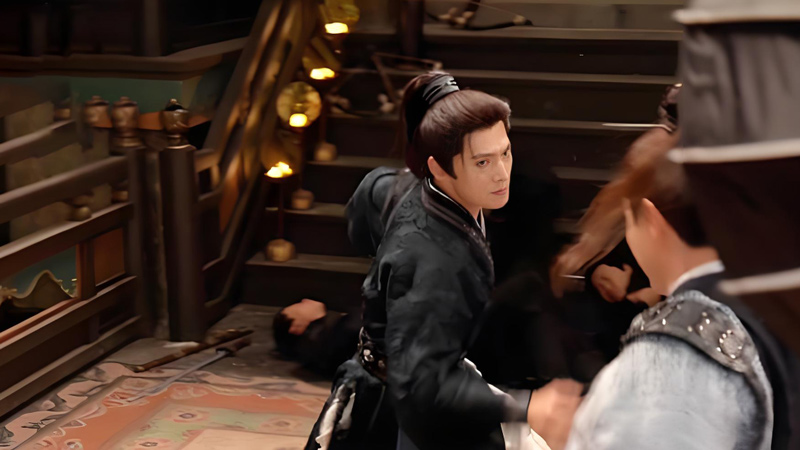
But the real shock came when Liu mentioned his cinematic godfather: King Hu (胡金铨), the legendary filmmaker who blended opera choreography with landscape painting. In King Hu’s Wuxia, every sword strike carried the weight of calligraphy. Zhan Zhao Adventures borrows that same spirit. You won’t see characters flying for minutes on end. Instead, you feel the thud of boots on clay, the rasp of steel against bone. It’s a sensory return to a “rooted Jianghu” (江湖)—a martial world that breathes, not just poses.
Producer Hou Hongliang calls their approach “hand-made Wuxia”. In an age where AI can generate fight scenes overnight, this phrase is almost a manifesto. Hou explained, “We are proud to keep making Wuxia with our bare hands. It’s our attitude—doing the clumsy, hard work to the extreme.” That meant actors performing their own stunts, often with real injuries. Yang Yang, who plays Zhan Zhao, once finished a three-day fight sequence in a single day—while hurt. He never stopped. The result? A rawness no algorithm can fake.
This commitment echoes the golden era of Hong Kong martial arts cinema, where directors like Zhang Che (张彻) pushed actors until they bled. It’s inefficient, yes. But as Hou said, “If you don’t put your body on the line, the audience can tell.” Zhan Zhao Adventures proves that slow, stubborn craftsmanship still has a place in a fast-forward world.
The Wounded Sword
Traditionally, Zhan Zhao is the perfect knight—loyal, invincible, and morally spotless. From He Jiajin (何家劲) to Jiao Enjun (焦恩俊), previous actors played him as the ideal “imperial cat”. But Zhan Zhao Adventures breaks that mold. Hou Hongliang noticed something unusual in the original novel (which remains unfinished): Zhan Zhao is already injured. Not just a scratch—deep, festering wounds that never heal. “That became our entry point,” Hou recalled. “He carries external scars, but also internal ones from past betrayals. He is a man who has been broken by the system he serves.”
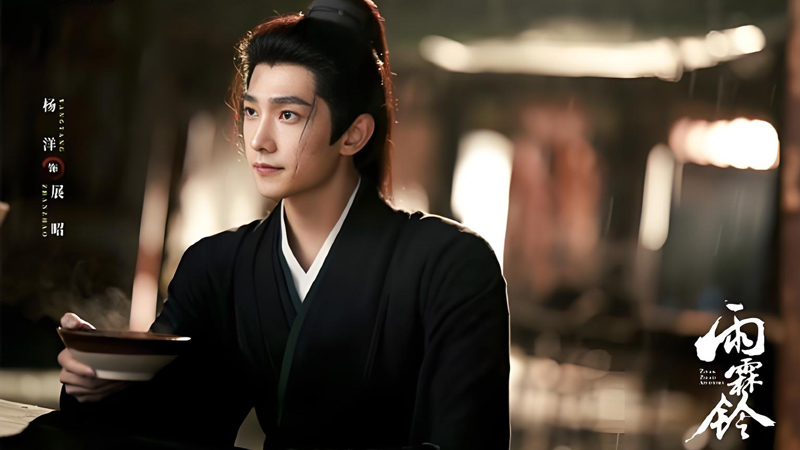
Here is the twist: Zhan Zhao is not a free-spirited rogue like Linghu Chong (令狐冲). He works for the imperial court. He wears a rank. Every time he draws his sword, he must balance chivalry (侠义) with law. That tension makes him deeply un-cool by Wuxia standards—no carefree drinking, no outlaw swagger. Yet that’s exactly what makes him human. Director Liu explained, “He is a man with limits. And in a restrictive era like the Song Dynasty, limits are what define character.”
Yang Yang’s casting was no accident. Hou said he chose the actor not just for his handsome looks, but for his “military discipline.” Yang served in the People’s Liberation Army as a young man. “He always sits straight. He never slouches. That bone structure—that self-restraint—is exactly what Zhan Zhao needs.” Indeed, watching Yang in the show, you see a hero who clenches his jaw instead of roaring, who bleeds quietly. This is not the Wuxia of wish-fulfillment. It’s the Wuxia of duty, pain, and hard choices.
Even the narrative pace follows this restraint. Hou admitted that today’s audiences crave instant gratification—“kill them all” in the first episode. But Zhan Zhao Adventures holds back. The first episode alone went through four different cuts before the team found a rhythm that balanced slow-burn character work with gripping conflict. It’s a gamble. But as Hou put it, “Not every story needs to scream. Some just need to breathe.”
Song Justice
So what is Zhan Zhao Adventures really about? Hou Hongliang coined a surprisingly blunt phrase: “Song Dynasty version of organized crime crackdown”. Underneath the silk robes and tea houses, the plot follows Zhan Zhao as he unravels a conspiracy where corrupt nobles—led by the Prince of Xiang Yang (襄阳王)—have infiltrated every level of government. It’s not about avenging a master or finding a lost manual. It’s about auditing power. The hero doesn’t just fight; he investigates. He gathers evidence. He argues with bureaucrats. That sounds boring? On screen, it’s tense as hell.
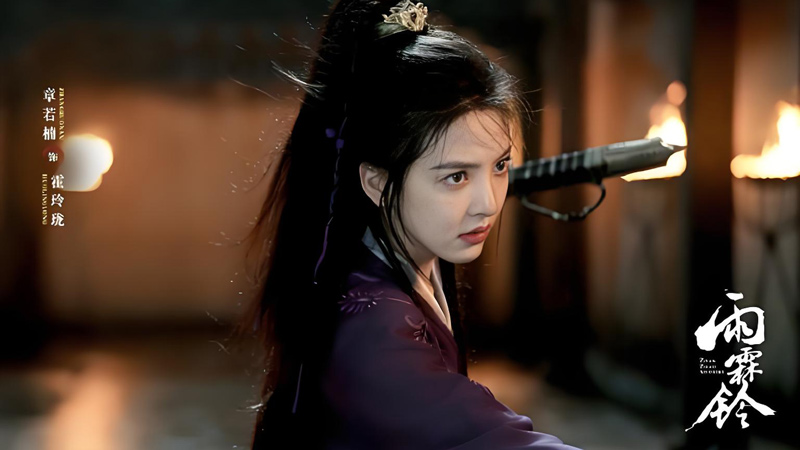
Three protagonists walk different paths. Zhan Zhao tries to work within the law, even when it fails. Bai Yutang (白玉堂), a rogue outlaw, believes in an eye for an eye—he would rather kill a hundred villains than trust a single judge. Then there is Huo Linglong (霍玲珑), a noblewoman initially raised as a marriage pawn. Hou said, “She is a woman’s choice.” In most Wuxia, female characters are either love interests or super-swordswomen. Huo Linglong does neither. She discovers her own family is part of the corruption. And she decides—not out of romance, but out of conscience—to side with justice. That scene, where she looks at her father across a torch-lit courtyard, might be the show’s most devastating moment.
What makes Zhan Zhao Adventures mature is its refusal to romanticize righteousness. Every act of chivalry costs something. Zhan Zhao loses friends. Bai Yutang loses his innocence. Huo Linglong loses her family. The show asks: would you still do the right thing if you knew you’d pay for it? In a cynical age, that question hits harder than any flying kick.
When I asked Hou and Liu to summarize the series in one word, they both said the same phrase: “clearing the clouds to see the sun”. Wuxia is not dead, they believe. What died was the belief that heroes can be perfect. Zhan Zhao Adventures offers a different kind of hero—bruised, bound by rules, yet still walking toward the storm with a lantern. And maybe, that’s exactly the kind of light we need right now.