In an era where young audiences scroll past endless short videos, the question “Do they still care about Wuxia (武侠)?” gets asked again and again. This year, fresh works have answered with a clear yes. The hard-hitting action of The Outcast (镖人) brought back classic swordplay vibes.
Now, Zhan Zhao Adventures (雨霖铃), airing on Youku, has crossed 9000 in heat index. It offers a bold new angle: a wounded, hunted Zhan Zhao (展昭) who must find his own path to heroism. The show blends Chinese animation storytelling with traditional martial arts. From its “battle-damaged” protagonist to its comic-like fight choreography, this drama is redefining what a Wuxia hero looks like for 2024 and beyond.
Why a Flawed Zhan Zhao Feels So Real
Unlike the confident, celebrated version from old tales, the Zhan Zhao in Zhan Zhao Adventures starts as a mess. He is poisoned, severely injured, and hunted by both the law and the underworld. He has gone from an elite officer to a wanted fugitive. This is the “battle-damaged” archetype popular in many Chinese animated series. Yet even at his lowest, he risks his life to save a young woman named Huo Linglong (霍玲珑) and a suffering child. His heroism is instinctive, not polished. That raw impulse makes him feel like a real person, not a legend.
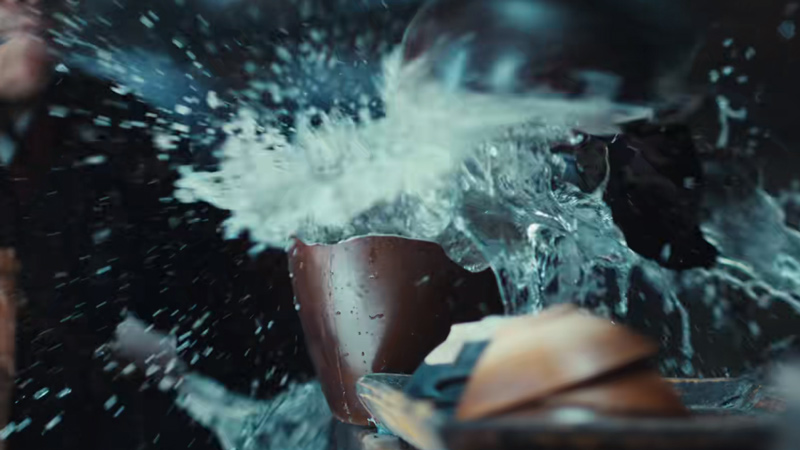
His struggle is deeply modern. Zhan Zhao is torn between serving the imperial court and following his own moral code. He cannot fully operate within the system, but he also cannot ignore injustice. This is the classic conflict between law and compassion. He carries painful memories, yet he remains an idealist. This mirrors the journey of many animated heroes who rise after tragedy. His hesitation feels genuine, not weak. When he holds a sword against a cult leader, he chooses to restrain himself with the law instead of taking revenge. That inner battle—between the official and the knight—is where his true complexity lives.
The show also builds a fascinating trio. Zhan Zhao, Huo Linglong, and Bai Yutang (白玉堂) form a “cat-mouse iron triangle.” They help each other, but they also keep each other in check. They risk their lives together and tease one another constantly. Zhan Zhao is the calm, strong leader, even when wounded. Huo Linglong is the sharp-witted strategist who makes every choice from her own will. Bai Yutang brings chaotic energy, looking carefree but hiding deep rebellion. This dynamic feels straight out of a manga. Even supporting characters have colorful names like “Black Fox Demon Zhihua” and weapons called “Yin Yang An” or moves like “Startled Swan Glance.” Each name adds to the comic-book texture.
Hand-Crafted Fights
If the characters feel like they’re from a comic, the action scenes push that feeling even further. Zhan Zhao Adventures delivers pure, hand-crafted Wuxia. Every punch connects. Every sword draws blood. The fights are intense and fast, much like the热血 (hot-blooded) battles in top Japanese anime. But the choreography is deeply rooted in real Chinese martial arts. Each duel changes based on the story and the fighter’s personality. Zhan Zhao moves with restraint and power. Huo Linglong fights with heroic grace. Bai Yutang is quick and tricky.
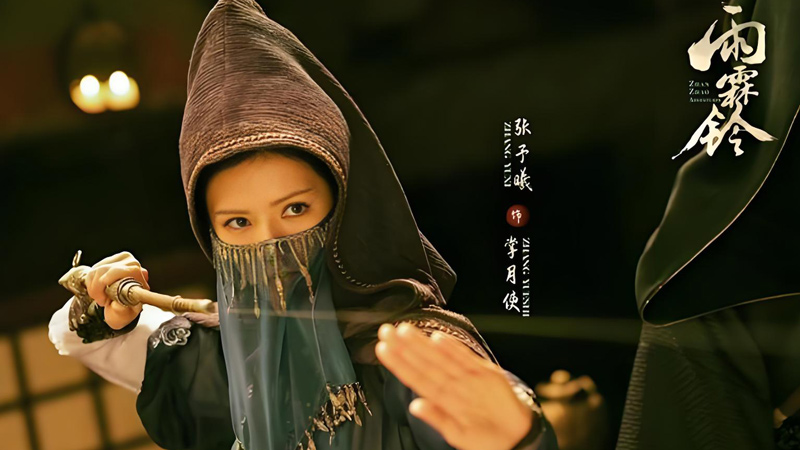
Take the opening fight on the riverboats. Zhan Zhao leaps between vessels, using a flagpole as his only weapon. The sounds are striking: the clang of metal, the thud of bodies hitting wooden decks, the swish of sword energy. It’s raw and immediate. Close-quarters combat feels especially brutal. Yet the show never forgets the poetry of Wuxia. The cinematography borrows from Song dynasty paintings and Dunhuang (敦煌) rock art. The ink-wash opening sequence flows like a living storyboard, with characters dissolving into mountains and rivers. That’s the grand ideal: a true knight serving the people and the land.
The visual language also screams anime influence. Directors use sound design, framing, and color to crank up tension. In one memorable shot, Zhan Zhao wears a bamboo hat that covers half his face. Cold tones and smooth camera movement give him a mysterious, larger-than-life entrance. Another scene shows him fighting thirty enemies in a rainy night. The composition, the lighting, the slow-motion cuts—all of it feels fresh and exciting.
The “Now” of Wuxia
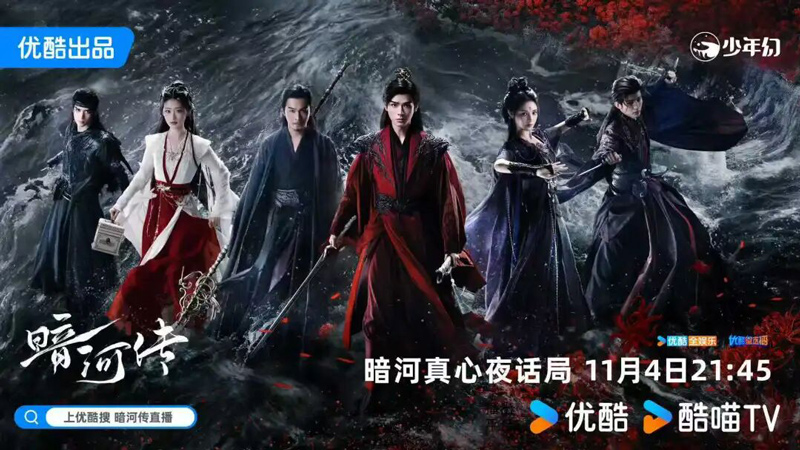
During a screening event, producer Hou Hongliang thanked Youku directly. “Thank you for giving us such a big creative space to hand-craft Wuxia,” he said. This is not Youku’s first bold move. The platform has been building a “new Wuxia” lane for years. From The Blood of Youth (少年歌行) to Dashing Youth (少年白马醉春风), Youku has focused on what feels current. Earlier shows emphasized speed and visual impact. Blood River (暗河传) experimented with a “dark Wuxia” look—unstable, uncertain, and moody. Now Zhan Zhao Adventures blends traditional Chinese style with anime sensibility, exactly what young viewers want: burning fights and poetic beauty.
Beyond the visuals, Youku connects emotionally. Traditional Wuxia rarely showed a hero’s awkward, rebellious teenage phase. Youku’s dramas pioneered the question, “How does one become a knight?” The young heroes in The Blood of Youth are curious about the world. They have wild dreams about friendship and justice. They are impulsive and unyielding. That raw teenage spirit resonates with today’s youth, who reject labels and charge forward despite doubts. Zhan Zhao Adventures deepens this relevance. Zhan Zhao’s dilemma—how to choose when society is complex and information is chaotic—is exactly what young people face every day. The show translates “chivalry” into a struggle they can empathize with.
The success of both The Outcast and Zhan Zhao Adventures proves that audiences still love Wuxia. They crave the spirit of heroism. As long as the content is quality, the revival of Wuxia is not just a slogan. Youku’s approach—respecting tradition while injecting “now-ness” into every bone of the story—shows the way forward. This is how you build the next ceiling for Chinese Wuxia dramas.