Yunjin, the cloud brocade of Nanjing, is woven on a frame that fills a room from floor to ceiling, and the output of that frame is five to six centimetres a day. The figure is not a marketing line. It is the arithmetic of two people working in coordination: a drawer who sits on the upper tier and lifts the warp threads for each pattern row, and a weaver below who throws the shuttle and works the colour. Neither can move faster than the other, and the pattern is decided one row at a time.
The machine has been on public view since the Nanjing Yunjin Museum reopened in a new building at 3 Jiangdong Middle Road in the Jianye district, with the public opening in the middle of November 2026. Several full-size looms stand in a working demonstration area rather than behind glass, with inheritors at the bench during opening hours. Visitors cannot touch, but they can stand close enough to follow a single gold thread.
What the Two People Actually Do
Up top, the drawer controls which warp threads lift. The position is known in the trade as the drawing of flowers. On a patterned row the drawer works from a coded programme hung above the loom, a sequence of knots and cords that tells him which of the thousands of warps to raise. The lower position throws the weft across only the section that the pattern calls for at that moment, then beats it home. In the trade the method is described as continuous warp and broken weft, because the warp runs the full length of the cloth while the weft is cut and restarted at every colour change.
That single decision, to cut the weft instead of carrying it across the back, is what allows a cloud brocade to hold dozens of colours in one row without the reverse side turning into a thicket. It is also what makes the work slow. A patterned band is not a repeat printed along the length. Each row is a separate instruction, and the drawer cannot skip ahead.
Zhuanghua, Zhijin, and Why the Difference Matters
Two names come up constantly in descriptions of Yunjin, and they are not interchangeable. Zhuanghua is the figure work, the technique in which colour sections are inlaid row by row so that neighbouring flowers can differ in hue within the same band. The trade calls the effect colour shifting by flower, and it is the reason a single garment can read differently as the light moves. Zhijin is the gold version, where flat strips of metal foil are worked into the weft so that the pattern is metal rather than dyed silk.
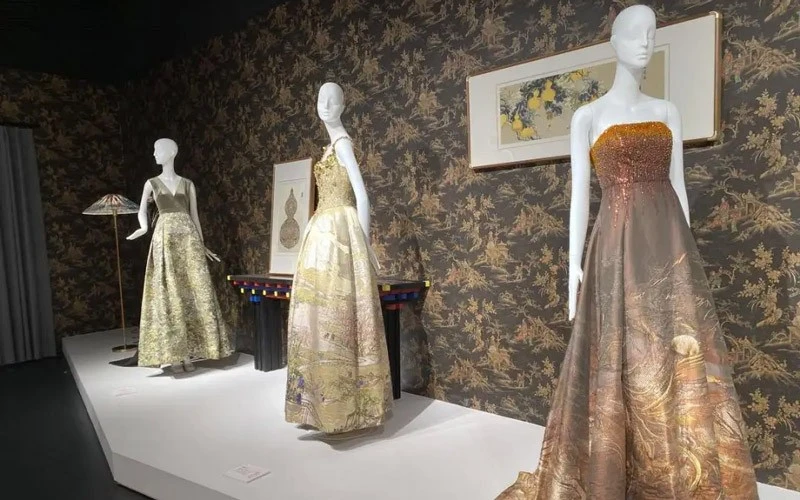
Both are on show in the new building. A dragon robe length seventeen metres long has been unrolled in full for the first time, a piece that had previously been seen only as finished garment sections. A gown worn by the actor Zhang Xiaofei at the 34th Golden Rooster Awards in 2021 is also displayed, made from a cloud brocade developed with real gold thread and peacock feather filament, with a garden scene from the novel Dream of the Red Chamber woven into the skirt. Six months went into that fabric from pattern drawing to the loom, and eighty days of two-person weaving went into the cloth alone.
Why the Museum Put the Loom in the Room
The decision to run working looms inside an exhibition follows from the arithmetic. A visitor who reads that a loom produces five centimetres a day learns a number. A visitor who watches a drawer raise warps for a single row, then watches the weaver below place one pass of colour, learns why the number is what it is. The second version is the one that survives the exit.
Something similar runs through the rest of the displays. Raw materials are broken out into stages, from the selection and degumming of silk to the hammering of gold foil and the twisting of peacock filament, so that the finished cloth is shown as the end of a sequence rather than as a single object. A digital wall at the entrance lets a visitor pick a motif, choose colours and simulate a pass of the shuttle, after which the contribution joins a growing image of a brocade on a large screen. The museum director, Jian Mingwei, describes the piece as one pass making a pattern and many passes making cloth, which is also how the craft has been transmitted.
Even the building takes the loom as its reference. The facade is clad in perforated aluminium panels divided into warp and weft, and the surface shifts in tone as the sun angle changes, a nod to the way peacock filament in the cloth changes colour with the light.
What the Loom Cannot Solve
Throughput is the constraint that no amount of museum attention changes. Two people, one frame, five centimetres a day, and a pattern that cannot be accelerated without changing what the cloth is. Everything built on top of that, the couture commissions, the export orders, the museum retail, inherits the same limit.
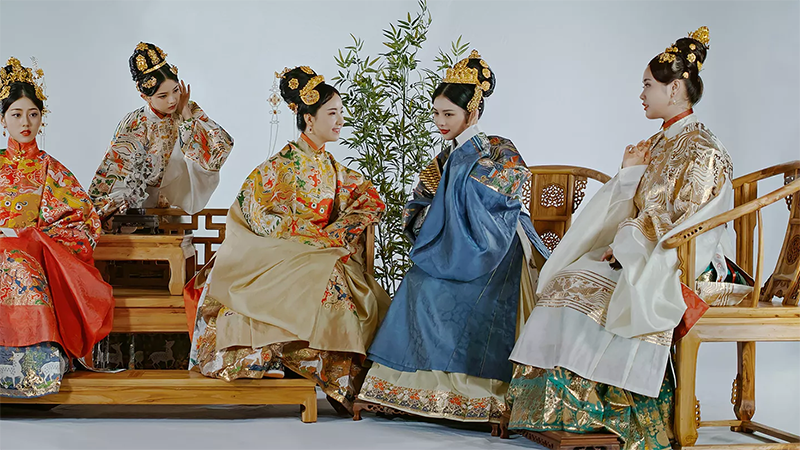
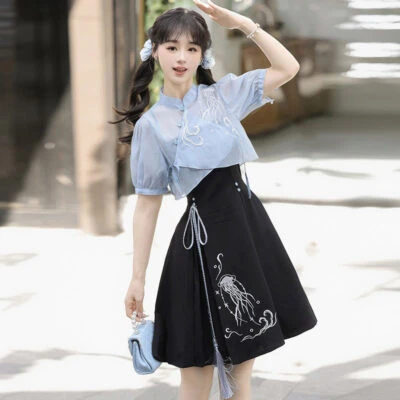
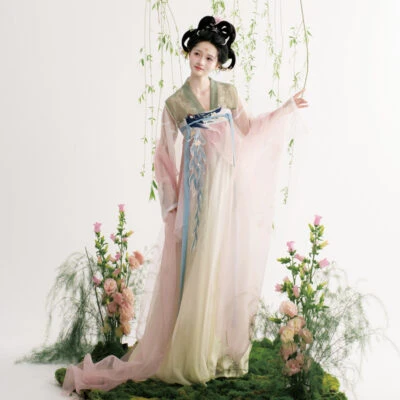
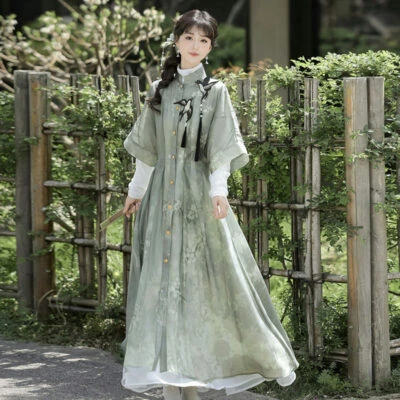
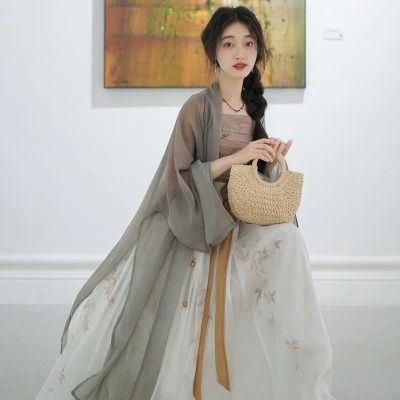
That is why the demonstration bench carries more weight than it first appears to. A craft whose unit cost is set by a hand-over-hand process survives by making the process itself valuable to watch, and by keeping enough trained pairs at the loom to fill orders that arrive in ones and twos. The museum opened with three historical brocade traditions gathered in one building, and the draw for the visitor is not the fabric in a case. It is two people, a day, and five centimetres. What a visitor leaves with is a cost structure that applies to any traditional Chinese clothing purchase, and a clearer idea of why the Hanfu styles cut from this cloth are priced the way they are.