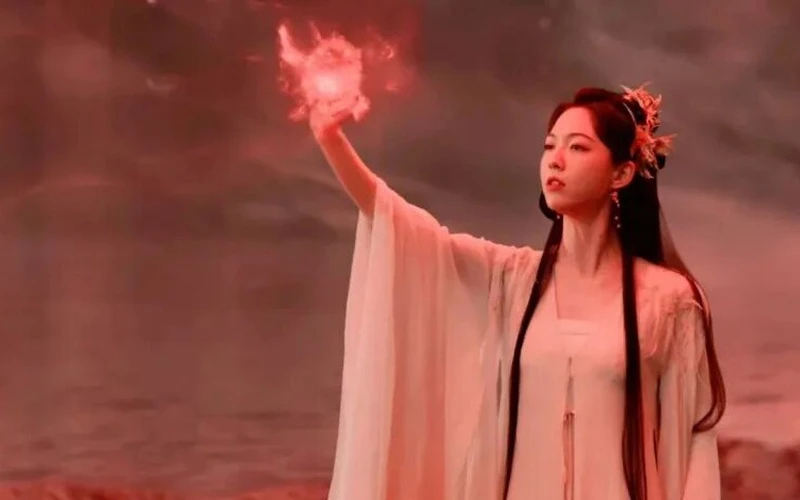
In Blossom in Darkness (十万狂花入梦来), the Zhaoshen Mirror (照神镜) does more than reveal a face. It cracks open a thousand-year plan. Duyao (独摇) looks like two different people: a devoted girl who calls Qi Fengyin (岐凤殷) “brother,” then a cold force trying to kill him. The change is not simple amnesia. It is a fight between her own heart and a destiny planted by Danshen (丹参). That makes every tender memory feel dangerous.
A Staged Saintess
Early Duyao is not complicated. She follows Qi Fengyin, trusts him, and throws herself into danger to block attacks meant for him. Her courage is real. So is her mistake. To save him, she walks into a trap arranged by Duzhong (杜仲). At that point, she believes love can solve what power has broken.
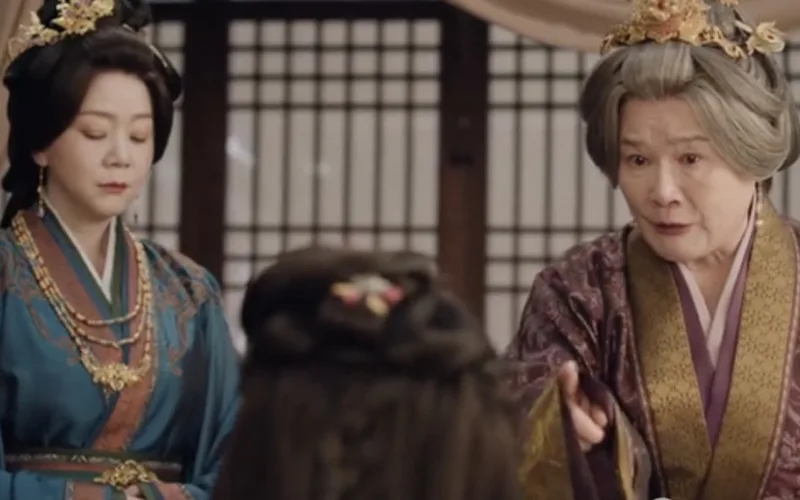
Later, she seems cruel. She hunts Qi Fengyin and speaks as if every warm memory has been erased. Yet the story avoids the easy answer. She has not lost her past. A holy duty has pressed down on her mind. The Tide Saintess seat inside the shrine gives that duty a voice, and the voice repeats one order: kill him.

The cruel irony sits in her origin. Duyao was a rootless spirit shaped by Duzhong, then placed in a sacred role. The role came with a script written by Danshen. She was never fully free. Even her rage may belong to someone else.
This explains why her behavior flips so sharply. The girl who once guarded Qi Fengyin becomes the weapon aimed at his heart. The show makes viewers ask a painful question: when duty speaks in your own voice, can you tell it apart from desire?
Danshen’s Long Game
Danshen is patient. For a millennium, his divine power has been thinning. He knows Shenyu (神域) is slipping away, and he knows what waits if he cannot return. So he hides his plan inside holy language. Duyao is not the true Tide Saintess, but he never exposes her. He watches.
He wants her to kill Qi Fengyin. If the Tide Saintess does it, Danshen can keep his hands clean and move closer to Shenyu again. His silence is a test, not mercy. He lets Duyao carry a fate too heavy for one spirit, because her failure or success both feed his design.
The white strands in his hair give the scheme a clock. They show his power draining. A god who fears disappearance becomes careless with other lives. Danshen’s calculation is not abstract; it has a deadline. That pressure makes him riskier.
Then Duyao turns her killing intent toward Yamao (鸭毛). That is not part of the plan. Danshen finally brings out the Zhaoshen Mirror. The mirror is not a gift. It is damage control. He needs the truth visible before his hidden board collapses.
Heart Against Fate
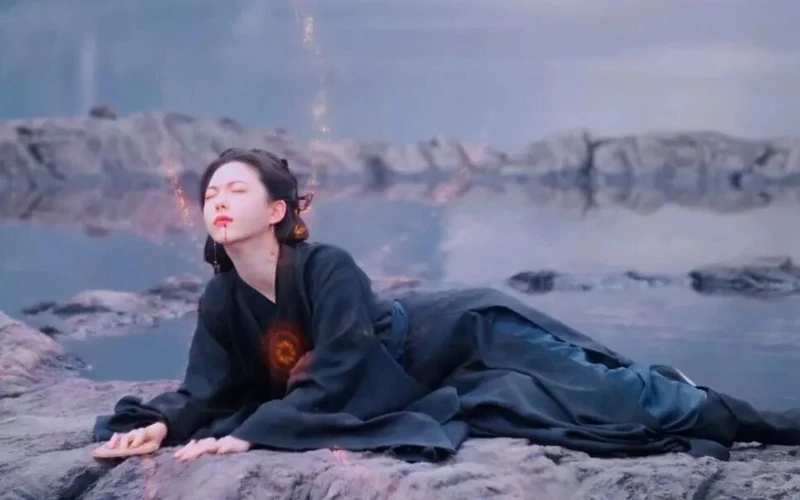
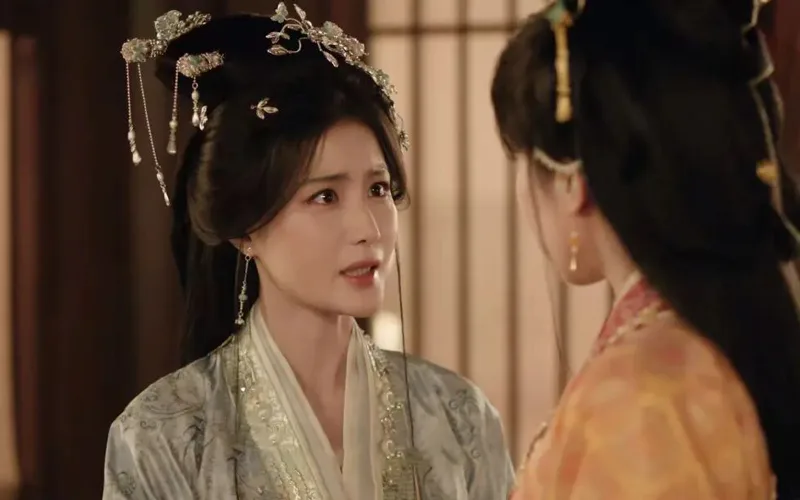
Under the mirror, Duyao’s real identity cannot hide. The holy title falls away, and what remains is a spirit who has done terrible things in someone else’s name. The question is not whether she regrets it. The question is whether regret can survive when fate has been carved into her.
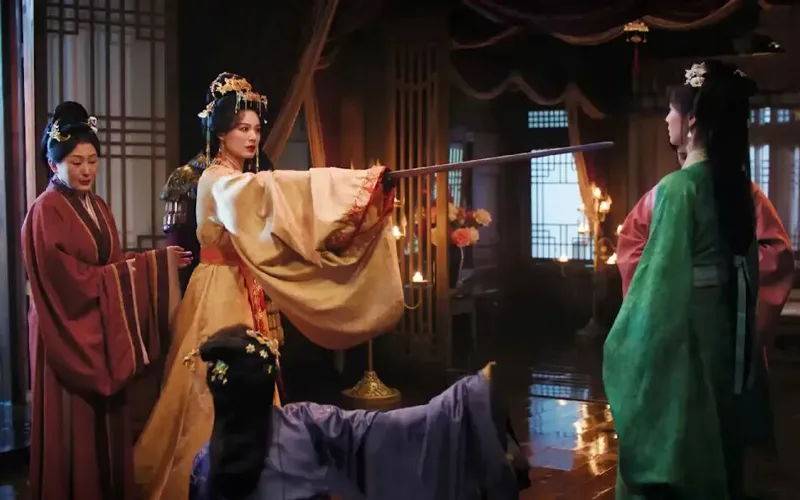
Her actions are brutal. She imprisons Qi Fengyin and tears out his demon heart. She wants to use that moment to refine immortal essence from the sect leaders. Seen from outside, it looks like villainy. Seen from inside, it is a mind split by two commands that cannot agree.
Her original heart is simple and fierce. The sects want to hurt Qi Fengyin, so she wants them gone. If they die, no one can touch her “brother.” That is the Duyao who once jumped into danger without thinking. Her love is narrow, absolute, and reckless.
The fate inside her wants something else. It wants immortal essence, more power, and Qi Fengyin dead. So she is pushed to destroy the one person she most wants to protect. That is the story’s sharpest wound. The mirror shows the truth, but truth does not free her. It only makes the trap easier to see.