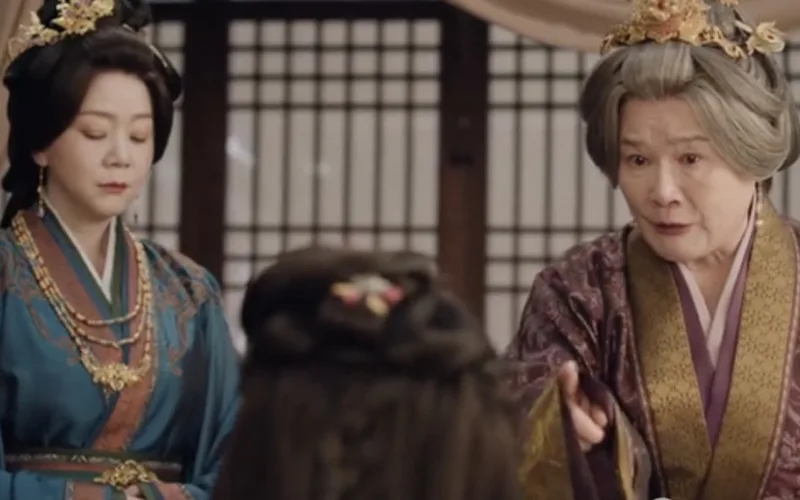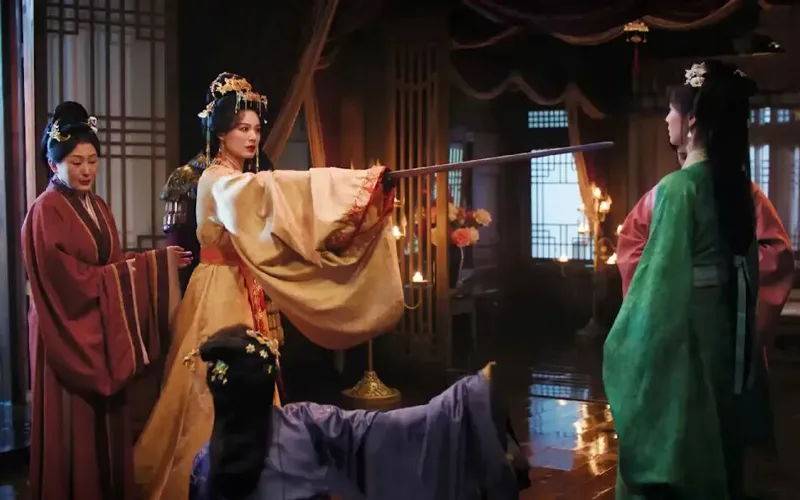
Taming The Husband (宝珠) opens with a rich household that looks calm and respectable. Behind the curtains, Master Xie (谢) keeps two women, yet no son arrives. The only daughter, Baozhu (宝珠), is quietly raised as a boy by Lin Yiniang (林姨娘). That secret is not a warm joke; it is a shield against a man who counts every coin. When money speaks, family becomes a tool. The real question is what kind of father makes an heir feel impossible.
Money Before Blood
Master Xie hides greed under a gentle smile. After Xie Yan (谢砚) and Baozhu take a shop and the Salt Route, he does not congratulate them. He plots. He strikes a family member on an old waist injury, then calls it discipline. To him, blood is cheap; cash is proof of power. Xie Heng (谢珩) refuses the script. He sees honor as shared, not hoarded, and will not join his father’s games.
The old man has two targets. He pushes salt prices higher and plans to blame Baozhu. If the Old Madam hears a scandal, she may decide a young woman cannot run a shop. The shop would slide back to him. He also delays Xie Yan’s return. A first voyage is fragile; a bribed servant can create panic, damage cargo, or waste days. Late delivery means lost money and lost trust. Then the route should return to him.
What he forgets is that a household is not a ledger. Xie Heng’s honesty is not weakness. It is a boundary. He dislikes the schemes, avoids private drinking with Xie Yan, and keeps distance from his father’s temper. Still, he understands that family honor rises or falls together. The older man mistakes silence for obedience. He mistakes fear for loyalty. Greed has made him blind to the people at his table.

A Rigged Voyage
Xie Yan is no sailor born on deck, but he is a scholar who passed the highest exam. He notices wrong details: a changed manifest, a nervous steward, a delay that smells planned. Instead of shouting, he watches. He lets the trap show its shape. Then he wins crew loyalty with respect, not grand promises. These men know winds, shoals, and cargo. If they trust him, they become his hands and ears.
The saboteurs expect panic. They get calm questions. They expect a scholar to freeze; they get a man who checks every crate and every hour. Xie Yan keeps suspicions private. He does not give the old man a chance to twist the story. When the crew sees that he listens before he commands, they warn him about loose ropes and missing stores. A respected leader cannot be replaced so easily.
The ship returns heavy with goods and profit. It earns more than Master Xie’s own trips. That result is an insult he cannot swallow. His scheme has fed his rival instead. The crew comes back with stories, and the shop has proof. Baozhu gains confidence; Xie Yan gains a route. The old man gains only suspicion. He wanted a disaster to prove that young people cannot be trusted. Instead, the disaster exposes his own smallness.
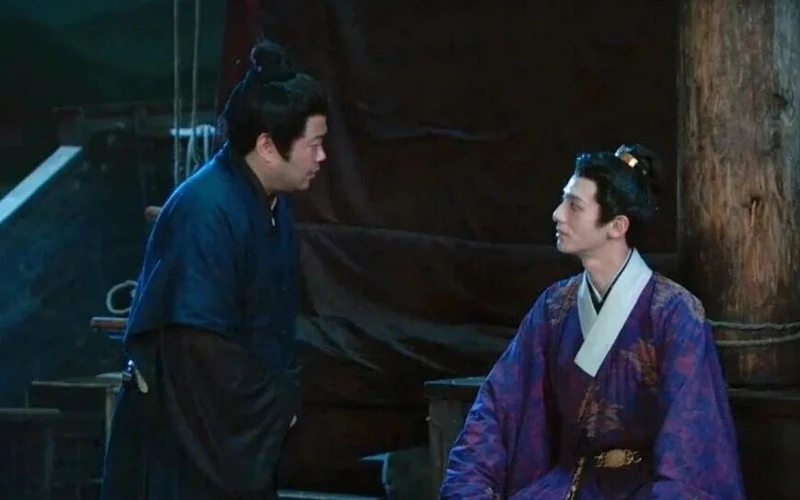
No Heir, No Mercy
The cruelest detail is not the plot. It is how Master Xie treats his own blood as inventory. A daughter is hidden and renamed in daily life. A son is watched, never heard. Two women share his house, yet no child is safe enough to be simply loved. He wants control more than heirs. He wants the Xie estate locked in his fist. A father who turns family into chess pieces should not be surprised when the board feels cold.
Xie Heng sees it clearly. He does not share his father’s poison, and he does not pretend the family is whole. Still, he stays upright. He will not help frame Xie Yan. He will not mock Baozhu’s secret. He will not let a bad parent define every choice he makes. That quiet refusal matters. In a house built on schemes, decency becomes a form of rebellion.
So why no son? The drama offers a sharp answer: a man who hoards everything leaves no room for life to grow. Goodwill is not a lucky charm, but it shapes a home. Cruelty does not always bring a visible punishment; sometimes it leaves a table full of people who do not trust each other. Master Xie clings to coins and loses what money cannot buy. When the final account is counted, what remains? A shop, a route, and a lonely man guarding both.