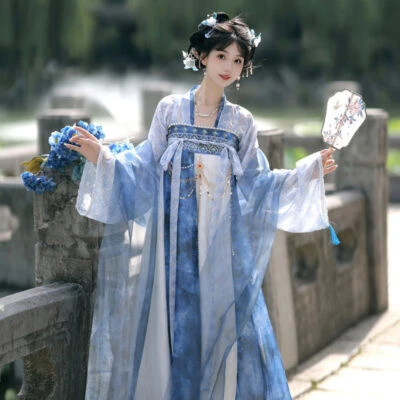
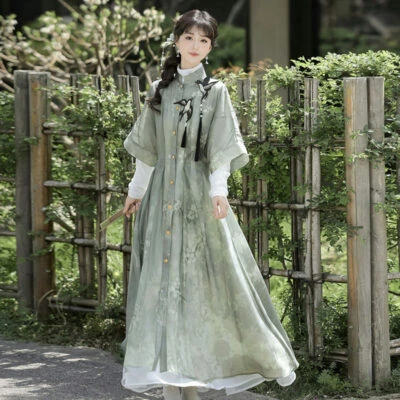
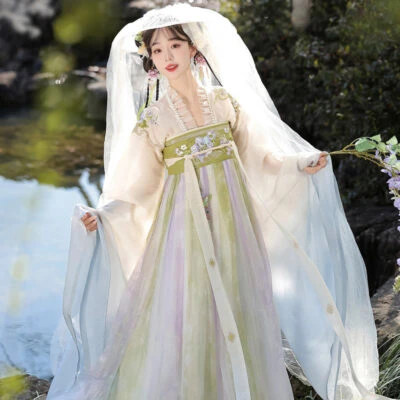
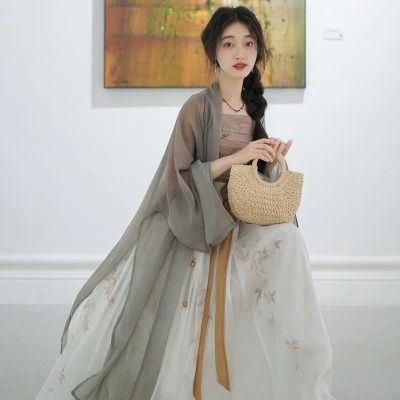
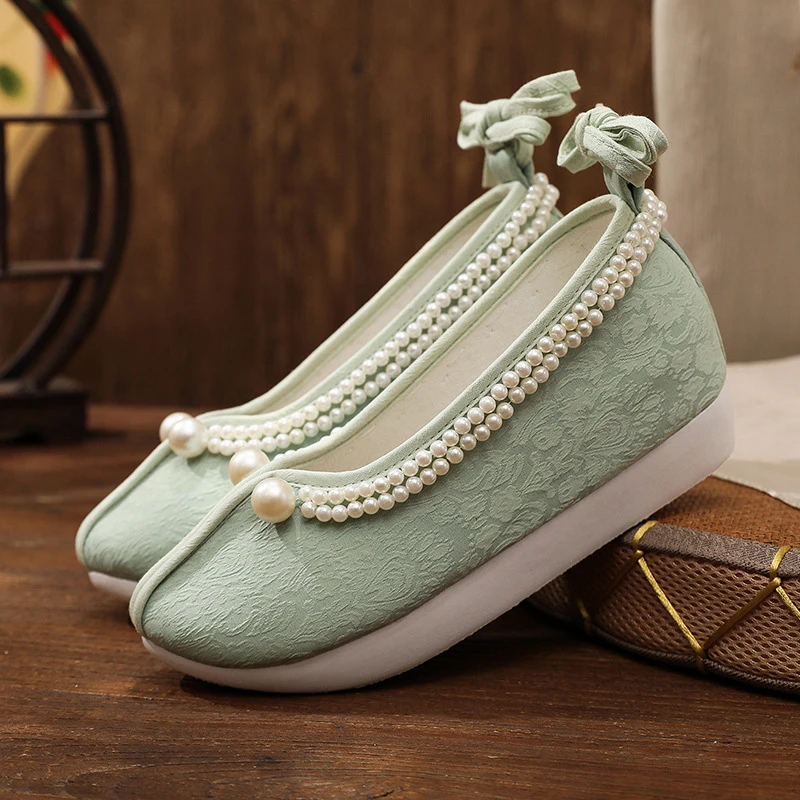
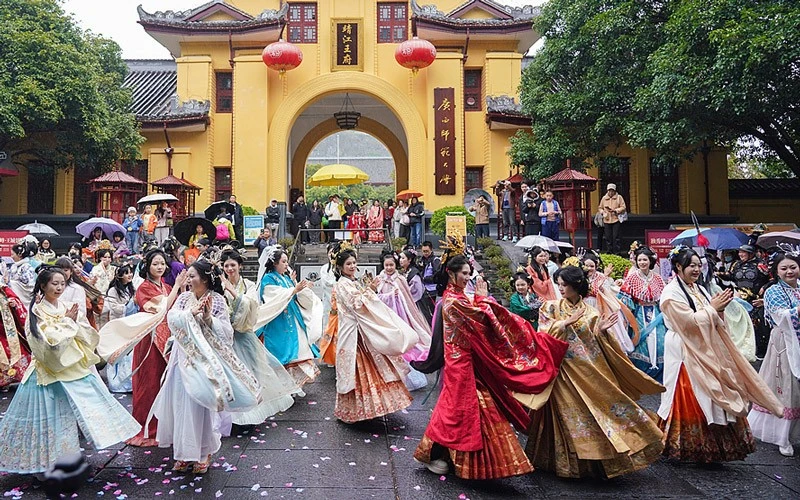
More than three hundred wearers turned out for the 2026 Hanfu travel day in Guilin on November 22, starting from the Wangcheng scenic area and walking a route that threaded the city’s main heritage streets. Rain came and went through the afternoon, which left umbrellas, hems and sleeves moving through the karst skyline in layers, and passers-by fell in behind the procession for blocks at a time.
The procession was organised by period. Eight blocks set off in order: deity dress, formal dress, Qin and Han, Wei and Jin, Tang, Song, Ming, and everyday Hanfu, running from the main gate of Dongxi Lane past the ruins square, Xiaoyao Tower and Binjiang Road to a pavilion in the Cultural Palace block. Every stop on the route is open public ground, which is the point of the format.
Eight Blocks, Eight Silhouettes
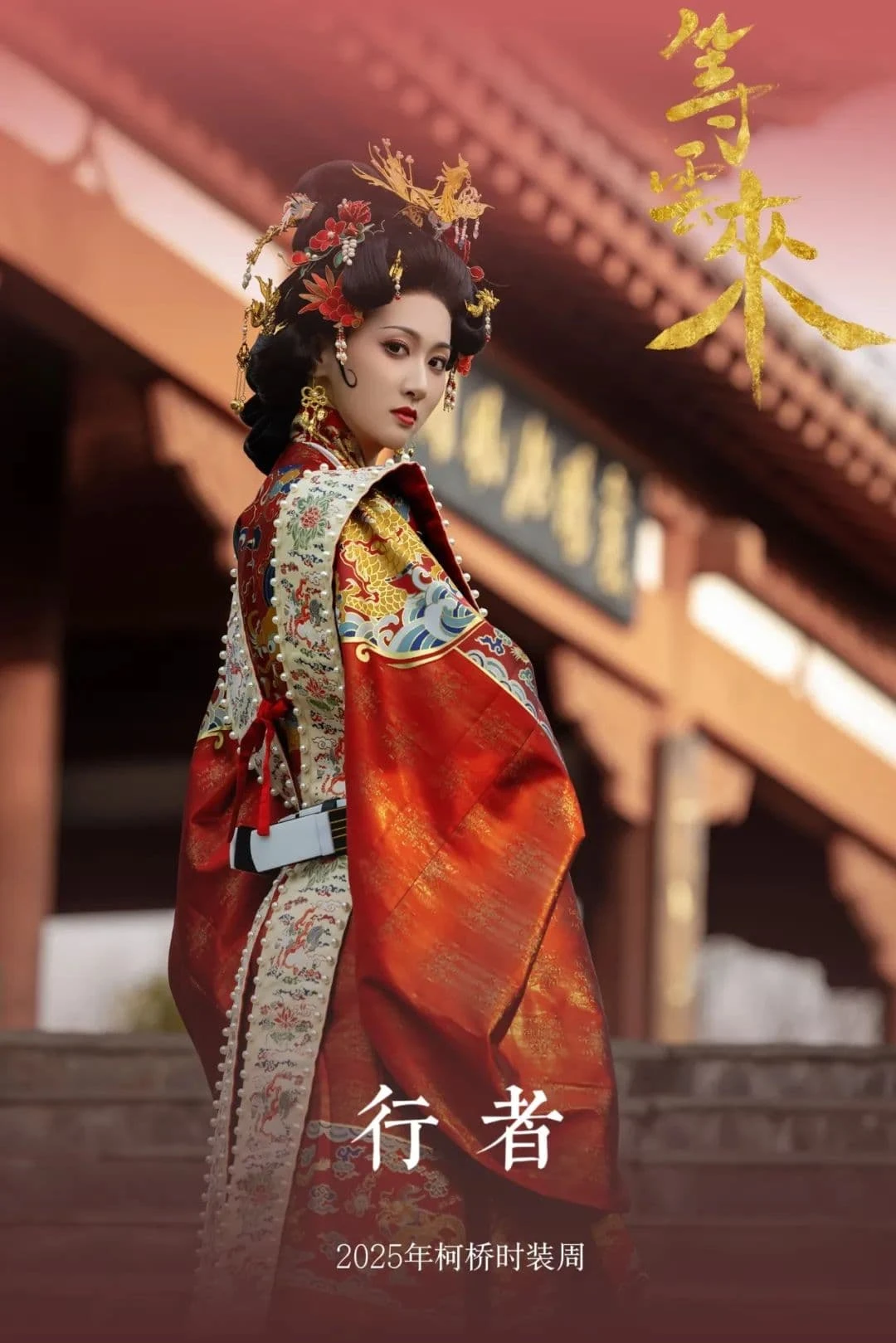
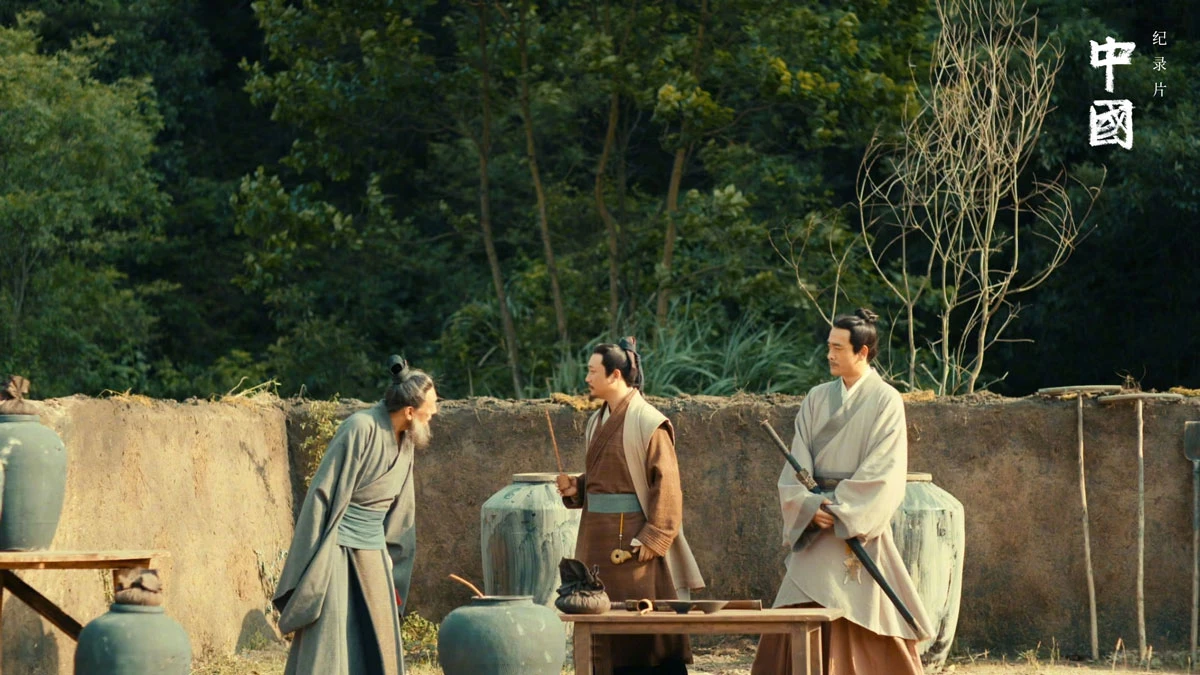
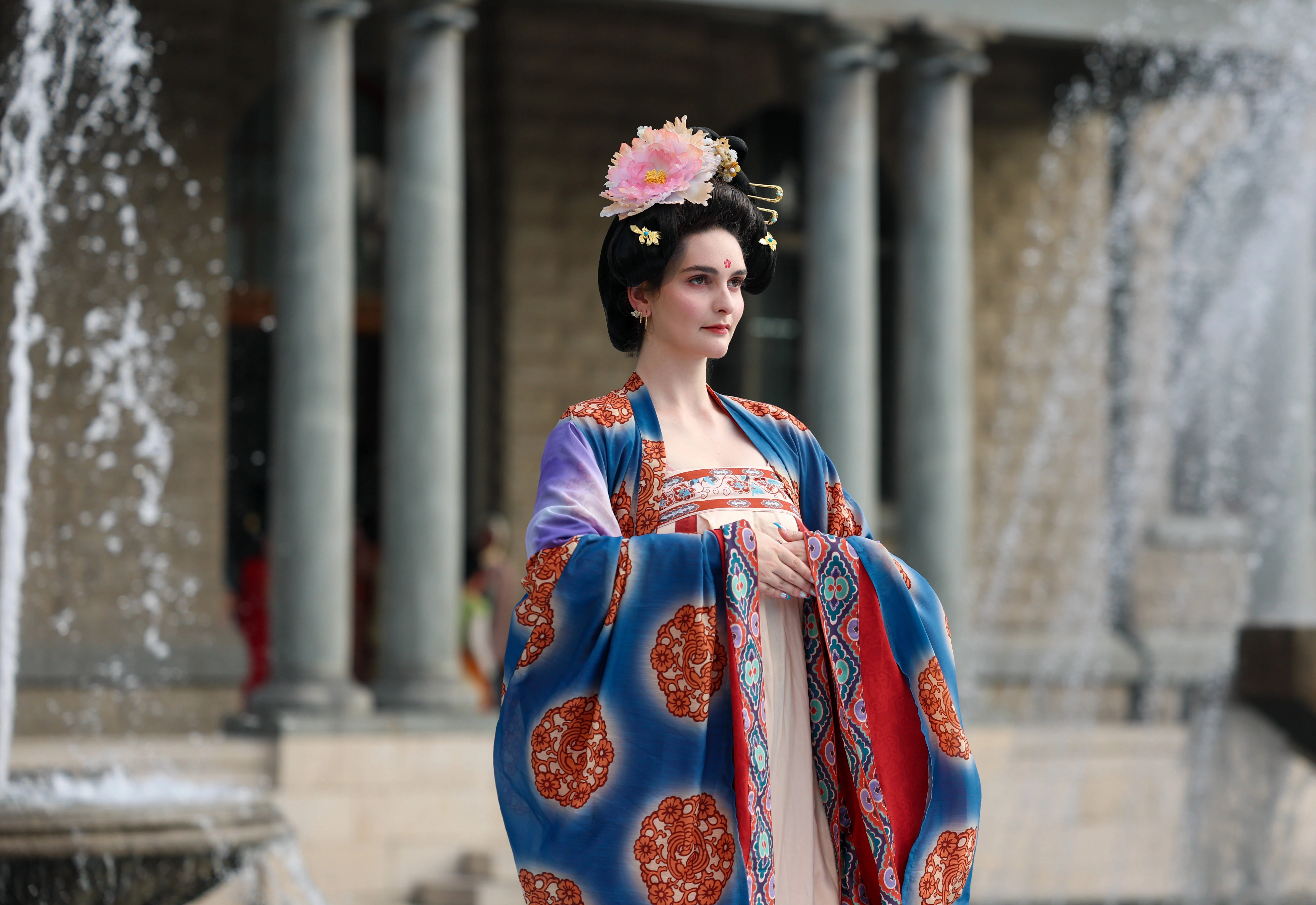
Set in that order, the parade doubles as a short history of cut. The Qin and Han block wore Quju Shenyi, the wrapped robe whose lapel spirals down the body and narrows the figure into a long cone. Wei and Jin came in loose gowns with dropping sleeves, so the fabric moved before the wearer did. Tang split into two lines, Qixiong Ruqun with a high waist and a scarf over the arms, and the round-collared robe with a turned-back lapel and narrow sleeves, worn by men and women alike. Song built on the Beizi, a straight-collared jacket with vents at both sides, over trousers, drawn thin. Ming belonged to the Mamianqun and the Aoqun, the skirt panel flat at front and back and pleated at the sides, opening and closing as the wearer walked.
Two of the blocks sit outside that timeline by design. Deity dress refers to the floating-robed figures in murals and cave sculpture rather than to any one dynasty, and formal dress means the full ceremonial set with crown, garment and pendants. Placed at either end of the line, with everyday Hanfu closing it, the arrangement runs from the least wearable to the most.
Home-Made Armour, and a Flying Fish Robe
The most labour-intensive costume in the parade was not a skirt. A resident surnamed Chen came as Guan Yu, the green-robed general of the Three Kingdoms, in armour he had built plate by plate. He bought the garment and made the armour himself, and spent an hour on hair and makeup. He joins events like this every year, he said, and last year came as a Tang military officer. Strangers stopped him for photographs along the route.
Further back walked Mu Mu, a fifth-grader at Baoxian Primary School, in a Feiyufu, the flying fish robe of the Ming bestowal system, named for the four-clawed python worked into the body and the fish-like tail fin. His mother, Yao, wears Hanfu herself and has bought several sets. He likes it, she said, so she brought him along to feel the occasion.
People got up at four or five in the morning to dress, according to the organiser, who goes by Mingyue and runs a local shop called Jiaxu Hanfu. She said this was the fourth Hanfu day held in Guilin. The line also carried people who had travelled for it, including Guilin natives working elsewhere who came home for the day, and two students from Sri Lanka attending their first such event, who did their own hair and makeup and were pulled into photographs all afternoon.
Why November 22
The date marks a specific afternoon. On November 22, 2003, Wang Letian, an electrician, walked through a square, a park and a shopping centre in Zhengzhou wearing a Quju Shenyi with a silk outer layer, and became the first person in recent decades reported by the press to go out in Hanfu. Wearers adopted the day afterwards, and from 2024 city processions began passing the occasion from one place to the next.
Guilin turned the relay into a walking route. Local Hanfu societies and the scenic area ran it together, stringing six stops through free public space, and used the crowd to point at the surrounding trade: styling studios, robe rental, photographers. A visitor who watches the parade can book a shoot within walking distance.
That shift, from staged performance inside ticketed venues to walking through open streets, is the clearest change in Hanfu events over the past two years. A stage proves technique. A street produces ordinary use. Rain in Guilin made the second effect obvious, since wet stone, umbrellas and wet hems are not a combination any brochure can stage.