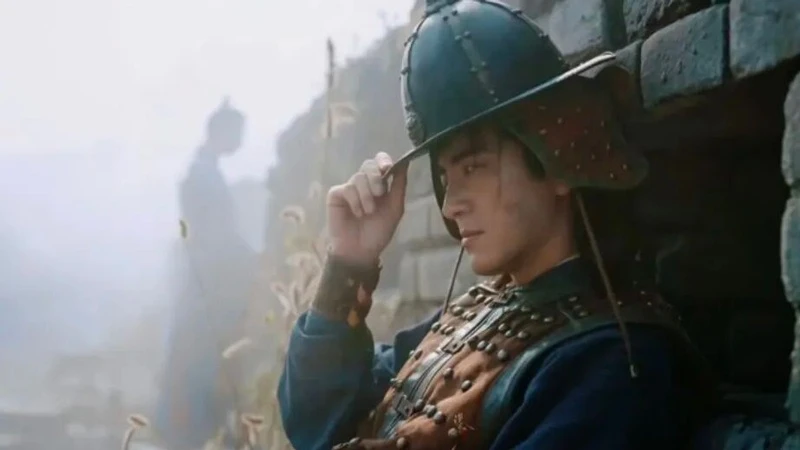
When viewers first see Lin Gengxin (林更新) in the drama River of No Return (两京十五日), that battered armor can look like a soldier’s gear. It is not. He plays Wu Dingyuan (吴定缘), a constable in Nanjing, not a proper military officer. The armor is emergency equipment tied to the early Hongxi (洪熙) years of the Ming dynasty. Before judging the costume, one must understand the man wearing it.
A Borrowed Shell
In the original story, Wu usually wears an old black official robe and carries a Tiechi (铁尺). He is sloppy, casual, and never keeps standing armor. This set is temporary grassroots infantry gear: Bu Mian Jia (布面甲), or cloth-covered armor. It is not a reward suit or a parade suit. Its first job is light travel, not display. That is why it looks irregular, with old and new plates, worn edges, and no shiny prop polish.
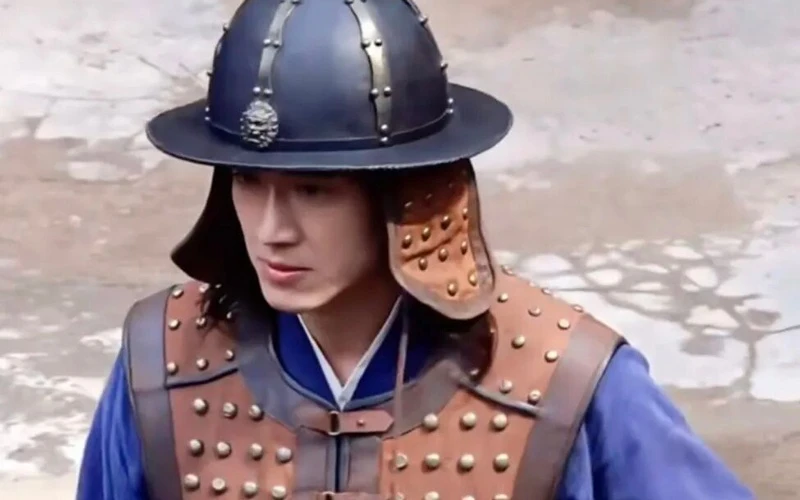
The main shape follows Ming cloth-covered armor, often called hidden armor. Iron plates are riveted between hemp cloth or thick cotton. Outside, brown coarse cloth shows rows of round rivets. Those rivets hold the plates together, and they also give the armor its most recognizable look. It protects the body without turning the wearer into a walking iron box.
The round-collar, front-opening tie design can be pulled on fast. By canal ambushes, that matters. In early Ming Nanzhili (南直隶), garrison soldiers, inspectors, and constables often used simplified versions. Protection sits on the chest, belly, and shoulders; the arms and lower waist stay free for a short knife or iron ruler. Fancy patterns belong to officers or Jinyiwei (锦衣卫) ceremonial gear. The lining is coarse linen. Lin said the weight pressed hard on his shoulders during running and water scenes. A real light version could still weigh twenty to thirty jin, so Wu wears it only for the final fight.
Fast, Not Fancy
The helmet is a Ming round-top bowl shape. Its front brim sits low over the brow, with ear and neck guards, and a short tassel. Long red tassels look heroic on camera, but southern infantry in this period needed restraint. A short tassel will not catch on boat beams, alley corners, or enemy hands. The surface has a matte black iron finish, not a mirror shine. Polished armor usually belongs to capital guards or ceremony; damp southern air also makes bright iron rust.
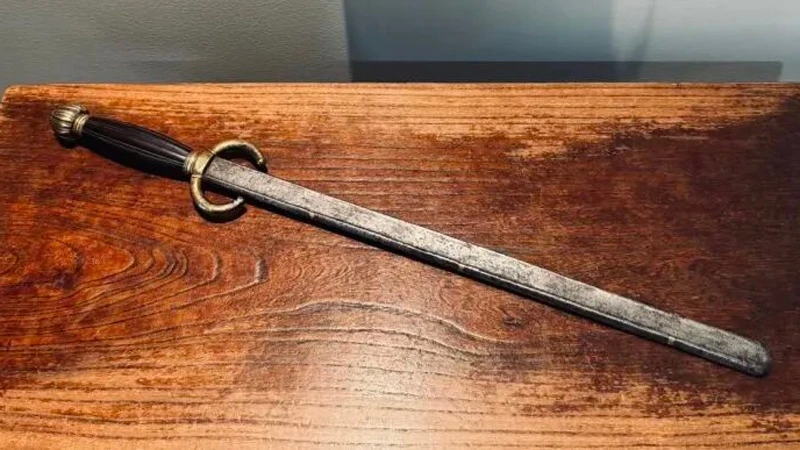
Wu’s main weapon remains the iron ruler, not a long spear. It was standard constable equipment: no blade, useful for blocking and pressing, made to subdue first and kill only in desperation. Side loops can hold a short waist saber, a leather pouch, and a fire-sickle bag. There is no bow or quiver, which quietly confirms infantry use. The short hem also suits walking, boarding boats, and fighting in narrow streets.
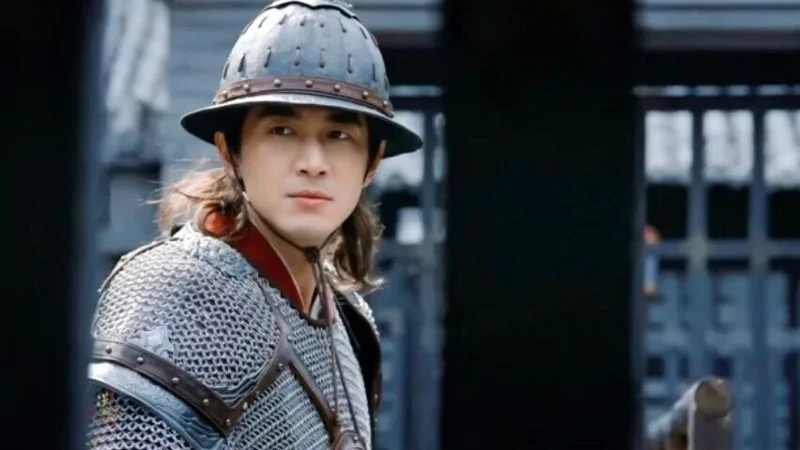
Zhu Zhanji (朱瞻基) wears a ceremonial zhaojia (罩甲), with finer fabric and richer patterns. Wu’s suit is combat gear: rough cloth, no decoration, practical plate placement. The drama also makes fair screen choices. Real early Ming plates were smaller and denser; the prop team enlarged rivets and simplified joins. They reduced heavy leg skirts so fights in boat cabins and docks could move. That change is reasonable, not careless.
Small Men, Real Weight
Many costume dramas linger on princes and generals in bright armor. This rough dark suit turns the camera toward constables, garrison soldiers, and local militia. These people have no awarded glory and no famous name. A borrowed shell is their shield; an iron ruler is their only support. The armor looks ordinary because the life behind it is ordinary.
Lin’s character has a hidden identity, yet he would rather stay away from trouble. In the end, he stands up for the country and its people, and both the man and his choice grow. He gets tired. He feels fear. The armor’s weight on his shoulders meets the sudden weight of duty. That is where the role becomes touching.
In crisis, unnoticed people often step forward with plain courage. The cloth-covered armor does not show divine power. It shows the resilience of ordinary people caught in a fast current of history. A small man can still carry heroic feeling. What do you think?