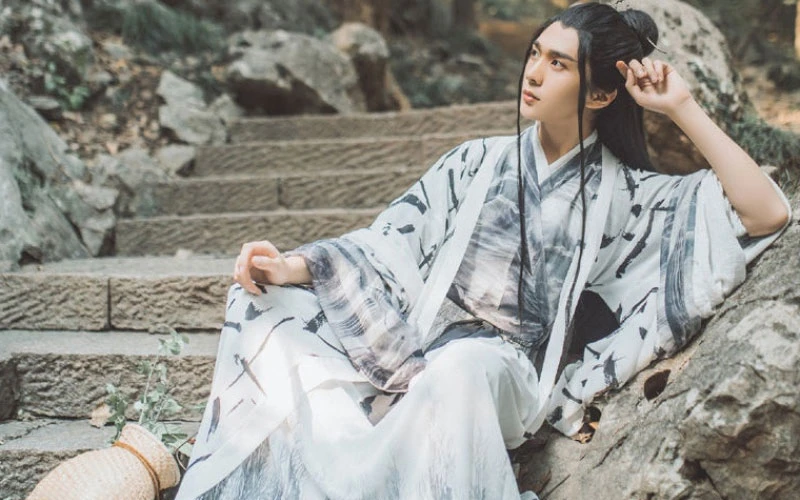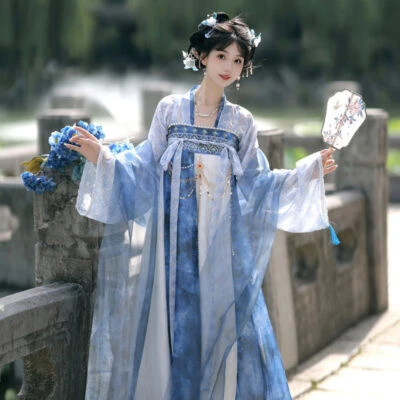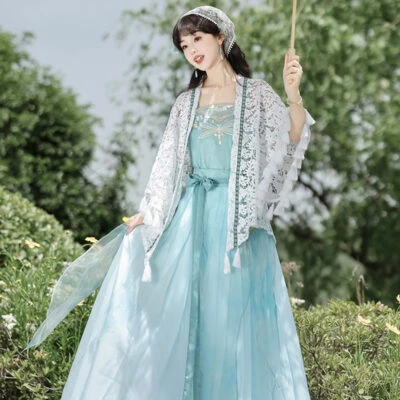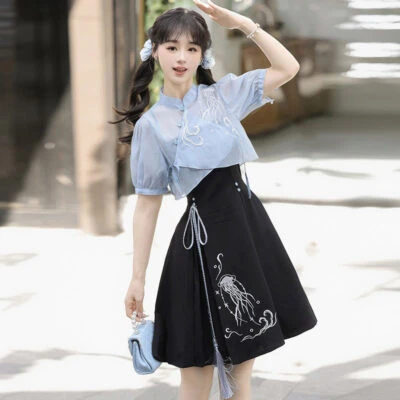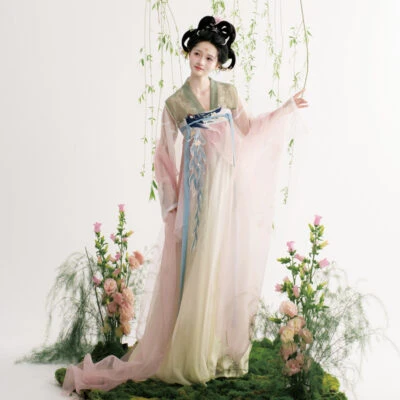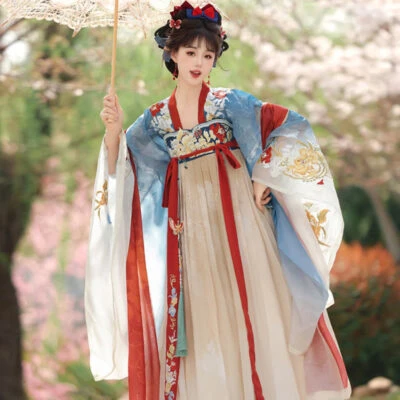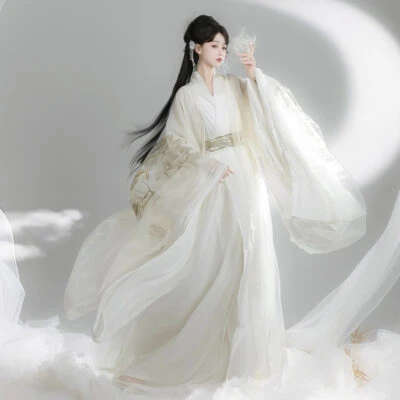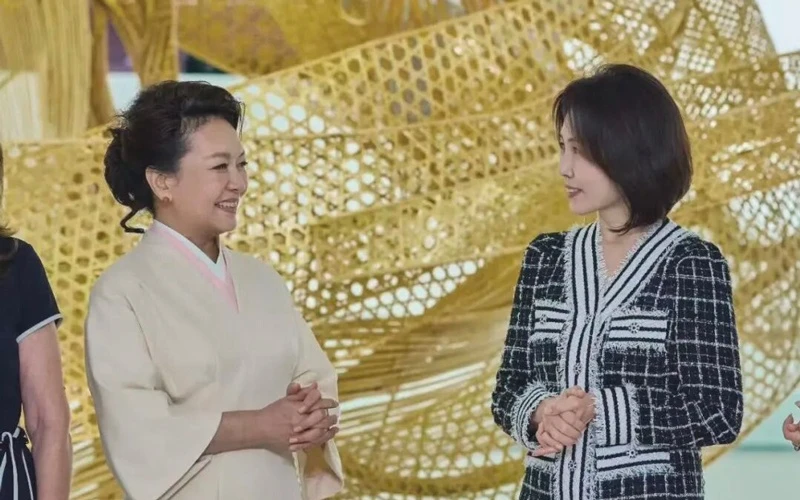
At the recent APEC Economic Leaders’ Meeting, the First Lady appeared in a modern gown built around a crossed collar with the right lapel on top. The detail is easy to miss in a wide shot, yet it carries a long history. Two front panels meet in a clean Y-shape, the outer edge folding toward the wearer’s right side. This structure, known in Chinese dress history as Jiaoling Youren (交领右衽), has remained recognizable for roughly three thousand years. The gown does not copy an ancient robe. It places a traditional line into a modern silhouette, letting the cut speak before any explanation is needed.
A Design That Endures
In plain terms, the “lapel” is the front panel that closes across the chest. Its direction matters. Across dynasties, the outer panel settled on the right side, and that choice became one of the clearest markers of Chinese dress. Murals, scrolls, textiles, and excavated garments preserve the same basic logic, even when sleeve width, skirt length, and fabric change around it.
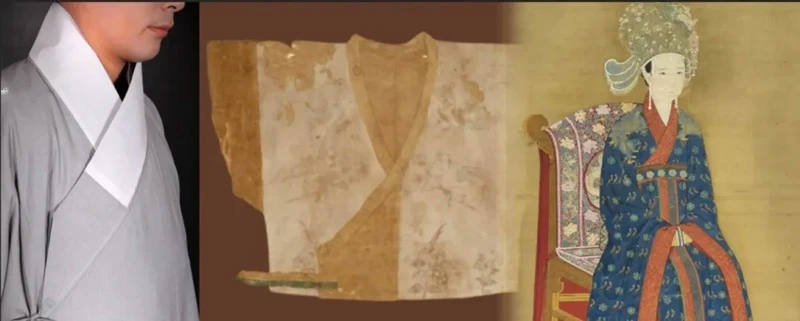
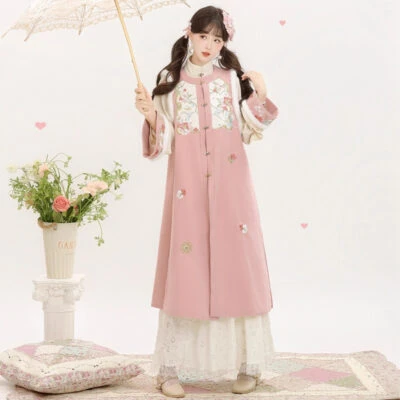
The structure appears in many familiar styles. Qin and Han straight and curved hems, Wei-Jin Ruqun, Tang and Song crossed-collar jackets, Song long gowns, Ming jackets with skirts, and Daoist robes all use different proportions, but they share the same crossed front. That continuity explains why the detail feels so immediate. It is not a decorative afterthought. It is a framework that has held traditional Chinese clothing together through centuries of change.
Deep Robe Roots, Modern Lines
The gown’s cut follows a robe-like construction, drawing on the ancient idea of a single continuous body with depth and restraint. Its roots can be traced to the Shenyi (深衣), a ceremonial robe in which the upper garment and lower skirt were cut separately, then joined into one piece. The result was neither loose nor stiff. It gave the wearer a contained, formal presence that suited occasions requiring dignity and measured movement.
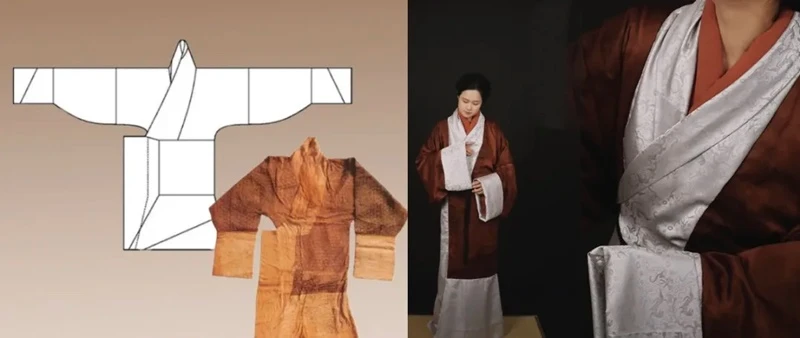
The layered neckline adds another historical echo. It recalls Han-dynasty triple-layered ceremonial dress, where overlapping collars created depth without loud ornament. Here, the effect is modernized for a global audience. The lines stay clean, the shoulders remain uncluttered, and the collar does the quiet work. Nothing needs to be shouted for the design to be understood.
Quiet Color, Careful Cloth
The palette favors calm, softened tones rather than bright contrast. Deep and pale shades both work because they keep attention on proportion and texture. This approach fits an international setting, where visual clarity matters more than theatrical display. A restrained color scheme can read as confidence, especially when the cut already carries a strong historical reference.
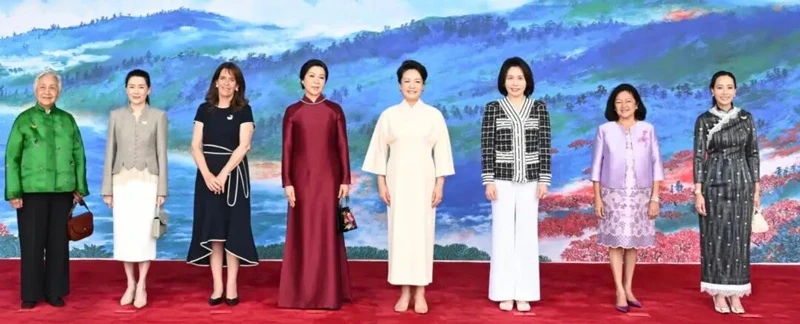
Traditional Chinese fabrics often rely on subtle interest: damask patterns, jacquard weaves, silk, cotton, and linen. From a distance, the surface looks smooth and composed. Up close, the weave reveals its care. That balance matches a cultural temperament often described in terms of modesty, courtesy, and inner strength. The gown uses the same principle, allowing detail to reward attention instead of demanding it.
Dress as Public Language
Clothing works well in diplomacy because it communicates before words begin. A silhouette, a collar line, or a fabric texture can suggest history without turning the wearer into a museum piece. This gown keeps that balance. It is modern enough for a summit, yet rooted enough to signal where its visual grammar comes from.
The crossed collar also shows how confidence can be expressed without excess. There is no need to crowd the design with symbols. One clear structural choice is enough to connect the present with a long lineage of Chinese dress. The result feels composed, direct, and unmistakably local.
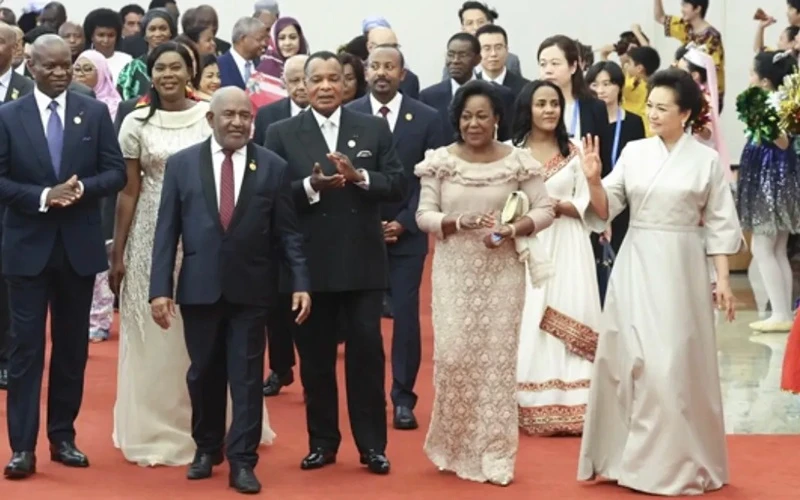
More appearances of this kind would be welcome. When traditional elements enter international settings with care, they help audiences see the elegance of Chinese style on their own terms. The hope is simple: a nation at peace, friendships across borders, and shared progress carried forward with grace.