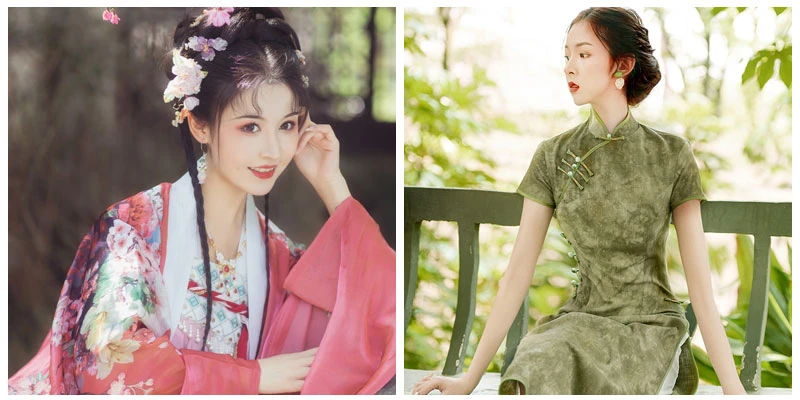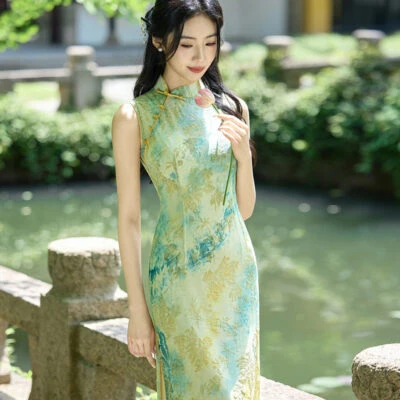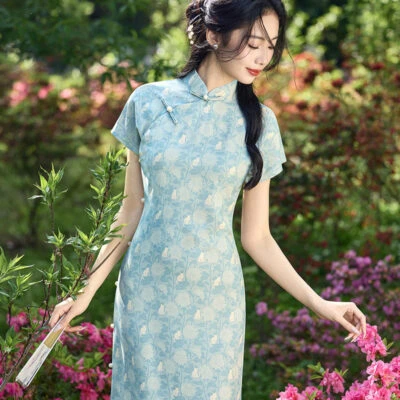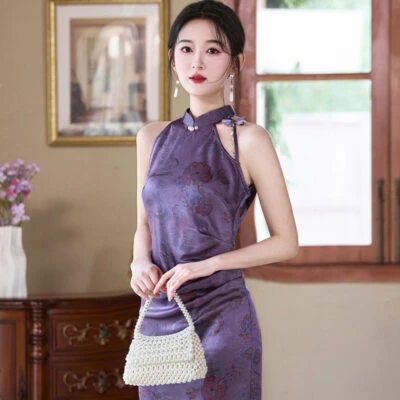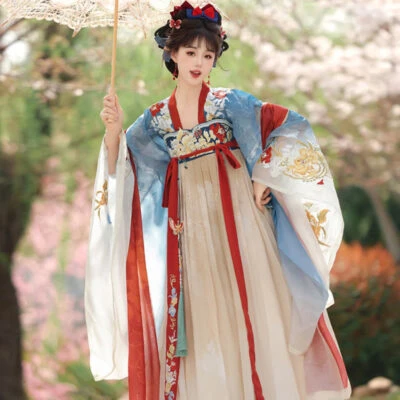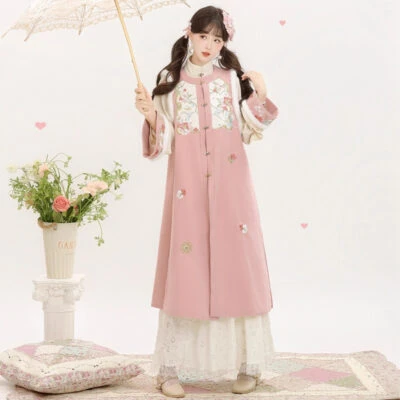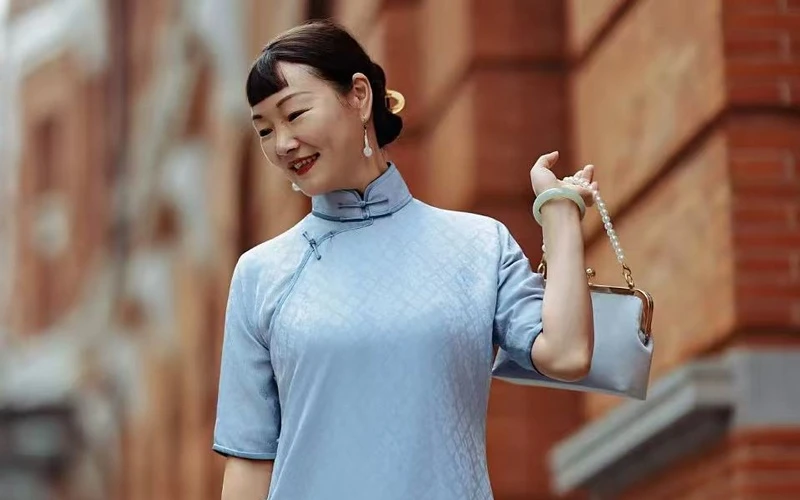
A Qipao can look elegant in a photo and still stay in the wardrobe for years. The usual reason is not the dress itself. It is a quiet list of worries: it will show every curve, it will be hard to clean, or it will look like a hotel uniform. Those worries deserve a straight answer. Fit, care and craft are separate problems, and each has a practical fix. The goal is not to become a different body or a different person. The goal is to choose a Qipao that moves with you and still holds its shape.
Fit Without Squeeze
Many people assume a tighter Qipao looks slimmer. In practice, a tight fit often exposes exactly what you want to hide. A good Qipao does not rely on pressure. It relies on line and proportion. Vertical drape pulls the eye up and down. Horizontal shaping, done through pressing-and-stretching, takes in where needed and releases where needed. The waist reads as a waist; the hip reads as a hip; the fabric does not cling to the body. That is the real meaning of a tailored fit: room to breathe, with a clean outline.
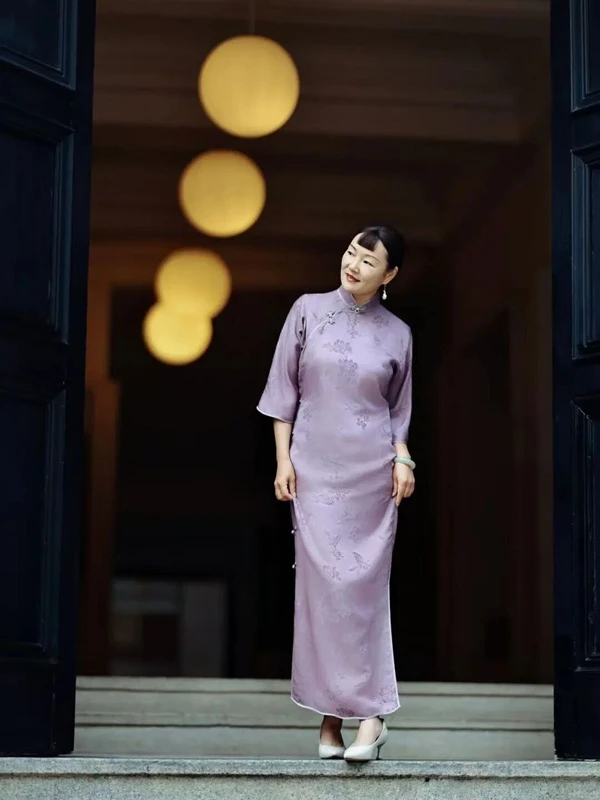
The construction detail matters more than the size label. A one-piece cut with no broken shoulder line and no set-in sleeve lets the fabric travel from neck to arm without a hard seam. The shoulder looks narrower, and the upper body looks lighter. Add a sleeve or break the shoulder, and a seam can stop the eye at the widest point. This is why a smaller tight dress can look heavier than a well-cut Qipao with a little ease.
So if fit is your worry, start with the cut, not the number. Try a one-piece Qipao with an unbroken shoulder. Raise your arms, sit down, walk a few steps. The cloth should follow you, not grip you. A good fit feels calm. It does not announce itself with pulling or tightness.
Care That Lasts
Handmade Qipao does ask for attention. From measurement to finishing, it takes time. Frog closures are knotted by hand. Piping and inlay trim are sewn step by step. Silk and Gambiered Canton gauze breathe well and feel lovely, but they dislike rough washing and hard wringing. That is not a flaw. It is the nature of a refined fabric and a detailed garment.
The simplest care rule is to skip hand washing when you can and use dry cleaning. Silk can hold water marks, and wrong wringing can pull the shape out of the body. Dry cleaning protects drape and sheen. After wearing, hang the Qipao to air. Do not fold and press it under other clothes. Avoid spraying perfume directly on the cloth. Treated with a little respect, a good Qipao can serve for many years.
Care is not a burden when it is planned. Keep one sturdy hanger. Give the dress air after an event. Deal with small marks early. You do not need a museum routine. You need steady habits. A Qipao that is stored well and cleaned wisely will keep its surface calm and its line true.
Craft Over Uniform
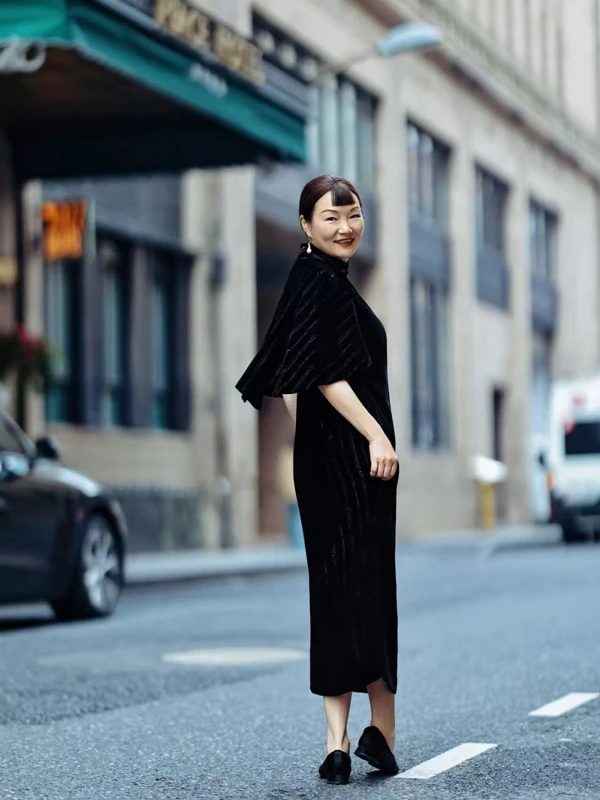
The “uniform” problem usually comes from construction, not from the wearer. Ready-made sizing, misplaced darts, a stiff waistline, thin fabric that collapses, machine-pressed buttons and narrow, rushed piping can make any dress look like staff clothing. If the shape is generic, the body has to fight it. A Qipao with real craft does the opposite. It supports the person inside.
Look at the details before you decide. A one-piece body keeps the line continuous. Handmade frog closures have a slight curve and tension. Piping has a clear width. Pressing-and-stretching gives the cloth memory, so it shapes the waist without pinching. These are small things, but they separate a garment from a piece of work. They also explain why two Qipao in the same color can feel completely different on the same person.
If you want to avoid the uniform effect, choose craft first. Try a one-piece Qipao, check the shoulder line, touch the fabric, and look closely at the closures.