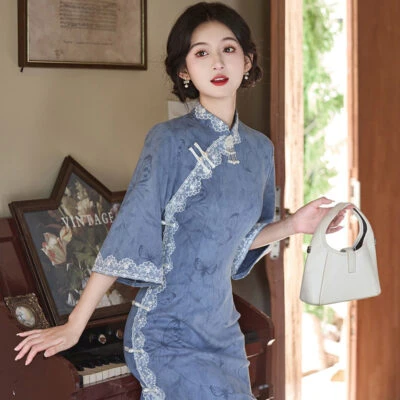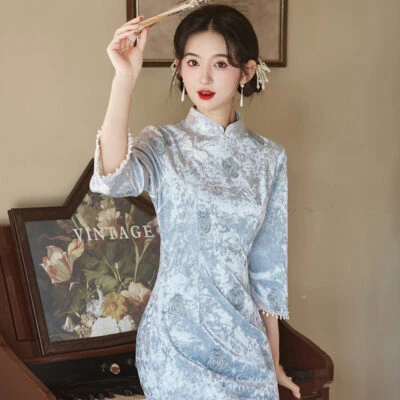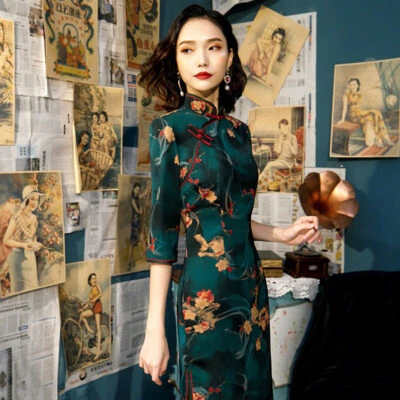
A Qipao rarely speaks from a shop window. It begins to speak when a woman fastens the collar, walks, sits, laughs, and forgets the mirror. One reader once sorted her life into three dresses: one for eighteen, one for her wedding, one for her child’s wedding. She did not call them costumes. She called them markers. That idea stayed with me. Not because every woman needs exactly three, but because clothing can hold memory without making a speech. So here is a question worth asking slowly: which qipao are you wearing now, and what does it quietly ask you to become?
Age Eighteen
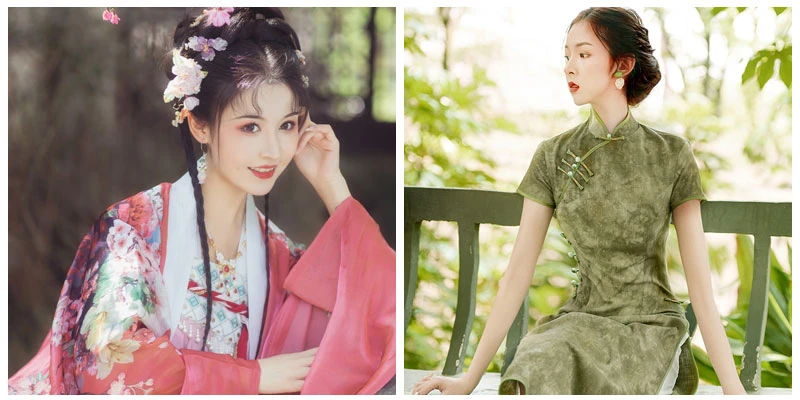
At eighteen, a qipao is less about shape than expectation. The girl stands before the mirror, closes the first frog button, and feels a small sweetness in her chest. Her eyes are bright. Something like pre-romance nerves flutters there. She cannot name the future, yet the dress makes the future feel reachable. That awkward grace has a history. In the 1930s, Chinese schoolgirls wore simple qipaos as uniforms. The cut was plain, the colors quiet, and the effect was upright and bookish. A school uniform became a quiet coat for independence.
At Peihua Girls’ School (培华女中), Lin Huiyin (林徽因) wore a school dress linked to the “new civilized outfit”: clean, modest, and self-possessed. Those girls were not dressing for applause. They were stepping outside as readers and students, and the qipao became the first outer layer of that independent self. The fabric did not announce ambition; it simply made room for it.
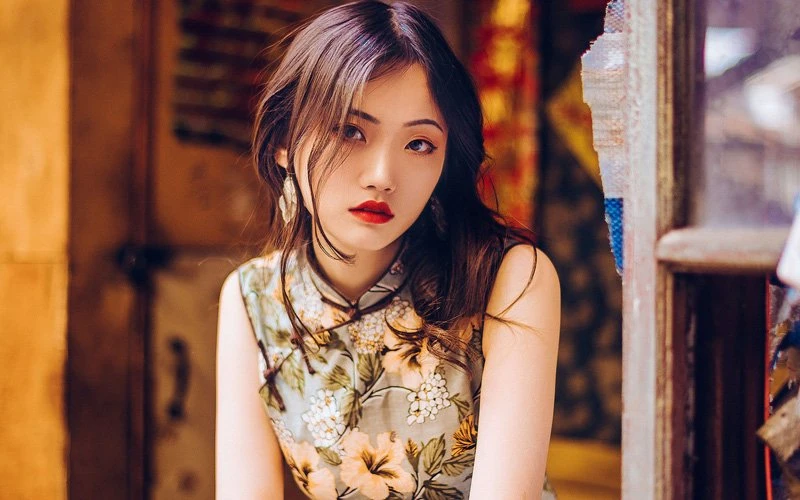
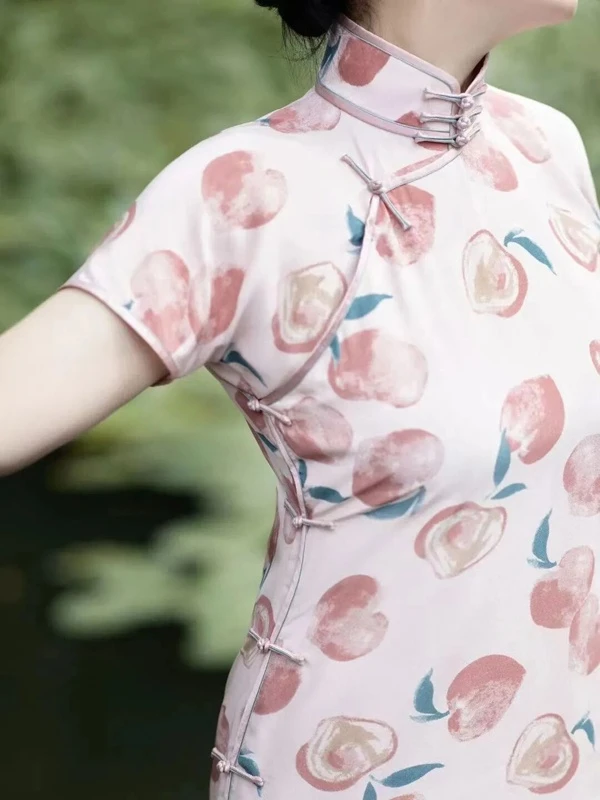
For an eighteen-year-old, keep it simple. Soft cotton or linen, a pale jacquard, a low standing collar, a few frog buttons instead of a dense row. Let the dress match that age’s uncertainty. Because she does not yet know who she will become, she imagines the future with unusual care when she wears it. The qipao does not answer the question. It lets her stand inside the question and look outward.
Wedding Day
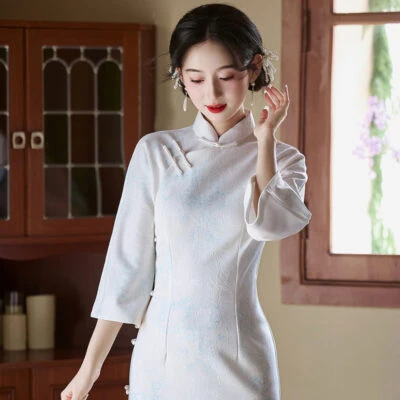
Brides often describe the same moment: the collar closes, the back straightens, and a shy girl becomes a poised woman. The qipao’s structure supports that change. A standing collar keeps the neck tall. A diagonal front follows the body without shouting. Handmade frog buttons run down the throat toward the waist, each one a small piece of a maker’s patience. When the last loop closes, the bride is not merely dressed. She has made a promise to carry herself differently.
Deep red remains the most serious promise in a Chinese wedding. Hidden jacquard patterns may carry plum blossoms and fret motifs, wishes for flowering fortune and completeness. The symbols are stitched into cloth, not printed on a banner. Yet the most moving details are often unseen: the fit across the shoulders, the ease when she bows, the way the hem behaves when she walks. A bride no longer asks only, “Is it pretty?” She asks, “Can I stand, greet, bow, and hold myself in this?” The answer lives in movement.
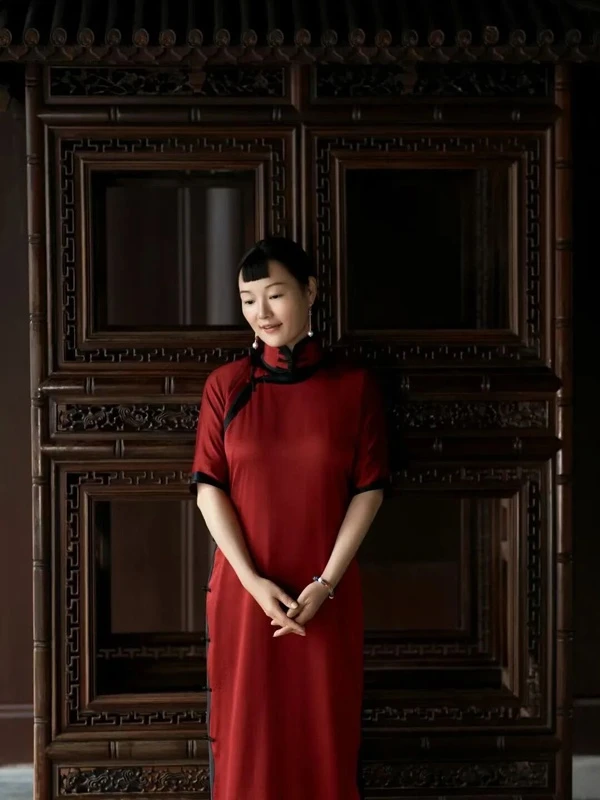
That is why a wedding qipao feels like a quiet handover. A daughter who was cared for becomes a wife who helps hold a household together. The dress does not lecture her about duty. It gives her a shape for calm. Silk, brocade, or a restrained red all can work; the point is not spectacle. The point is that she can feel her own bearing. When she sits beside her new husband, the qipao has already done its subtle work: it has helped her meet the day as herself, only more steady.
Mother of the Groom
Years later, the same woman sits at the elder table. Her child is marrying. What does that qipao wear? A reader gave one word: Ruyi (如意), meaning as one wishes. This dress is not trying to look young, and it is not trying to overpower the bride. It needs the ease that only ordinary days can grow. At fittings, these mothers often ask less about a slimmer waist and more about a lucky meaning. The question has changed because the woman has changed.
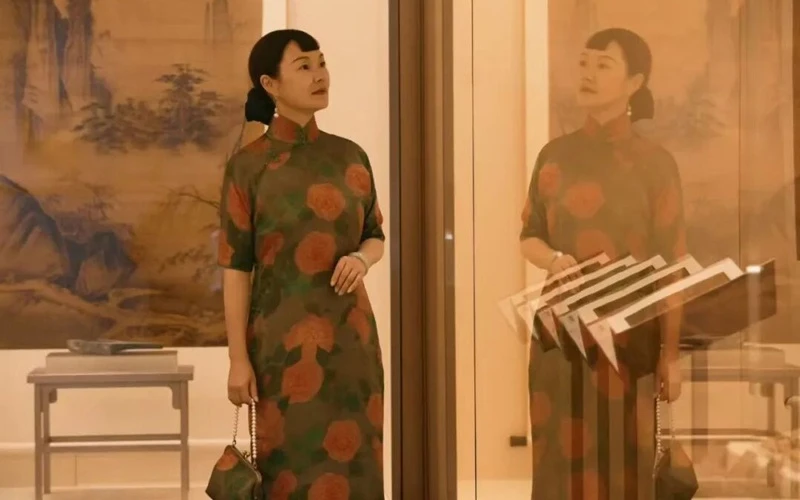
Meaning can live in cut. Many mothers choose a one-piece qipao with no shoulder seam and no set-in sleeve. In traditional tailoring, that choice suggests unbroken family lines and harmony, a blessing for the young couple and a visible sign of peace inside the household. Gambiered Canton silk is a favorite fabric too. It softens with wear and gains character with age, much like a woman who has stopped rushing. The cloth does not sparkle. It settles.
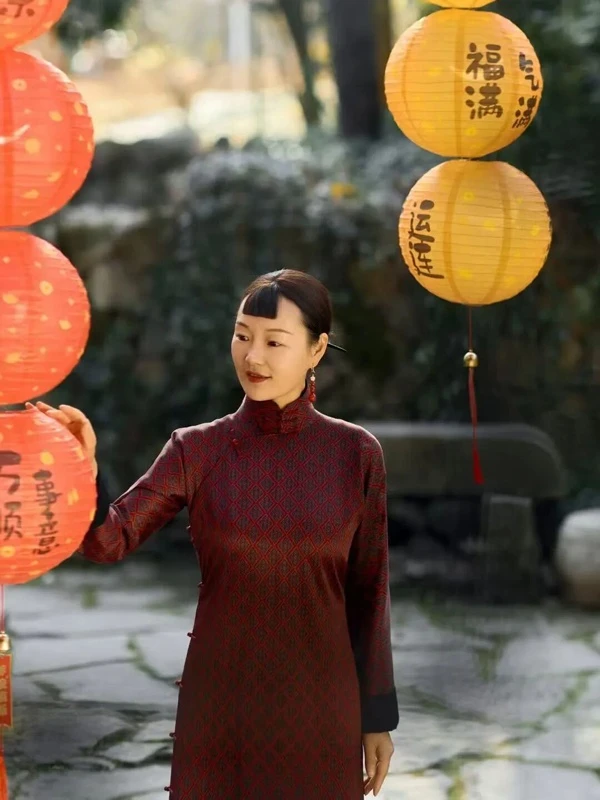
This third qipao carries luck, dignity, and a particular kind of female strength. By this age, a woman’s rarest quality is not youth. It is steadiness after youth. She wears the family’s atmosphere on her shoulders, and children remember it. Eighteen wears expectation. A wedding wears promise. The mother’s dress wears continuity. Three qipaos, three seasons, one woman learning how to stand with light in her eyes and weight in her bones. If you are standing at such a crossing, choose slowly. The right qipao will not hurry you. It will wait until you recognize yourself in the mirror.