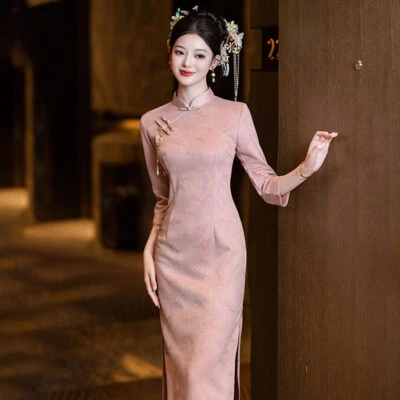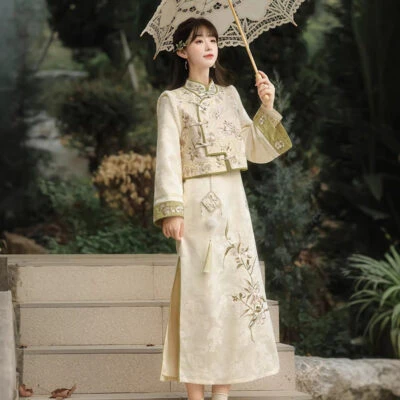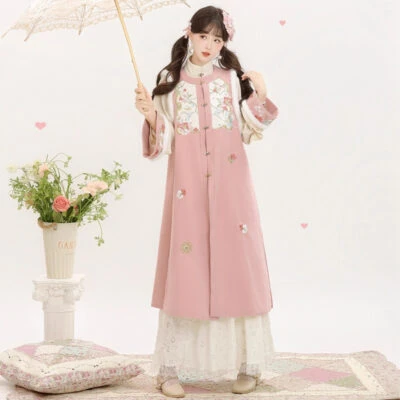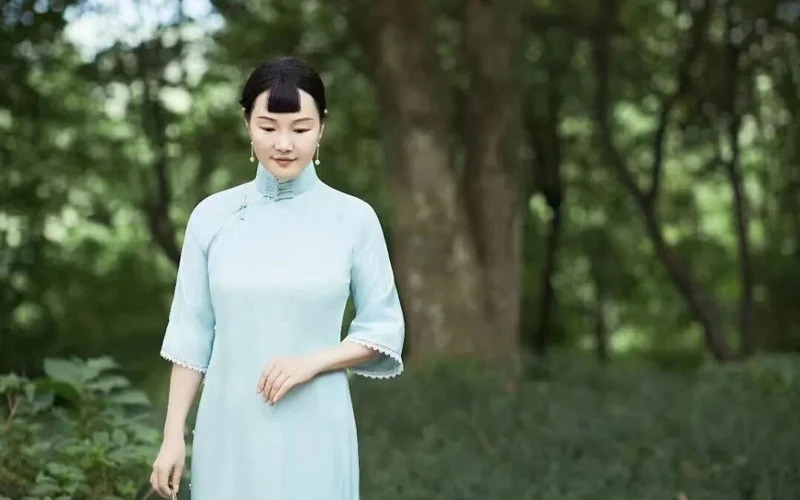
A qipao does not ask for a model’s body. It can follow soft curves, straight lines, broad shoulders, narrow shoulders, a quiet mood, or a bright one. The useful question is not “Can I wear it?” but “Which cut lets me move and breathe like myself?” Before buying, decide your daily style, then check the details. A qipao is clothing for real life, not a costume for a photo. It has no age limit and no duty to please anyone else. Begin with three choices: collar, sleeve, and opening. Try the garment on, walk, sit, and lift your arms. The mirror shows shape; movement shows the truth.
Start With Collar
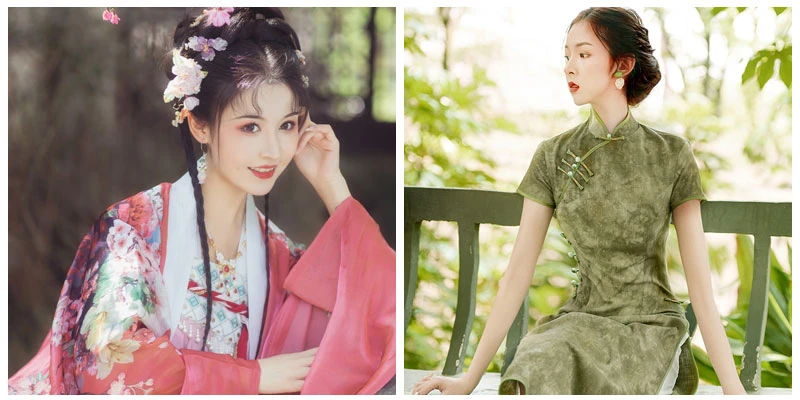
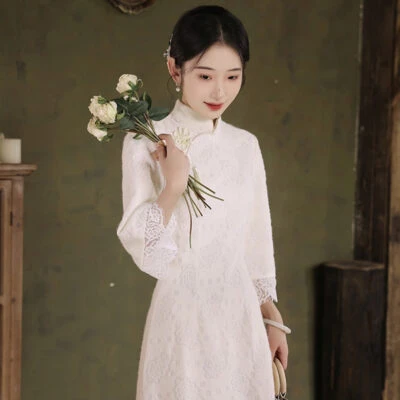
The collar frames the face and sets the tone. A stand collar lifts the posture and looks neat, yet it can feel tight around the neck. A low stand collar is easier for most people. A round face often suits a small stand collar, which keeps the look lively rather than heavy. Deng Lijun (邓丽君), with her standard round face, blended a sweet personal style with a fitted qipao in a way that felt natural, not forced.
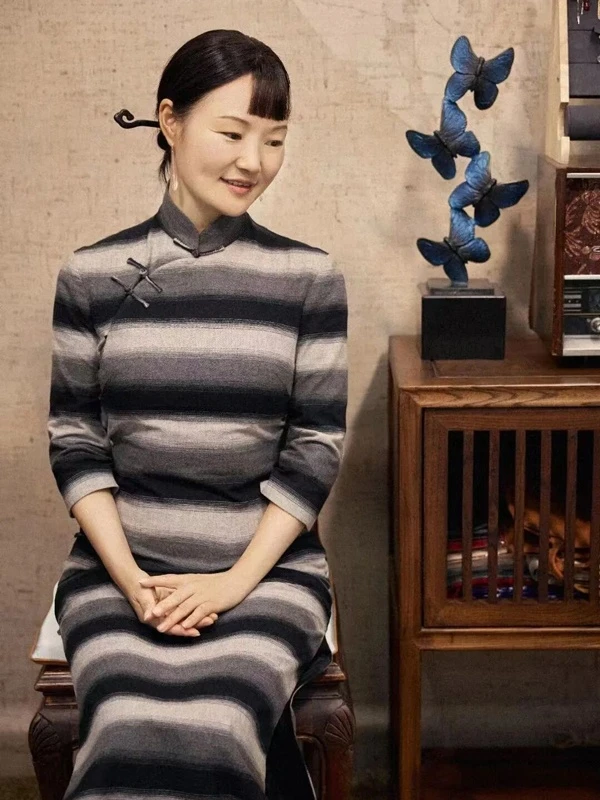
Higher collars need more care. An ingot collar can look cramped in daily wear, so try it before you commit. Collar height also changes how long the neck appears. If your neck feels sensitive, choose a lower edge and check whether you can turn your head freely. A collar that photographs well but makes you hold your chin stiffly will rarely leave the wardrobe.
Match the collar with your hairstyle and the place you plan to wear the qipao. A high collar with an updo can feel formal; a low collar with loose hair can feel relaxed. There is no single correct answer. The better collar is the one that lets you speak, eat, and look around without adjusting it every few minutes.
Test Sleeve Shapes
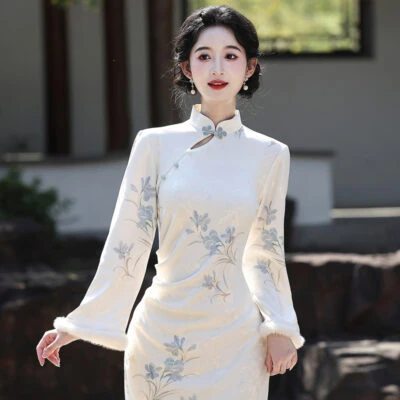
Sleeves change the balance of the whole dress. The flared sleeve is a traditional shape. Eileen Chang described trumpet-tube sleeves in Record of Clothing (更衣记) as floating and light, with a long section of wrist left visible. That image still helps today: a sleeve should add movement, not weight.
Women with sloping shoulders or a petite frame often do well with a flared sleeve and a loose cut. The extra room softens the shoulder line and keeps the body from looking narrow. If a large sleeve feels too dramatic, choose a slightly loose version instead. The aim is balance, not volume. Check the armhole as well; a tight armhole will ruin the ease of even a beautiful sleeve.
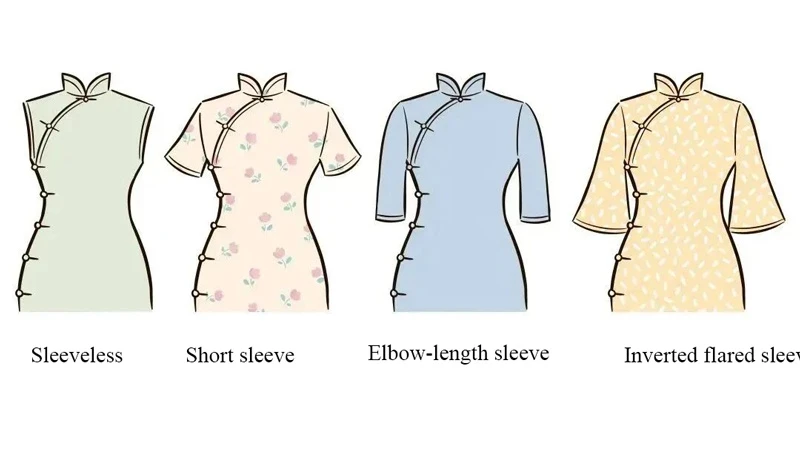
In hot weather, a sleeveless qipao can show a clean shoulder and arm line. Short and medium sleeves are more regular choices, and they can make the arms look slender while improving proportion. Raise your arms in the fitting room. If the sleeve pulls the chest or twists the shoulder, try another shape. Comfort at the armhole matters more than a perfect still pose.
Check the Opening
The front opening affects both look and wearability. Common types include single, double, straight, diagonal, pipa-style (琵琶襟), curved, and no opening. A double opening takes more work: both sides are opened first, then one side is sewn shut. That sewn side is decorative, so the dress wears like a single-opening qipao while looking richer and more formal.
A straight opening is less common. A diagonal opening once paired with large flower buttons, though many modern versions use thinner knots. These details are not just ornament; they guide the eye and change the dress’s character. If you prefer a calm look, keep the buttons small. If you want a stronger focus, let the opening line do the work without adding too many other decorations.
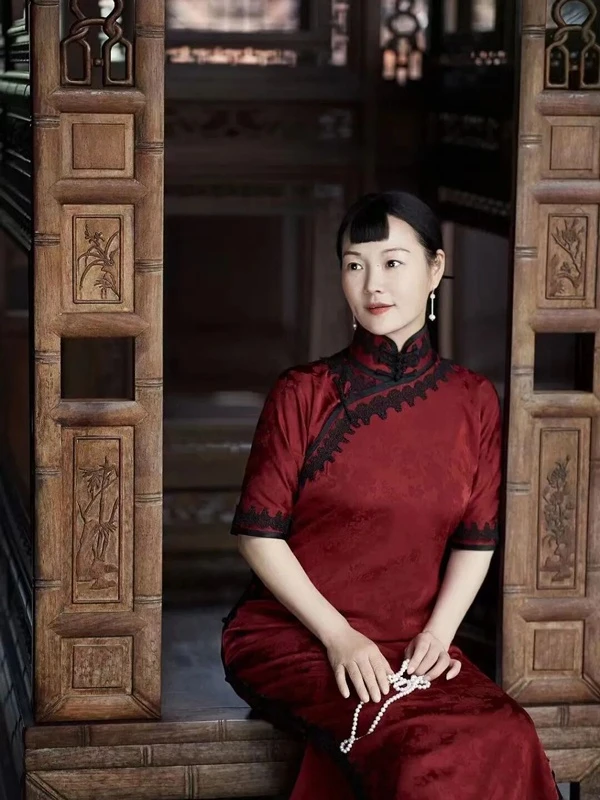
A curved opening looks like an angled “S.” Because the opening is larger, it is often easier to put on. Think about your morning routine: do you want a qipao that slips on quickly, or one that invites a slower dressing ritual? Try sitting and walking in the dress. The right opening should feel secure, not restrictive. Beauty has no age limit; a qipao belongs to any woman who chooses it with clear eyes and a comfortable body.