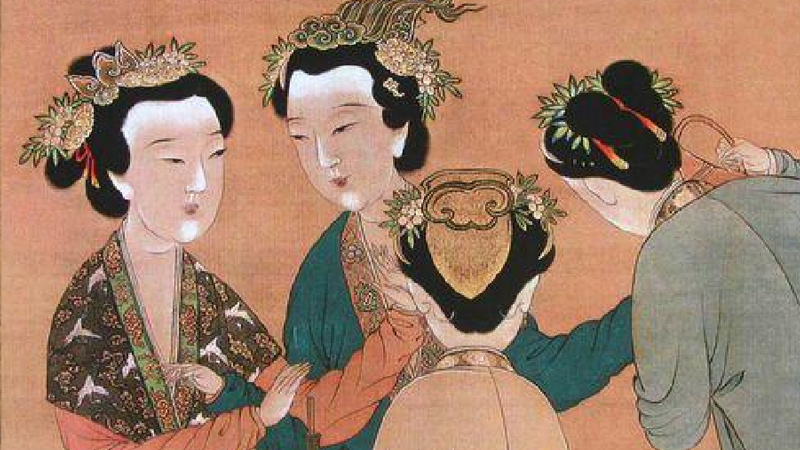
Costume dramas love a striking updo. A noblewoman turns her head, and a tower of braids catches the lamplight. Viewers gasp. Yet those styles were never only pretty. A bun could announce age, marriage, rank, even the mood of a dynasty. In the Shang and Zhou dynasties, hair already carried law and feeling. This article follows the bun through palaces, streets, and tomb paintings, asking one plain question: what did ancient Chinese women really wear on their heads, and why did it matter so much?
Hair as ID
In early China, tying hair into a bun was serious business. The Book of Rites (礼记) records that a noble girl received a hairpin at fifteen. After that ceremony, called Ji Li (笄礼), she was treated as an adult ready for marriage. People believed hair came from parents, so cutting it dishonored them. For men, hair signaled duty. For women, it held memory and love. A child’s double bun wished her a quick growth. A couple’s tied locks promised a shared old age. One small knot could speak before the wearer did.
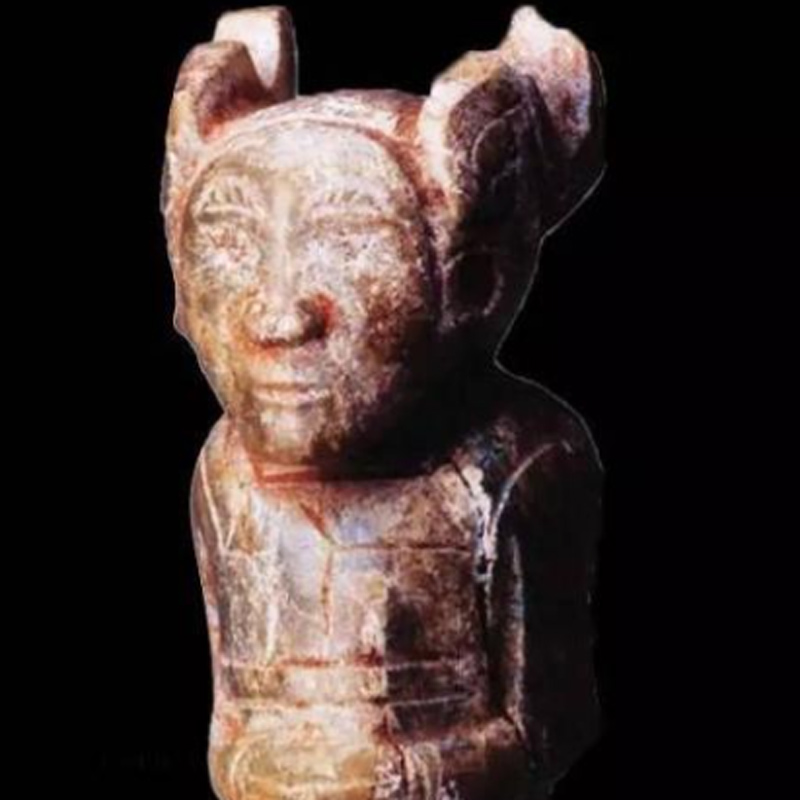
Hairstyles worked like identity cards. A girl in twin buns was young and unmarried. A married woman’s bun showed her new household. Palace women wore height and gold. Farming women wore simple loops that stayed out of the way. In the Han Dynasty, fashion found a scandalous star: Sun Shou (孙寿), wife of the powerful Liang Ji (梁冀). She invented the falling horse bun. It split at the center, swept past the ears, then dropped into a loose knot at the neck. One strand fell to the side. Luoyang (洛阳) noblewomen copied it at once. The look seemed careless, almost tumbling, but every strand was planned.
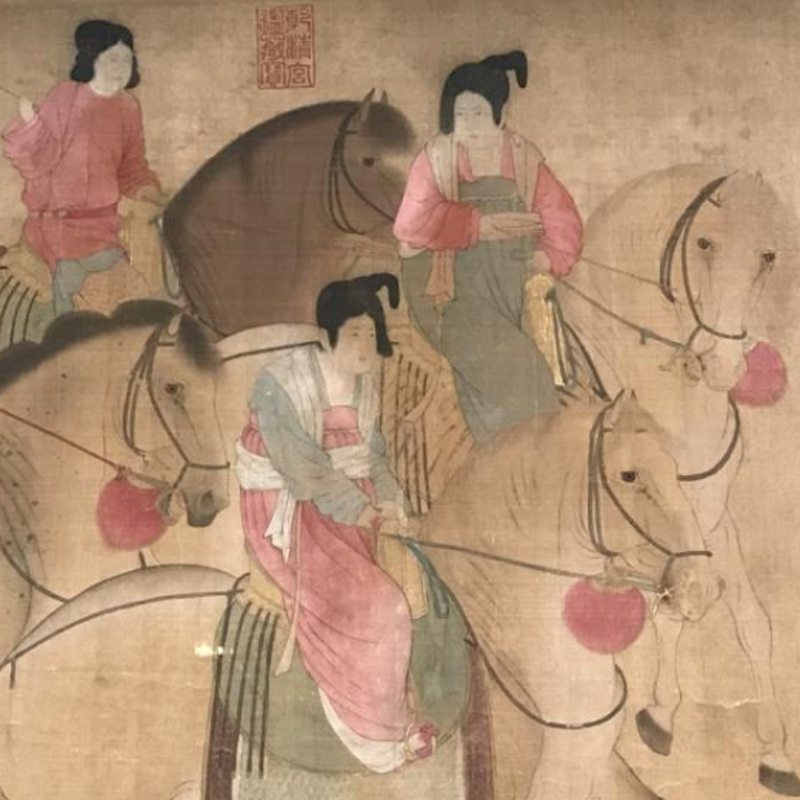
Court life demanded the opposite. High buns rose above the head for sacrifices and rituals. A children’s rhyme warned that when the city loved high hair, the whole realm raised it a foot higher. Such towers needed help, so women used wigs. Records even mention dry hair sent as tribute from the Korean peninsula. Outside the palace, common women chose hanging buns. They were light, cheap, and practical for work. The same era, then, held three languages of hair: dangerous charm, sacred height, and daily ease.
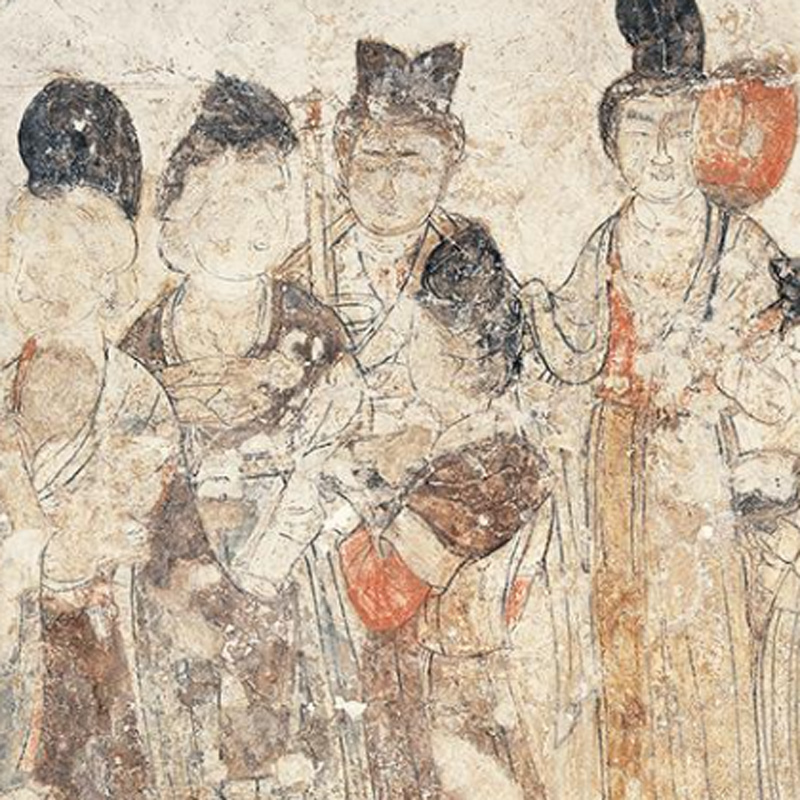
The Tang Dynasty turned hair into an art explosion. Duan Chengshi (段成式) listed more than a hundred styles in his book Jiji Pin (髻鬟品). Modern archaeology has found around 140. Early Tang women liked upward sweeps, such as the half-turned bun, which looked eager and bright. High Tang favored flatter, heavier shapes, like the double-loop immortal-waiting bun, rich with calm power. Late Tang let buns fall lower, a lazy beauty that some historians read as a tired empire. Hair followed the pulse of the age. The half-turned bun began as the Sui lotus-flip. In Tang hands it grew tall, with the top tilting to one side. People called it the single or double blade half-turn, because it resembled a sword half drawn from its sheath. It looked elegant, yet sharp. Costume designers for Flourished Peony (国色芳华) and Chang An (长安三万里) used it on maids and noblewomen alike.
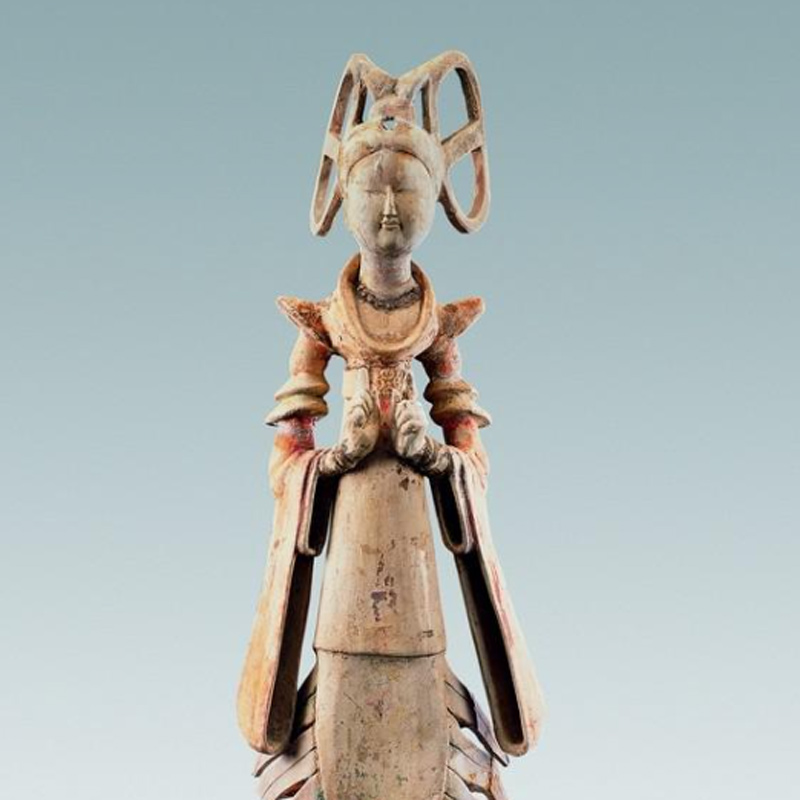
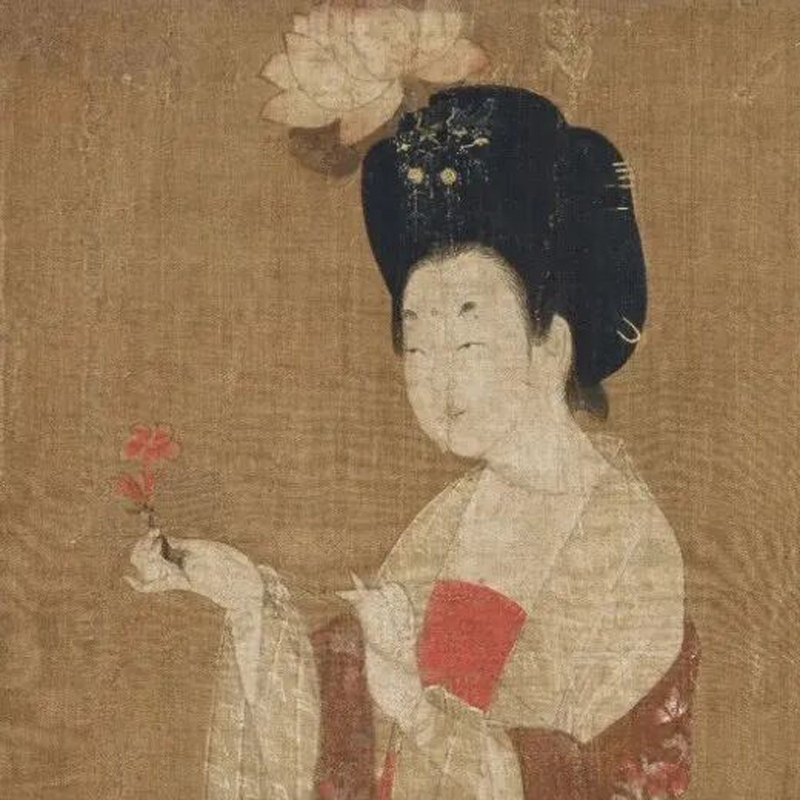
Buddhist statues inspired the spiral bun, a coiled shape linked to holiness and foreign lands. The double-loop immortal-waiting bun was stranger still: hair split into two parts, each coiled into a hollow ring on top, as if a goddess were about to fly. Tang women also piled flowers into their hair. The painting Court Ladies Adorning Their Hair with Flowers (簪花仕女图) shows how blossoms and faces made each other glow. If natural hair was not enough, they wore a false bun built on gold wire, cloth, bamboo, or whalebone. Fashion, clearly, had engineering.
Dynastic Heights
Song Dynasty women pulled back from Tang excess. They still raised hair now and then, but they prized neatness, balance, and quiet dignity. The sky-facing bun gathered all hair on top, divided it into two cylinders, and folded them toward the forehead. Li Yanniang (李艳娘), a concubine of the Later Shu ruler, was said to have invented it to win attention. It later appeared in dramas such as Serenade of Peaceful Joy (清平乐) and A Dream of Splendor (梦华录). In the streets, women wrapped buns in colored cloth. They also loved crowns, including flower crowns, round crowns, and white-horn crowns.
Later dynasties split into two directions. Ming Dynasty women wore the carefully woven bun, built on silver and gold thread, then pinned it in place. Qing Dynasty elite women pushed toward spectacle. The large wing headdress and the peony head grew wide, heavy, and crowded with ornament. Yet even the grandest shape followed the same rule as the simplest knot: it told strangers who you were, what you could afford, and where you belonged.
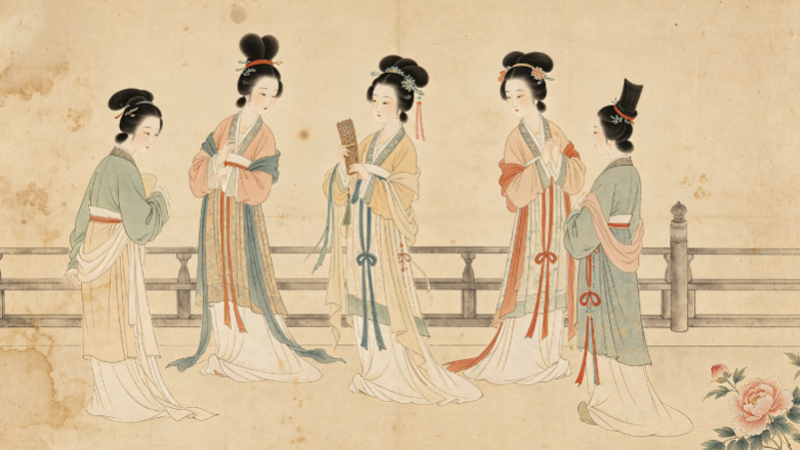
Looking at these styles today, the skill is startling. Women worked without mirrors, gels, or machine-made pins. They used combs, oil, thread, and patience. In a few inches of black hair, they recorded beauty, rank, and time. The next time a costume drama fills the screen, watch the head before the face. Is that a falling horse bun from Han? A half-turn from Tang? A sky-facing bun from Song? The answer may reveal the whole story.