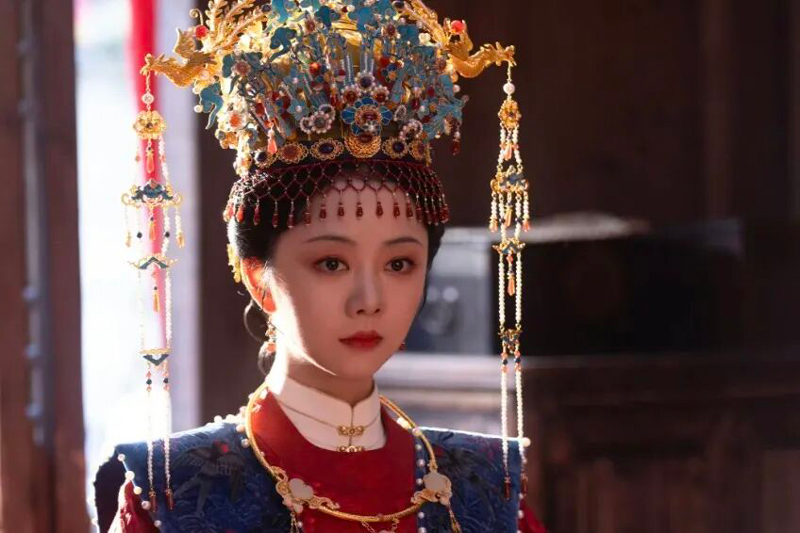
A wedding preview for Against the Current (兰香如故)started a costume debate. Did Lin Xiuru (林绣茹) and Xu Lanxiang (许兰香) wear the same crown? At first, the two bridal looks seem close. Look longer, and the difference appears. In the Ming dynasty, a wedding crown was not pure decoration. It announced rank. One bride could enter a first-rank titled house; another could marry a common ranked official. The crown made that gap visible. So when viewers say a woman’s marriage can be read from her headwear, they are half joking, half serious. The real clue is not the dress. It is the bird, tail, and number on the crown.
Crowns, Not Combs
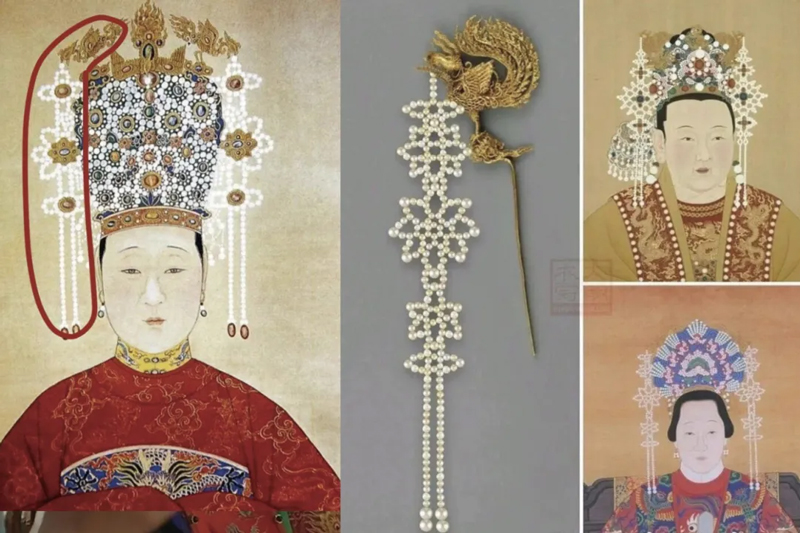
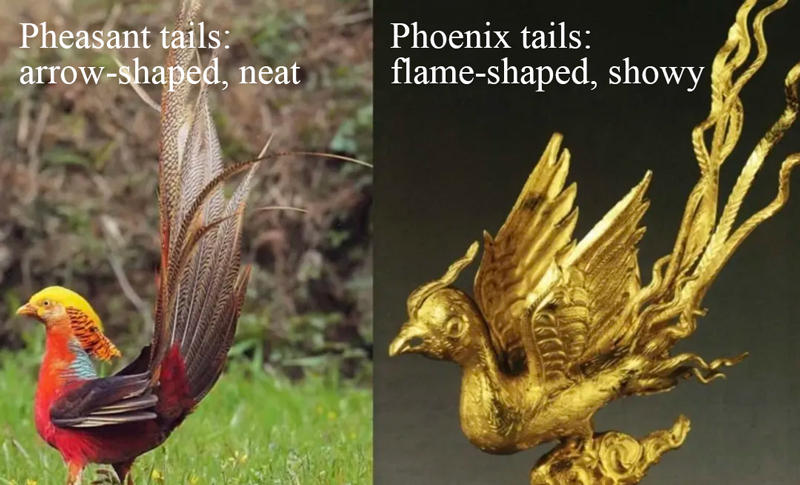
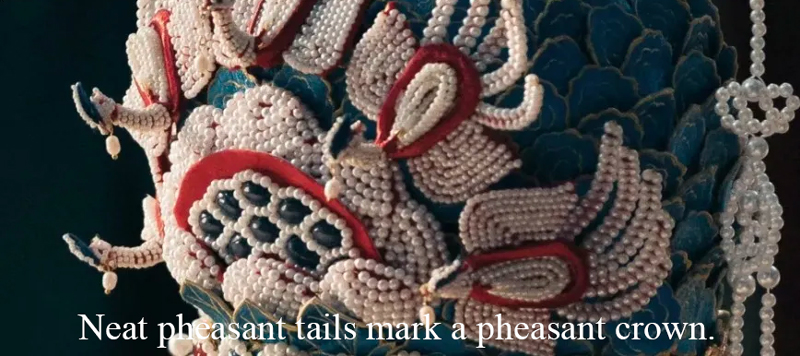
Many people call every grand wedding crown a phoenix crown. That word is often wrong. A true phoenix crown was reserved for the empress and the crown princess. Consorts, princesses, and wives of titled officials wore pheasant crowns instead. The fastest way to separate them is the tail. A phoenix tail is flame-shaped, bold and showy. A pheasant tail is arrow-shaped, neat and formal. In one drama still, the tail is regular and upright, so the crown is a pheasant crown. The key is the main bird, not the amount of gold.
In Against the Current, Lin Xiuru wears a five-pheasant crown. It suits a first-rank titled lady, so its presence is rich and commanding. Xu Lanxiang wears a three-pheasant crown. That belongs to the wife of an ordinary ranked official. Once you know the code, the rank gap is easy to spot. Yet a good marriage is not only about official grade. Character, family behavior, health, and daily respect matter just as much. The crown shows the formal status a woman entered, not the full quality of her life. The drama simply uses that detail to make viewers look closer.
Pheasant crowns followed hard rules. The number of pheasants was always odd, because each number matched a rank. More birds meant higher status. Gold, pearls, and gems were added with control, not stacked without thought. One crown could carry a woman’s dignity. This helps explain why “phoenix crown and ceremonial stole” became an ideal for many traditional brides. It was not just beautiful clothing. It was a rare sign that a woman had reached the top of a female rank system. Even today, that image still feels powerful on screen.
The debate is not about fashion rivalry. The two crowns are similar because they share a Ming-style shape: dark body, gold sides, beaded birds. But the number changes the message. A five-pheasant crown says first rank. A three-pheasant crown says lower official wife. Viewers may see sisterly tension, but the costume designer is speaking in rank. This is why the preview caused such strong reactions. People sensed status before they could name it.
Rank and Change
High-ranking titled ladies wore matched sets. The crown centered on pheasants. The ceremonial stole, or Xiapei (霞帔), used bird patterns by rank: pheasants for first and second rank, peacocks for third and fourth, mandarin ducks for fifth, and smaller long-tailed birds below. Pheasant patterns were the hardest to earn. They were limited to princesses and top noblewomen. An ordinary official’s family could not borrow them. Surviving Ming portraits also show paired pendant plaques. These were strings of beaded knots, hanging with weight and symmetry. Only empress, consorts, and titled ladies could wear them. Different ceremonies also required different crowns and ornaments, with no casual mixing.
Craft made these crowns rare. Ming examples often used kingfisher-feather inlay, beaded pheasants, and a pair of gold pheasants on the sides. A famous piece is the Jiajing (嘉靖) five-pheasant gold crown held by the Guizhou Museum (贵州博物馆). Its base is pure gold. It also borrows an older, retro style, with curved side wings that sweep downward. The design is unusual and finely made. Such objects were not wedding accessories for everyone. They were controlled symbols, worn in specific ceremonies, and stored with care. Their survival today is a rare window into Ming rank and taste.
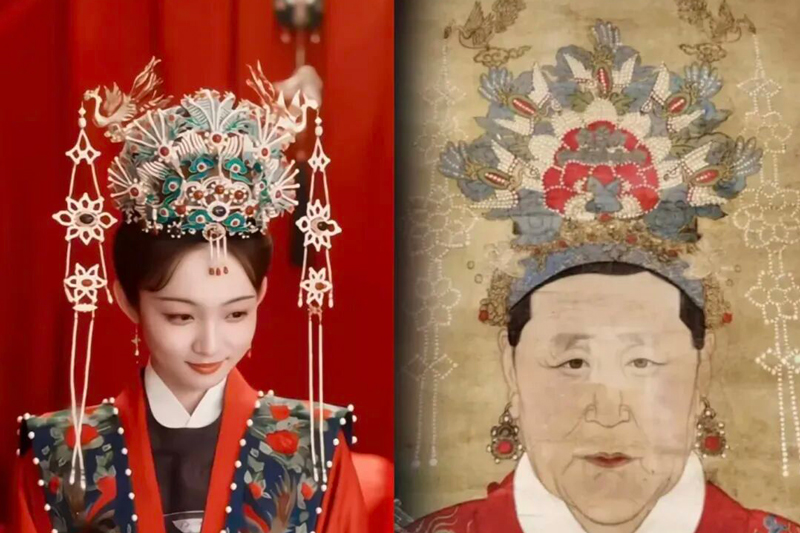
Ming rules were severe. Private making and wearing of phoenix or pheasant crowns was banned. Today, only four complete Ming phoenix crowns survive, all kept in museums in Beijing. Complete pheasant crowns are even rarer. In the Qing dynasty, especially later, rank rules loosened. Wealthy commoners could order such crowns. Phoenix crowns became auspicious wedding wear, so many Qing examples remain. Their look differs: Qing crowns often leave the hair uncovered and feel busy, while Ming crowns are symmetrical, bird-centered, and calm. In the drama, the five-pheasant crown gives Third Sister full glory. Women once fought for rank not only for a man, but for that unique honor. Do you like such traditional wedding dress?
The Qing shift also changed memory. Because many Qing crowns survived, people often imagine all Chinese wedding crowns as busy and red. Ming pieces tell another story: fewer, stricter, quieter. Their symmetry and bird focus reflect a courtly eye. When a modern drama borrows that language, it invites viewers to compare past and present. A crown can be pretty, but it can also be a document. That may be why the wedding scene feels tense.