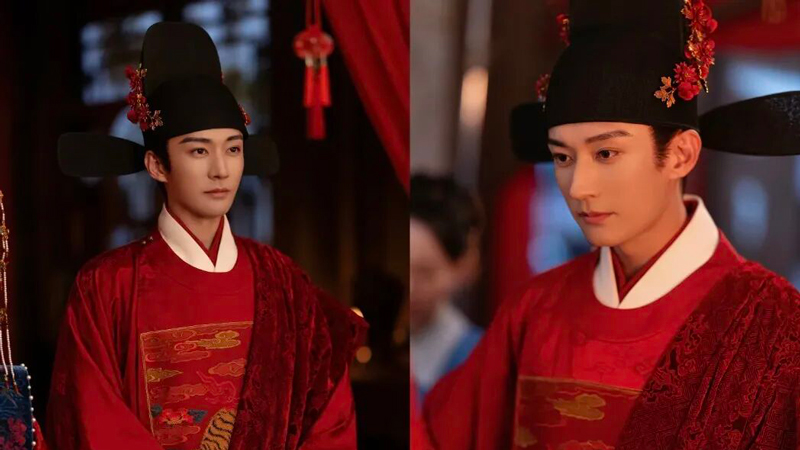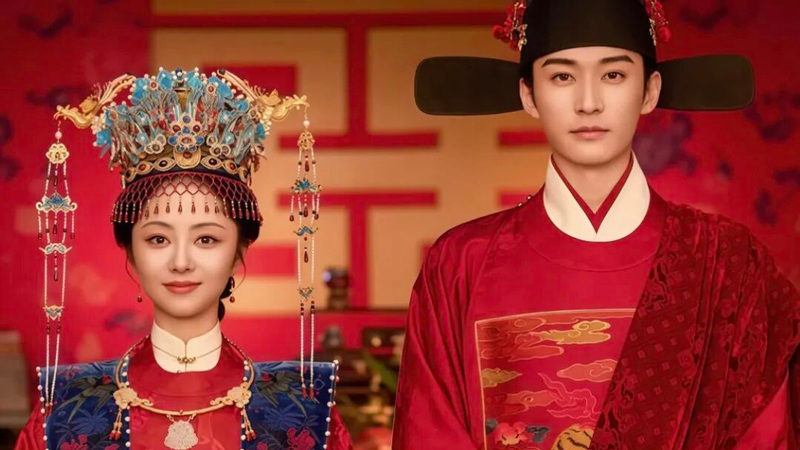
In Against the Current (兰香如故), a wedding scene has caused a small storm. Liu Xueyi (刘学义) plays Elder Lin (林). He marries Xu Lanxiang (许兰香), played by Tan Songyun (谭松韵). On his left shoulder sits a square of red velvet. Viewers ask: is that a prop mistake? Why velvet? Why a shoulder cloth at all? The answer reaches back to Ming dynasty wedding custom, not to a costume department error. The piece is called Pihong (披红), or sometimes Guahong (挂红). It marked honor, joy, and social announcement. Once you see its history, the strange red square becomes less random and more like a quiet rulebook stitched in cloth.
Ritual Red
Pihong began as a badge for scholars. Men who passed the imperial exams wore red across the body after their names were posted. A top candidate, a Jinshi (进士), could ride through the streets with flowers in his cap and red silk on his shoulders. A Ming novel, Joyful Enemies: Chapter 23 (欢喜冤家·二十三回), even describes a scholar in red and flowers, touring the streets before a banquet. Later, the same gesture moved into other happy events: weddings, birth banquets, school promotions. Ming society loved red for auspicious occasions, so the drape carried luck and public respect. It told strangers, without a word, that this person stood inside a moment worth noticing.
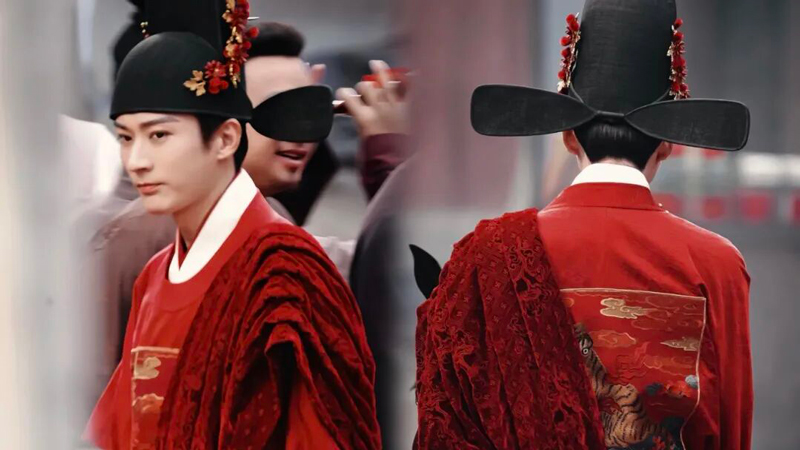
Material mattered. Old Pihong usually used thin silk, satin, or brocade. Those fabrics fall close to the body. They do not look puffed or heavy. Velvet changes the silhouette. It absorbs light, adds thickness, and can look like a modern fabric shop sample. In the same series, another wedding pair uses brocade on the groom’s robe, and the result feels closer to period style. So the question is fair: the custom is real, but the chosen texture may pull the eye away from the ritual. A red drape should signal ceremony, not costume malfunction. That tension explains why one shoulder cloth sparked so many comments.
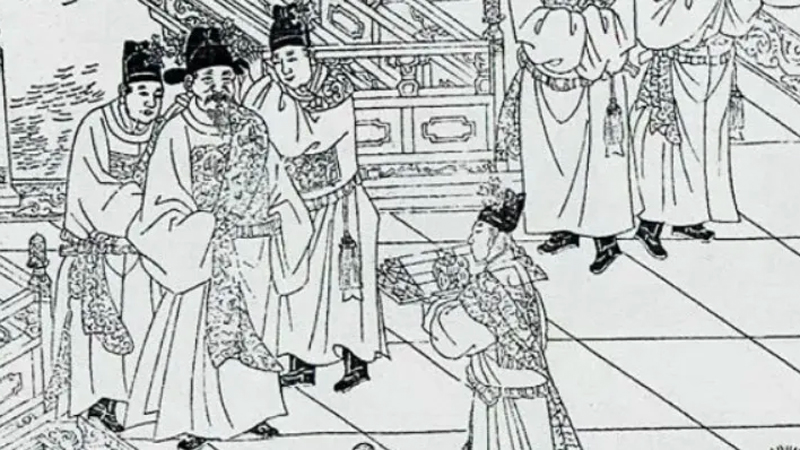
Some historians and costume fans argue Pihong belonged with everyday robes, not full ceremonial dress. An exam candidate waiting for official robes might wear a Confucian scholar’s robe, a scholar’s cap, and a red drape outside. Once the court granted proper robes, the extra red symbol was no longer needed. In that reading, Pihong was a temporary marker: a visible promise that formal recognition was coming. Later, ordinary weddings borrowed the same logic. A groom in common clothes could add a red drape and instantly become festive. The cloth did not replace the outfit; it transformed the meaning of the outfit.
Cloth And Custom
In Ming folk weddings, red drapes became common. In Qingyang (庆阳), before the bride entered, the groom’s uncles or other outside relatives tied the Pihong on him by hand. This was not a casual favor. It was a ritual. One drape meant a bright future. If three outside families took part, the rules could get specific: two on the left shoulder, one on the right. After the tying, the banquet manager had to invite those relatives to eat and drink. The gesture mirrors the red veil a bride’s family once placed over her head. Both cover a person in luck before a life changes.
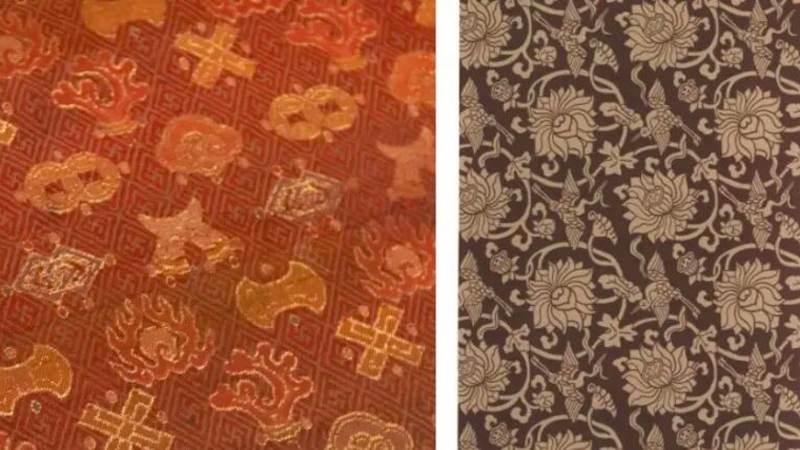
Patterns carried messages too. Wedding drapes often showed pomegranates, a wish for many children. Exam success used eight treasures or mixed treasure motifs, pointing toward a smooth career. A common choice was scrolling lotus, a sign of wealth and continuity. When pattern and red cloth joined, people believed the blessing doubled. These were not random embroidery choices. They were a visual language for guests who could read cloth as quickly as text. A groom’s shoulder became a small billboard of hopes: fertility, rank, money, peace, and the family’s wish to be seen as fortunate.
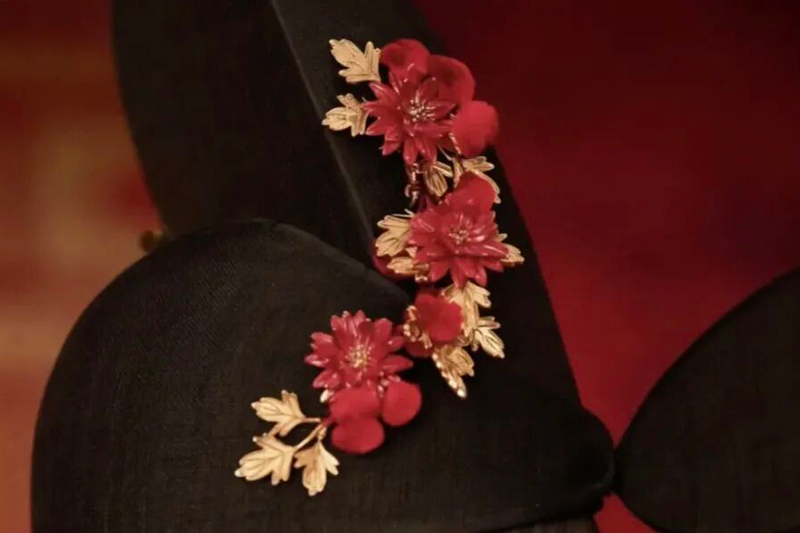
Men also wore Zanhua (簪花), paired flowers fixed on both sides above the cap. A local official, a senior relative, or a friend could pin them on. Gold and silver versions showed wealth; silk flowers offered a cheaper path. The flowers and the red drape worked together. One announced joy, the other added beauty and rank. Together they made the groom look chosen, not merely dressed. In a society where clothing rules were strict, these additions let ordinary families borrow the visual power of official celebration. The result was a personal ceremony that felt larger than the household.
Today Pihong has not vanished. It hides in graduation dinners, wedding banquets, and award ceremonies. The big red ribbons and chest badges worn by students or honored guests carry the same urge: mark a happy milestone with China red. Many people never connect a modern ribbon to a Ming shoulder drape. Yet the habit remains. A pinned flower is easy. A proper drape feels slower, more formal, and more intentional. It asks someone to stand still while relatives tie luck onto the body. That small pause is why the old custom still works. It turns a private success into a scene others can witness.