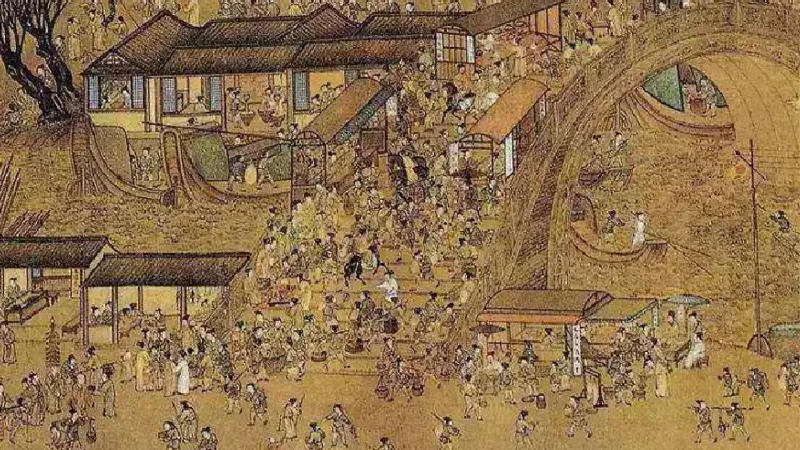
Night falls. Modern cities glow with screens, delivery bikes, and shops that never seem to close. We treat electric light as ordinary. Yet for most of Chinese history, darkness arrived with a closing drum. No phones, no WiFi, no midnight convenience stores. What did people do after sunset? Their answers depended on rank, money, and dynasty. A farmer’s night, a poet’s night, and an emperor’s night could belong to different planets. The story of ancient nightlife is really a story about who could move, who could see, and who could afford to stay awake.
Gates Close Early
Before anything else came curfew. From the pre-Qin era, Chinese cities limited movement after dark. A night officer described in the Rites of Zhou (周礼) watched for illegal walkers. The rule protected order, controlled fire, and guarded against rebellion. In the Tang capital, the system became almost mechanical. Chang’an was laid out like a chessboard, with residential wards separated from markets. At sunset, drums rolled. City gates and ward gates shut. Six hundred beats closed the streets; four hundred beats opened them at dawn.
Anyone caught outside could be charged with night walking and beaten twenty times. Even an official could not talk his way out. Each ward was a walled block, and at night every block became a small locked island. Lights inside might burn, but the street belonged to guards and watchmen. For merchants, travelers, and wine lovers, this was frustrating. For rulers, it was comforting. A silent city was easier to count, tax, and control.
Yet the system had cracks. The most famous exception came during the Shangyuan Festival (上元节). For three nights around the fifteenth day of the first month, the Tang court lifted curfew. Lanterns filled the avenues. Rich and poor mixed in the streets. For ordinary people, this brief window may have been the year’s brightest night. Most evenings, however, the closing drum was final. The city did not become empty; it became private.
Light Was Luxury
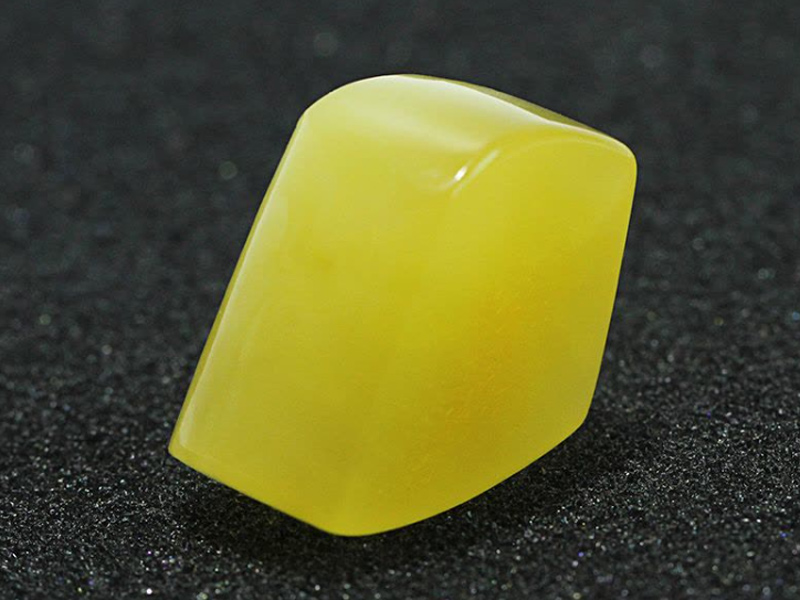
Even if a person could go out, seeing was another problem. Artificial light cost money. Oil lamps go back to the Shang dynasty, but early lamps burned animal fat, which was expensive. For a long time, bright rooms belonged to nobles and rich merchants. Candles were worse. Han honey wax candles and later tubular candles in the Tang and Song were luxury goods. One New Year’s Eve, Emperor Taizong (唐太宗) wanted to show off by lighting the palace. Empress Xiao (萧皇后), who had lived through the Sui court, remarked coolly that Emperor Yang (隋炀帝) used to burn agarwood in the palace, two hundred carts in one night.
Ordinary households used small, smoky lamps and tried to save oil. A breakthrough came with better ceramics and cheaper lamp designs, often called oil-saving lamps. They reduced waste and made evening reading, sewing, and conversation less costly. Cities also produced more oil, wicks, and candles as trade grew. Light did not become free, but it became less rare. This mattered for nightlife. A street is only as lively as its lamps. A market is only as safe as its lanterns. A scholar’s night is only as long as his oil.
Light also changed behavior. Bright light allowed work, gambling, gossip, and theater. Dim light encouraged early sleep. In wealthy homes, lamps became decoration and status symbols. In poor homes, one flame might serve several people at once. When we imagine ancient nightlife, we should not picture a uniform glow. We should picture islands of light in a sea of darkness, each island paid for by someone.
Markets After Dark
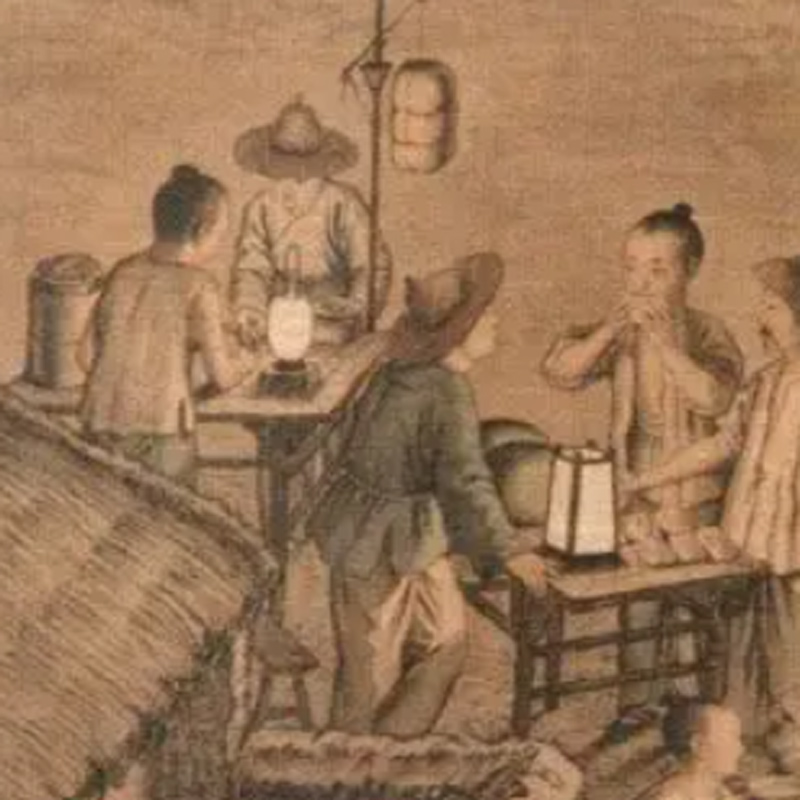
Commerce hated curfew. As early as the Eastern Han, night markets began to appear. The thinker Huan Tan (桓谭) recorded a gathering in Bin (邠) where people met at night to trade. It may have been small, but the word “night market” had arrived. During the middle and late Tang, enforcement loosened. Poet Wang Jian (王建) described Yangzhou (扬州): thousands of night lamps lit the clouds, and red-sleeved customers crowded tall towers. These markets were unofficial and vulnerable. A mysterious “ghost market” also existed, where lights were forbidden and goods were often shady.
The real turning point came in the Song. Song Taizu (宋太祖) ordered that the capital’s night market should not be banned until the third drum. Song Renzong (宋仁宗) went further, breaking ward walls and allowing shops along streets. Curfew did not disappear in law, but it faded in practice. Kaifeng (开封), the Northern Song capital, held over a million people. Its night market was enormous. Dreaming of the Splendor of the Eastern Capital (东京梦华录) describes the Zhouqiao (州桥) market closing near the third watch, then reopening before the fifth. That left only about two hours of quiet. On Horse Street, carts and horses packed the road so tightly that people could barely stand still.
Song nightlife offered more than food. Entertainment quarters hosted storytellers, wrestling, music, and drama. Even Emperor Renzong was said to slip out as an enthusiastic spectator. Teahouses, wine houses, snack stalls, and performance stages kept different hours, so the city never fully slept. By the Ming and Qing, night markets spread to more towns. Hangzhou had a North Gate market said to shine like daylight. In Tongzhou (通州), dozens of horn lanterns hung outside shops, turning the street bright. What began as illegal trading had become a normal part of urban life.
Banquets and Darkness
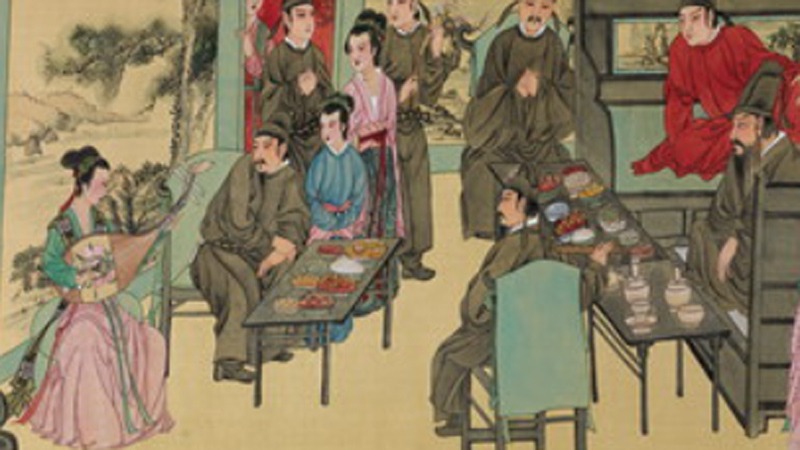
For the rich and idle, night was for art. The most famous image is The Night Revels of Han Xizai (韩熙载夜宴图), a painting from the Five Dynasties and Ten Kingdoms period. It shows Han Xizai<, a Southern Tang official, hosting guests at home. Pipa music, dancing, wind instruments, and conversation fill the scene. A single banquet could include as many segments as a modern variety show. Such evenings were not just parties. They were performances of taste, power, and connections. A host who could afford lamps, food, musicians, and servants turned darkness into a stage.
Writers made their own kind of night. Li Bai (李白) drank alone under the moon and invited it, with his shadow, to become three companions. Du Fu (杜甫) attended a night banquet and wrote of thin moonlight in windy woods and a quiet qin covered by dew. Su Shi (苏轼), unable to sleep when moonlight entered his window, walked to Chengtian Temple to find Zhang Huaimin (张怀民) for a stroll and talk. Cao Pi (曹丕) remembered a trip to Nanpi (南皮) with friends, where lofty talk pleased the heart and sad zither music pleased the ear. A lamp, a pot of wine, and a few close friends were enough to outlast the long night.
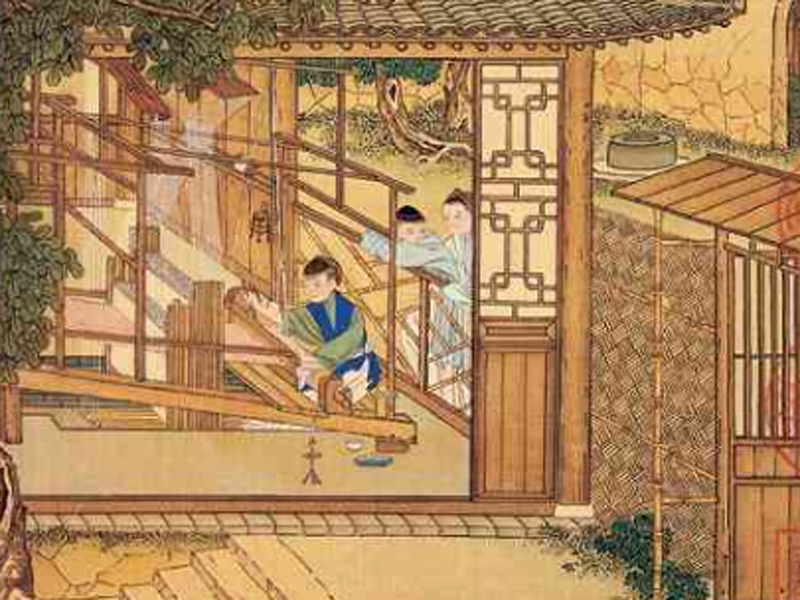
Most people, however, did not have such evenings. For farmers, the rule was simple: work at sunrise, rest at sunset. After a day in the fields, sleep was the main nightlife. Women often wove cloth. A Han custom called night spinning let women gather in winter to spin hemp together, saving lamp oil and sharing skills. In peaceful Ming and Qing years, village opera during festivals might be the year’s great night out. Through every dynasty, the night watchman walked with a clapper or gong. He divided the night into five watches, about two hours each, and warned of fire or theft. His sound was the only public night service many people knew. Bright lanterns belonged to a few. For the many, darkness and silence were the ordinary background. When we enjoy neon streets today, each lit window is a small victory over that old curfew.