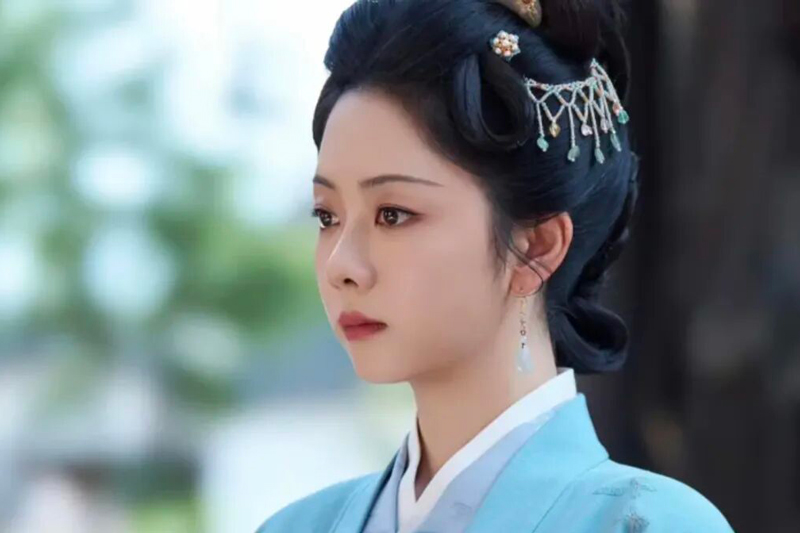
Viewers of Against the Current (兰香如故) keep spotting a delicate net of tiny pearls and jade pinned to women’s updos. Noble girls wear it. Xu Lanxiang (许兰香) wears it after she becomes mistress. Fans simply call it a bead net. Does this ornament have a real past, or is it pure costume design? It has a name: the curtain comb. Its family tree reaches back to Tang, Song, and Ming jewelry with hanging strings. The screen version is polished, but the idea is older than the camera.
A Real Headdress?
The curtain comb is clever because it is not locked to one spot. Its size can shift with its place on the head. Often it appears as two pieces near the temples, acting as sideburn covers. It can also sit behind the bun, where hanging strands hide loose hair and press the updo down. That double duty explains its appeal: decoration and control in one object. A stylist can make a character look soft, formal, or wealthy without changing the whole hairstyle. The piece moves with the wearer, not against her.
Materials tell a social story. Pearls, jade, gold, silver, and glass beads are strung into small sheets. Such work costs money. On screen, the piece quietly marks a woman’s household comfort before marriage or after it. It does not shout. Up close, however, the mixed shine suggests taste, budget, and careful grooming. A plain hairpin may hold a bun, but this ornament advertises that someone has time, servants, and access to fine goods. In a silent way, it tells viewers who can afford softness.
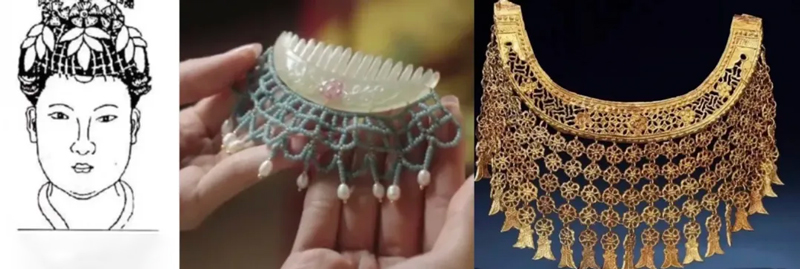
Historical clues support the shape. Tomb finds, comb-back ornaments, and sideburn covers from Tang, Song, and Ming periods show related thinking. Paintings and poems mention strings of beads beside hair. No single surviving object needs to match every drama prop. Costume teams combine evidence with invention. They keep the logic: light beads, flexible placement, and a built-in fix. That mixture lets a modern show feel old without becoming a museum copy. The goal is mood, not a exact replica.
Designers also love how it behaves on camera. A large gem can swallow a face. A beaded net adds texture, movement, and shadow without blocking expression. In close-up, tiny highlights travel across the strands. In wide shots, the ornament reads as a dark, elegant line against hair. It gives actresses a visible status marker while keeping their features clear. That balance is useful in long palace scenes, where every gesture and glance must still reach the audience.
How Does It Hold?
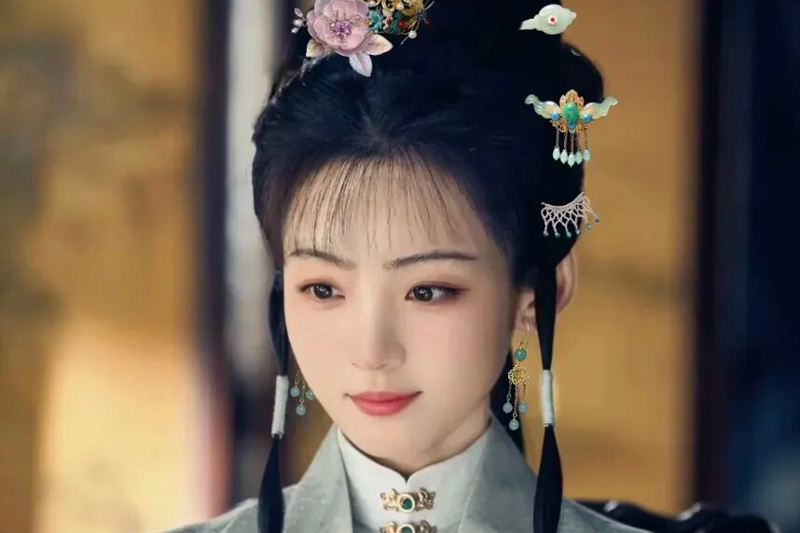
The name explains the mechanics. “Curtain” means the hanging strings, or Luo Suo (络索): bead chains that form the visible net. “Comb” does not mean a grooming tool. It means the top section has comb teeth or feet. Those teeth slide into the bun and lock the ornament in place. No modern U-shaped pin is required. The hair itself becomes the anchor. This simple trick lets a wide, trembling decoration stay steady during walking, bowing, or sitting at a feast. It looks fragile, but the fix is practical.
Luo Suo first meant rope. Old dictionaries describe linked cords. Later, the word moved to jewelry: gold chains or silk threads holding pearls, glass, coral, and jade. The strings hung like a curtain. When a woman moved, light broke into tiny flashes. Huang Geng (黄庚), a Song poet, wrote of golden Luo Suo with coral drops. His line places the ornament in a spring garden, beside peonies and wind. The image is close to what viewers see when a curtain comb sways on screen.
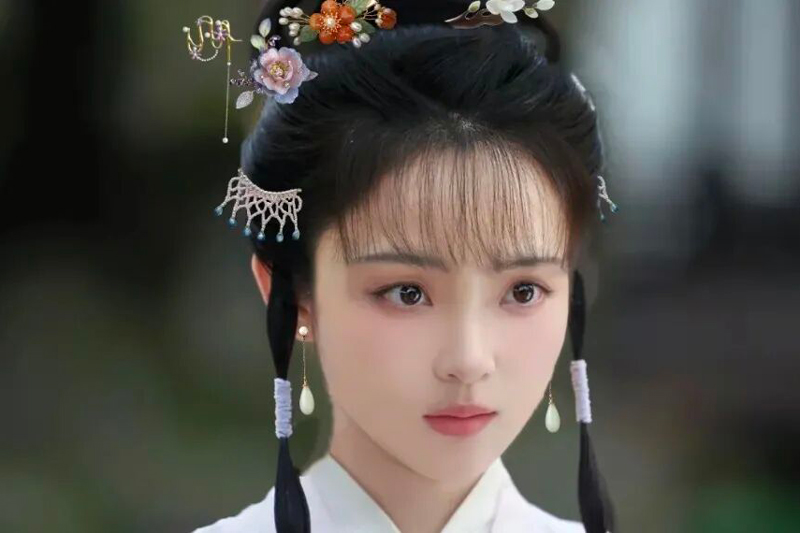
The Southern Song daily encyclopedia Suijin (碎金) lists Luo Suo under jewelry. That listing matters. It suggests the style was not only a palace rarity. Wealthy commoner families could buy versions. Yet texts rarely include drawings, and surviving objects are fewer. Historians rebuild the look from comb backs, sideburn covers, and written clues. The result is not a photograph of the past. It is a careful guess, stitched from fragments. Even so, the name keeps appearing, which proves the fashion had reach.
Do not confuse it with Buyao (步摇). A Buyao usually has one pin, a flower top, and one or two bead strings. A curtain comb is a wider sheet of beads held by comb feet. Its charm is not a single swing. It is a whole trembling layer that half hides the hair. Tang and Song taste often favored this veiled glow. The drama follows that older eye. Would you wear one?