Article
Search results:
-

2025 Huairou National Trend Culture Season Kicks Off
The series of activities of the 2025 Beijing Great Wall Culture Festival in Huairou District - the "2025 Huairou National Trend Culture Season" will set off a national trend fashion in Huairou District, Beijing from July to October. Chinese and foreign Hanfu enthusiasts experienced immersive Hanfu travel photography in Qinglong Gorge, Huairou, Beijing, preheating the "2025 Huairou National Trend Culture Season" which will kick off in July. Hanfu Tourism Photography Theme Experience As the first pre - heating event, the immersive Hanfu travel photography theme experience was recently held in Qinglong Gorge. Twenty Chinese and foreign Hanfu enthusiasts gathered in Huairou, becoming the first batch of "Hanfu experience officers" to feel the charm of the integration of the national trend and nature, and let the world see the new expression of Chinese aesthetics where tradition and modernity are intertwined. "This is a blue - and - white porcelain bowl with a painting of ladies from the Ming Dynasty. We dressed up and took photos imitating the scene here, which made me feel the fun of the ancients painting their lives on porcelain." The influencer "Xiaoxi", who participated in the event, has had a strong interest in traditional culture since childhood.… -

Dissecting Lin Jiang Xian's Chaotic Finale & Broken Promises
The much-anticipated finale Lin Jiang Xian(临江仙), starring Bai Lu (白鹿) and Zeng Shunxi (曾舜晞), promised a groundbreaking blend of "divorce xianxia," intricate suspense, and infinite loops. Creator Yu Zheng’s (于正) bold marketing framed it as a genre revolution. Yet, the concluding four episodes delivered not a satisfying resolution, but a maelstrom ofjarring plot twists,hollow characterizations, andnarrative whiplash. Audiences who invested weeks deciphering clues were left bewildered, questioning if innovation was merely a facade for chaotic storytelling. The finale exposed a core truth: a cascade of reversals means little without logic or emotional grounding. What began as a daring experiment concluded as a cautionary tale of style over substance, leaving viewers to untangle the debris of a meticulously marketed, yet fundamentally flawed, narrative ambition. The Hype vs. The Hollow Core Yu Zheng’s pre-release campaign toutedEternal Immortalityas a pioneer—the first "divorce xianxia" drama. This premise centered on Bai Jiusi (Zeng Shunxi) and Hua Ruyue (Bai Lu), a celestial couple navigating a bitter separation entangled with amnesia, deception, and layered conspiracies. Promises of "infinite loops" and psychological suspense fueled fan theories and meticulous plot dissection. The central mystery revolved around identities like Yin Tongzi and the fate of their child, Shi’an. However, the execution crumbled under its own weight.… -
Nambo Fashion Week: Bridging Cultures Through Yi Embroidery and Global Style
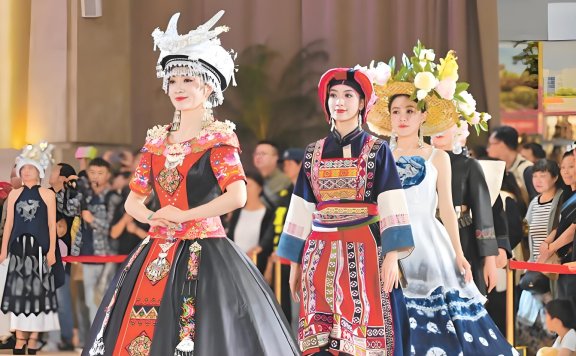
From June 19 to 24, the vibrant city of Kunming transformed into a global fashion hub as the Nambo Fashion Week took center stage at the Dianchi International Convention and Exhibition Center. This event, an upgraded iteration of the Chuxiong Fashion Week, served as a key highlight of the 9th China-South Asia Expo, drawing over 25 mesmerizing showcases of intangible cultural heritage attire. With a staggering 1,100 media reports and an exposure of 1.62 billion views, it captivated audiences worldwide, blending ancient traditions with contemporary flair. The week-long celebration spotlighted Yi embroidery - a centuries-old craft from China's Yunnan Province - as a symbol of unity, where diverse cultures converged to weave a narrative of shared beauty and innovation. As the curtains rose, it wasn't just about clothing; it was a testament to how fashion can foster cross-border harmony and drive cultural evolution in our interconnected world. Cultural Fusion on Display The runway came alive with a kaleidoscope of ethnic ensembles, each telling a unique story of heritage. Yi costumes, adorned with intricate patterns and bold colors, shared the spotlight with graceful Bouyei garments from Guizhou and elegant saris from South Asia. In one standout show, models glided to rhythmic… -
The Rise and Resonance of Labubu
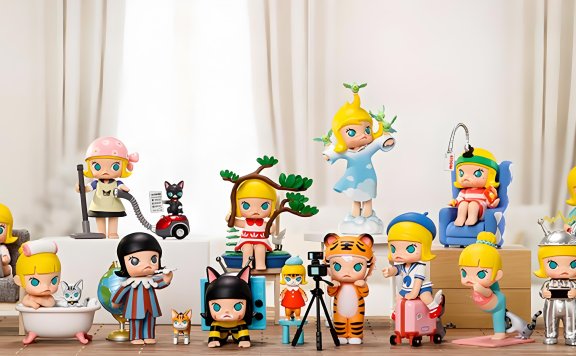
In the ephemeral world of collectibles, Labubu’s journey from obscurity to auction-record fame - and subsequent market correction - mirrors a seismic shift in cultural consumption. Once traded at 1,080,000 RMB yet now facing a 50% price plunge after restocks, this "ugly-cute" figurine embodies capitalism’s dance with emotion. As Peking University scholar Hu Yong (胡泳) observes, its appeal lies in violating norms: merging infantile familiarity with unsettling novelty. For a generation navigating digital isolation, Labubu isn’t just plastic; it’s a vessel for identity, rebellion, and the quiet erosion of grand narratives. The Baby Schema Paradox Labubu’s disproportionate eyes and miniature body exploit an innate human trigger: the Kindchenschema (baby schema). Animal behaviorist Konrad Lorenz’s theory reveals our hardwired urge to protect infantile features - a tool brands weaponize for emotional consumption. Yet Labubu subverts this. Its jagged teeth and hollow gaze inject discomfort into cuteness, creating what Professor Cui Di (崔迪) calls "a dark innocence." Where Hello Kitty radiates saccharine purity, Labubu hybridizes charm with chaos, rejecting "standardized" aesthetics to resonate with adults disillusioned by performative optimism. This duality expands its reach. Traditional "mēng" (萌, cute) toys exclude those seeking sophistication, but Labubu’s grotesque allure bridges demographics. Its design acknowledges… -
Why Ancient Cdramas Frequently Use Headbands for Styling?
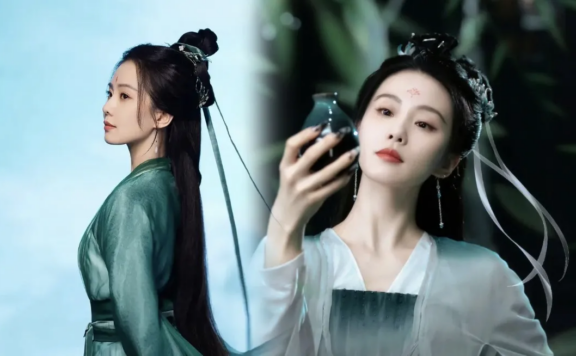
No matter which ancient - cdrama it is, there's always a headband on or behind the character's head. This seemingly simple headband can make the wearer look graceful and full of Chinese charm. How can such a simple accessory be so appealing? Let me state my view first. This headband is extremely common in TV dramas and Hanfu makeup and styling. For instance, Liu Shishi (刘诗诗) often sported headband looks in the ancient - costume drama Huai Shui Zhu Ting (淮水竹亭). Although we usually just call it a "headband", it actually has multiple names. Let's briefly sort out its common names and wearing methods. Netizens joke that this headband is like a veteran actor, as it appears in every ancient - costume drama with excellent "acting". One of its names contains a character that's difficult to write (a character composed of "xu" on top and "jin" at the bottom, pronounced "xu", meaning a hair rope). According to Zhu Zi's Family Rituals (朱子·家礼), for mourning women, the "xu - jin" is a piece of slightly thin linen about eight inches long, used to tie the hair roots with the rest hanging at the back. In the Song Dynasty's Records of the… -
Why Are Double-loop Bun Hairdos So Popular in Cdramas?
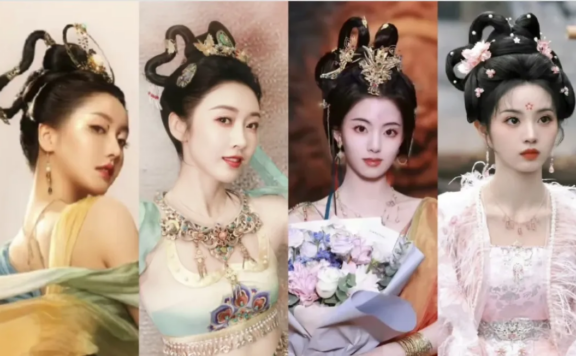
Why do fairies in ancient costume dramas always have two loops on their heads? It seems that in the ancient costume dramas I watched as a child, fairies all sported this hairstyle. Usually, there are two loops, but there can also be multiple loops. What's the name of this hairstyle? Let me give the answer first. This hairstyle is called the Double-loop (Bun) Immortal-worshipping Hairdo, which evolved from the Double-loop Hairdo. "Bun" and "loop" are interchangeable, just different terms. The Double-loop Hairdo was originally a hairstyle for young girls, and multiple loops can also be collectively referred to as "Bun Hairdos". But perhaps because it's so beautiful, this hairstyle also frequently appears in paintings of immortals, such as the famous ancient painting The Nymph of the Luo River and The Scroll of Eighty-seven Immortals. Since then, the fashion has spread throughout history. Because it's the hairstyle of fairies, people weren't satisfied with the traditional name of the double-loop and gave it a new name, "Immortal-worshipping Hairdo". As the name suggests, "this style can only be found in the heavens". Evolution of the Hairstyle You can see that there's an evolutionary context from the traditional Double-loop Hairdo to the Double-loop Immortal-worshipping… -
What's the Real Costumes of Chinese Immortals?
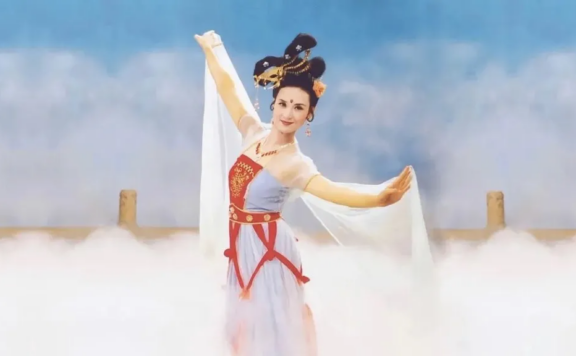
Why were the immortals in ancient costume dramas easily distinguishable at a glance? In today's Xianxia (仙侠) - themed movies and TV shows, the image of immortals usually features white, long robes fluttering in the wind, along with a combination of Chinese and Western photo - studio styles. So, which one is the "real immortal"? Let me state the conclusion first. The images in old - fashioned TV shows were mostly modeled after the traditional costumes in immortal paintings, rather than being conjured up out of thin air. In contrast, modern Xianxia dramas adopt a uniform white color scheme and loose - hair makeup due to modern minimalist aesthetics, which has created a stereotypical impression of Xianxia among most young people. However, can we just make wild guesses about immortal costumes without a dynasty background? No. Looking at the Xianxia dramas in recent years, there are those with ancient Chinese styles, Western styles, or a blend of both. But without exception, pure white and light - colored outfits dominate. No wonder fans say, "To look charming, wear all white." When we examine ancient murals, we find that the immortals' clothing was colorful. The ancients also painted immortals, and like us… -
Yang Zi's Square Collar in Jia Ye Cdrama
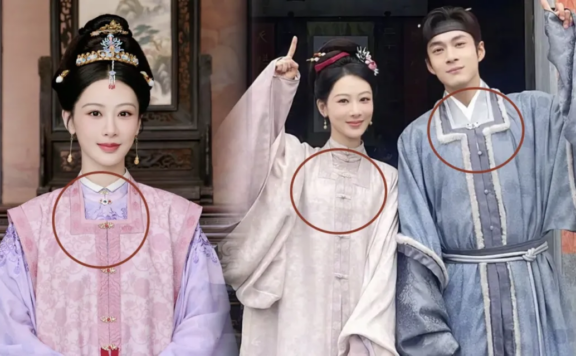
Yang Zi's Ming-style square collar in the ancient costume drama "Jia Ye (家业)" is truly eye - catching. Square collars are rare even today, so were they really popular in ancient times? Netizens are saying it's such a niche style! Let's start with the fact that similar rectangular and square collars already existed during the Shang and Zhou dynasties. However, the structure of these collars still requires further research, and they weren't very popular. Among traditional collars, the cross - collar was the most common. Rich Ming - style Collars By the Ming Dynasty, there was a wide variety of collars, including stand collars, round collars, square collars, and cross collars. While the front - opening collars popular in the Tang and Song Dynasties and classic cross collars were common, square collars were relatively rare. But they often appeared in Ming Dynasty portraits. You could wear a cross - collar or stand - collar inside a square collar, like Yang Zi wearing a stand - collar and Han Dongjun a cross - collar in the leaked photos of "Jia Ye" Artifacts with Square Collars Many clothing artifacts unearthed from the Ming Dingling Mausoleum feature square collar elements. Most of them… -
A Decade-Long Journey to "The Monkey King"
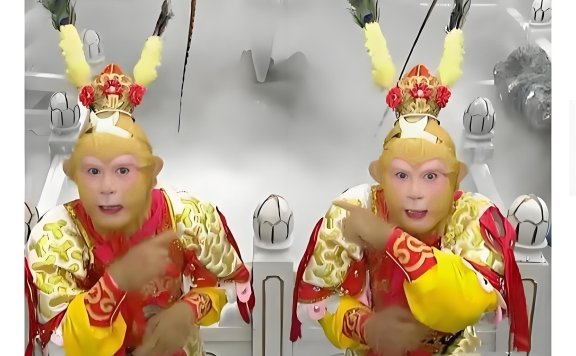
64 Monkeys Herald a Legend's Return The internet erupted. A single image - 64 spectral monkeys locked in furious combat across a roiling cloud sea - instantly reignited decades of collective memory. This wasn't just concept art; it was a clarion call. After a staggering ten years in development limbo, the cinematic adaptation of Journey to the West's (西游记) most enigmatic chapter, "The True and False Monkey King," finally has tangible form, aiming for a 2026 release. At its heart lies the unparalleled legacy of Liu Xiao Ling Tong, the actor whose portrayal of Sun Wukong in the seminal 1986 TV series remains the undisputed gold standard, etched into the DNA of Chinese popular culture. Liu Xiao Ling Tong (六小龄童), now 64, embodies the Monkey King like no other. His iconic silhouette - the phoenix-feather crown, the shimmering golden staff - transcends mere performance; it is Sun Wukong for generations. His famous, often-misunderstood declaration - "Adaptation is not random fabrication; dramatic interpretation is not nonsensical chatter" - resonates with newfound weight today. Once perceived as artistic arrogance, it now reads as fierce cultural custodianship, a shield forged from deep reverence against decades of derivative, often disrespectful, commercial exploitation of the… -
A Cool Fish Swims Global: Twin Tales of Fortune and Meaning
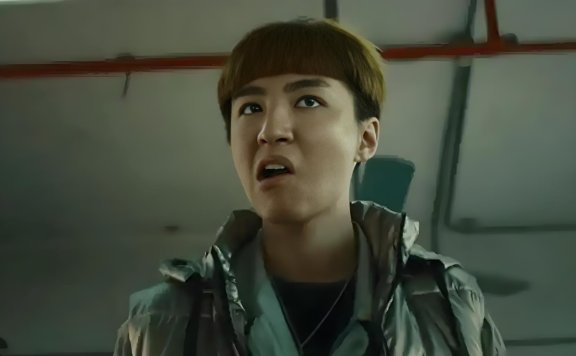
The Shanghai International Film Festival shimmered with surprise on June 14th as director Rao Xiaozhi (饶晓志) unveiled not one, but two highly anticipated sequels to his groundbreaking black comedy franchise, A Cool Fish (无名之辈). Nobody: Turning Tide (否极泰来) will ignite summer screens on July 5th, while Nobody: What Truly Matters (意义非凡) promises a darkly humorous New Year’s Eve celebration on December 31st. This bold dual release strategy marks an ambitious expansion for the series, transforming standalone tales of provincial chaos into a globally interconnected saga. Seven years after the original film became a sleeper hit, its unique blend of razor-sharp wit and profound empathy for society’s underdogs continues to resonate. The first A Cool Fish wasn’t just a box office success; it etched characters like Hu Guangzhi (Zhang Yu) and Ma Jianyin (Ren Suxi) into China’s cinematic consciousness, proving that stories of small-town desperation could capture nationwide hearts. The announcement of dual sequels signals Rao’s confidence in evolving these beloved misfits from local curiosities into accidental players on an international stage. Returning with the original creative nucleus, the sequels promise amplified stakes and broader horizons. Ren Suxi (任素汐) reprises her role, hinting that Turning Tide descends into "sheer madness, drama,… -
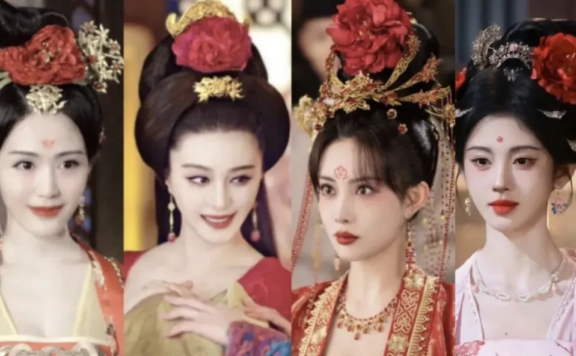
Why Is the Big Flower Hairdo Rarely Seen in Cdramas Now?
In early period cdramas, especially those with Tang-style costumes, this kind of big flower hairdo was often seen. But why is it less common today? Well, now there are more references from cultural relics, offering a wider range of options for hair and makeup styles. However, the association between the Tang Dynasty and wearing big flowers still persists as a stereotype in most people's minds. The Tang people's fondness for wearing peonies in their hair was closely linked to their love for these flowers. Peonies are so rich and magnificent, and some rare varieties are extremely precious. Only by wearing a whole peony could one show their status. Moreover, once a peony was worn, there was no room for other flowers, leading to the popular custom of wearing a single big flower on the head. Additionally, when the Tang people styled their hair in the 'big head style', there was some empty space on the head, so a big flower wouldn't look overly 'garish'. The most famous example is the Ladies with Head - flowers (簪花仕女图), which clearly shows this kind of adornment. This hair - flower - wearing custom reached the peak of fashion in the prosperous Tang Dynasty.… -
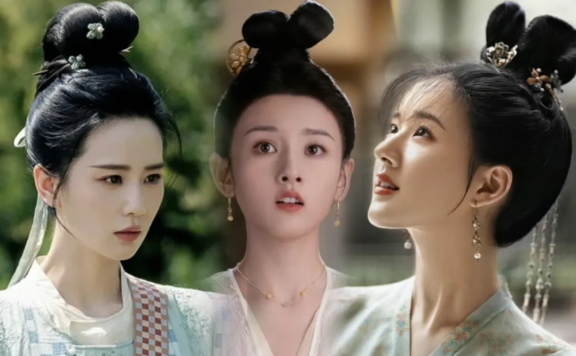
The Origin and Styles of the Chinese Rabbit Hairstyle
What's the name of the rabbit - like hairstyle on Song Zuer's head? In ancient - costumed dramas, we often spot this kind of rabbit - like hair bun, which netizens lovingly call the 'rabbit hairstyle'. What's its origin? Why do female stars adore it? Let me share the conclusion first. This hair bun resembling rabbit ears can generally be called 'double buns'. Double buns are a general term for two buns. Looking into specific styling details, they can also be named 'Lily Buns', 'Intertwined - heart Buns', etc., all styles of double buns. There's a gap in the middle or they're crossed, and it was a popular hairstyle in the early and prosperous Tang Dynasty. We can see it in many TV dramas, usually paired with Tang - style Hanfu, like the chest - high shirt and skirt, showing simplicity and vitality, as well as a girlish charm. According to 'Zhonghua Gujin Zhu' by Ma Gao of the Five Dynasties, the Lily Bun was very trendy during the Zhenguan period: 'During the Zhenguan period, people combed the Submissive Bun. Also, Yang Yuhuan combed side buns and did the crying - makeup. There were also the Sorrow - coming Bun,… -
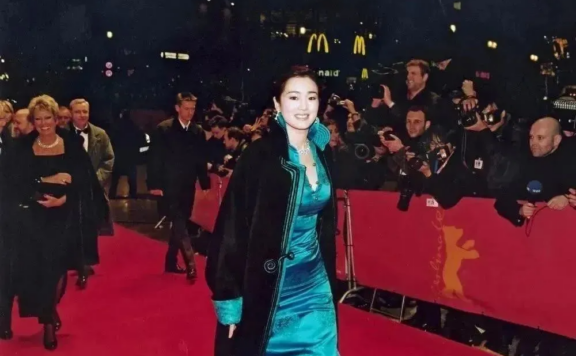
Gong Li's Red - Carpet Odyssey in Chinese Styles
Today, let's continue the previous special topic about Gong Li's red - carpet shows throughout the 1990s, which can be regarded as a dazzling cheongsam show. In this long - spanning show, Gong Li presented us with a perfect and eye - catching display. The arrival of the new millennium marked the end of an era and the gentle start of another. All nostalgic and classical elements achieved unexpected development and presentation under the influence of new - style culture, with the cheongsam being a representative. If we look at the cheongsam's development in the vast waves of the entire era's civilization, it would be an extremely long - winded narrative. However, using Gong Li's choices as a reference, it's easier to discover the changes and context. In 2000, a new era began. Gong Li was invited to be the chairperson of the jury at the 50th Berlin International Film Festival, becoming the first Chinese judge to enter the three major European film festivals. It can be said that from 2000 on, Gong Li transformed from a Chinese actress into a globally influential superstar and a symbol of Chinese cinema. This change was also very concretely reflected in her subsequent… -
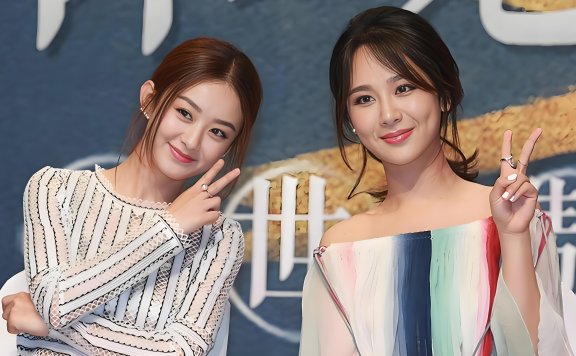
Yang Zi and Zhao Liying: Parallel Stars
In the glittering world of Chinese cinema and television, few stories resonate as deeply as those of Yang Zi (杨紫) and Zhao Liying (赵丽颖). Both actresses have carved their legacies not through overnight fame, but through years of unwavering determination against societal and industry prejudices. Their journeys—marked by humble beginnings, public scrutiny, and triumphant reinventions—mirror each other in uncanny ways. While Yang Zi battled perceptions of her appearance to rise as a "drama queen," Zhao Liying defied stereotypes to become a beacon of strength. This article explores their shared evolution, focusing on their breakthrough roles and the cultural shifts they embody. As we delve into their narratives, we'll see how perseverance and artistic integrity have redefined success in an often unforgiving industry. From Humble Starts to Unstoppable Forces Yang Zi's entry into acting was anything but smooth. As a child star, she faced harsh criticism, including blunt advice from veteran actress Song Dandan (宋丹丹) that nearly derailed her career: "Child, with your looks, it's better not to act." This moment, recounted in industry lore, highlights the crushing weight of beauty standards that young actresses endure. Yet, Yang Zi refused to bow out. She transformed her perceived weakness into fuel, gradually… -
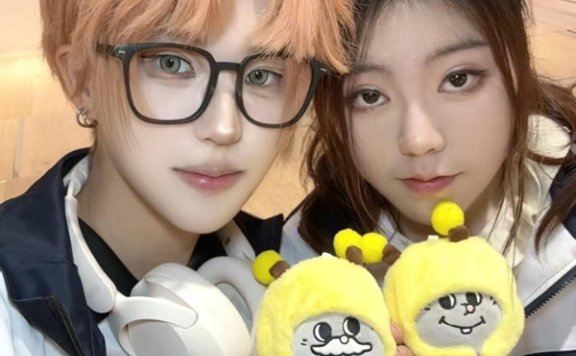
Inside Cosplay's Exploding Market for Virtual Love
A whirlwind of vibrant wigs, intricate armor, and unnaturally colored eyes swirls through crowded convention halls. This isn’t Halloween; it’s the daily reality of a global subculture evolving into a colossal economic engine. Forget niche hobbies - cosplay (costume play) is now a $4.8 billion global powerhouse, fueled by 10 million passionate fans spending an average of $480 annually to bring their favorite characters to life. The days of cardboard props and makeshift outfits are fading, replaced by a sophisticated, IP-driven ecosystem mirroring the explosive growth of its anime, gaming, and comic roots. How IP and Passion Forged a Billion-Dollar Cosplay Juggernaut The transformation is staggering. What began in the underground scenes of 1980s Japan has matured into a structured, three-tiered commercial ecosystem: The IP Wellspring: At the source lies a torrent of compelling characters. Global hits like Genshin Impact (原神) and Heaven Official's Blessing (天官赐福), alongside breakout phenomena like Black Myth: Wukong (黑神话:悟空), provide an endless reservoir of visually distinct, emotionally resonant personas. These aren't just drawings or pixels; they're blueprints for a multi-million dollar costume industry. The explosive popularity of characters like Genshin's Zhongli (钟离) or Wukong's titular Monkey King translates directly into soaring demand for meticulously crafted replicas of their attire… -
4 Highly Anticipated Series Set to Debut This Month
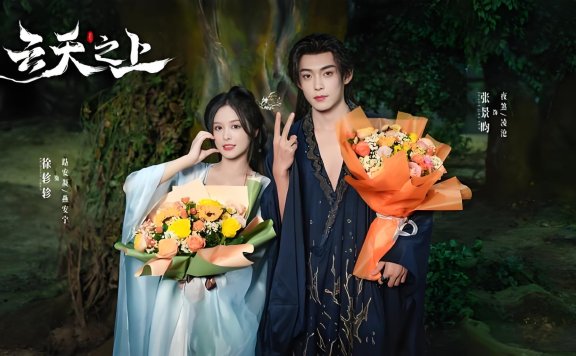
As June unfolds, the small screen is gearing up for a vibrant lineup of new dramas. On June 18, 2025, four fresh series officially announced their release dates - one ancient fantasy epic and three modern-themed shows, each boasting unique genres, star-studded casts, and plotlines designed to captivate diverse audiences. Let’s dive into what these titles have in store. 1. Cloud Heaven’s Summit (云天之上) Blends Myth and Rebellion Leading the charge is Cloud Heaven’s Summit, a much-talked-about ancient xianxia (immortal hero) fantasy drama that premiered on Tencent Video starting June 20. Directed by Cui Xiaoxiao (崔肖肖) and written by Chen Yongyi (陈泳夷), the series stars Xu Zhenzhen (徐轸轸) as the dual-identity protagonist Lu Anning/Yan Anning (路安凝/燕安宁) - a goddess bound by celestial fate - and Zhang Jingyun (张景昀 ) as the fearsome Demon Lord Ye Sha/Ling Cang (夜煞/凌沧). The narrative revolves around their fiery rivalry turning into an unlikely alliance. Forced into a cycle of conflict by predestined fates, the pair gradually awaken to their own agency, choosing to defy the heavens rather than submit. With soaring visuals, intricate world-building, and a central theme of resisting destiny, Cloud Heaven’s Summit aims to rekindle fans’ love for xianxia tropes while adding a… -
Shenhe's Undiminished Brilliance in Genshin Impact 5.7
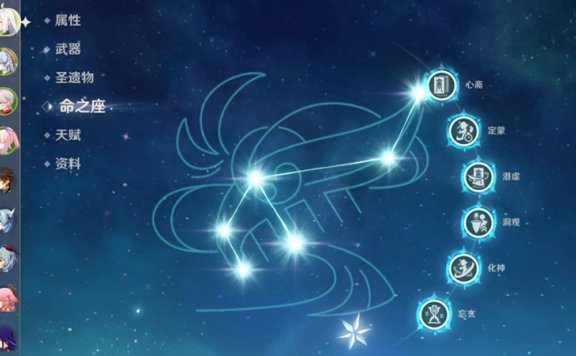
With whispers of Shenhe's (申鹤) rerun banner circulating through Teyvat (纳塔) in version 5.7, a surprising narrative has emerged among some Travelers: the belief that this elegant Liyue (璃月) Cryo character has faded into obsolescence. Critics point to her origins in an older chapter of the game, suggesting her "primordial" status renders her incompatible with the fiery challenges of the Natlan era. Yet, declaring Shenhe obsolete is a profound misjudgment of her unique value. Far from being left behind, Shenhe retains a potent and surprisingly accessible niche, offering advantages many newer characters struggle to match. Her strengths lie not in raw, flashy power, but in exceptional versatility, low investment requirements, and enduring synergy within the ever-evolving meta. Why Shenhe Remains a Top-Tier Investment The most compelling argument for Shenhe’s continued relevance is her remarkably accessible power curve. In an era dominated by characters demanding high constellations to unlock their core potential - often labeled as "constellation-dependent" or "whale-bait" units - Shenhe stands apart. She delivers exceptional value straight out of the box at Constellation. Her core functionality as a premier Cryo buffer is fully intact without needing duplicate pulls. While her first constellation offers a quality-of-life improvement and a modest… -
Chen Duling's New Makeup Style
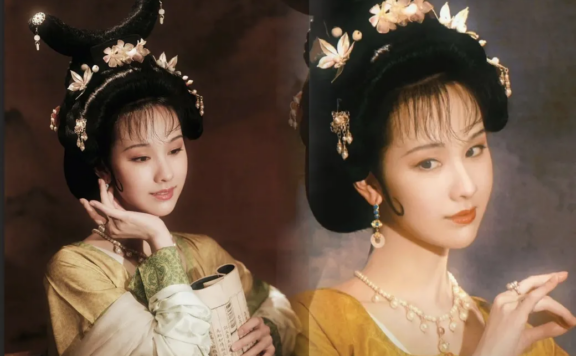
Recently, Chen Duling specially shot a set of costumes in the style of 1980s ancient - costume dramas, which left netizens hardly recognizing her. Some even wonder: Is there really such a significant aesthetic difference between classical makeup and modern makeup? Let's start with the conclusion. The biggest difference between them lies in the 'charm'. Most of the so - called classical makeup adheres to the traditional aesthetic standards for eyebrow and lip shapes, presenting a classical charm. In contrast, modern makeup is mostly the result of integration under the influence of various trends, like the once - popular Korean and European - American styles, with a style leaning towards modern simplicity and fashion. This charm, though abstract, can be expressed in forms. For example, the makeup and styling of the 1987 version of A Dream of Red Mansions are often regarded as a classic because its style shows a harmonious beauty. Here, harmony means that the proportion of a person's eyebrows and eyes complements the makeup, without being obtrusive, and the colors are warm - toned. So, the reason why classical makeup is enduringly attractive is the grasp of this sense of harmony. The most challenging part of classical… -
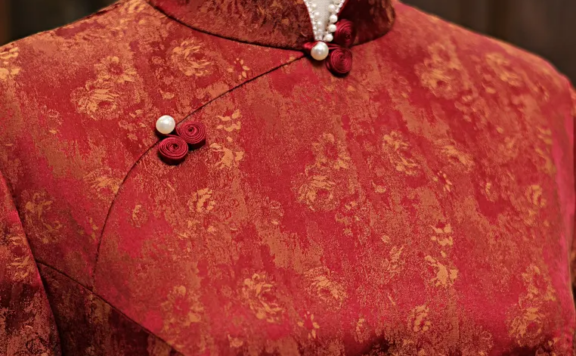
A Deep Dive into Cheongsam Pankou Buttons
Today is a special sharing session about cheongsam pankou buttons. In the process of making a cheongsam, these buttons are not only the finishing touch but also the starting point, just like the opening of a perfect work. A surprising or unexpected start can always spark more attention and appreciation later. Meanwhile, these buttons, which are linked to the essence of traditional Chinese culture, are an important way for us to rediscover Chinese characteristics. They are small, delicate, and a vivid symbol of the ancient people's aesthetics. In ancient times, our ancestors needed to use ropes or belts to tie knots or fasten buttons to fix the front of their clothes and keep warm during work. This kind of knot can be regarded as the earliest origin of the frog buttons. Later, with the development of dynasties, the knots also changed accordingly. For example, the "ribbon" in the Zhou Dynasty, the "silk ribbon" in the Northern and Southern Dynasties, the "silk knot ribbon" in the prosperous Tang Dynasty, and the "jade ring ribbon" in the Song Dynasty. These are all the step - by - step changes of the knot ribbons evolving into frog buttons. In the Ming and Qing… -
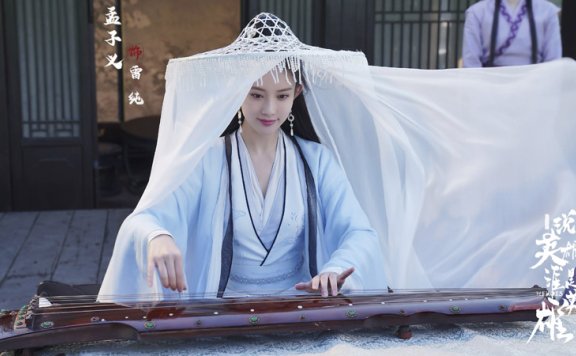
Top 8 Must-Watch Costume Dramas Starring Meng Ziyi
Meng Ziyi (孟子义) has rapidly ascended as a standout actress in Chinese historical dramas, blending stunning visuals with nuanced portrayals of resilient women. Whether playing a vengeful rebirth heroine or a diplomatic princess, she injects intelligence and emotional depth into every role. Here's a curated guide to her finest costume dramas—including the highly anticipated 2025 release. Blossom 九重紫 Aired: 2024 Period Background: Ming Dynasty-inspired fictional era Genres: Rebirth drama, Family revenge, Political strategy Main Roles: Meng Ziyi (Dou Zhao), Li Yunrui (Song Mo) Adapted From: Novel by Zhi Zhi Dou Zhao dies betrayed by her husband, only to awaken in her youth with memories intact. Partnering with General Song Mo, who also retains past memories, she races to prevent her mother's poisoning and reclaim stolen family assets. Despite their efforts, fate intervenes—her mother still dies, propelling Dou Zhao into a broader battle against systemic corruption. She navigates patriarchal constraints, outmaneuvers scheming relatives, and builds economic independence through shrewd entrepreneurship. Her alliance with Song Mo evolves from tactical cooperation to a deep bond as they expose political conspiracies threatening the nation. Narrative Precision & Emotional Resonance The story avoids clichéd "revenge fantasy" tropes. Dou Zhao's struggle emphasizes practical agency—using business acumen…