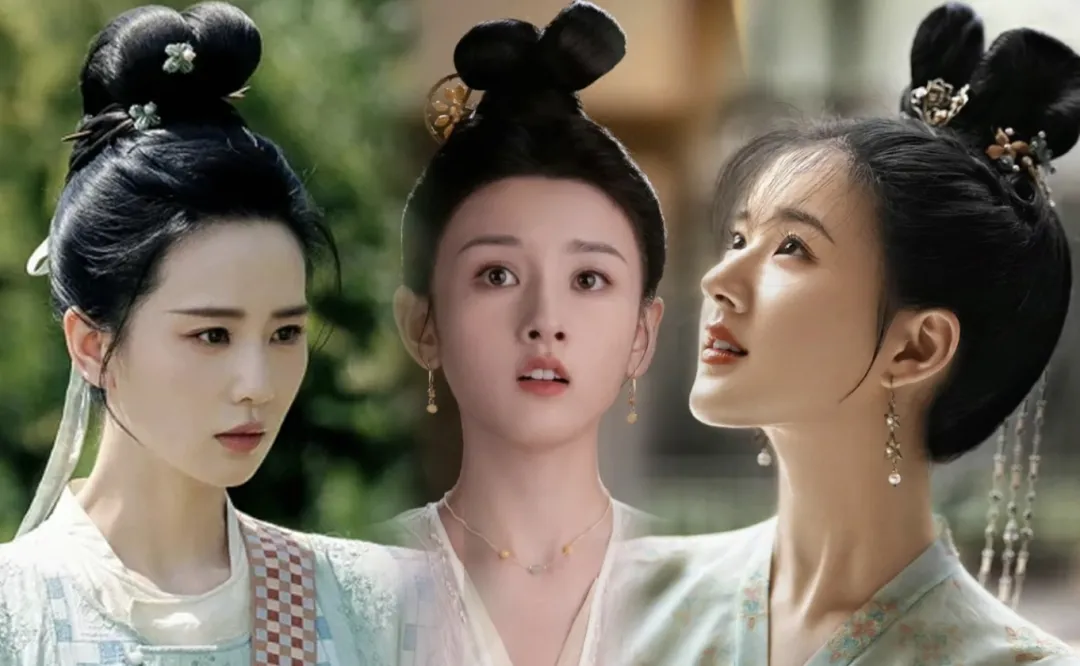
What's the name of the rabbit - like hairstyle on Song Zuer's head? In ancient - costumed dramas, we often spot this kind of rabbit - like hair bun, which netizens lovingly call the 'rabbit hairstyle'. What's its origin? Why do female stars adore it? Let me share the conclusion first. This hair bun resembling rabbit ears can generally be called 'double buns'. Double buns are a general term for two buns. Looking into specific styling details, they can also be named 'Lily Buns', 'Intertwined - heart Buns', etc., all styles of double buns. There's a gap in the middle or they're crossed, and it was a popular hairstyle in the early and prosperous Tang Dynasty.
We can see it in many TV dramas, usually paired with Tang - style Hanfu, like the chest - high shirt and skirt, showing simplicity and vitality, as well as a girlish charm. According to 'Zhonghua Gujin Zhu' by Ma Gao of the Five Dynasties, the Lily Bun was very trendy during the Zhenguan period: 'During the Zhenguan period, people combed the Submissive Bun. Also, Yang Yuhuan combed side buns and did the crying - makeup. There were also the Sorrow - coming Bun, the Flying Bun, and the Lily Bun, with white makeup and black eyebrows.' This hair bun suits the sweet - style image best, so it often appears on young female characters, making it easier for the audience to relate.
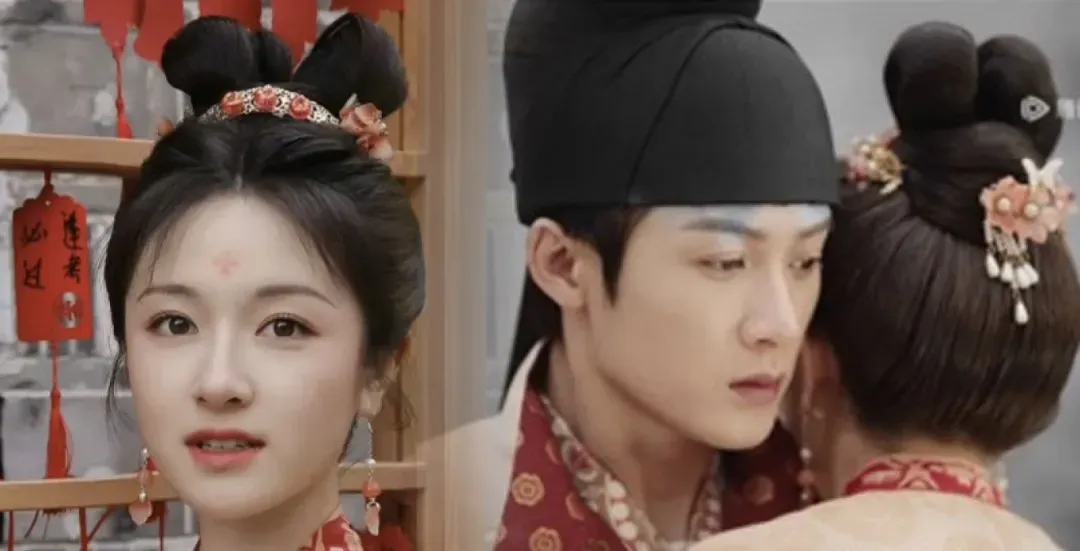
In addition, although this double - bun style seems upright, the forward - leaning posture often seen in Tang - style hairstyles reflects another gentle charm. The Intertwined - heart Bun looks similar to the Lily Bun. The biggest difference is that there's a strand of hair winding around the buns. It was very popular during the Wu Zhou and prosperous Tang periods. There are also other rabbit - like hairstyles, such as the double - loop hanging buns in the upper - left picture, the unnamed 'lop - eared rabbit' style in the middle, and the exaggerated double - knife buns in the right picture. They're all created by combining two buns with different shapes. We can also create numerous hairstyles using this formula today. So, these are all extensions of the ancient double - bun style, full of inspiration.
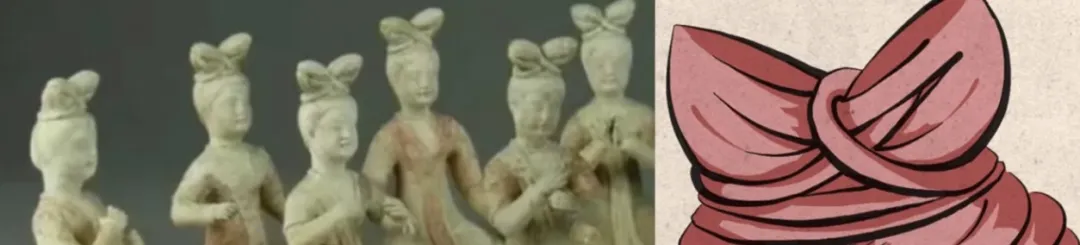
In the drama 'Guose Fanghua', Yulu's previous hairstyle used double hanging buns. We can guess that this 'rabbit hairstyle' might be an evolution of the double - maid buns. After all, double buns were common in ancient young girls' hairstyles, showing their innocent and romantic side. When ancient women reached adulthood, their hair buns were mostly on top of the head, looking more mature. We can see this in many ladies' paintings. For example, in the picture above, from left to right, there are the ring - shaped bun, the spiral bun (double - spiral, single - spiral), and the adult hair bun after the hanging bun is moved to the top of the head. There are more names for buns as the shapes change. So, the change of hairstyles accompanies women's growth.
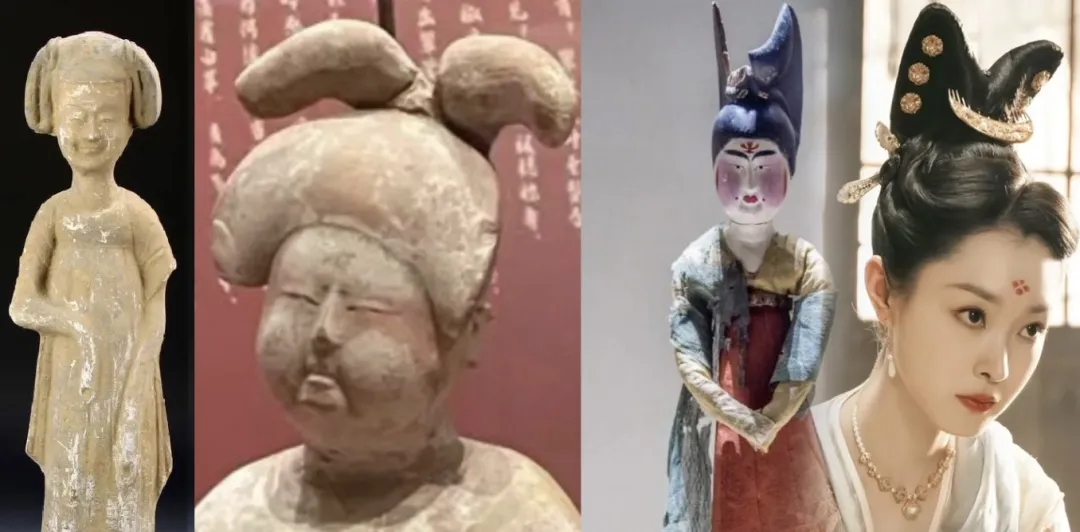
Different hair buns create different temperaments. For instance, in a TV drama, the hairstyles of unmarried and married women are different. Generally, the double - bun style is common among unmarried girls, palace maids, waiting - maids, and lively young servants, becoming part of their daily dressing. Adult women usually choose single buns to look more steady.
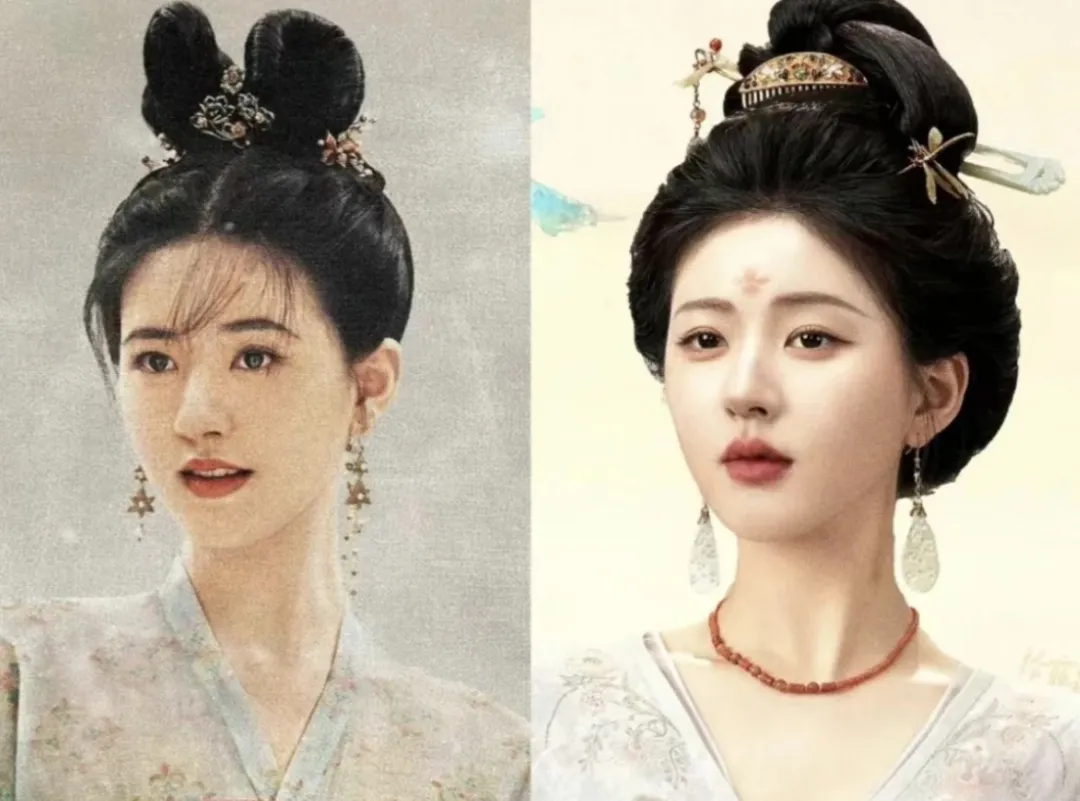
In the TV drama 'Wuyou Du', Song Zuer paired Tang - style costumes with various double - bun styles, allowing us to appreciate the beauty of daily makeup and hairstyles in the Tang Dynasty. Remember, there are countless styles of Tang - Dynasty hair buns, and many are even unnamed. Next time you see a similar hairstyle, don't just call it the 'rabbit hairstyle'. They have their own names!