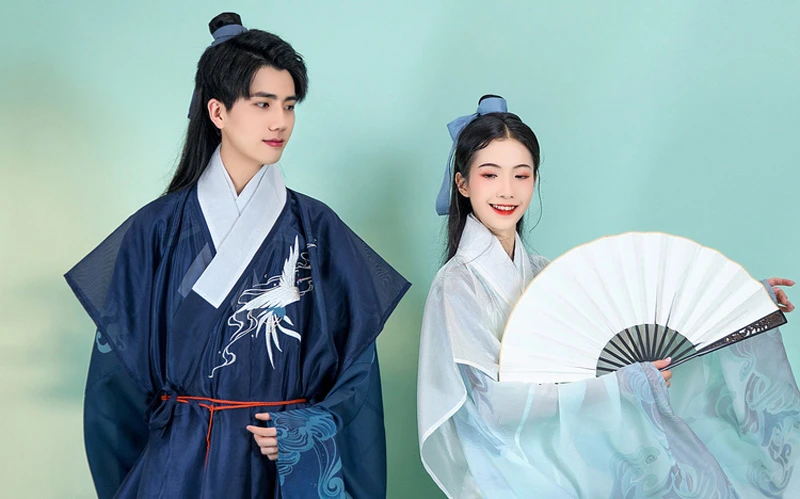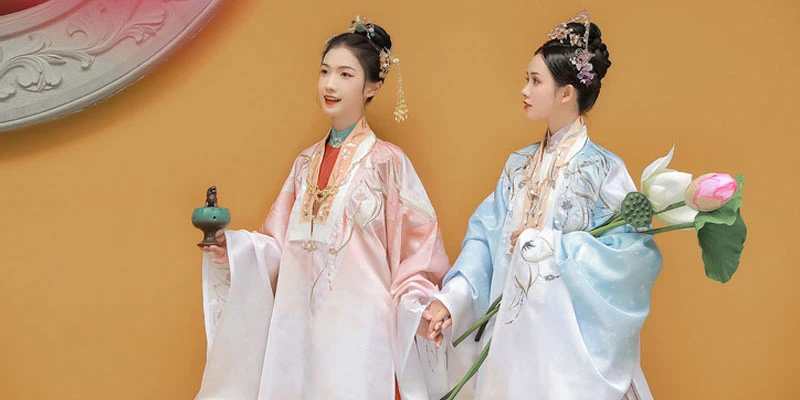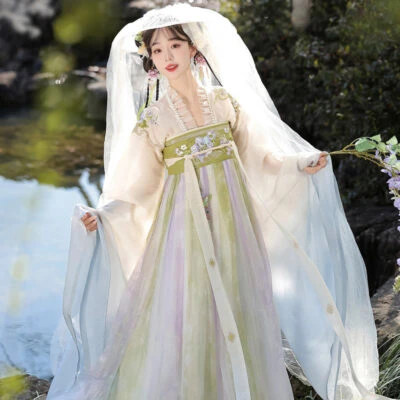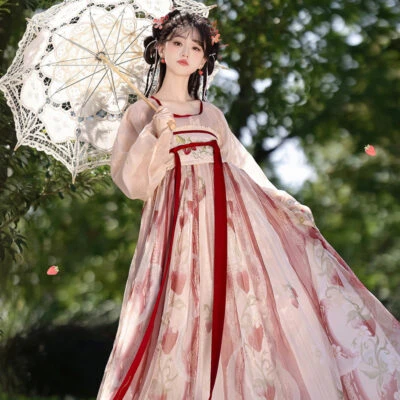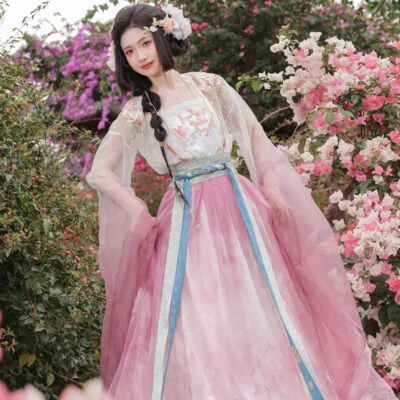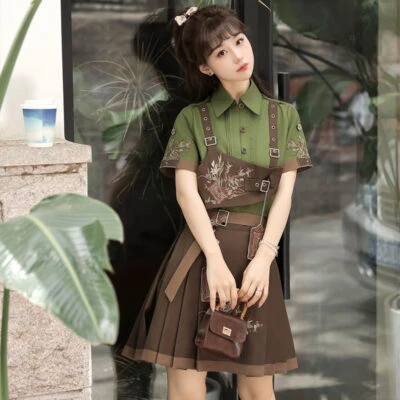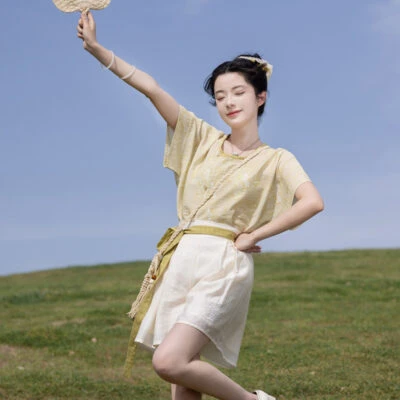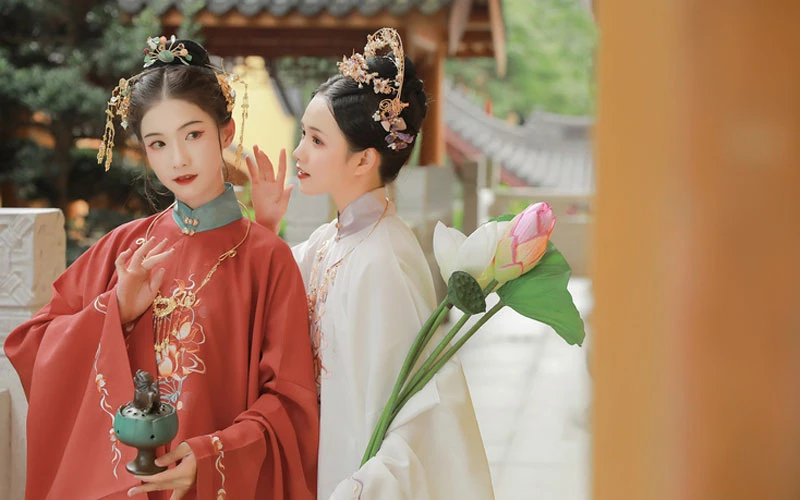
Ming Dynasty Hanfu clothing refers to the clothing system in the Ming Dynasty (1368-1644).
At the beginning of the Ming Dynasty, Zhu Yuanzhang, the founder of the Ming Dynasty, inherited the costume style of Zhou, Han, Tang, and Song Dynasties and re-established the costume system in order to rebuild the national pride and etiquette and remove the influence of ethnic minorities.
In the middle and later period of the Ming Dynasty, there were some new styles, such as stand collar, and a large number of buttons were used in the conspicuous part of a garment.
It was gradually banned during the Qing Dynasty, but there are still a few styles and features that have been handed down to this day.
The Characteristics of Hanfu in the Ming Dynasty
In the Ming Dynasty, a series of measures were taken to develop production, which made the industry and commerce develop continuously, and the production technology of each industry has improved.
After the rise of the citizen class, the aesthetic interest has become the aesthetic orientation of the general dress in the Ming Dynasty. “Secularization” of the aesthetic and cultural sources and a relatively general, casual, and loose historical and cultural environment.

At the beginning of the Ming Dynasty, most people wore cloth to make robes, but later, many people did not use cloth, but used silk and other gorgeous fabrics to cut.
The color also changed from a single blue color to more rich colors, and the style of robes became longer and longer, some even covered the feet, especially the sleeves were very fat and wide. Hanfu in Ming Dynasty has the following characteristics:
Collar design
The official and men’s clothing in the Ming Dynasty were mainly round-necked, which was one of the measures to restore the Han clothing. The round-necked gown in Song Dynasty, and was replaced by the minority culture in Liao, Xia, Jin, and Yuan Dynasties.
Zhu Yuanzhang advocated the restoration of Han characteristics in the Ming Dynasty. In the Ming Dynasty, round-necked robes were prescribed in the form of clear text. It was worn by emperors, ministers, literati, and rich businessmen of all levels, but the pattern and color were different.
Buzi on the official uniform
The system of “Buzi (补子)” is clearly defined. Before the Ming Dynasty, in terms of the patterns on the official uniforms, the twelve Wenzhang was used to distinguish the emperor and his ministers.
In the Tang Dynasty, the prototype of “Buzi” appeared, in the Ming Dynasty, in addition to the emperor, prince, and nobility, they also continued to enjoy the twelve-chapter pattern. In addition, the clothing of civil and military officials was replaced by “Buzi” with the pattern of birds and animals, which distinguished the official positions since then.

Women’s clothing proportion changes
The development and change of women’s clothing are reflected in the proportion of upper and lower skirts, the length of the top is obviously long, and the length of the skirt is reduced. From the visual aspect, the proportion of the human body is longer, which is more charming.

At the end of the 16th century, China gradually used a button belt, reflecting the progress of the times and the innovation of technology development in clothing.

Another characteristic of Ming-style clothing is to wear ornaments on Jin (襟), which is very eye-catching. All kinds of ornaments are made of gold, beads, jade, and other materials. Another special ornament is a gold chain with four small objects: tweezers, toothpicks, earpicks, and knives, all of which are practical articles for women’s life.
Zimu Kou – Exquisite Ming Style Hanfu Button
Rich colors
Ming Dynasty advocates simplicity and frugality, and has strict system constraints. The color of clothing has different regulations according to different levels of officials. Level one to four: dark red robe; level five to seven: blue robe; level eight to nine: green robe.

According to the regulations, the dress color of the noblewomen in the Ming Dynasty was: dark pink, elegant green, and yellow, while that of the literati and commoners was only purple-green, peach red, and light color.
The emancipation of people’s mind in the middle and late Ming Dynasty made people break through the shackles of feudal autocracy, dress more and more gorgeous, dyeing technology richer.
Ming Dynasty attaches great importance to the restoration of the Han nationality’s traditional costumes. At the same time, it is a dynasty with distinct anti-traditional characteristics.
It has a wide range of characteristics and changes according to time. It fully demonstrates the strong imagination and creativity of the Ming people, and reflects the unconstrained and rich atmosphere of the Ming Dynasty’s costumes from a perspective.
Ming Dynasty Characteristic Hanfu
Aoqun in the Ming dynasty
Women’s dresses in the Ming Dynasty have the richest styles, the most exquisite production, and the most harmonious color matching among all the costumes in China.
The basic styles of clothes are mostly imitated from Tang and Song dynasties. Adult women’s clothing, with the change of people’s family background and identity, has various forms, ordinary women’s clothing is more simple.
Aoqun (袄裙), the dress form of upper Ao and lower skirt in the Ming Dynasty is totally different from that in Tang and Song Dynasty. Women in Ming Dynasty often add a short waist skirt to the skirt for activities.
There are many kinds of collars for upper Ao, including cross collar, square collar, and vertical collar. The color of the skirt is light at the beginning. Although there are patterns, they are not obvious.

Pifeng in the Ming dynasty
Pifeng(披风, cape) is a popular dress in the Ming Dynasty. It can be worn by both men and women. It was developed from Beizi in the Song and Yuan Dynasties.
The shape of the Cape is Duijin, straight collar, open sleeves, two side vents on the body, the front and back of which are not connected, front decorated with a pair of lace for fastening, and the flower-shaped jade buttons are also used for fastening.

Bijia in the Ming dynasty
Bijia(比甲) is a kind of sleeveless and collarless vest with two sides open to the knee. Its style is longer than that of the later vest, generally to the hip or knee, some longer.
This kind of clothing was originally a kind of Chinese style Hanfu in the Song Dynasty, with no sleeve long top, also known as “vest”. Later, it was introduced into Mongolia.

Fengguan Xiapei
Fengguanxiapei (凤冠霞帔) refers to the dress of a wealthy woman when she was married in ancient times to show her glory. It also refers to the costumes of ancient noblewomen and women who were appointed by the imperial court.
In the Ming Dynasty, the queen and the wife of the rank officials could wear them. According to their status, they had different colors, patterns, decorations, and materials. In the Ming Dynasty, ordinary women could also wear a Fengguan Xiapei when they got married.
Fengguan (phoenix crown), because of the Phoenix embellishment and named. The Phoenix is the king of birds, so only the queen or princess is worthy of it. In fact, the phoenix crown of the Ming Dynasty was formed in Song Dynasty. It uses a gold wire net as the skeleton, which is covered with gauze, inlaid with gold and silver, and decorated with jewelry tassel.

Xiapei, which matched with the phoenix crown, was actually Peizi in the northern and Southern Dynasties. Xiapei is a ribbon draped from the shoulder to the chest, made of brocade, with embroidered on it, triangular at both ends, and hung with a gold jade pendant below.

Robes
The dress of robes is very common in the Ming Dynasty. Most scholars wear a blue or black robe, also known as Zhiduo. This kind of robe is loose, and the length of the robe is generally to the foot, and it is a big sleeve, the sleeve is longer than the arm length, with wide edges around. More about robe history.
Cifu (赐服: clothes awarded by the Emperor)
Mangfu (蟒服) is a kind of dignified Hanfu next to Dragon Robe, because its pattern is similar to the dragon pattern. Mangfu were first given to officials by the emperor in the Ming Dynasty.
Feiyufu (飞鱼服, flying fish suit) is a unique garment of the Ming Dynasty. It is decorated with a flying fish pattern(a pattern similar to a dragon), with the same pattern arrangement on the front and back. Flying fish was worn by the emperor as a symbol of glory, second only to Mangfu.

The Influence of the Ming dynasty Hanfu
During the 300 year reign of the Ming Dynasty, there were also great changes and developments in Hanfu clothing. Ming Dynasty clothing is dignified, formal, rigorous, and generous, and women’s Hanfu clothing is more conservative. Ming Dynasty clothing in the whole feudal era, formed the final pattern of Han historical clothing.
Meanwhile, the silk trade in Ming Dynasty not only spread all over the country, but also abroad. At that time, the main channels had been transferred from land to sea. The trading countries included Japan, Southeast Asia, West Asia, Europe, East Africa, and even South America.
It is in these business exchanges that cultures around the world can be exchanged and inventions and creations of all nationalities can be spread to each other, thus enriching the cultural connotation of all countries and further promoting the development of human civilization history.
The sections above describe each Ming garment on its own. The table below pulls them into one view, so that a reader arriving from a single search term can see at once what was worn, by whom, and how each piece is recognised.
| Garment | What it is | Who wore it |
|---|---|---|
| Aoqun (jacket and skirt) | An upper jacket over a lower skirt, cut in a form quite different from the Tang and Song versions; women often added a short waist skirt for ease of movement. | Women of every background, in the greatest variety of the dynasty |
| Pifeng (cape) | Developed from the Song and Yuan beizi. Front-opening with a straight collar, open sleeves and two side vents; fastened with a pair of ties or with flower-shaped jade buttons. | Both men and women |
| Bijia (vest) | A sleeveless, collar-less vest open at both sides, falling to the hip or the knee and longer than later vests. It began as a Song-era garment and passed into Mongolia before returning. | Women, usually as an outer layer |
| Fengguan Xiapei | Formal dress of a phoenix crown and a matching stole. The crown uses a gold-wire net as its frame, is covered with gauze and inlaid with gold and silver, and is finished with jewellery tassels; the stole is a brocade ribbon running from shoulder to chest, with a jade pendant below. | The queen and the wives of ranked officials; ordinary women could wear it on their wedding day |
| Zhiduo (scholar’s robe) | A loose robe most often cut in blue or black, usually falling to the foot, with wide sleeves longer than the arm and broad edges all round. | Scholars, as everyday dress |
| Mangfu (python robe) | A dignified robe ranked just below the dragon robe, its pattern close to a dragon motif. | Officials, when granted it by the emperor |
| Feiyufu (flying fish robe) | Decorated with a flying-fish pattern close to a dragon, arranged in the same way on the front and the back. | Granted as a mark of glory second only to the python robe |
How to Tell Ming-Style Clothing Apart
Four markers separate Ming dress from what came before. The first is the collar. Official and men’s clothing returned to the round-necked robe, which had been displaced under the Liao, Xia, Jin and Yuan, and the round-necked gown was written into the regulations, so that emperors, ministers, literati and wealthy merchants all wore it while differing in pattern and colour. The second is the rank badge. From the Ming dynasty, civil and military officials were distinguished by Buzi, the square badges carrying bird and animal patterns, replacing the earlier twelve-symbol system that had applied to everyone below the emperor, prince and nobility.
The third marker is proportion. In women’s dress the top grew visibly longer while the skirt shortened, which lengthened the figure. The fourth is colour, which was graded by rank rather than chosen freely: officials of the first to fourth levels wore dark red, the fifth to seventh blue and the eighth to ninth green, while noblewomen were assigned dark pink, elegant green and yellow, and literati and commoners were limited to purple-green, peach red and light shades. This grading loosened in the middle and late Ming, when the widespread use of buttons, button belts and ornaments along the front opening, together with denser colour and heavier fabric, turned dress into a field for display.
Frequently Asked Questions About Ming Dynasty Hanfu
- What is Ming dynasty hanfu? It is the clothing system worn during the Ming dynasty (1368-1644). Its founder, Zhu Yuanzhang, drew on the costume of the Zhou, Han, Tang and Song dynasties and re-established a dress code, in part to restore Han ceremonial practice.
- What are the main Ming dynasty hanfu styles? Aoqun, Pifeng, Bijia, Fengguan Xiapei, the Zhiduo scholar’s robe and the awarded Cifu robes (Mangfu and Feiyufu). Each is set out in the table above.
- What is Buzi? A square badge worn on the official uniform. In the Ming dynasty its bird and animal patterns told the wearer’s rank apart, and it replaced the twelve-symbol system for officials below the emperor, prince and nobility.
- What colours could Ming officials wear? Colour was fixed by rank: dark red for levels one to four, blue for five to seven and green for eight to nine. Ming dress is often described as dignified, formal and rigorous, and the colour code is a large part of why.
- Did Ming clothing use buttons? Yes. At the end of the 16th century buttons and button belts came into wider use, alongside stand collars and ornaments pinned along the front opening. The knotted fastening behind that change is the ancestor of the Pankou button still used on traditional jackets.
More about the Chinese traditional clothing system:
What You Need to Know About Ming Dynasty Clothing
Guide of the Ming Dynasty Shan/Ao Types for Girls