Article
Search results for the keyword [wear]:
-
History of the Qipao & Cheongsam Fashion
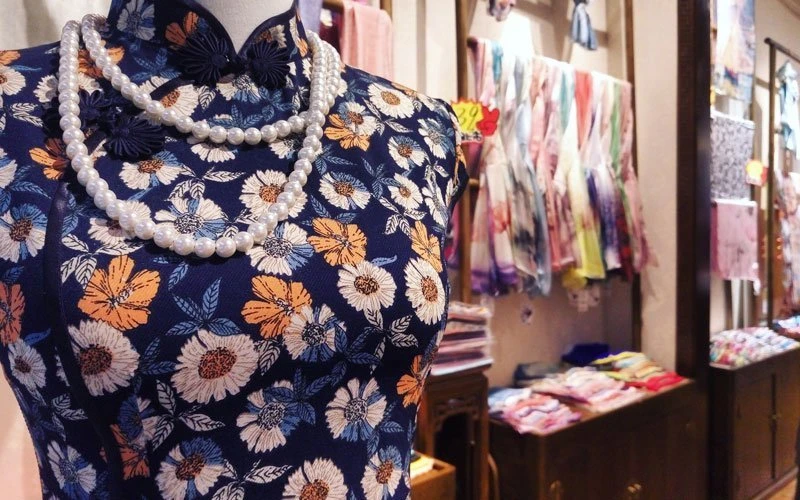
The cheongsam (literally, long shirt/dress), also known as Qipao or Mandarin Gown, was a type of feminine body-hugging dress with Manchu and Western elements. It was first used as the uniform of Shanhai girl schools at the time of the Republic of China period (1911-1949). Back then, it was very popular for representing the images of new era knowledge females. Cheongsams led a fashion trend for a long time during the Republic of China period. After the sovereignty was transferred to the People’s Republic of China (1949), Cheongsams had been forbidden as they were a sign of bourgeoisie. It was until the conduct of the Reform and Opening policy in the 1980s that Qipaos being prevalent again. Nowadays, Qipaos have gained more and more attention with a great number of local and international designers involved. History When it comes to modern Qipao’s origins, there are 3 mainstream claims. The first claim suggests that modern Qipao is only the evolutionary style of Manchu’s clothing. The second claim says western elements affect a lot on modern Qipao designs. The last claim supposes that ancient Chinese clothing plays an important role as well. 1. Qipao with Manchu Speaking of the history of Cheongsams, the… -
Report on Hungarian Hanfu Adult Ceremony
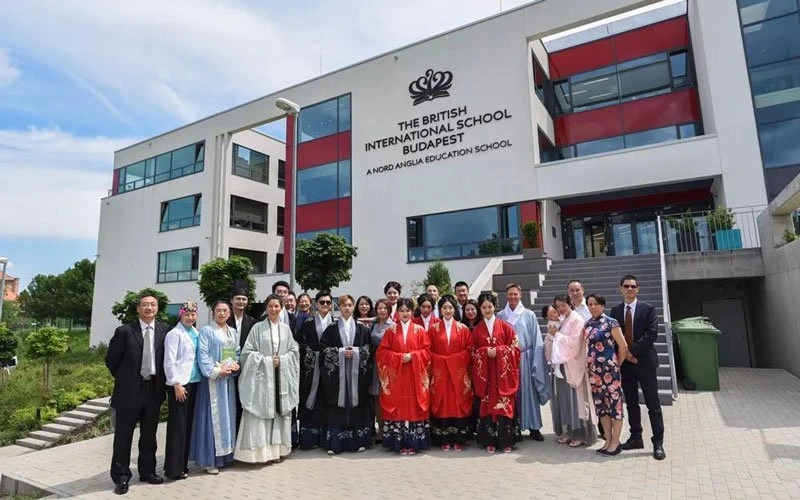
When you were eighteen years old, what kind of adult ceremony would you like to have? Nowadays, many teenagers who know Chinese traditional hanfu will wear elaborate Chinese clothes on the day of the adult ceremony. The graduates of the British International School chose the traditional adult ceremony as their graduation gift and adult declaration. Adult teenagers arrived at the scene on time to make up before the ceremony. Their youth is marked by their beautiful black hair. At ten o'clock in the morning, the guests were seated. The ceremonist, Cai Zehong, dressed in Hanfu and Dongpo scarf, announced the official beginning of the ceremony. Ji etiquette (笄礼) and guan etiquette (冠礼) are an important part of adult etiquette. Boys and girls are sitting in the middle of the stage wearing top Yi and upper Shang (basic Chinese traditional dress). The teacher solemnly put on their Ji (hairpins) and guan (crowns). It marks that they can pull up their hair from today and show people their mature appearance. Later, teenagers wear more solemn clothes. The following links are carried out separately. First of all, the boys are on stage. They put on big black sleeves and showed them to the… -
35 Best How to Pose for Hanfu Pictures
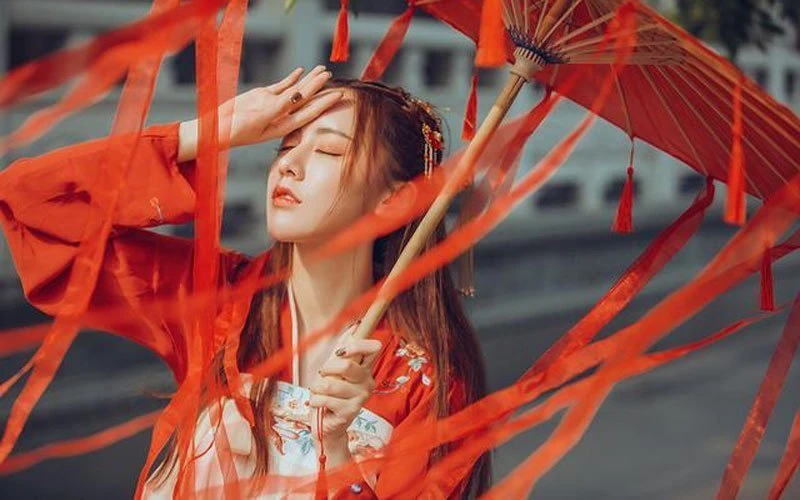
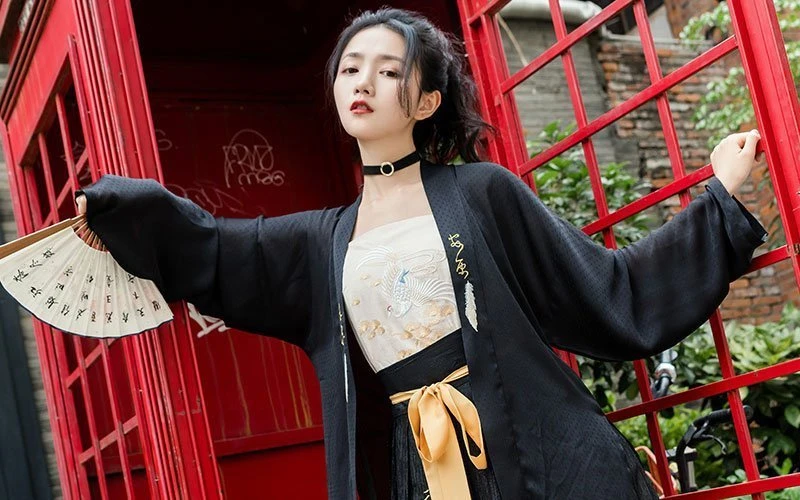
Are you still helpless when taking pictures? Do you feel that embarrassed hands are nowhere to be put? We often see some pictures of girls wearing hanfu on the Internet, such as fairies, but we always feel embarrassed when we go to take pictures by ourselves. When the camera is facing you, you don't know what to do. You will suddenly find that pose is very important when taking pictures. Today let's learn how to pose when we shoot hanfu. Props Series The use of props is particularly important in the filming of Chinese costumes. They can help you find a place for your hands. Fans, umbrellas, books, lanterns, musical instruments. They are all good props to add temperament to you. With props, we can interact with props in various ways, and the story of the picture will be rich. Common props are as follows: [Lantern] [Fan] Different shapes of fans and different clothes will have different effects. It can be shaded, placed on the chest, or half-opened folding fan. More importantly, it can be used to block the face. [Musical instruments] The commonly used instruments are Xiao (萧), Dizi (笛子, flute), Qin (古琴), Pipa(琵琶), etc. [Book] [Umbrella] All kinds… -
The Best Waltz From Mr. Fashion and Ms. Hanfu
Is Hanfu a Niche Culture? You may have never heard of Hanfu before. Hanfu is the Chinese traditional clothing of the Han people. Han has a history, which can be traced back for thousands of years, and the charm of Hanfu has also flourished for centuries, leaving the brightest colors in the river of history. wear hanfu add unexpectedly natural charm. The flowing and graceful lines lead to tantalizing thoughts and rich imagination. Hanfu should be fashionable? Hanfu is a traditional Chinese culture, but it is also the pursuit of beauty, the same as for the pleasure of the eyes. Can't Hanfu and fashion be better combined? We did a little interview to see what the Hanfu fans said: I think that Hanfu should not only be revived, but also be synchronized with the times. Just like the characteristics of Han clothes in each period are different. At different times, Hanfu also has different styles. Han clothes are not blindly self-confident. We should also create hanfu that belong to our times. ——Katherine In the future, we hope that Chinese clothes will be freer. It is a kind of culture but also a kind of clothes. We hope that they can develop… -
Autumn is Coming? Hanfu for Early Autumn is Ready!
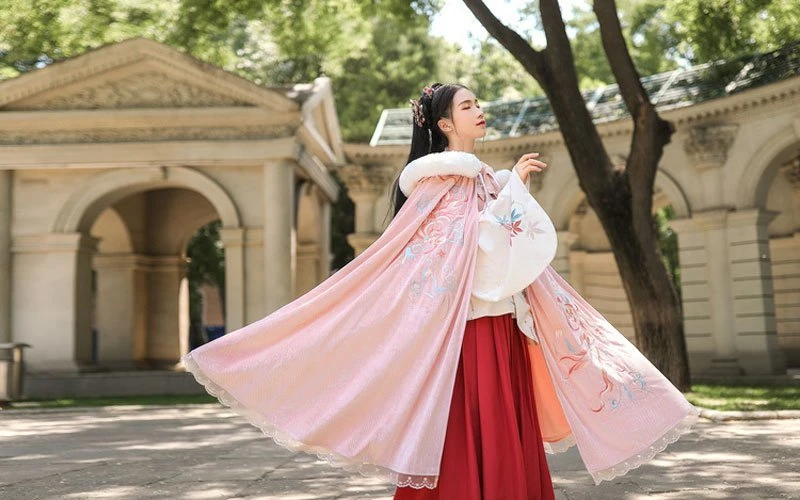
August 23 is the "Chu Shu (处暑)" in China's 24 solar terms, "处" is mean: "leave", "暑" is mean that "summer". It means that the heat of summer has passed and the prelude of autumn has slowly opened. Today, I bring you some suggestions on the style of Hanfu. They are suitable for wearing when the weather is slightly cooler. Stand collar ao dress (立领袄裙) The weather starts to cool down, so we need to keep warm in early autumn. Stand collar Ao dress fabric selection is generally moderate thickness, if cold can also be appropriate in the clothes wearing clothes to keep warm. Duijin ruqun (对襟襦裙) In autumn, mountain flowers are romantic and suitable for wearing a pair of Duijin ruqun to go out. And the Duijin ruqun is more convenient to handle, if you go out, the action is also more convenient. Crossed collar ruqun (交领襦裙) The crossed collar ruqun is warmer than the skirt, and you can wear thermal underwear under the jacket. In the cool weather. Vertical collar Cape ( 竖领披风) The vertical collar cape is lighter than the stand collar Ao dress. It can also wear a sling, or warm clothes, if the weather is… -
Old-Fashioned? The Best Fashion of Hanfu Defined By a Doctor
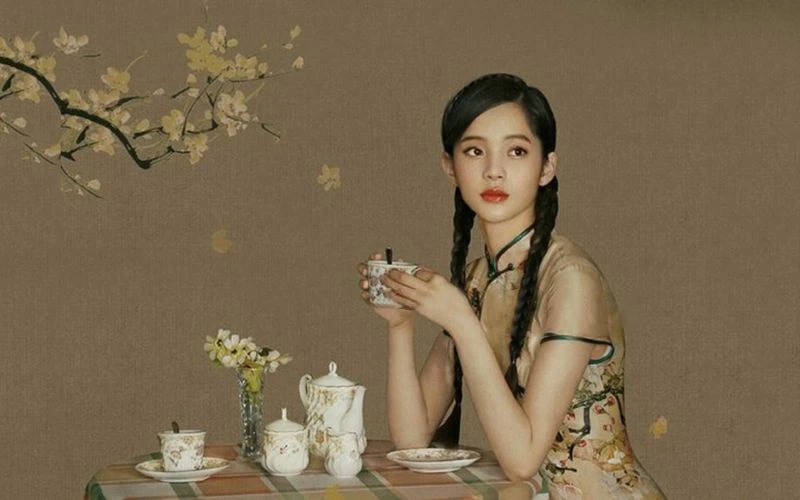
Lifen is a cardiologist in China and a Hanfu fanatic at the same time. She accepted our invitation to share her experiences about collecting and wearing Hanfu. She collects different styles of Hanfu and loves Cheongsam (Qipao) in particular. Let’s see how she falls in love with Hanfu. ------------------------------------------------------------------------------------------------------ Newhanfu: You’re a doctor, right. Would you mind sharing your working lives with us? Lifen: I’m a cardiologist. It’s been about 15 years since the first day I face cardiac diseases. Speaking about this career, as you can imagine, I’m living under serious stress everyday. It’s me who decides if my patients’ can continue their lives. The white coat I wear, the demeanor I bring with me, and the reputation of the profession I entered, all of these stand for a sacred trust that comes with great responsibility. Newhanfu: No doubt it’s a sacred profession. As you mentioned, there’s a lot of pressure you need to face in your career life. Are there any hobbies or interests that help you to reach a work-life balance? I know you‘re a Hanfu fanatic, and that’s why we have today’s talk. Could you talk about it? What is the role Hanfu play in your… -
Wow! The Best Business Casual Clothing of Hanfu: Shenyi
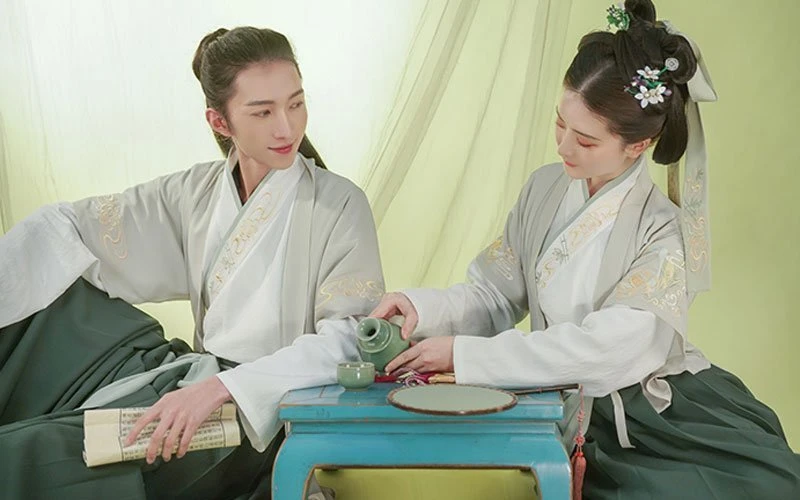
When people watching Chinese costume drama, the similarities of the clothing from different dynasties always make them confused. Do people live in the Tang dynasty wear as same as people live in the Qing dynasty? Does Yang Guifei (the beloved consort of Emperor Xuanzong of Tang) and Little Swallow (the main character of My Fair Princess) have the same taste in dressing? The first fact that causes such a phenomenon of similarities is the lack of historical knowledge by the production team. However, it is also well known that Hanfu from different dynasties does have something in common. Lots of clothing elements have affected the evolutions of Hanfu. This article will focus on a critical one among them: Shenyi. Shenyi: the traditional dress for male In the Shang and Zhou Dynasties, the clothing for male nobles was sewn into two parts. The upper part is called Yi (衣, blouse) and the lower part is called chang (裳, skirt). After the warring states period, male nobles started wearing the one-piece gown as female. This is a significant change of Hanfu evolutions. The popularity of it is understandable as It is more convenient to wear and cheaper to produce. Shenyi, a production… -
Amazed! Hanfu T-shirts were Available in the Tang Dynasty?
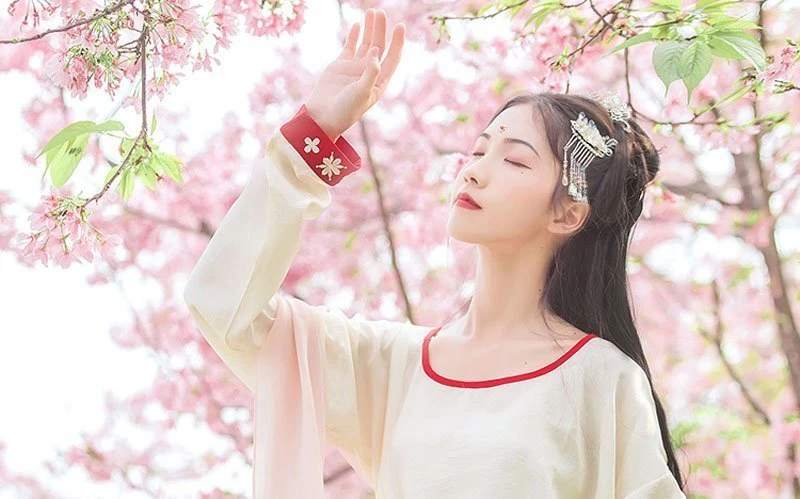
We have introduced Banbi (半臂) before, which is a kind of hanfu very suitable for wearing in summer. The tan collar introduced today is a small classification of Banbi. You will find that the shape of the tan collar is very similar to the collar of the T-shirt we usually wear. Tan collar (坦领), also known as U-collar, is a kind of short coat with a wide collar. Some of them cover it outside the skirt, some like today's short windbreaker. The lower body is matched with a long dress, which fully reflects the graceful posture and natural beauty of women in the Tang Dynasty. In the Tang Dynasty, the tan collar was more popular, not only for men and women but also for court uniforms. I spelled out a long picture to introduce it. It's easier to understand: Because of the wide popularity of Hu culture among different classes in the Tang Dynasty, it became a fashion hanfu for women to wear small sleeves in the Tang Dynasty. Popular in the Sui and Tang courts, and later spread to the folk, enduring. There are many conjectures about the origin of the tan collar. One conjecture is that the tan… -
Hanfu Complete Your Kungfu Dream
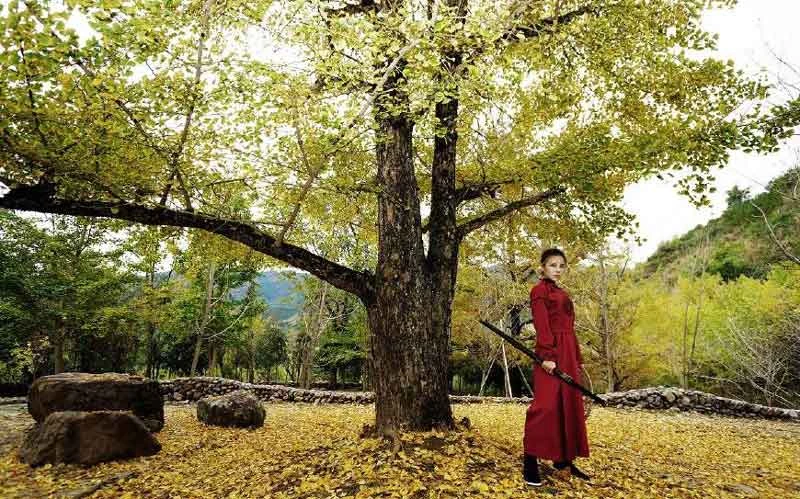
Chinese tourists may wear kimonos to go to Tokyo in Japan, but there are also foreign tourists who come to China to experience a world of martial arts. With Chinese kung fu, martial arts novels, and online novels popular in foreign countries, many foreign tourists are full of curiosity about the Chinese martial arts world. After arriving in China, there are some tourists who wear Chinese hanfu costumes to experience a "martial arts master". Recently, a foreign beauty "Heroes" appeared in Lingchuan, Guangxi (灵川, 广西). Lingchuan has been the hometown of ginkgo since ancient times. Every autumn and winter, the ginkgo is yellow, as if it is entering a golden sea. This is the most natural background for shooting martial arts, and there are countless visitors to Lingchuan every year. However, it is rare for foreign female tourists to wear hanfu to play the heroes. Even the locals are amazed. In recent years, more and more foreign friends come to China to experience cheongsam, Chinese costume, and even knight-errant costume. If you want to experience Hanfu, you can leave a message to communicate with me. -
How to Wash Hanfu
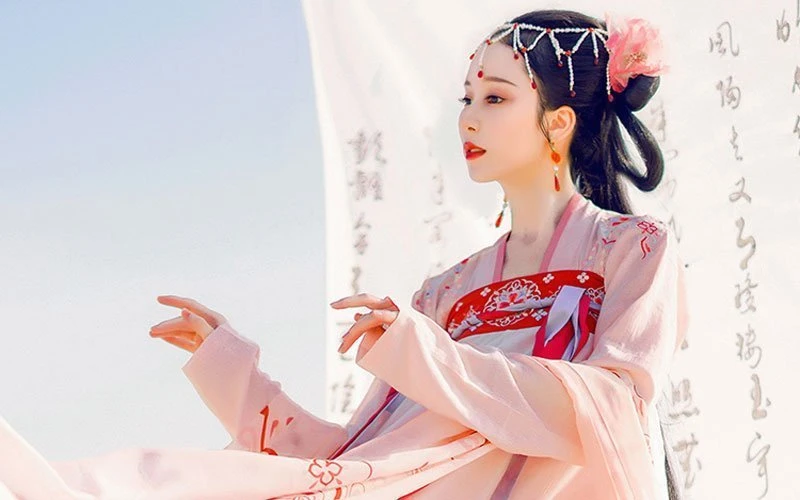
Summer is coming. It's the season of silk and chiffon. Although it's hot, the elegance and droop of silk and chiffon make summer beautiful immediately. Hanfu made of silk and chiffon are easy to clean, preserve, and wrinkle. They are one of the easiest kinds of cloth to clean and maintain. But we can still see a lot of hanfu, the cloth turns yellow and old, after wearing them several times. In the final analysis, it is the reason why there is no cleaning in the washing process. In the process of washing hanfu, there are several points needing attention. I hope it will be helpful to you. The correct way to wash hanfu is to wash them by reversal. Hand wash them as much as possible. To put it in the washing machine, remember to wrap it in a laundry bag. Dark hanfu may be partially discolored for the first time. It should be noted that dark and light colors must be washed separately. If you buy dark colors, you can soak them in warm brine for half an hour, which can reduce the discoloration. Cotton fabrics will shrink in the first washing. It can be soaked in water… -
The Longest Day in Chang’an: Perfect Reproduction of Tang Dynasty Hanfu
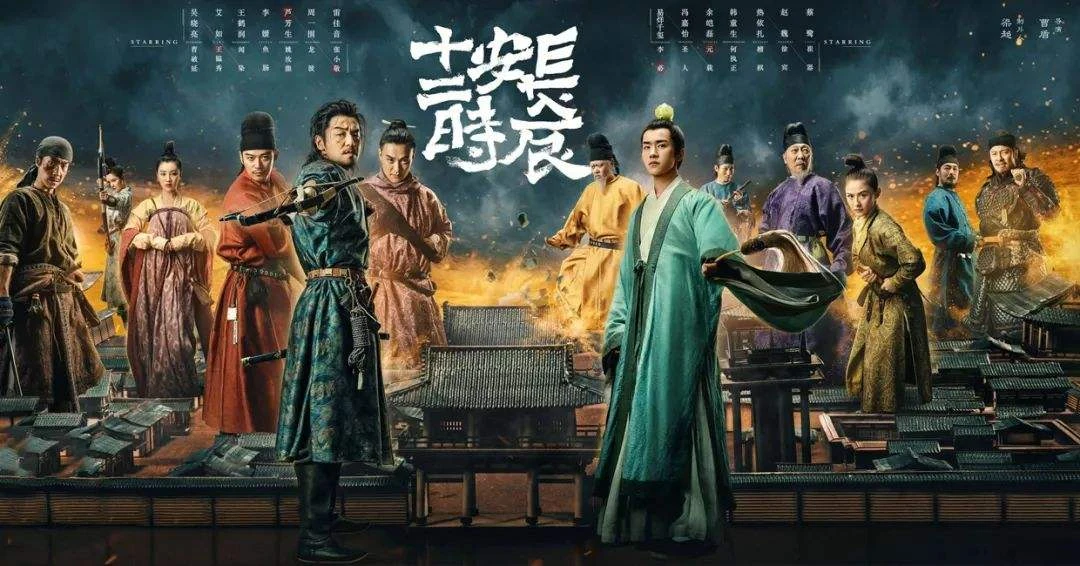
Recently, a TV play, "The Longest Day in Chang'an(长安十二时辰)" is very attractive! It tells the story of the hero defending Chang'an City from the enemy's destruction during the Tang Dynasty. In addition to the glamorous actors, the play also pays tribute to the culture and history of the Tang Dynasty, including traditional costumes, weapons, makeup, architecture and Lantern Festival costumes, which are carefully reproduced on the basis of historical data. Today, let's take a look at the Tang Dynasty hanfu in the TV series. Let's start with the Taoist costumes worn when Jackson Yi appeared. Because of the prevalence of Taoism in the Tang Dynasty, Taoist costumes can be divided into five parts: Tao scarf, Tao crown, Tao gown, shoes and socks, and decoration. Taoist priests have different ranks and wear different clothes. The crane is a commonly used pattern in Taoism, known as "the emergence of immortals into the sky". Men basically wear round collars robe. "Round collar" refers to a collar type that does not wrap around the neck. A button often falls on the right side of the wearer's collar. On informal occasions, the buttons can also be unbuttoned to make the neckline hang down naturally. In… -

You Need a Flying Fish Robe to Become a Knight-errant
Have you ever seen such hanfu clothes in movies? In fact, this is a kind of costume of the Ming Dynasty in ancient China, called "Ci Fu (赐服)". Ci Fu in ancient times can be understood as the clothes given to you by the emperor. Only the relatives of the emperor, the ministers of merit, or the tribal chiefs can get it. There are four kinds of Ci Fu: Python Robe (蟒袍, manɡ páo), Flying Fish Robe (飞鱼袍, fēi yú páo), Bullfight Robe (斗牛袍, dòu niú páo), Unicorn Robe (麒麟袍, qí lín páo ); The difference between the four is mainly due to the different patterns. (Remember, the flying fish suit is not a flying fish, but the pattern is called flying fish, it is actually more like a dragon.) Flying fish clothes are more common nowadays. Both men and women can wear them. Let's enjoy the handsome flying fish clothes together. -
Banbi - The Best Hanfu in Summer
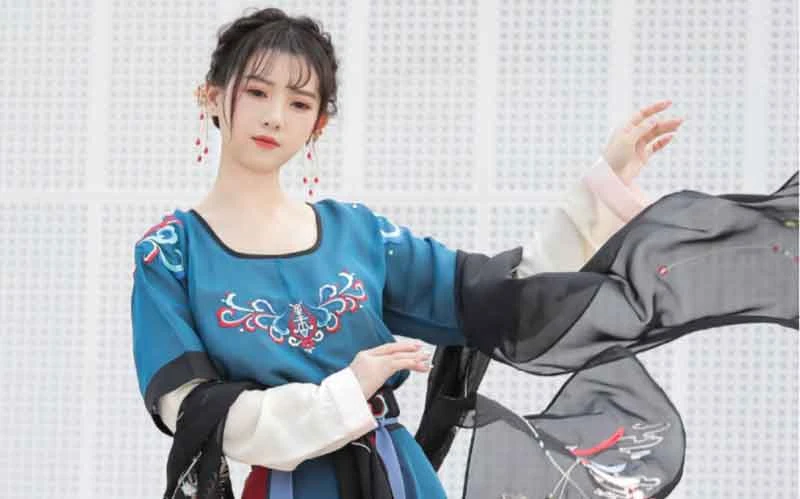
In hot summer, light Hanfu becomes the first choice, and Banbi (半臂, half-arm) is a good match single product. Banbi Origin Banbi is a kind of short-sleeved jacket in ancient China, was developed from the half sleeve of the Han and Wei Dynasties. The length of the Banbi reaches the waist, sleeves less than elbow length. Suitable for work, so it is popular among people. Affected by Huhua, it became a modern dress for women in Sui and Tang Dynasties. Banbi later appeared in a large number of murals, figurines, and other cultural relics in the Sui and Tang Dynasties. Banbi's Style and Matching Banbi was very popular in the early Tang Dynasty, which was related to wearing a small sleeve jacket at that time. In the late Tang Dynasty after the flourishing Tang Dynasty, clothes gradually became fat, wearing large sleeve shirts outside, Banbi can no longer be worn outside, in this period, the scope of application of Banbi gradually narrowed. In Tang Dynasty, Banbi were mainly worn with long skirts, usually on coats. Banbi has two styles, a symmetrical collar, and a pullover U-shaped low collar. Some have the same pattern as clothes. In the early Tang Dynasty,… -
A Brief Introduction to Hanfu's Fans Culture
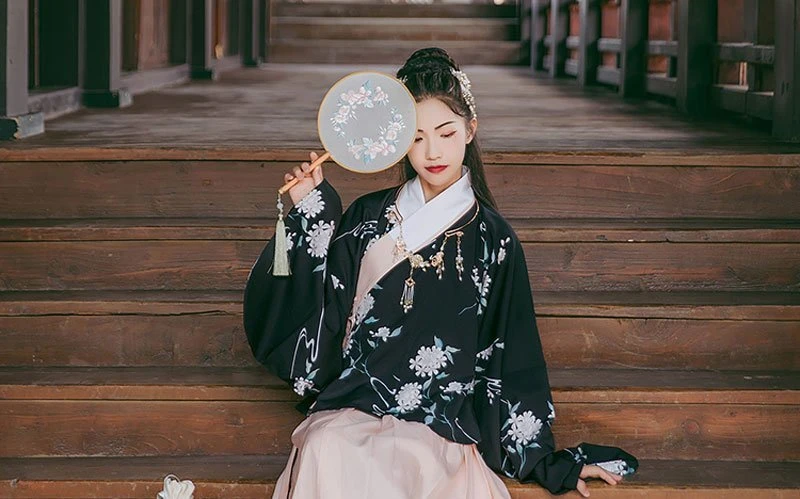
In Chinese culture, accessories are a language of beauty. They are an extension of clothing expression. With accessories, Hanfu can be more appealing. Fans are one of the common accessories in Hanfu culture. This article will lead you to understand the history of Hanfu's fans. Fans have about three thousands of history in China. After thousands of years of evolution and improvement, they have developed into hundreds of fans' families. Fans were originally known as the "Five Ming Fans (五明扇, Wu míng shàn)" in history, was invented by the "Shun" (舜, Chief of the Ancient Tribal Alliance of China). In the Yin and Zhou Dynasties, appeared a kind of "Di Fan" (翟扇, Dí shàn) made of the colorful pheasant tail feathers, so there is a saying of "Feather Fan". At that time, the fan was not used to fan the wind, but to serve as the emperor to ward off the wind and avoid the sand. It can be classified into two categories: First, Flat Fans (平扇), can not be folded. Brief introduction: during the Warring States, Qin, and Han Dynasties, flat fans became the mainstream of fans at that time, used by both emperors and civilians. In the Western Han… -
10 Tips on Hanfu You Have to Know
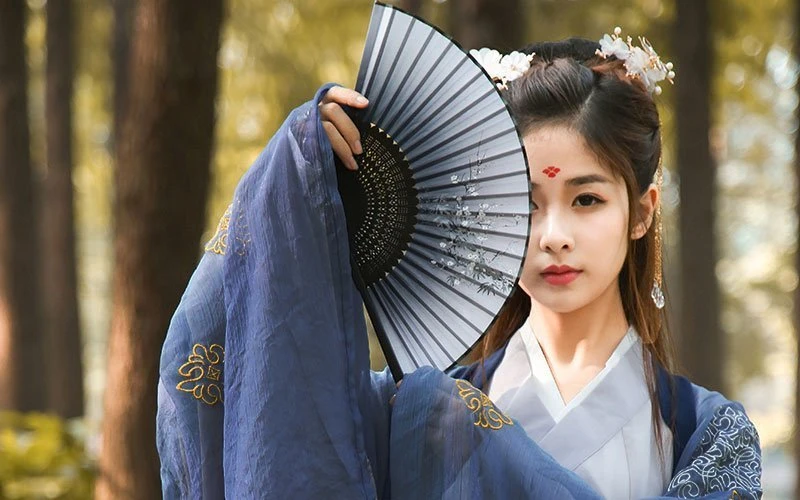
Q1: There was no Hanfu sewing machine in ancient times. What was it used to make clothes? A:Of course, ancient people sewed by hand. As early as the Paleolithic Age, cavemen on the top of the mountain could sew animal skins with bone needles. With the development of society, in ancient China, women learned to tailor, sew, and embroidery patterns from childhood. Ancient clothes were sewn by hand with needles and threads, and there were many sewing techniques. Q2:There are so many pleats in the hanfu dress we are wearing now. What made the pleats of dress in ancient times? A: In ancient times, there were irons. The earliest iron was a kind of torture tool. Later, it was slowly used for ironing clothes. The shape is different from dynasty to dynasty. Some are like spoons, some are like pots and bowls. At first, it was bronze iron, then it was metal iron and porcelain iron. Ancient people often put red charcoal or hot water in the ironironed, and then ironed clothes. Q3: The styles of Hanfu are long sleeves and long skirts. Will the ancients wear them in summer? A: The ancients wore light clothes when they were hot.… -
10 Best Hanfu Handmade Jewelry Accessories
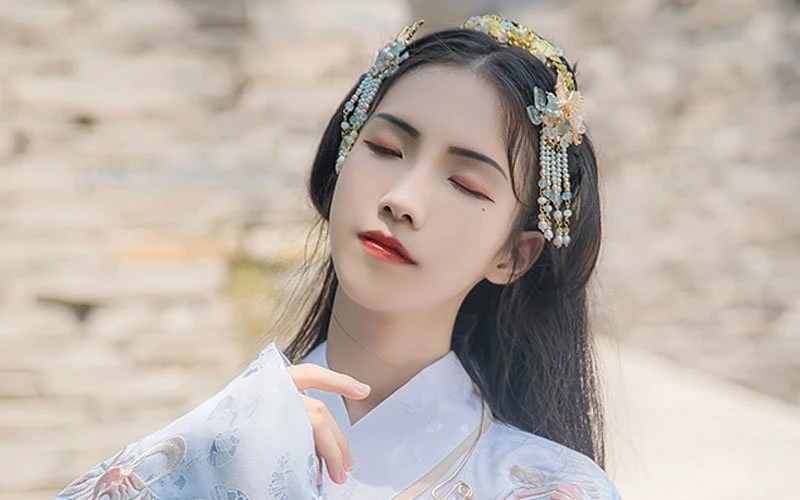
As the old saying goes, a woman's elegant temperament must have something to do with her dress. This sentence is not entirely correct, but to some extent, it also shows the importance of clothing and jewelry for women. In ancient China, jewelry was not only an ornament, but also a symbol of status. So what jewelry did ancient women wear? Let's have a look. Ji Ji (笄, a kind of hairpin), a kind of scorpion used by ancient Chinese women to decorate the rolled hair or insert a hat. Is the originator of Zan (簪,zān), Chai (钗,chāi). In ancient times, the use of Ji by women was a very important thing. It is necessary to hold the "Hair pinning ceremony", which is the same as the "crown ceremony" of men, they are all adult rituals in ancient China. From the Zhou Dynasty, it was stipulated that women should complete their "Hair pinning ceremony" after engagement and before marriage. Usually, at the age of 15, the mother combs her daughter's hair, pulls her hair in a bun, and inserts her hair in a Ji, meaning "Adult, start another stage of life".The material of Ji is various. The dignitaries usually use… -
What is a Hanfu Clothing? - Traditional Chinese Costume
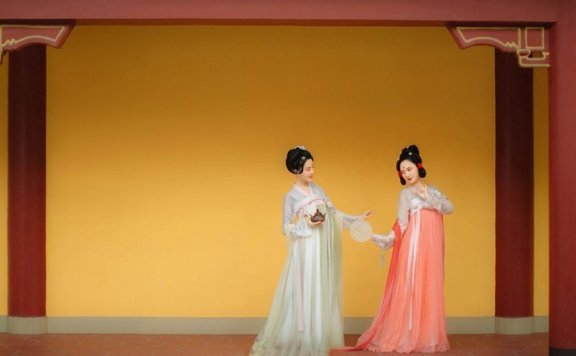
In recent years, traveling to China has become more and more popular around the world. Many people come to enjoy the unique life of China, taste delicious food, visit beautiful scenery, and experience Chinese traditional culture. But you may find out it is rare to see people wearing traditional Chinese costumes in their daily lives. It seems like traditional clothing has been forgotten by them. So, you might have a question, what is Chinese traditional dress, Cheongsam, Qipao, or Kimono? Hanfu – The Traditional Costume of China Each country's traditional costumes are one of the symbols that reflect countries' ancient cultures and how native citizens were influenced by the regional environment. China has a long history of more than 5,000 years. Undoubtedly, Hanfu, as the most typical traditional costume of China, is a very important part of Chinese national culture. But compared with other traditional cultures, such as Chinese painting and calligraphy, Hanfu is not getting proper status and glory in the Chinese Culture Circle. Though with its disappearance in some ears, Hanfu still remains its typical features today due to its strong vitality. The clothing of Buddhism, Taoism, and many minority nationalities in China still maintains the characteristics… -
How to Made a Hanfu
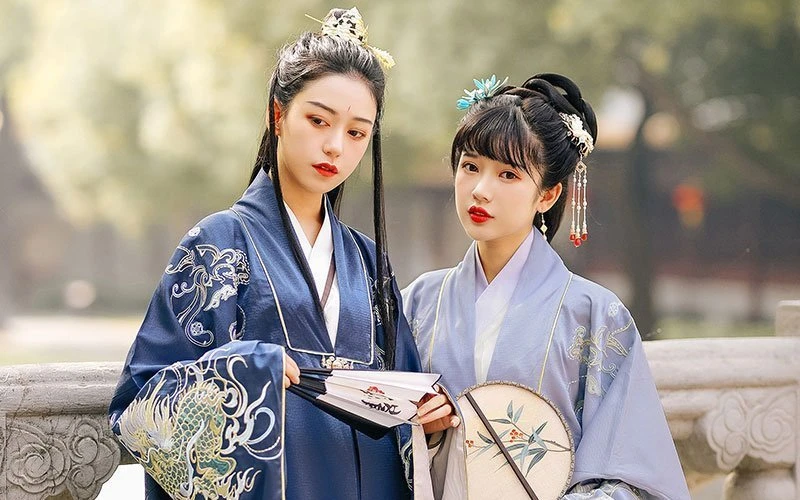
In modern times, there are many ways to cut clothes, forming different costumes, such as short sleeves, skirts, pants. Hanfu also has several different cutting methods. The following is an introduction to everyone. Yishangzhi(衣裳制, yī cháng zhì) In ancient China: Yi(衣) is an upper outer garment, Chang(裳) is an underskirt (clothing worn in the lower body). Yishangzhi is due to the ancient people’s worship of the heavens and the earth. It is the most basic and most orthodox form of ancient Chinese clothing. It originated in the Yellow Emperor era and has been passed down for thousands of years in ancient Chinese society. Lianshangzhi (连裳制, lián cháng zhì) Lianshangzhi is also known as "Shenyizhi(深衣制)", in order to adhere to the clothing system that is separated from the top and bottom, specially divided and then integrated into one. Lianshangzhi is originated from the early Qin Dynasty. Although it is a long coat, however, when cutting, the top is separated from the lower skirt, and then stitched together to express respect for the traditional concept. Tongcaizhi (通裁制,tōng cái zhì) Due to the inconvenience of movement in frequent social activities, the style of Hanfu men has evolved from Yichangzhi to Shenyizhi, it’s… -
What Does Hanfu Represent
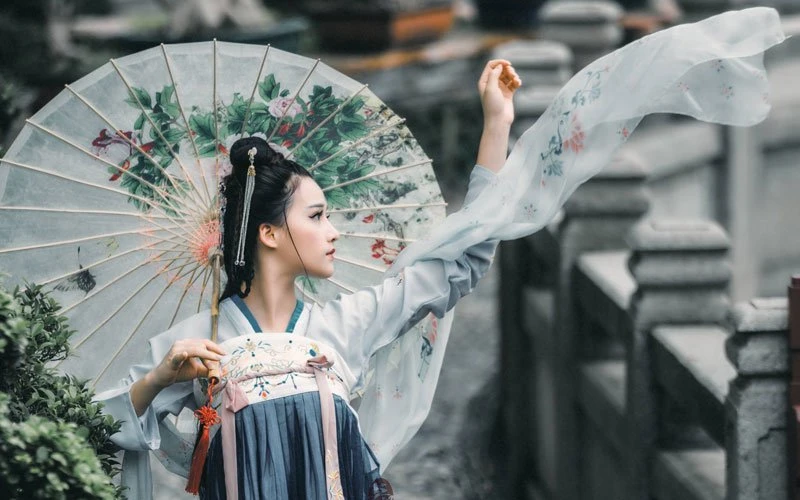
Traditional costumes of the Han nationality Hanfu doesn't refer to Han Dynasty Costumes, but refers to the traditional national costumes of the Chinese Han nationality and is one of the oldest national costumes in the world. Hanfu is the most suitable combination of Chinese traditional culture in art and poetry, chess and calligraphy, music and dance, and tea ceremony. In the process of inheritance and development of history, Hanfu fully demonstrated the moral connotation of the ancients Benevolence, Righteousness, Courtesy, Wisdom, Trust, and it is also an important symbol of pure Chinese traditional costume art. Costumes in the gods' culture There are many flying clouds in Dunhuang murals, one by one is pure and beautiful, the dress is elegant, the ribbons are flying, and people can see the scenery after the sights, and the heart feels clear. It reflects the beauty of ancient costume art. Most of the flying costumes fully demonstrate the rich and beautiful human background of the Tang Empire and the gorgeous and beautiful costume features of that era. It can be seen that the costume itself is part of the culture, and it has deep connotations behind it. The profoundness of the Hanfu clothing culture Wearing… -

The Difference Between Male and Female Ruqun Hanfu
The previous article's introduction focuses on women's Ruqun, and then we introduce men's Ruqun. The men's Ruqun is a male dress, composed of a top blouse and a lower dress, and the upper jaw is mostly handed over(Jiaoling). Compared with the women's skirts, the men's skirt style and pattern are plainer. "Zhou Yi(周易)" said that “Yellow Emperor, Yao, Shun is wearing clothes and the world is ruled”, which shows that in the Yellow Emperor's era, the tops of the blouses were the styles of the ancient Chinese people. This is the prototype of the Ruqun (a top blouse and a lower dress)of the next generation, costumes of the blouses, and other costumes. Although its specific shape still needs further research, but the suit of a top blouse and a lower skirt lays the foundation of Hanfu. Until the appearance of Zhiju, Quju, and so on, the number of people wearing Ruqun(Ru dress) has been reduced, but the official high-standard men's dress was still the Ruqun system(a top blouse and a lower dress), which continued until the Ming Dynasty. The traditional dress of Hanfu is an enclosed skirt, which is made up of several pieces of skirts and is connected to…