Article
Search results for the keyword [wear]:
-
Wearing China on the Body: Unraveling the Tapestry of Chinese Attire
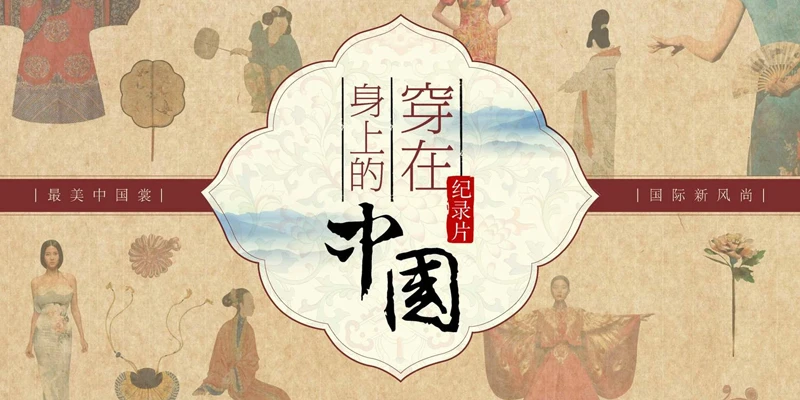
Clothing, food, shelter and transportation, the word clothing is the first. Throughout history, the Chinese have consistently showcased their pursuit of clothing. From the exquisite attire donned by emperors in ancient palaces to the fashionable ensembles spotted in bustling city streets, people appear to consistently have a wealth of commentary regarding fashion trends. Today, a documentary that was specifically created to delve into the rich Chinese clothing culture would be recommended - "Wearing China on the Body". It tells the story of Chinese etiquette, clothing expression, folk art inheritance, and human relationships through vivid clothing, and skillfully reflects the changes in people's aesthetic preferences in the era. The Chinese documentary "Wearing China on the Body" is composed of six episodes, including Sang Ma, Bu Yi, Ni Shang, Jin Xiu, Zi Jin, and Jiang Xin. This documentary interprets Chinese culture through the perspective of clothing, arousing the audience's profound longing for clothing aesthetics from various perspectives such as fashion, elegance, intricacy, culture, humanity, and emotion. Enable them to comprehend the China within which we reside from the dreamlike clothing realm. Episode 1: Sang Ma This episode will trace the origin of magnificent Chinese costumes, choose the life course of different… -
From Dynasties to Daily Wear: The Resurgence of Hanfu Fashion
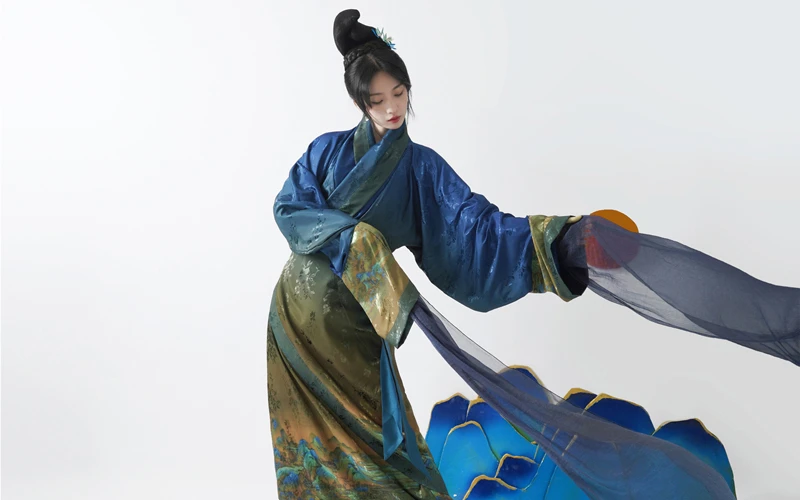
Mamian skirt, Qixiong dress, and the hundred-pleat skirt; wearing traditional Hanfu has become a new trend in public attire in recent years, whether it be for sightseeing, wedding ceremonies, shopping, friend gatherings, and various other occasions. The "Hanfu craze" continues to rise, blending tradition with modernity, activating cultural resources, igniting the consumer market, and driving industrial development. In recent years, Hanfu has gradually gained popularity among the younger generation, with their youthful expression and fashionable presentation bringing Chinese traditional culture into daily life in a tangible and palpable form. The long-standing Chinese traditional clothing culture embodies a blend of Chinese aesthetic interests, reflecting not only a consumer choice but also the Chinese people's love for outstanding traditional culture. Demand exceeds supply During the Spring Festival and Lantern Festival of the Year of the Dragon, the activity of "wearing Chinese costumes for free to visit the Confucian Temples" in Qufu City, Jining, Shandong, has been well received. Wang Chunling, a visitor from Liaoning, traveled a long distance with friends to play here, attracted by the lively atmosphere of night tours in the ancient city of Qufu and folk performances, and dressed in Hanfu to join the parade. This year, garments… -
Wear Red Hanfu Dress to Brighten Up Your Summer
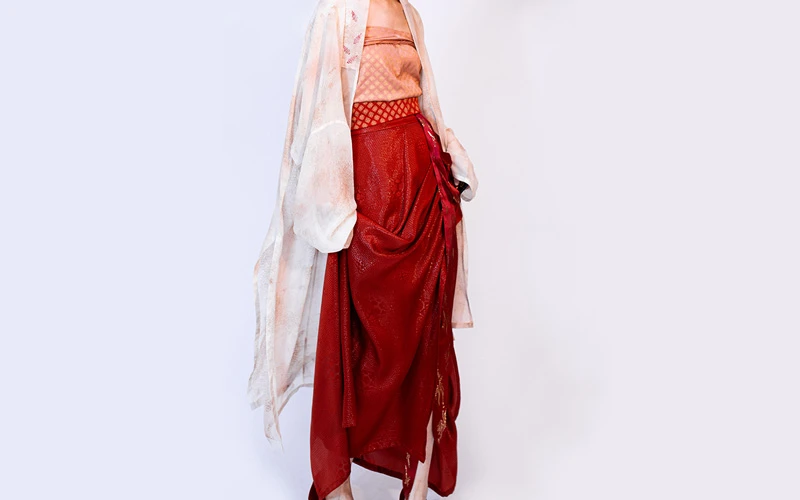
Summer is here, and what better way to celebrate the season than by brightening up your wardrobe with a stunning pomegranate red Hanfu dress. HAN TIME will use the combination of pomegranate color and hanfu as the starting point to recommend a series of suggestions for wearing red hanfu dress in summer. Pomegranate color refers to a slightly deeper shade of red, resembling the color of pomegranate fruit or bright orange-red like the color of pomegranate flowers. As summer approaches and greenery abounds, the blooming of pomegranate flowers marks the season's arrival. It is an ideal time to wear a flowing long skirt in a vibrant shade of pomegranate while standing under these blossoms with a radiant smile. When it comes to pomegranate skirts, people tend to lean towards the latter meaning as this hue is more charming and unique compared to other shades such as vermilion and pink. Have you ever heard of "kneeling under the pomegranate skirt"? The phrase has been passed down through generations related to Yang Guifei who had an affinity for both Pomegranates and dresses in that same rich hue. Emperor Xuanzong ordered widespread planting of Pomegranates within palace just for her love for them.… -
Chinese Cheongsam Lapel Forms: Characteristics and Occasions to Wear Them
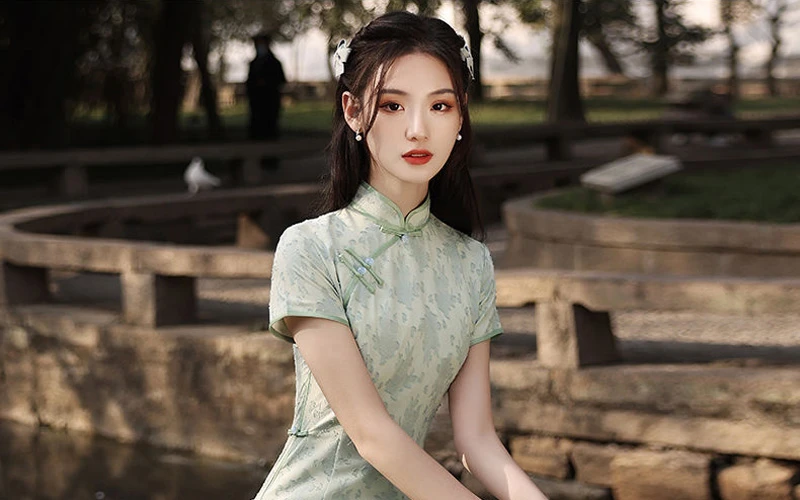
The lapel, as an essential component of the cheongsam dress, serves as a critical dividing line in the layout of its style, possessing both functional and ornamental purposes. It complements the collar, buttons, or overlapping pieces in a harmonious manner, thus showcasing the overall beauty of the Qipao. The lapel (Jin, 襟), also known as the opening of the garment, is the unfastening of the Qipao's garment. Changes in the lapel are one of the primary way in which the Qipao's style evolves. Today, let us appreciate the modern styles of Qipao's lapels and savor the charm of Eastern women. Without Lapel One of the most concise ways of opening a cheongsam is the "Without lapel, 无襟, Wu Jin" style. This kind of lapel style is directly derived from traditional Chinese clothing, appearing dignified and traditional. Pleated & Without Lapel "Pleated without lapel, 褶皱无襟, Zhezhou & Wu Jin" style adds decorative pleats to the front chest, simple yet sophisticated, enhancing the sense of fashion. Round Lapel "Round lapel, 圆襟, Yuan Jin" is the most common style of modern cheongsam lapel, with smooth lines from the neckline to the armpits. Depending on the size of the arc, it can… -
Signs To Wear Modern Hanfu in Your Daily Life
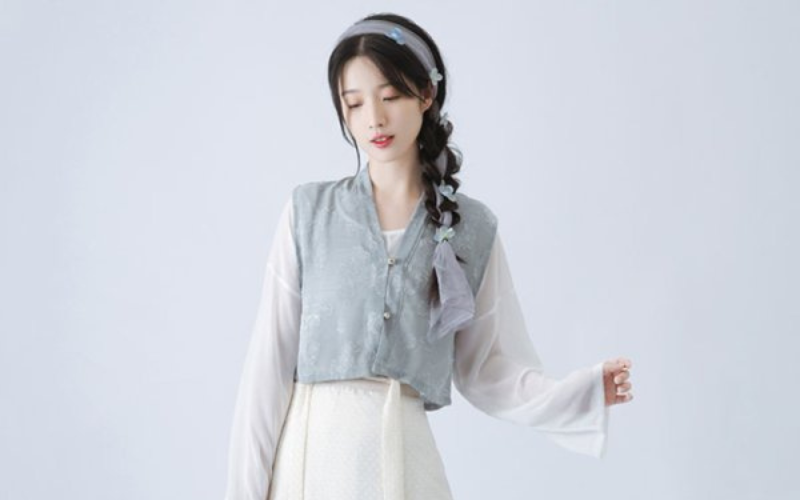
Who says hanfu is uncomfortable for daily use? Some people feel that hanfu is too complicated to wear, uncomfortable, and unsuitable for modern daily life. Hanfu itself is a kind of Chinese national dress that includes the everyday clothes of all the ancient Han people. Back then, no one had ever said that hanfu was uncomfortable and can't be used in daily life. Like ancient hanfu, modern hanfu is a type of clothing that can meet people's daily needs at home, travel and work. Modern hanfu? Modern hanfu is functional and elegant. With a blend of sophisticated cotton & silk fabrics, this style is easy to wear and easy to wash. It is enough to care for it by washing it in cold water on a gentle cycle and then hanging it to dry. The luxury modern women crave, whether it's layering or lounging, this piece is durable and soft. Who tend to wear modern hanfu most often - in some cases on a daily basis - are girls and boys, students and teachers, tourists and cultural workers. In some places with unique views of ancient gardens, it is required to wear traditional or modern hanfu clothing whenever appearing in… -
Huaxia Dresses - The Evolution of Chinese Traditional Wear
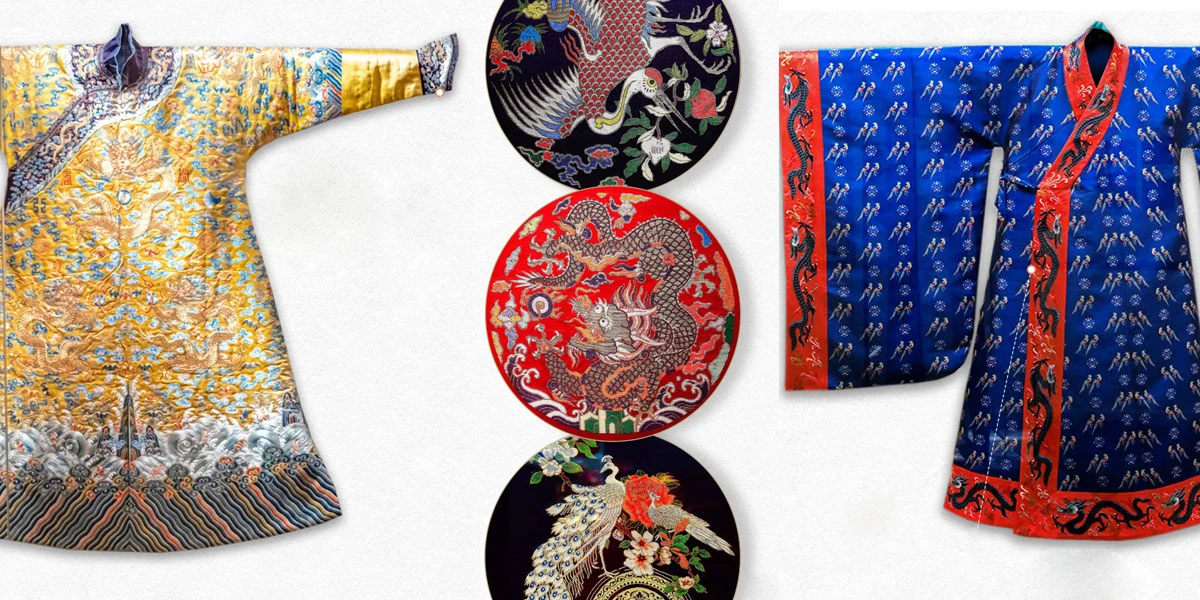
Huaxia dresses brilliantly for thousands of years. How rich is the Chinese traditional wear? Follow the INSTITUTE FOR PLANETS to enjoy a journey through a thousand years of Chinese costumes. Huaxia Dresses - Prehistory to Shang & Zhou Period Looking back tens of thousands of years ago, human beings learned to sewn clothes with Guzhen (骨针, bone needle). Perhaps inspired by making ropes and bamboo baskets, around 7,000 B.C., Chinese ancestors began to weave fabrics with plant fibers. In order to improve the weaving efficiency, the Fanglun (纺轮, spinning wheel) was created that used pottery sheets to rotate inertial for twisted threads. There is also the Yaoji (腰机, waist machine) that is used to bind lines and make them tight and easy to knit. In that era of extremely backward productivity, it was not easy to get fabric, so the shape of clothes was relatively simple. Two narrow pieces of cloth were directly combined and then tie a straw rope, which may be the daily dress. With the continuous development of society, the function of clothing has long been more than just covering up and keeping warm, it has also been endowed with a lot of aesthetic concepts, which is… -
Can Foreigners Wear Hanfu? 3 Non-Chinese Ladies’ Experience Tells You the Answer
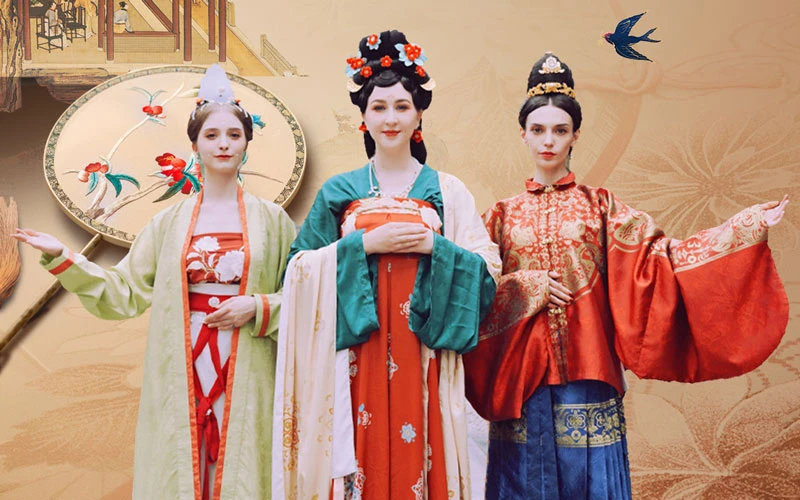
Can foreigners wear Hanfu? Which dynasty's Hanfu style is more suitable for non-Chinese people, Tang, Song, or Ming? Wearing Chinese hanfu costumes, tasting traditional Chinese food, and learning traditional handicrafts, three young ladies from different countries immersive experienced Chinese culture, in the recently released Chinese traditional culture creative short film "They Are All From China" by the Sichuan Provincial Department of Culture and Tourism, China. https://youtu.be/Ufvs8bqcYgA Traditional Chinese Hanfu Costume Hanfu is the traditional national costume of the Han people and has a history of over 3,700 years, with different costumes and makeup for different dynasties. In this video, Ms. Ting Yue, the Chinese costume enthusiast and promoter, leads three foreign friends in a special Chinese cultural experience. They put on different dynasties Hanfu to achieve a "gorgeous transformation". Tang Dynasty Hanfu The Tang Dynasty saw an unprecedented flourishing atmosphere of feudal society, with advanced society, cultural prosperity, advanced silk weaving techniques, and a nationwide tea drinking culture, making it a dynasty in which China exported a great deal of culture, art and technology to surrounding countries. At this time, clothing styles, colors, patterns, and so on, all presented a new situation, the gorgeous crowns and clothing are… -

Common Measurements of Hanfu - Wear Guide
Hey everyone! So there were a couple people in my hanfu server asking about what different kinds of measurements of hanfu were. I answered and did a little compilation of the most basic measurements that you'll see on most sizing charts, if you're choosing a size and buying from a vendor, as well as some that are often used to create patterns and the like. Hope that it's a helpful reference! I've included both traditional and simplified characters in this for better reading and some of my own notes as helpful explanations, let me know if there's any questions you need answered. Body Measurements Let’s start with the basic measurements of your own body. 身高 - Height. Usually in centimeters, if you don’t understand any of the other measurements, this is the one you want to go by. 體重/体重 - weight. often comes up in either kg or lbs, and it’s pretty easy to figure out which one through common sense. I would recommend that you don’t trust this one too much though since everyone is like… a different density. 三圍/三围 - three rounds, the standard starting point for more detailed measurements. These include the three below: 胸圍/胸围 - the… -
Wearing Flowers - How the Ancients Take All Year’s Scenery as Decoration
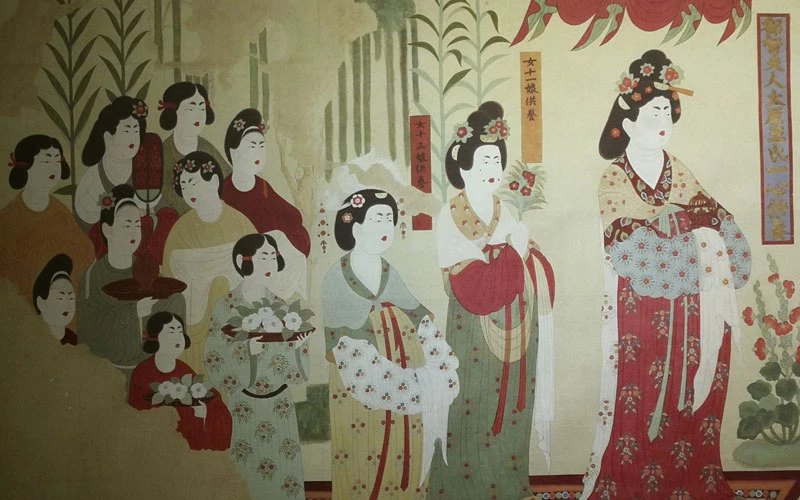
More than a thousand years ago, Wei Zhuang once wrote the poem "Spring Tour, apricot blossoms blowing all over the head", walking towards the apricot forest during the blossoming season, and the apricot blossoms would fall on hair bun at the wind. In ancient times, seasonal flowers in addition to floating down in the hair bun, but also may be inserted in the hair or brim, embellished as a touch of spring color in the ancient head. Putting flowers on the head is also called Zan Hua 簪花 (Flower Hairpin, or wearing flowers). In ancient times, both Sheng Hua and Xiangsheng Hua were used to Zan Hua. Sheng Hua is flower, and Xiangsheng Hua is a kind of fake flower made in imitation of a flower. All the flowers mentioned in this article are Sheng Hua. In the Han Dynasty, although the culture of wearing flowers was not really formed, but flowers had already entered people's lives in various forms. For example, on the day of the Chongyang Festival, people in the Han Dynasty, in addition to climbing mountains and drinking chrysanthemum wine, would take off dogwood flowers and wear them around their waists to avoid disasters and repel evil… -
How to Wear Hanfu When It’s Hot
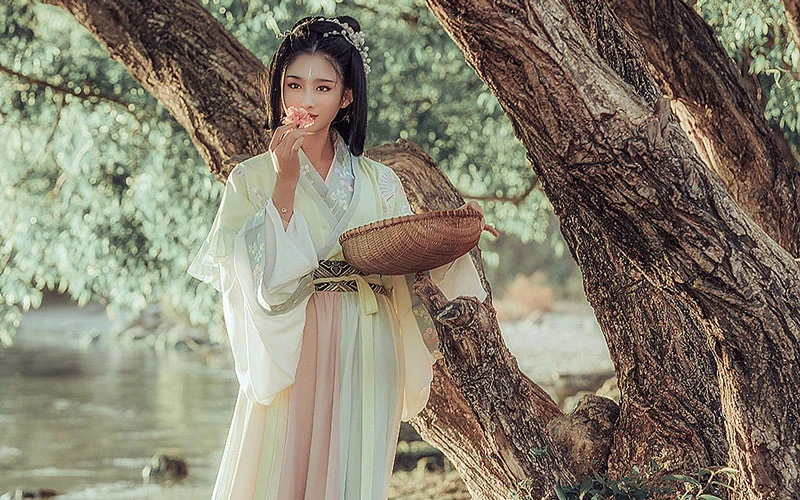
Summer is coming soon! Here's how to pick out your hanfu for summer vacation! -
How to Bring Elements of Hanfu into Daily Wear
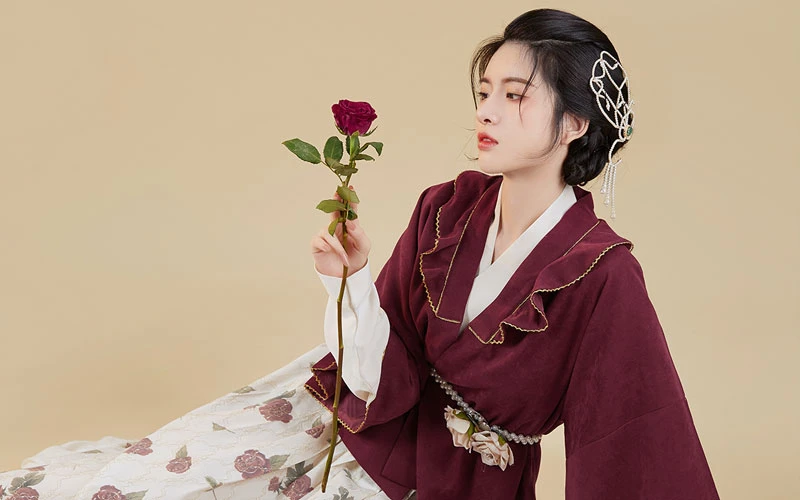
Want to show off your enthusiasm in hanfu without looking too awkward or out of place? Try these tips! -
The Most Iconic Hanfu Outfits to Wear for Chinese New Year
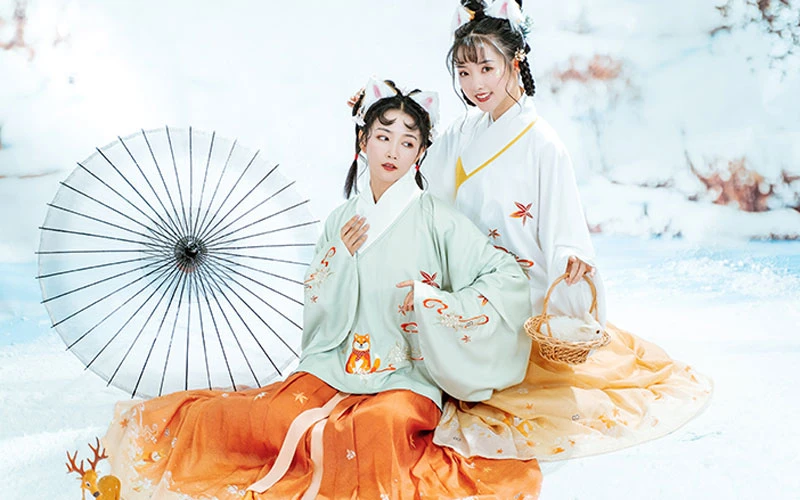
The traditional Chinese New Year is coming up soon, are you ready new hanfu outfits to celebrate this festive occasion? Let's see what Chinese New Year hanfu styles Chonghui Hantang has prepared for you! LOOK 1 This style is inspired by Wugu Fengdeng (五谷丰登, a bumper grain harvest), with a wheat grain pattern on the upper part. The lower skirt has a bumper grain lantern pattern. LOOK 2 The embroidered lotus flower and Yingluo (璎珞) pattern are all over the dress, symbolizing transcendence. The Yingluo pattern also signifies luxury and good fortune, and the placket is embellished with red buttons. Overall has a very strong Tang style atmosphere. LOOK 3 The gold woven horse face skirt, in which is a small rabbit frolicking in the flowers, golden silk threads shining in the sunlight like a dream. LOOK 4 The collar edge and sleeve edge are mandala patterns, and the pattern of Beizi is from Cave 197 of the Mogao Caves in the Middle Tang Dynasty. The lower skirt has a flower and butterfly pattern, creating the same mysterious feeling as the Dunhuang portrait figures. LOOK 5 This style is inspired by "A Deer of Nine… -
3 Colorful Winter Hanfu Wearing Styling for You
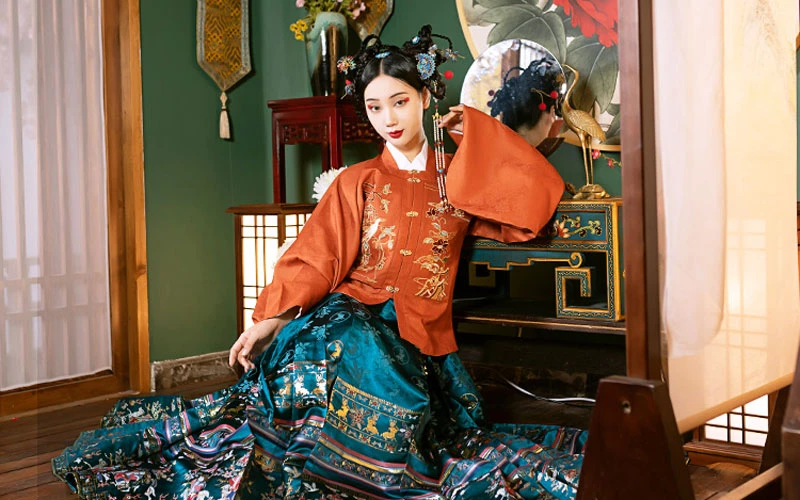
When it comes to winter, everyone's choice of clothing color scheme may focus on black, white and gray, or darker colors that are grayish. But in traditional hanfu winter wear, you can be as imaginative as you want, whether it's the color scheme or the pattern design. Take a look at these three winter hanfu wearing styling and let them inspire your winter hanfu matching! Look 1 Generally speaking, wearing clothes with lower color purity will highlight the merits of the features, the first set using lotus root pink color scheme, breaking the gray winter a touch of mild bright color. The pattern is inspired by the Ming dynasty Shu brocade pattern - diamond lattice flower group pattern brocade, meaning auspicious and reunion. The Duan Ao with a standing collar generally makes the wearer long and slender, highlighting the beauty of the body. The fabric is made of high-grade double-sided tweed fabric, warm and comfortable, girlish. Baidie skirt using silk embroidery thread, embroidered all over the skirt, the thread quality is soft, excellent luster, the surface is silky smooth. The planets with the track and snowflakes intertwined play, winter atmosphere is also warm and harmonious. The embroidery of the… -
3 Fashion Modern Hanfu Look for Your Everyday Wear
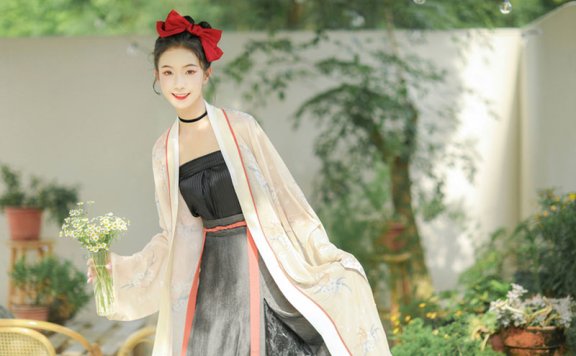
With the gradual development of hanfu in the current society, there are already many hanfu lovers who have started to integrate it into their lives. Not only is it very everyday, but it is also fashionable and atmospheric. So how to wear such a modern hanfu for everyday wear? Let's take a look at it together. Style 1 Song Hanfu: Long shirt + Pleated skirt Needless to say, Song-style hanfu has always been synonymous with everyday because its shape and style are particularly like modern fashion, and the length and width of the sleeves are also very suitable. It's more with a touch of literary sense, very suitable for summertime. [Song hanfu dressing analysis] The outermost layer of this hanfu set is a lapel long shirt imitation of Chang Gan Si excavated artifacts style, which has short sleeves, perfect for summer, and the whole is very loose and elegant. The innermost layer is the song Moxiong, and the following is a pleated skirt. The overall color of the dress uses a combination of dark blue and black and red, quite a classical sense. This style of hanfu is perfect for girls who usually have a more literary temperament, but… -
How the Ancient Chinese Wear to Stay Warm in the Winter
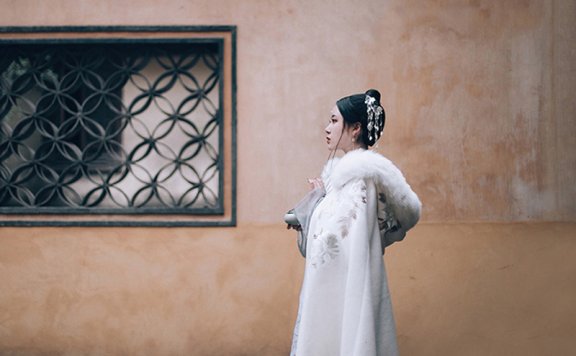
With winter approaching, what to wear to keep warm is a top priority. Why not take a look at how the ancient Chinese wear to kept warm? The thinnest winter coat - paper clothes Did the ancients enjoy the winter with wine and food, wearing mink and fox fur? Perhaps slightly different from the Chinese drama, that is just the illusion created by the rich people, in fact, before the popularity of cotton, there were also paper clothes in history. Zhi Qiu (纸裘, paper clothes), as the name implies, it is made of paper mulberry, rattan paper, and other paper made of clothing, since the emergence of the Wei and Jin, to the Tang and Song dynasties, began to be popular on a large scale in the folk. According to historical records, at that time, the poor people suffered from war and were displaced, so they made paper clothes to protect themselves from the cold due to the lack of cloth. The low cost of paper materials, easy to obtain, so it can be widely popular. Not only did the people favor paper clothes, there was also a group of people who liked to wear paper clothes, namely monks.… -
Master 6 Kinds of Hanfu Mix and Match Wearing at a Glance
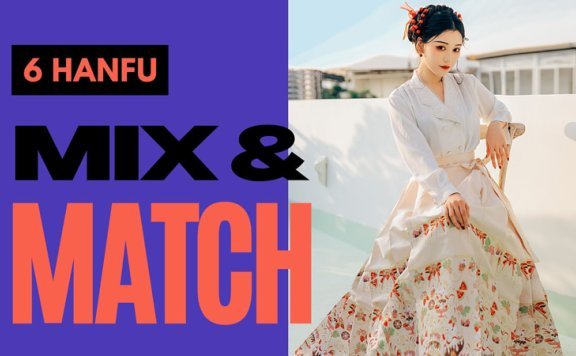
Traditional hanfu is very beautiful and will make a very strong impression. Sophisticated, elegant, and full of rich details, it looks more appropriate for a formal traditional festival or occasion. This is certainly one of the most correct ways to wear it, but fashionable hipsters who wear hanfu always manage to incorporate fashion into their outfits. What is the best way to incorporate traditional hanfu into modern clothing, or in other words, how to wear traditional hanfu in a modern way? I have found a few good examples. They are much lighter to wear and don't take too much time to get ready. That's the beauty of hanfu. If you have enough time, you can prepare a complete hanfu look, including makeup, hairstyle, clothing, and other accessories. If you just want to have some elements of hanfu in your outfit today, you can refer to this article for some additional styling options. Contributed article from Xiayang (2021 Hanfu Free Giveaways & Contests -PLAN C), Ling assists with article layout and detailing. -
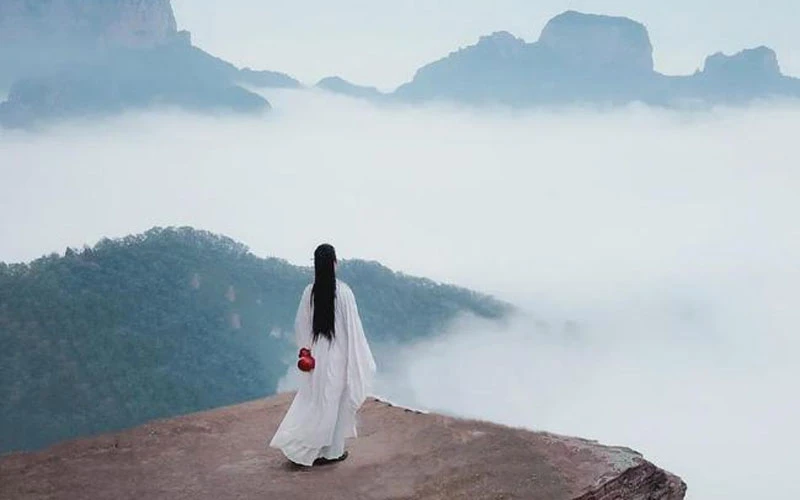
A Man Wearing Hanfu Traveling the World at Large for 6 Year
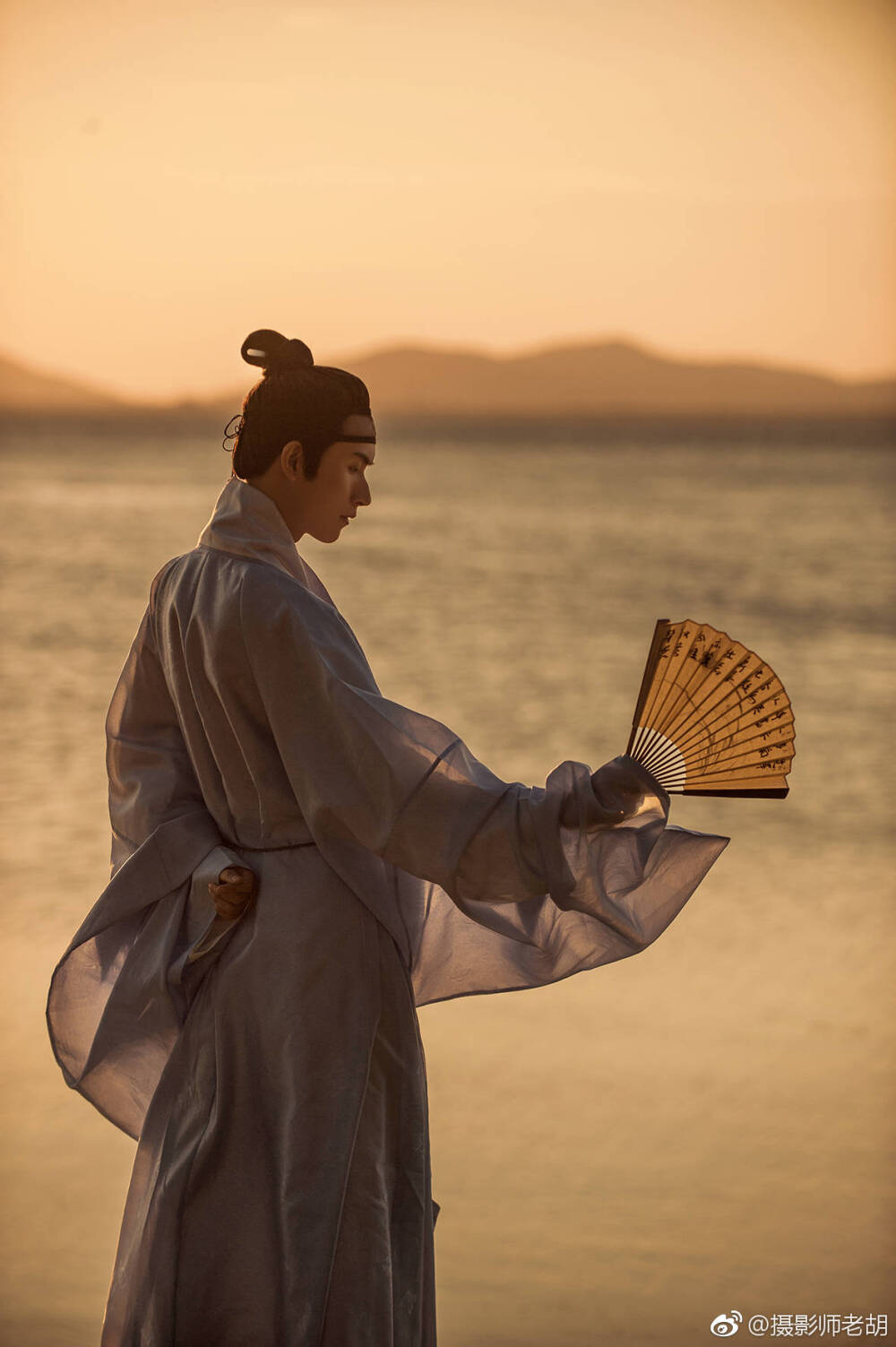
Perhaps we have lived in the city for too long, busy for a long time, but more and more longing for beautiful scenery outside the city. Recently, there is such a post 90s guy, wearing Hanfu, out of the busy city, traveling half of China for 6 years. He seems to have created his own Jianghu. Under the waterfall, he sang, domineering and unrestrained. On top of the immortal mountain, he was dressed in white, immortal bones, floating like the world independent. Between the mountains, he stood in a Chinese dress, a magnificent painting of the motherland, spread out in front of him. In the midst of the yellow sand, he leaned on his cane and was alone, just like seeing the back of the Tang monk when he took the scriptures. Under the sunset, he played the Qiang flute and took us to appreciate the magnificence of the Hexi Corridor. In these images, he seems to be a chivalrous man or a poetic literati. His name is Konggu (空谷). He has long hair, wears hanfu, carries a Qin or hangs a bottle gourd. Before becoming a photographer, Konggu was a painter. Since he was a child, Konggu has… -
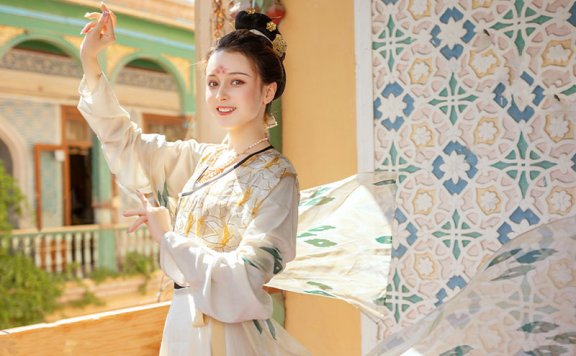
5 Way to Wear Hanfu Pibo Fairy You Should Know
Pibo (披帛) is perhaps the most fairy-like of all hanfu accessories. The light texture, delicate prints, and embroidery set it off. When walking, the Pibo drapes between the hem of the skirt, looking like a fairy with fluttering clothes and clouds. Pibo appeared in pottery figurines as early as the Wei and Jin dynasties and became widely popular in the Tang dynasty. The pairing of Pibo and Banbi, because of its perfect combination of linearity and human beauty, became a product of women's refreshed aesthetic imagination. Pibo is also useful for more than just decoration, generally, draped over the shoulders, or over the body, are good choices. It can also be used for sun protection. Here are six ways to wear a Pibo, from the simple to the complex! How to wear hanfu Pibo LOOK 1: The most common way to wear a Pibo. Wrap the Pibo around the body from the back to the front. If your Pibois too long, try to wrap it around your arm. LOOK 2: Mostly used for photography and catwalk shows, and is also the method of dressing for many Tang Dynasty unearthed pottery figurines. One side is put on the shoulder, and the… -
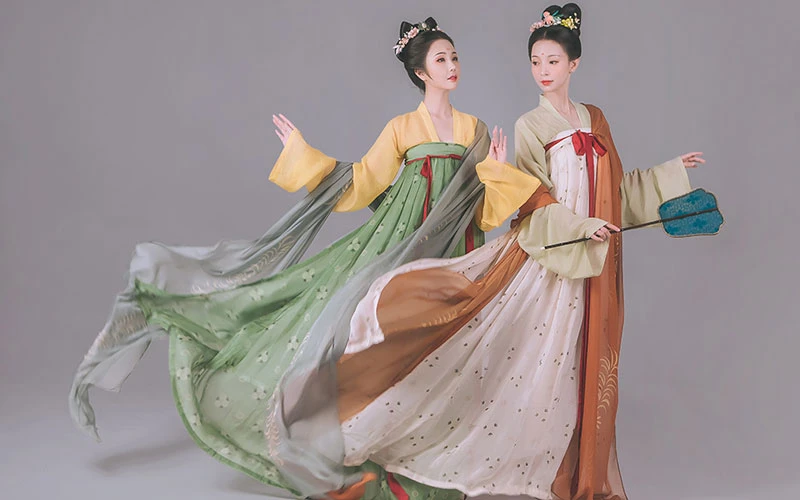
Traditional Chinese Clothing - What do you wear in China
As in all countries, clothing plays an important role in Chinese culture. Chinese culture has existed for over 5000 years, and during this time some traditional clothing has been created. Traditional Chinese clothes are often based on the religion and social status of the person wearing them. Traditional Chinese clothes usually have a straight cut that is not too tight. This makes the clothes comfortable to wear. Light colors are most popular, but you can also find red, yellow, and purple clothes surprisingly often. White is considered the color of mourning in China and is therefore rarely worn in everyday life. In imperial times, the colors red, yellow, and purple were reserved for the ruler, his family, and high nobles. Today, red clothes are particularly popular, because the color stands for happiness and prosperity. This is the reason why many Chinese wear red clothes, especially on Chinese New Year. Chinese women's clothing is often more detailed and decorated with more embroidery than men's clothing. Everyday clothing is usually made of cotton or linen. On special occasions, people wear traditional clothing made of silk. To this day, there are four traditional Chinese garments that are still worn by many Chinese people:… -
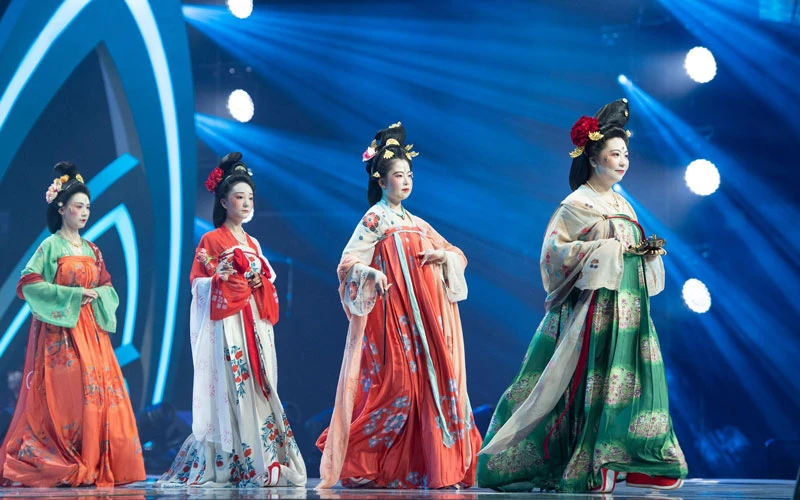
Wearing Hanfu and Meet the Rise of China-Chic
During this year's Qingming Festival, the first Hanfu Flower Festival was held in Suzhou, Jiangsu Province. Hanfu enthusiasts in groups of Chinese traditional costumes, with pretty makeup, walked among the hundreds of flowers, or heroic, or delicate and soft, attracting the attention of tens of thousands of visitors. In the 2021 Spring Festival, a program called "Tang Palace Night Banquet" became popular. In the program, actors wearing Tang costumes in a delicate dance, recreate the culture of the Tang Dynasty in its prime, and also let the traditional costume of hanfu once again penetrate the hearts of people. Hanfu ushers in a new wave of boom The main character in the picture is called Chu Qi (楚淇), a hanfu fan. For more than two years, with exquisite ancient style styling and stunning contrast, it has rapidly become popular on the Douyin (Chinese regional version of Tiktok), gaining nearly 7 million fans. "Wearing hanfu has made me more confident and enabled more people to understand and like hanfu." Chu Qi said. At the end of last year, he decided to become a short-form videos blogger full time. From hanfu enthusiast to hanfu promoter, he admits that he wants to spend…